
HealthSpan
ApoB, Lp(a) and insulin: what can they tell you that standard cholesterol and glucose may not?
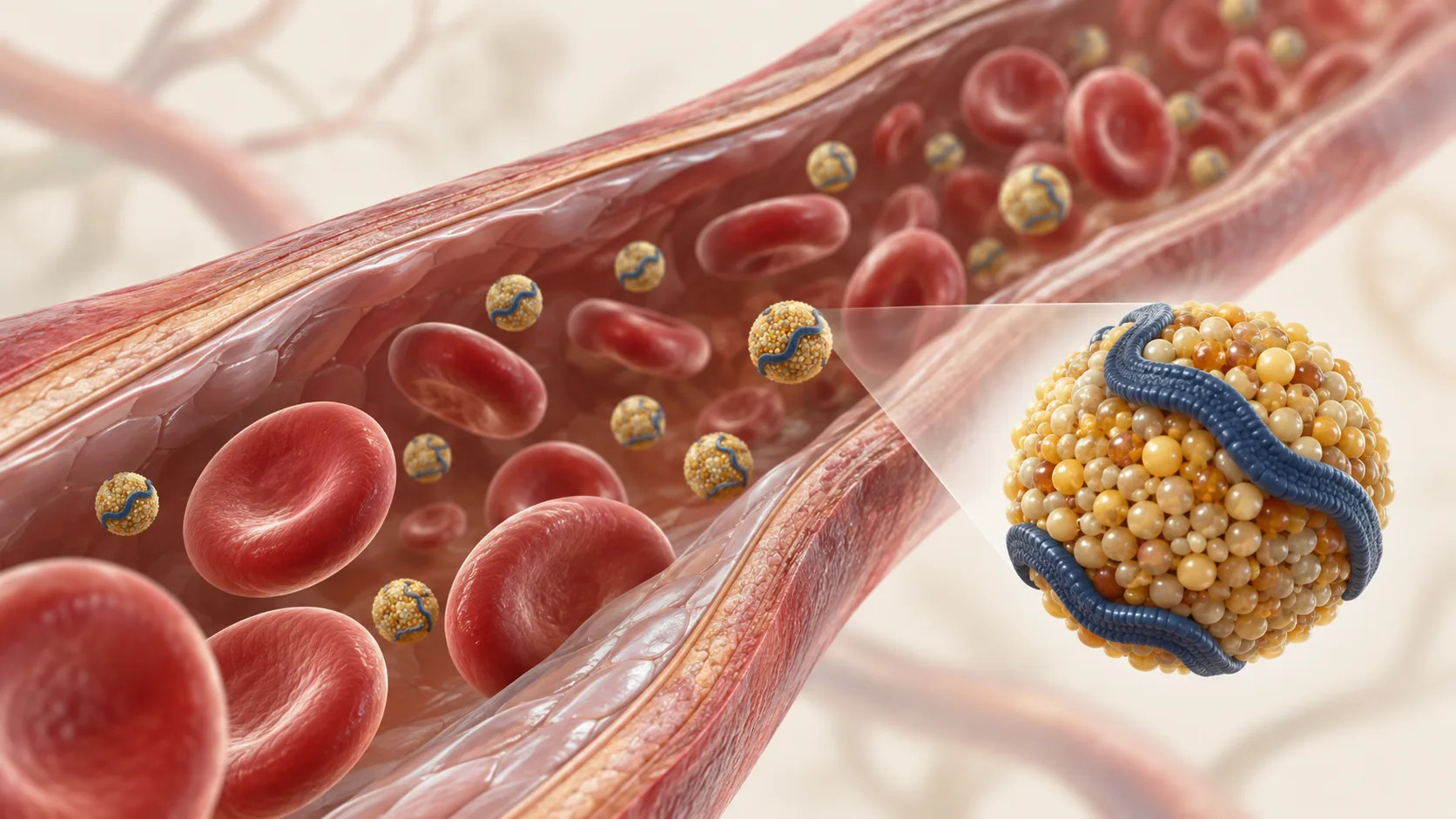
ApoB, Lp(a) and paired fasting insulin and glucose can add different kinds of information to a health assessment. ApoB helps describe cholesterol-carrying particle burden, Lp(a) adds information about inherited cardiovascular risk, and fasting insulin with glucose allows an estimate of insulin resistance called HOMA-IR.
The names can make the subject feel more complicated than it needs to be. The useful starting point is the question each test answers and how that answer might affect your care.
For HealthSpan, the purpose is to help you make informed changes that support living well. These results belong alongside your history, established tests and physical capability.
The short version
- LDL cholesterol describes cholesterol content; ApoB helps assess the number of particles that can contribute to arterial disease.
- Lp(a) is largely inherited and adds a different piece of cardiovascular risk information.
- Hanbury uses fasting insulin with fasting glucose to calculate HOMA-IR.
- HOMA-IR is an estimate with a different evidence base from established cardiovascular markers.
- Your overall health and the decisions the results support matter more than any isolated score.
What does a standard cholesterol test measure?
Cholesterol travels through your blood in particles called lipoproteins. A standard lipid profile measures aspects of the cholesterol and other fats carried in the blood.
LDL cholesterol, often abbreviated LDL-C, describes the amount of cholesterol carried within LDL particles. It is useful information, but it does not directly tell you how many particles are carrying that cholesterol.
An everyday comparison is the difference between the amount of cargo and the number of vehicles carrying it. The same amount of cargo can be distributed across different numbers of vehicles. This is only an illustration, but it helps explain why two related measurements can sometimes tell different stories.
ApoB adds information about particle concentration. It complements the lipid profile rather than making familiar cholesterol testing irrelevant.1
What is ApoB, and when can it be helpful?
Apolipoprotein B, or ApoB, is a protein on the main lipoprotein particles that can contribute to atherosclerosis, the process underlying much arterial cardiovascular disease.
Because these particles carry ApoB, measuring it helps assess their concentration. The National Lipid Association's expert consensus explains how ApoB can improve interpretation, particularly when it gives a different picture from LDL cholesterol.1
You may see this described as “discordance”. It simply means the measurements do not line up as closely as expected. Understanding that difference can help an expert discuss your overall risk and management.
For you, the useful outcome is a clearer explanation of what deserves attention. An ApoB result does not show whether an artery is blocked, and it is not interpreted without the rest of your health information.
Does everyone need an ApoB test?
Its value depends on what is already known and whether the additional information could affect a decision. The consensus supports its clinical role, but it is not evidence that testing every adult with ApoB will by itself improve health outcomes.1
This is a useful distinction between a measurement and a programme of care. The test provides information; the expert helps decide how that information should be used.
If ApoB is included in your assessment, ask how it relates to your lipid profile and medical history. You should be able to understand whether it changes the discussion or supports the same conclusion.
There is no need to think of one marker as the winner. Related measurements can be valuable precisely because they describe different aspects of the same system.
Related reading: What should you measure in your 40s and 50s if you want to stay healthy later?
What is Lp(a), and why is it different?
Lipoprotein(a), written Lp(a), is a particular lipoprotein particle. Its concentration is largely determined by inherited factors, and higher levels are associated with cardiovascular risk.
The European Atherosclerosis Society's consensus recommends measuring it at least once in adulthood and interpreting it within overall risk.2
This can add useful information when you are thinking about family history. It can also identify a relevant factor in someone who did not know of a family pattern.
A raised Lp(a) result is not a reflection of how hard you have tried to look after yourself. Understanding that can make the conversation more constructive: what does it mean for your overall risk, and which aspects of your health can we address?
Can you change Lp(a) through lifestyle?
Lp(a) is largely inherited and usually does not respond to lifestyle changes in the way some other risk factors do. That does not mean activity, diet or other appropriate care lose their value.
The EAS consensus emphasises managing the wider cardiovascular picture.2 Your expert can discuss the factors that can be addressed and whether further assessment or treatment is appropriate.
It also helps to keep the original laboratory units when reviewing a result. Lp(a) may be reported in different units, and there is no reliable fixed conversion that works for every person.
If you compare results from different reports, let the expert check that they are comparable. A change in units should not be mistaken for a change in your health.
Why look at insulin together with fasting glucose?
Insulin is involved in regulating glucose. Looking at the relationship between fasting insulin and fasting glucose can provide context about that regulation.
Hanbury combines the two measurements to calculate HOMA-IR, a model-based estimate of insulin resistance. The methodological review by Wallace and colleagues describes HOMA's applications and the importance of careful use.4
The result answers a different question from ApoB or Lp(a). It does not describe cholesterol-carrying particles or inherited lipoprotein risk. It contributes to a metabolic discussion.
That is why the measurements should not be presented as interchangeable “advanced” tests. Understanding their separate purposes makes the overall assessment easier to use.
How much weight should you place on HOMA-IR?
It is one piece of contextual information. The estimate depends on its inputs, and insulin measurements can vary between laboratory methods.
The 2023 AACC/ADA laboratory guideline does not recommend routine insulin testing for most people with diabetes or at risk of diabetes or cardiovascular disease. It identifies limitations in standardisation and added clinical value.3
HOMA-IR therefore has a different place in the assessment from established glucose-based diagnosis and from the evidence supporting ApoB or Lp(a). It should not be used to diagnose diabetes or treated as a universal pass-or-fail test.
At Hanbury, the useful question is whether it adds to the wider interpretation and the practical plan. If it is repeated, the method and sampling conditions matter when judging a change.
Can these tests explain low energy or difficulty losing weight?
They may contribute to a broader assessment, but none can explain those experiences on its own. Your symptoms, medicines, activity, medical history and other relevant findings need to be considered.
For example, a result may prompt a discussion about metabolic health while a movement assessment identifies a separate difficulty. The plan can address both without assuming that one marker explains everything.
If your main concern is a persistent symptom, say so at the outset. That helps the team choose an appropriate clinical route rather than rely on a panel to answer an unspecified question.
You deserve an explanation that recognises how you feel as well as what the tests show.
What should you do with an unexpected result?
Begin with interpretation. Ask whether the finding needs confirmation, how it changes the overall assessment and what the recommended next step is.
Some results lead to medical treatment discussions. Others support changes in routine or a plan for review. The appropriate response depends on the marker and your circumstances.
A clear explanation can also identify what is already going well. An assessment should help you build on those strengths, alongside addressing areas that deserve attention.
The goal is a plan you can understand and act on, with suitable support. There is little benefit in leaving you to compare numbers against unrelated targets found online.
How can you discuss these markers in Milton Keynes?
The HealthSpan programme includes blood assessment within a wider consultant-led review. Current packages and prices are set out on the HealthSpan page.
Use Contact us to explain your questions or share that you have previous results you would like to discuss. The team can help identify the right starting point before an appointment is booked.
Why Hanbury Health is different
HealthSpan provides a setting in which these detailed results can be translated into a practical conversation. Their meaning is considered alongside your body composition, physical function, cognition and goals.
For someone concerned about later health, that means help identifying what matters now and how to begin addressing it. Support from Hanbury's experts can connect appropriate movement and training changes with the medical plan.
Frequently asked questions
Is ApoB the same as LDL cholesterol?
No. LDL cholesterol describes cholesterol carried in LDL particles. ApoB helps assess the concentration of particles that can contribute to arterial disease. They are related measurements with different roles.
Is Lp(a) inherited?
Its concentration is largely genetically determined. The result can add useful cardiovascular risk information, interpreted alongside the rest of your medical picture.
Does raised Lp(a) mean I have heart disease?
It is a risk factor, not proof of a current arterial blockage. An expert can explain what it means for your overall risk and which next steps are appropriate.
Is fasting insulin the same as HOMA-IR?
No. Hanbury calculates HOMA-IR using fasting insulin and fasting glucose together. The result is a model-based estimate of insulin resistance.
Should I try to get every result as low as possible?
No. Each marker needs an appropriate interpretation. Ask what target or action, if any, is relevant to your circumstances rather than pursuing an isolated number.
Can I discuss ApoB, Lp(a) and HOMA-IR in Milton Keynes?
Contact the Hanbury team with your questions. They can explain how these fit within HealthSpan and help identify an appropriate assessment route before booking.
References
- Soffer DE, Marston NA, Maki KC, et al. Role of apolipoprotein B in the clinical management of cardiovascular risk in adults: An Expert Clinical Consensus from the National Lipid Association. Journal of Clinical Lipidology. 2024.
- Kronenberg F, Mora S, Stroes ESG, et al. Lipoprotein(a) in atherosclerotic cardiovascular disease and aortic stenosis: a European Atherosclerosis Society consensus statement. European Heart Journal. 2022.
- Sacks DB, Arnold M, Bakris GL, et al. Guidelines and Recommendations for Laboratory Analysis in the Diagnosis and Management of Diabetes Mellitus. Diabetes Care. 2023.
- Wallace TM, Levy JC, Matthews DR. Use and abuse of HOMA modeling. Diabetes Care. 2004.
Read the metabolic picture in context, with quality of life as the purpose.
The Hanbury team can review your enquiry and help identify the appropriate next step before any appointment is booked.
About the author: Prof Arul Ramasamy is a consultant orthopaedic surgeon and a founder of Hanbury Health. He holds a PhD in bioengineering from Imperial College London, where he is a Visiting Professor, and is a Fellow of the Royal College of Surgeons (Trauma and Orthopaedics). He leads Hanbury's approach to recovery, performance and long-term health.
General information, not medical advice. Written by Prof Arul Ramasamy. Medically reviewed by Prof Arul Ramasamy MA PhD MBA FRCS(Tr+Orth). Last reviewed: 6 September 2026.
Related insights

HealthSpan
What is a longevity blood test, and which biomarkers actually matter?
Which biomarkers can guide care, which need cautious interpretation, and where HOMA-IR fits.
Ramasamy11 min readRead the article

HealthSpan
What should you measure in your 40s and 50s if you want to stay healthy later?
What to prioritise in midlife, when extra testing helps, and how to turn the results into something useful.
Ramasamy11 min readRead the article

HealthSpan
Private health MOT vs longevity assessment: what is the difference, and which do you actually need?
When NHS care, focused testing or a broader assessment is the proportionate choice for what you want to know.
Ramasamy10 min readRead the article
Stay informed
More from the Hanbury team.
New articles on recovery, movement, physiotherapy and performance, sent when there's something worth reading. No spam, unsubscribe any time.