
Recovery · Treatments
Compression Boots in Milton Keynes: The Effortless Way to Flush Tired, Heavy Legs
Written and medically reviewed by Prof Arul Ramasamy MA PhD MBA FRCS(Tr+Orth)
Consultant Orthopaedic Surgeon and Medical Director, Hanbury Health · Milton Keynes
Published:
Some recovery tools ask something of you. Compression boots ask nothing. You lie back, the boots do the work, and twenty minutes later your legs feel lighter than they have all week. It is the most effortless tool in our recovery suite, and, quietly, the one with the deepest medical heritage. At Hanbury Health, compression is the middle step of our recovery circuit: cold first, then compression, then Shiftwave. This article explains what the boots do, how they work, what the evidence shows, and who they're for.
What compression boots are
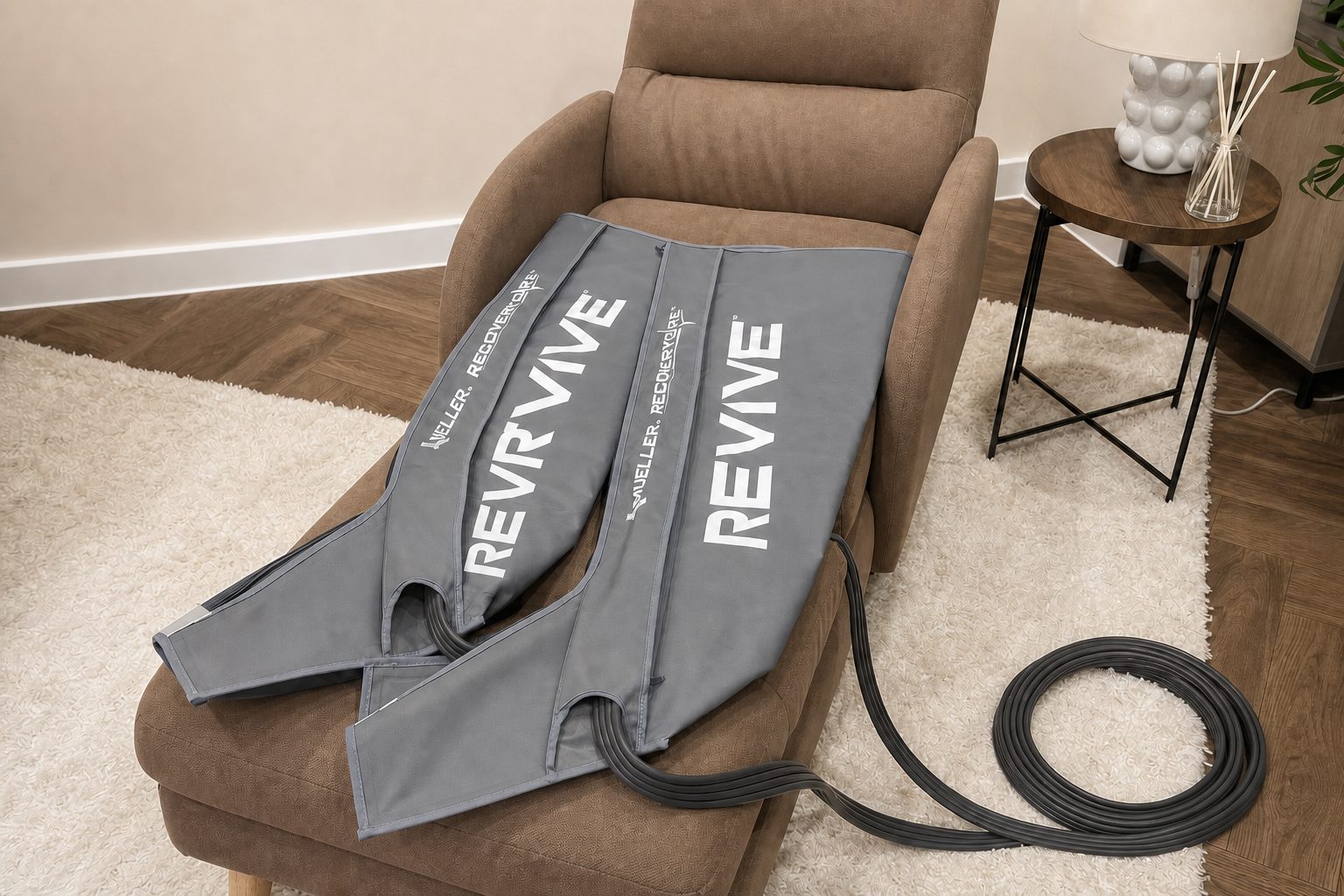
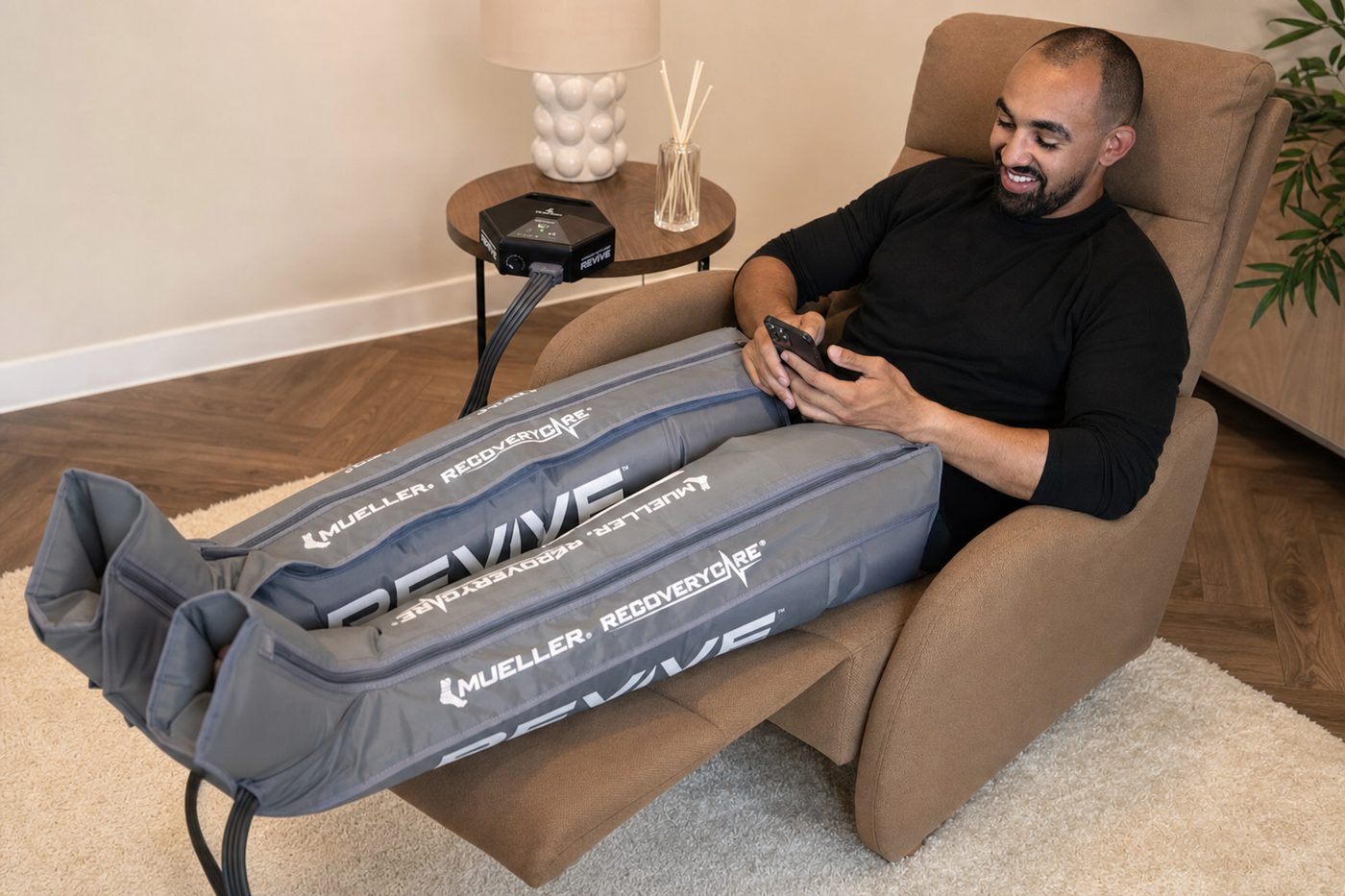
Recovery compression boots are sleeves that wrap the legs from foot to hip and connect to a control console. The console inflates a series of overlapping air chambers in a timed, repeating sequence, applying gentle, precise pressure to the legs and then releasing it. It's a modern, automated version of a technique hospitals have used for decades.
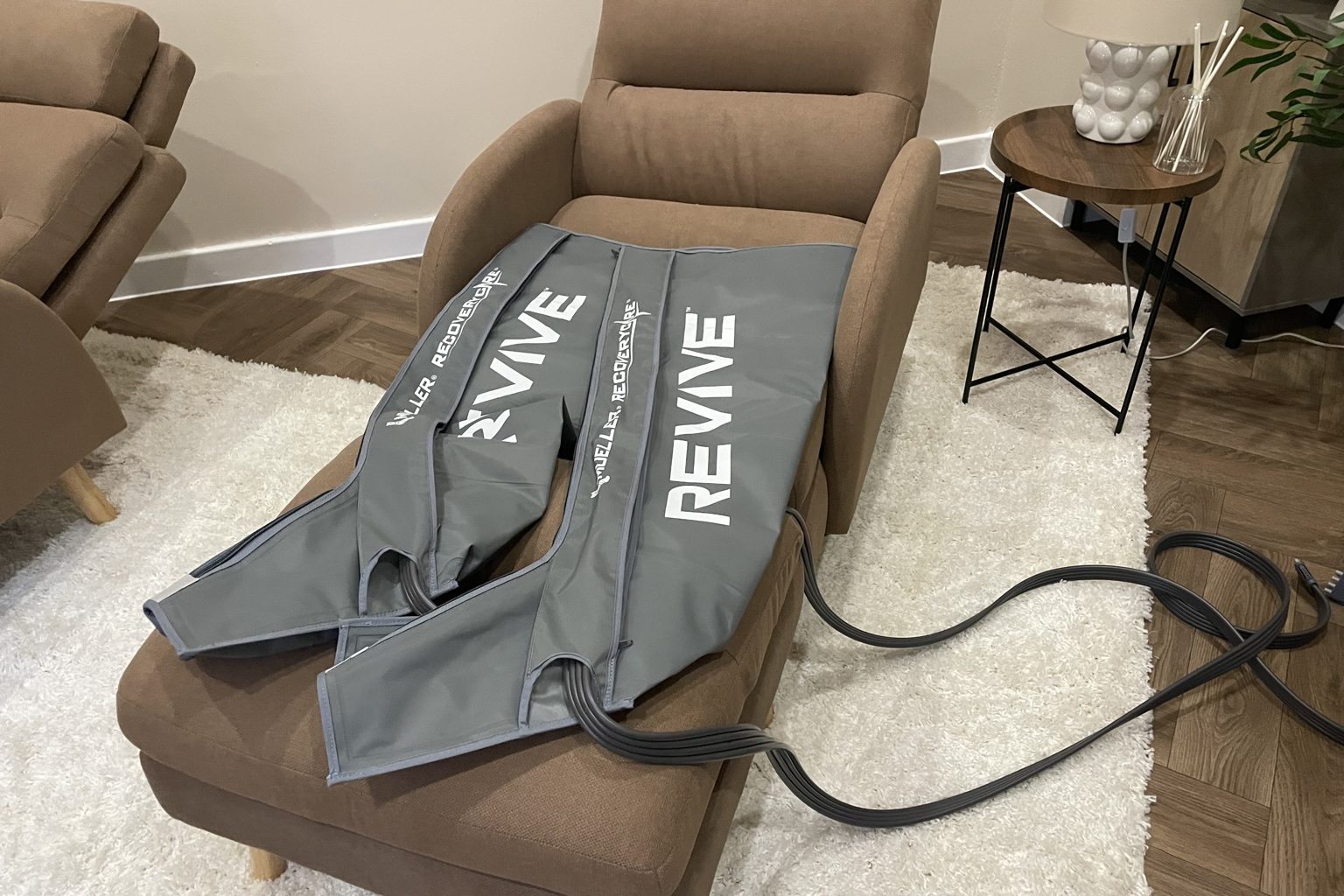
At Hanbury we use the Mueller RecoveryCare REVIVE M4 full-leg system, a clinical-grade unit with overlapping chambers and an adjustable console that lets us dial the therapeutic pressure to each person rather than applying a one-size setting. The result is a controlled, comfortable squeeze-and-release that works its way up the leg.
Compression therapy is used here as a recovery and wellbeing tool. Nothing in this article has been evaluated by the MHRA or FDA, and it is not intended to diagnose, treat, cure or prevent any disease. We use it inside a clinically informed, supervised setting.
Who it's for
Compression boots suit a broader range of people than almost anything else in the suite, because heavy legs aren't only an athlete's problem. They're used by:
- Athletes and serious trainers, to recover between hard sessions and clear the legs after long runs, rides or leg days.
- Professionals who sit all day or stand all day, the desk-bound and the on-their-feet alike, whose legs feel tired, heavy or swollen by evening.
- People in structured rehabilitation, where supporting circulation and reducing swelling is part of the plan.
- Anyone after long travel or a demanding week who simply wants their legs to feel light again.
You don't need to be training for anything. If your legs feel heavy, this is the most comfortable way to change that.
How they work
The mechanism is circulation, not magic. Your leg veins and lymphatic vessels rely on movement and muscle contraction to push blood and fluid back up toward the heart. When you've trained hard, travelled, or been still for hours, that return slows and fluid and metabolic by-products pool in the lower legs, the source of that heavy, swollen feeling.
Sequential pneumatic compression does mechanically what walking does naturally, only more thoroughly. The chambers inflate from the foot upward in a wave, milking blood and lymph in the direction they're meant to travel, then release to let the vessels refill. Over a session this:
- Supports venous return, helping move pooled blood back up the leg.
- Assists lymphatic drainage, clearing the fluid responsible for swelling and heaviness.
- Helps flush metabolic by-products that accumulate after exertion, faster than passive rest.
It is, in effect, a guided pump for your legs, which is exactly why the same principle is used in medicine.
How compression boots support circulation
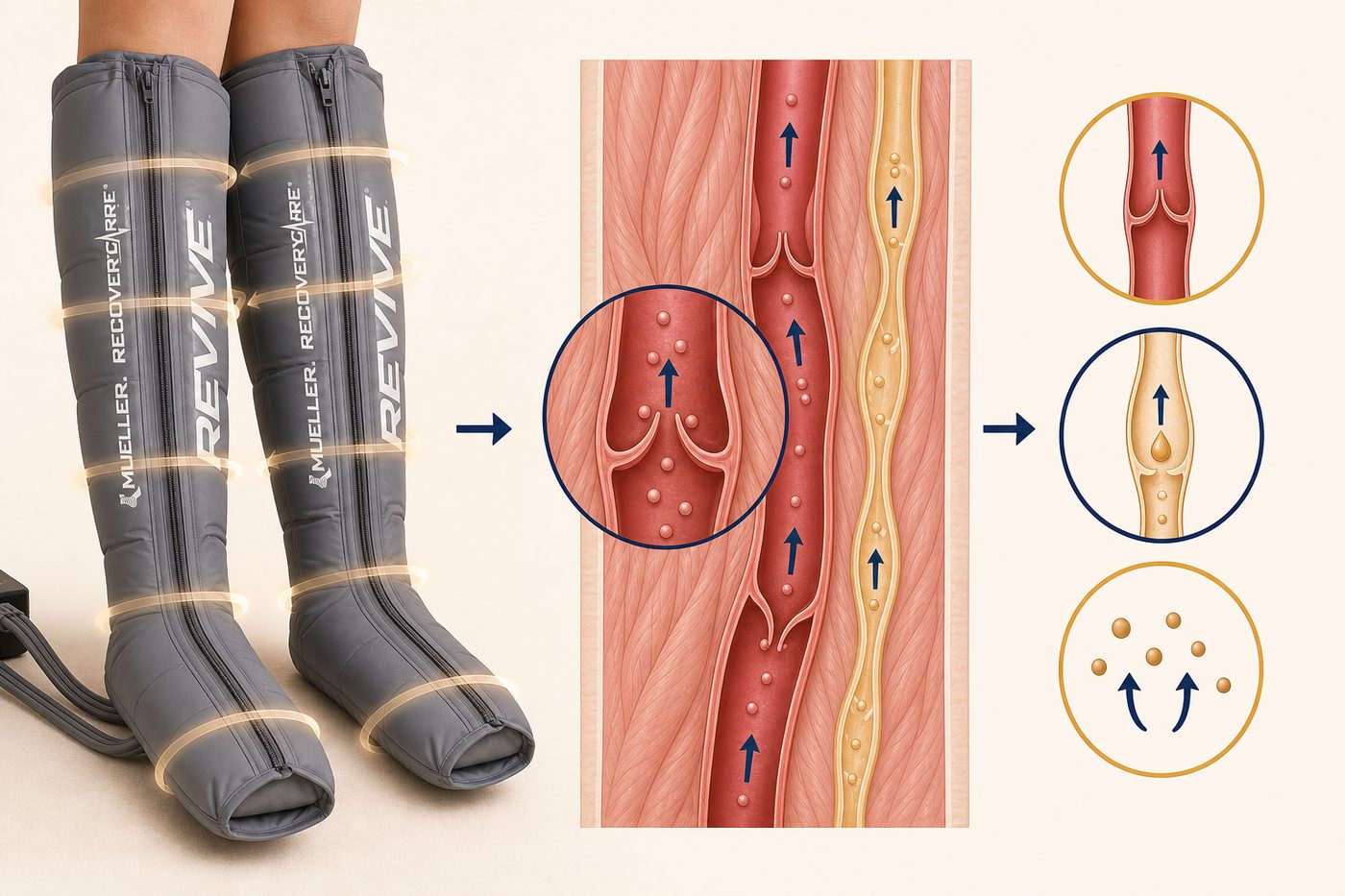
Chambers inflate from foot to hip in a wave
Milks pooled blood and lymph back toward the heart
- Supports venous return
- Assists lymphatic drainage
- Flushes metabolic by-products, faster than rest
What the evidence shows
Here's the honest picture. The circulatory and lymphatic effects of pneumatic compression are well established, it genuinely moves blood and fluid, which is why versions of it are standard in hospitals. For post-exercise recovery specifically, a 2024 systematic review and meta-analysis found that compression boots offer real but modest benefits over passive rest: small improvements in recovery, and favourable effects on muscle soreness, swelling and stiffness, with typical protocols around 20 to 30 minutes.
In other words: reliable for circulation and the feeling of lighter legs, helpful for recovery, and not a performance miracle. That's the same standard we apply across the suite, a clear mechanism, honest expectations, and no overclaiming. What most people notice first isn't a number on a test. It's that their legs feel lighter, looser and less tired when they stand up.
Compression for recovery
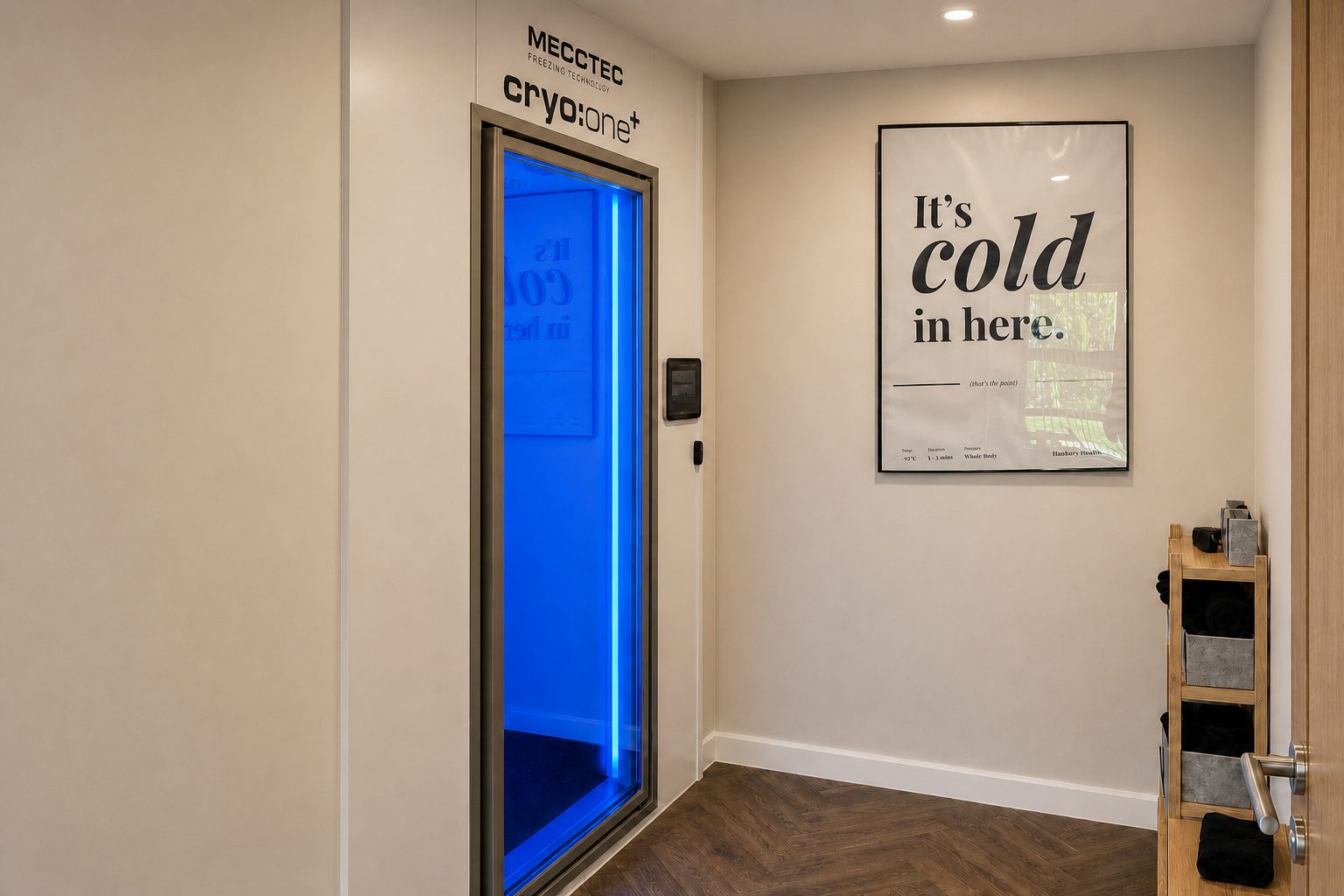
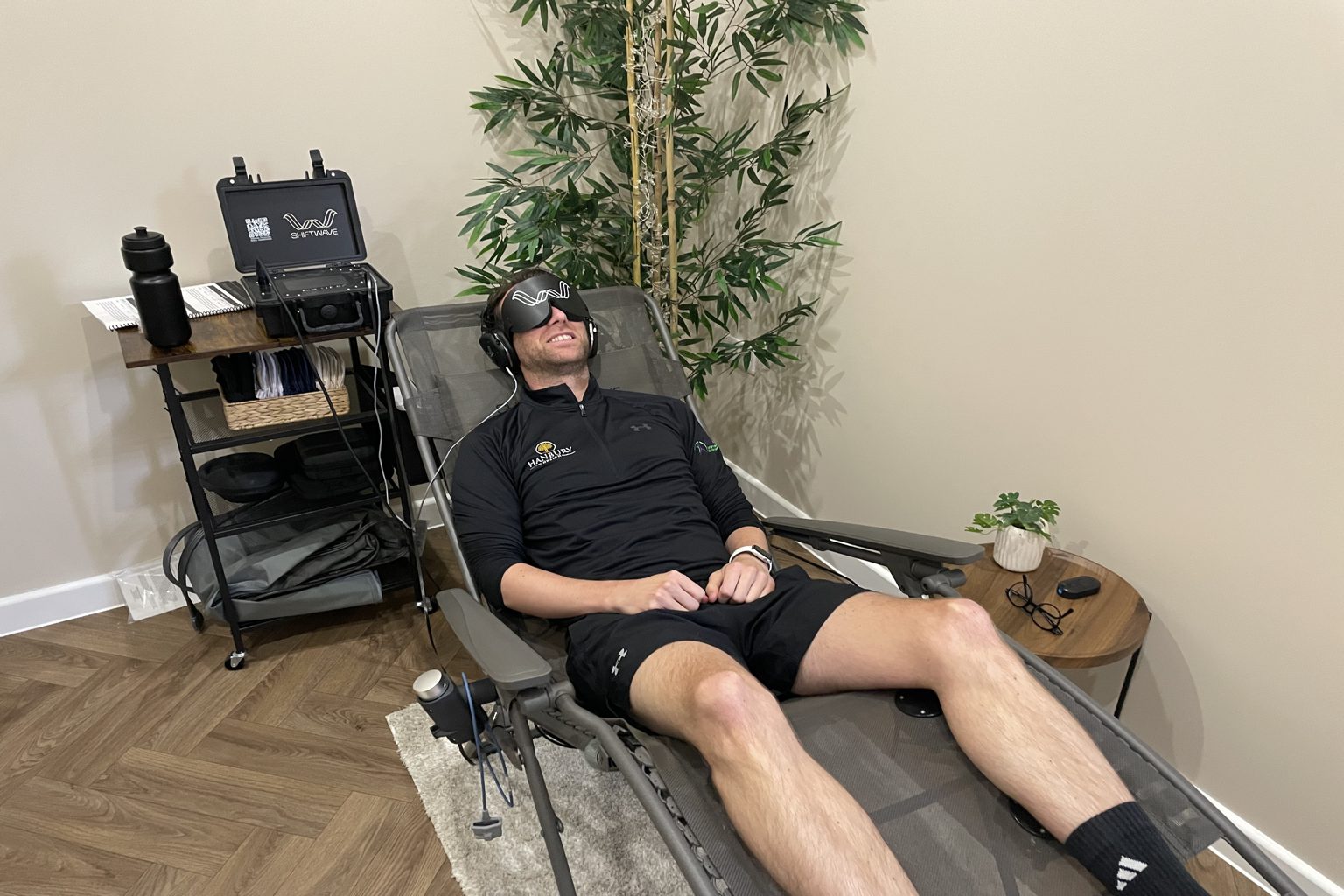
Training creates stress, and adaptation happens during recovery. Compression is the circulation-focused step of that recovery. In our guided circuit it runs second, by design: cryotherapy first to trigger the anti-inflammatory response, then compression to actively move blood and fluid while the body is primed, then Shiftwave to settle the nervous system. The order matters, each step sets up the next. You can see how the full circuit fits together within the Recover pillar on our recovery page.
Compression for heavy legs and everyday life
The surprise, for a lot of people, is how useful compression is outside of sport. A day of back-to-back meetings, a long-haul flight, a shift on your feet, or a week where exercise slipped and sitting took over, all of it leaves the legs heavy and the circulation sluggish. Twenty minutes in the boots is one of the few genuinely relaxing ways to reverse that: you don't have to do anything, and you get up feeling lighter. For busy professionals who never quite find time for recovery, it's the easiest possible entry point, recovery you can do lying down.
Where this fits into longevity and healthspan
Circulation is one of the quiet fundamentals of ageing well. Healthy venous and lymphatic return, good vascular function and mobile, un-swollen legs underpin how well you move and how you feel as the years add up, and prolonged sitting, which most modern professional life demands, works against all three. Compression therapy is a low-effort way to counter that, supporting the circulatory systems that sedentary days undermine.
We use compression alongside our HealthSpan Medicine and Performance Testing, so the recovery you do is informed by the same picture of you the rest of your plan works from. Recovery here is one lever in a longer healthspan strategy.
What a session is like here
A session is genuinely restful. You settle into a recliner, we fit the full-leg boots and set the pressure to a level that feels right for you, and the system runs its sequence for around twenty to thirty minutes. There's nothing to do but relax, most people read, close their eyes, or simply enjoy the feeling. In the recovery circuit, compression is paired with cryotherapy and Shiftwave; on its own, it's the easiest recovery session you'll ever have.
Who it's not for: safety and contraindications
Compression is very well tolerated, but the leg is not the place to guess. Speak to us or your own medical provider before using compression boots if any of the following apply: a known or suspected deep vein thrombosis (DVT) or blood clot; severe peripheral arterial disease; heart failure or significant leg swelling from a heart, kidney or liver condition; a skin infection, open wound, ulcer or cellulitis on the legs; recent leg fracture or surgery; severe peripheral neuropathy; or pregnancy. We screen everyone before a first session, if you're unsure, ask, and we'll check.
Why we chose clinical-grade compression
Of everything in our recovery suite, compression has the longest medical pedigree, and that's exactly why we take it seriously rather than treating it as a gadget. Intermittent pneumatic compression has been used in hospitals for years to keep blood moving in the legs and to manage swelling, which is why, as a surgeon, it's the recovery tool I'm most instinctively comfortable with. The physiology is not in question; the only variables that matter are the quality of the device and how it's set up. So we chose a clinical-grade full-leg system and we tailor the pressure to the person, rather than buying a consumer wrap and running everyone on the same setting. Done properly, it's simple, safe and genuinely effective.
How to try compression therapy in Milton Keynes
The simplest way to start is the guided recovery circuit, cryotherapy, then compression, then Shiftwave, in one prescribed session. Your first visit is £75, one time only. Compression is also available on its own, and full pricing and membership options are on our recovery page.
Frequently asked questions
What do compression boots do?
Compression boots use sequential pneumatic compression, air chambers that inflate in a wave from foot to hip, to support circulation and lymphatic drainage, helping flush tired, heavy or swollen legs and aid recovery after exercise or long days.
Do compression boots actually work?
For moving blood and lymph and relieving the heavy-leg feeling, yes, the circulatory effect is well established. For athletic performance recovery, the benefit over simple rest is real but modest. Most people notice their legs feel lighter and less tired straight away.
How long is a compression session?
Around twenty to thirty minutes, which is the range most used for recovery. You simply recline and relax while the boots run.
Are compression boots safe? Who should avoid them?
They're very well tolerated but not for everyone. Anyone with a known or suspected blood clot (DVT), severe arterial disease, heart failure, a leg skin infection or open wound, recent leg surgery or fracture, or who is pregnant should consult a medical provider first. We screen everyone before a first session.
Can compression boots help with swollen or heavy legs from sitting or standing all day?
Yes, this is one of the most common reasons people use them. By supporting venous and lymphatic return, a session helps clear the fluid that pools in the legs after long periods sitting, standing or travelling, so your legs feel lighter afterwards.
What compression system do you use?
The clinical-grade Mueller RecoveryCare REVIVE M4 full-leg system, with overlapping chambers and adjustable pressure tailored to each person.
How much does compression therapy cost in Milton Keynes?
Your first guided recovery circuit, cryotherapy, compression and Shiftwave, is £75, one time only. Compression is also available on its own; current pricing is on our recovery page.
Where can I try compression boots in Milton Keynes?
Compression therapy is available at Hanbury Health in Milton Keynes, as part of the guided recovery circuit or on its own. You can book through our website.
Book a recovery circuit in Milton Keynes
To try compression therapy, book it as part of our guided recovery circuit at Hanbury Health in Milton Keynes, cryotherapy, compression and Shiftwave, prescribed for you, from £75 on your first visit.
Medical disclaimer: Compression therapy is used as a general wellbeing and recovery tool. It is not intended to diagnose, treat, cure or prevent any disease, and the statements above have not been evaluated by the MHRA or FDA. This article is for general information and is not medical advice. Always consult a qualified healthcare professional about your individual circumstances, particularly regarding circulatory conditions.
Written and medically reviewed by Prof Arul Ramasamy MA PhD MBA FRCS(Tr+Orth), Consultant Orthopaedic Surgeon and Medical Director, Hanbury Health, Milton Keynes.