
Move · Physiotherapy
Knee pain physiotherapy in Milton Keynes
Most knee pain, from anterior knee pain to a twisted ligament or a meniscus tear, is assessed and treated without surgery. Where a knee specialist's opinion is genuinely the better next step, we refer you on to the right person, promptly and with a clear explanation of why.
Not sure what you need? Call 01908 330 243
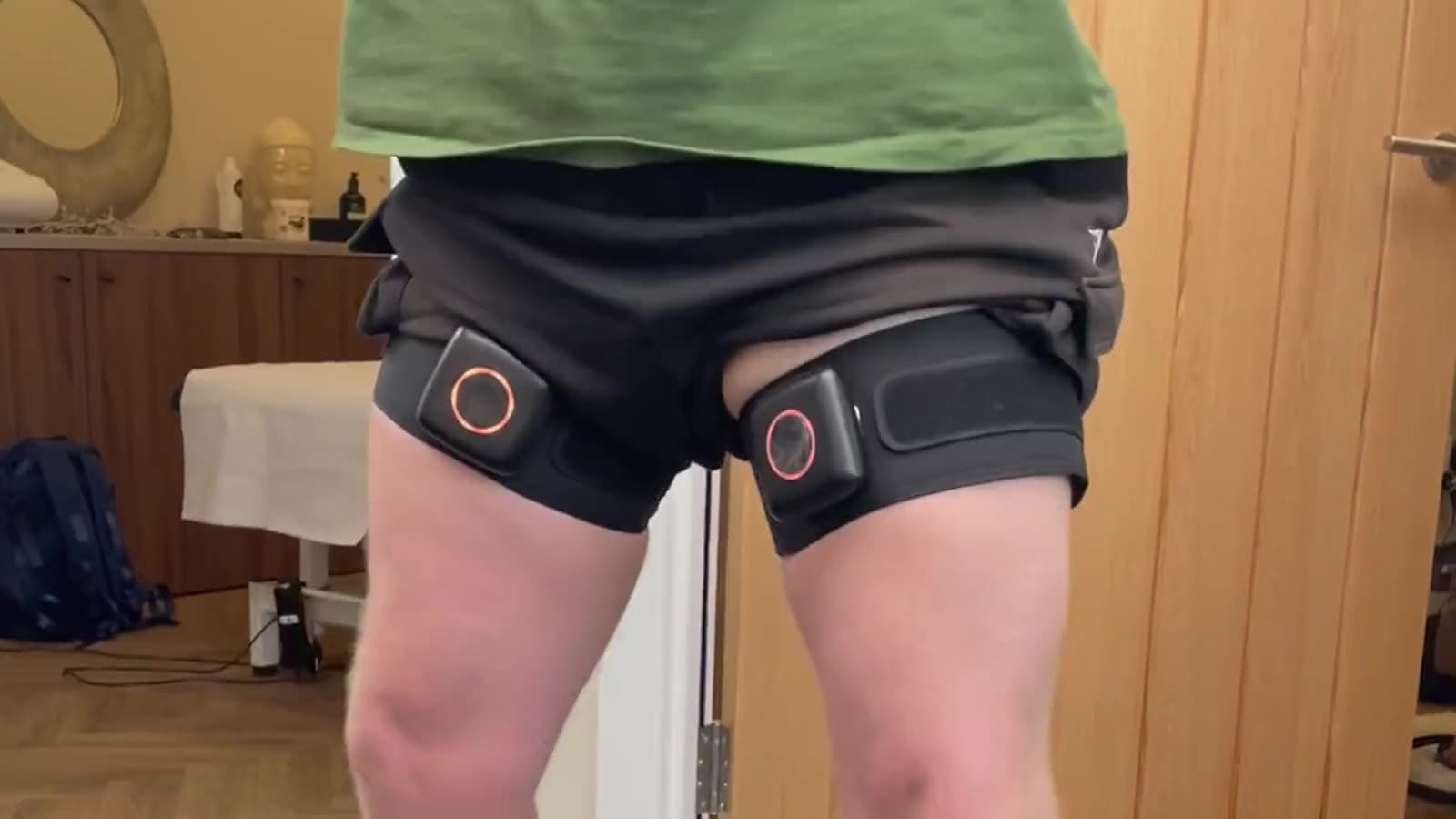
What this usually is
Knee pain covers a wide range of problems, and getting the pattern right matters, because the right approach for one is not the right approach for another.
Runner's knee (patellofemoral pain) is pain at the front of the knee, usually worse going up or down stairs, squatting, or after sitting for a long time with the knee bent. It is the most common knee problem we see in active adults and does not usually follow a specific injury. Our Insights explainer on runner's knee and patellofemoral pain goes into more detail.
Ligament injuries, most often to the ACL, usually follow a twisting injury during sport, often with a pop, rapid swelling, and a feeling the knee is unstable.
Meniscus tears come in two different pictures that matter clinically. A traumatic tear, from a twisting injury, can cause the knee to catch, lock, or feel like it will not straighten. A degenerative tear develops gradually, often without any clear injury, most commonly from your late thirties onwards, and behaves quite differently — see the "How we treat it here" section for why that distinction changes the treatment.
Cartilage damage and patellar instability (the kneecap dislocating or feeling like it might) are less common but are assessed with the same principle: a proper examination first, imaging only where it would change the plan.
Knee pain from arthritis is covered on our arthritis page rather than duplicated here, since the assessment and management approach is different.
When it is worth getting checked
Seek urgent medical attention the same day, at A&E or an urgent care service, if you have
- Significant swelling within hours of a twisting or impact injury, combined with an inability to weight-bear, or a visible deformity
- A knee that is locked and will not straighten, particularly after a twisting injury — possible bucket-handle meniscus tear
- Signs of infection in the joint: a hot, red, significantly swollen knee, especially with fever — possible septic arthritis, a genuine emergency
- Calf pain, swelling, redness or warmth, particularly after a period of immobilisation or knee surgery — possible deep vein thrombosis
Speak to your GP before booking physiotherapy if you have
- A significant effusion (swelling within the joint) that has come on without a clear cause and is not settling
- Pain that is constant, unrelated to movement, or comes with unexplained weight loss, fever or night sweats
- Frequent locking, catching or giving way, even without significant pain
For everything else, physiotherapy is a sensible starting point. You do not need a GP referral or a scan to be seen. This page is general information and does not replace an individual assessment — if anything above applies to you, please contact your GP or A&E rather than relying on this page alone.
What your first appointment involves — and what it costs
Sixty minutes: a full history, an examination, an objective baseline where relevant, an explanation you can repeat to someone else, hands-on treatment where appropriate, a plan, a review point, and onward referral if that is the better next step.
Pricing
Clear, simple fees.
The same rate applies to adults and children/adolescents.
Initial assessment
£110
60 minutes, including history, examination, diagnosis, and your first plan.
Follow-up appointment
£70
Ongoing treatment, progress checks, and plan adjustments.
Using private medical insurance? See the FAQ below.
How we treat it here
Assessment first — a full history, an examination of the knee and how it moves and loads, and a series of hands-on tests for the ligaments and the menisci where the picture calls for them, to work out exactly what is going on before deciding what to do about it.
For runner's knee, the strongest evidence supports strengthening both the hip and the knee together, not the knee alone. A systematic review and meta-analysis of six randomised trials found that combined hip-and-knee strengthening improved pain and function significantly more than knee strengthening on its own (Halabi et al., Musculoskeletal Care, 2025. DOI 10.1002/msc.70059 — pain SMD -1.29, function SMD 0.99). We also use movement and gait analysis to see what is actually driving the load through the joint, since two people with the same pain often need different fixes.
For meniscus tears, the distinction above matters directly. For degenerative tears in people without significant arthritis on imaging, strong trial evidence shows that supervised exercise therapy produces outcomes no worse than surgery at two years, with better early muscle strength (Kise et al., BMJ, 2016. DOI 10.1136/bmj.i3740), and a separate sham-surgery-controlled trial found no benefit from arthroscopic partial meniscectomy over a placebo procedure for the same population (Sihvonen et al., New England Journal of Medicine, 2013. DOI 10.1056/NEJMoa1305189). That is why our starting point for a degenerative tear is a structured exercise programme, not a referral for surgery. A genuinely locked knee, or a tear in a younger person after significant trauma, is a different picture and is assessed and referred on its own merits.
For ACL injuries, the picture has shifted. Reconstructive surgery is the right choice for some people, particularly those returning to pivoting sport at a high level, but a living systematic review of randomised trials found that primary rehabilitation with the option of later surgery produced broadly similar outcomes to early reconstruction, though the certainty of that evidence is low to very low given how few trials exist (Saueressig et al., British Journal of Sports Medicine, 2022. DOI 10.1136/bjsports-2021-105359 — low to very low certainty of evidence, 3 trials, 320 participants). We start with a structured rehabilitation programme and objective strength and symmetry testing, and where reconstruction genuinely is the better path — which it often still is, especially for younger athletes returning to cutting and pivoting sport — we refer you on promptly to the right knee specialist to discuss it, rather than assuming either surgery or rehab by default. Our fuller explainer on ACL reconstruction rehabilitation covers what that programme involves.
Throughout, the on-site rehabilitation gym means strengthening is progressed under supervision, and objective strength and symmetry testing gives you and us a real measure of readiness, particularly before returning to sport, rather than a decision made on how the knee feels on the day.
If the picture is unclear, if a significant ligament or cartilage injury is suspected, or if recovery is not progressing as expected, we refer you on promptly to the right knee specialist — rather than leaving you to find that route yourself.
What the plan usually looks like
This varies a lot by presentation — runner's knee looks very different from ACL rehabilitation — but the shape is the same: an assessment, an initial plan, a defined review point, and progression or onward referral from there. Where surgery has happened or is being considered, we work alongside your surgeon's protocol or their advice, rather than in place of it.
How many appointments this takes depends on the person and the problem, and you will get an honest view at the first appointment rather than a number chosen in advance. We do not keep people in treatment that is not helping them.
What to expect
From first assessment to progress check.
A straightforward three-step process. Each stage is designed to give you clarity, momentum, and confidence that you are heading in the right direction.
- 01
First assessment
We take a full history, assess how you move, and identify the underlying cause. You leave with a clear picture of what is happening and why.
- 02
Your treatment plan
A structured plan built around hands-on treatment, targeted exercise, and the right technology, paced to your body, your schedule, and your goals.
- 03
Progress check
We re-test, refine, and keep you moving forward. Regular check-ins make sure the plan is working and adjust before small issues become setbacks.
“Thank you Ryan for all of your expertise, I don't think that I would have recovered this quickly without your guidance and knowledge.”
“First time with Louise, who I saw with a shoulder injury. She made me feel at ease and went into a lot of detail and certainly put across she knew what she was talking about. She spent the time listening to me without me feeling like I was being rushed. Excellent result and no hesitation in recommending her.”
“Nick helped me get back to full fitness after a painful Achilles injury. Nick explained the recovery process and managed my expectations of what was involved. Steady and very effective rehabilitation - thank you!”
Questions
Knee pain FAQs
Runner's knee is pain at the front of the knee that builds up gradually, usually without an injury, and is worse with stairs, squatting or sitting. A meniscus tear more often follows a twisting injury (though it can develop gradually too) and can cause catching, locking, or a feeling the knee will not straighten. The assessment tells them apart.
Further reading: our physiotherapy hub, our Insights explainer on runner's knee and patellofemoral pain, and the NHS guide to knee pain.
If your knee is not settling, a proper assessment is the place to start.
Or call 01908 330 243