
Move · Physiotherapy
Arthritis physiotherapy in Milton Keynes
"Wear and tear" is the phrase most people hear alongside an arthritis diagnosis, and it is also the reason so many people quietly stop moving the joint that needs movement the most. Every major guideline on osteoarthritis, including NICE's, puts exercise at the centre of treatment for exactly this reason — not because it is cheap or convenient, but because the trial evidence for it is stronger than for almost anything else on offer, glucosamine and rest included.
Not sure what you need? Call 01908 330 243
What this usually is
Osteoarthritis is the gradual, joint-specific wearing of cartilage and change in the surrounding bone and soft tissue, most common from the 40s onwards, though it can develop earlier, particularly after a significant joint injury. It most often affects the knee, hip, hand and foot, and is a leading cause of pain and reduced mobility, but the pattern, pace and impact vary enormously between people and between joints — which is exactly why exercise and load management, tailored to the specific joint, works better than a generic approach.
Knee and hip osteoarthritis are the two most researched and most commonly seen presentations, causing pain, stiffness (particularly after rest or first thing in the morning) and gradually reduced range of movement.
Foot and ankle osteoarthritis is less commonly discussed but genuinely disabling when it affects weight-bearing joints, and — because this is our subspecialty — is an area we assess and manage with particular attention to the specific joint involved (the ankle joint itself, or one of the smaller mid-foot joints, behave quite differently and respond to different loading strategies).
Hand and shoulder osteoarthritis are less common than knee or hip, and shoulder osteoarthritis in particular is frequently secondary to a previous injury, rotator cuff problem, or, occasionally, previous surgery rather than a purely age-related change.
Facet joint arthritis in the spine is a related but distinct picture, covered on our back pain page rather than duplicated here.
When it is worth getting checked
Seek urgent medical attention the same day, at A&E or an urgent care service, if you have
- A hot, red, significantly swollen joint, especially with fever — possible septic arthritis, a genuine emergency, and not the same as an arthritis flare
- Sudden inability to weight-bear or use a joint after even minor trauma, particularly if you have known osteoporosis — possible fracture
Speak to your GP before booking physiotherapy if you have
- Pain, stiffness and swelling in several joints at once, particularly with morning stiffness lasting more than an hour, or a symmetrical pattern (both hands, both wrists) — possible inflammatory arthritis (such as rheumatoid arthritis), which needs a different diagnostic pathway and is not the same condition as osteoarthritis
- Constant pain unrelated to movement, or pain with unexplained weight loss, fever or night sweats
- A joint that has become suddenly and significantly more painful or swollen than your usual pattern
For everything else, physiotherapy is a sensible starting point — and current guidance recommends it as a first-line treatment, not something to try after other options have failed. You do not need a GP referral or a scan to be seen. This page is general information and does not replace an individual assessment — if anything above applies to you, please contact your GP or A&E rather than relying on this page alone.
What your first appointment involves — and what it costs
Sixty minutes: a full history, an examination, an objective baseline where relevant, an explanation you can repeat to someone else, hands-on treatment where appropriate, a plan, a review point, and onward referral if that is the better next step.
Read more on what to expect at your first physiotherapy appointment in Milton Keynes.
Pricing
Clear, simple fees.
The same rate applies to adults and children/adolescents.
Initial assessment
£110
60 minutes, including history, examination, diagnosis, and your first plan.
Follow-up appointment
£70
Ongoing treatment, progress checks, and plan adjustments.
Using private medical insurance? See the FAQ below.
How we treat it here
Assessment first — which joint, how it is behaving, what it currently stops you doing, and what else might be contributing (weight, general strength, a completely different problem such as gluteal tendinopathy, which is commonly mistaken for hip arthritis and needs a different treatment altogether).
The evidence base for exercise as a core, first-line treatment for osteoarthritis is genuinely strong, not just a well-meaning default. According to NICE guideline NG226, therapeutic exercise should be offered to every adult with osteoarthritis, regardless of age, pain severity or other health conditions, alongside weight management advice where relevant — and the same guideline specifically advises against offering glucosamine or chondroitin, for which the trial evidence does not support a meaningful benefit (NICE NG226).
For knee osteoarthritis, a Cochrane systematic review of 54 trials found that land-based therapeutic exercise produced a moderate, meaningful reduction in pain and improvement in physical function immediately after treatment, sustained for at least two to six months after formal treatment stopped. According to PubMed (Fransen et al., British Journal of Sports Medicine, 2015, DOI: 10.1136/bjsports-2015-095424).
For hip osteoarthritis, a separate Cochrane review of 10 trials found a similar pattern — high-quality evidence that land-based exercise reduces pain (SMD -0.38) and improves physical function (SMD -0.38), with the improvement sustained three to six months after treatment ended. According to PubMed (Fransen et al., Cochrane Database of Systematic Reviews, 2014, DOI: 10.1002/14651858.CD007912.pub2).
For foot and ankle osteoarthritis, treatment is more individualised to the specific joint affected, and this is where the direct surgical perspective genuinely adds something: knowing what a joint looks like structurally changes how confidently we can push a loading programme, and when it is time to discuss a surgical opinion rather than continuing to adjust the exercise plan. Where imaging or a surgical view is genuinely needed, we arrange it directly rather than sending you to find that route yourself.
For hip and knee arthritis that has progressed to the point joint replacement is being considered, we support that decision with an honest, evidence-based view rather than either pushing surgery or discouraging it — our post-surgical rehabilitation page covers what comes after, including the modern enhanced-recovery approach to joint replacement rehab.
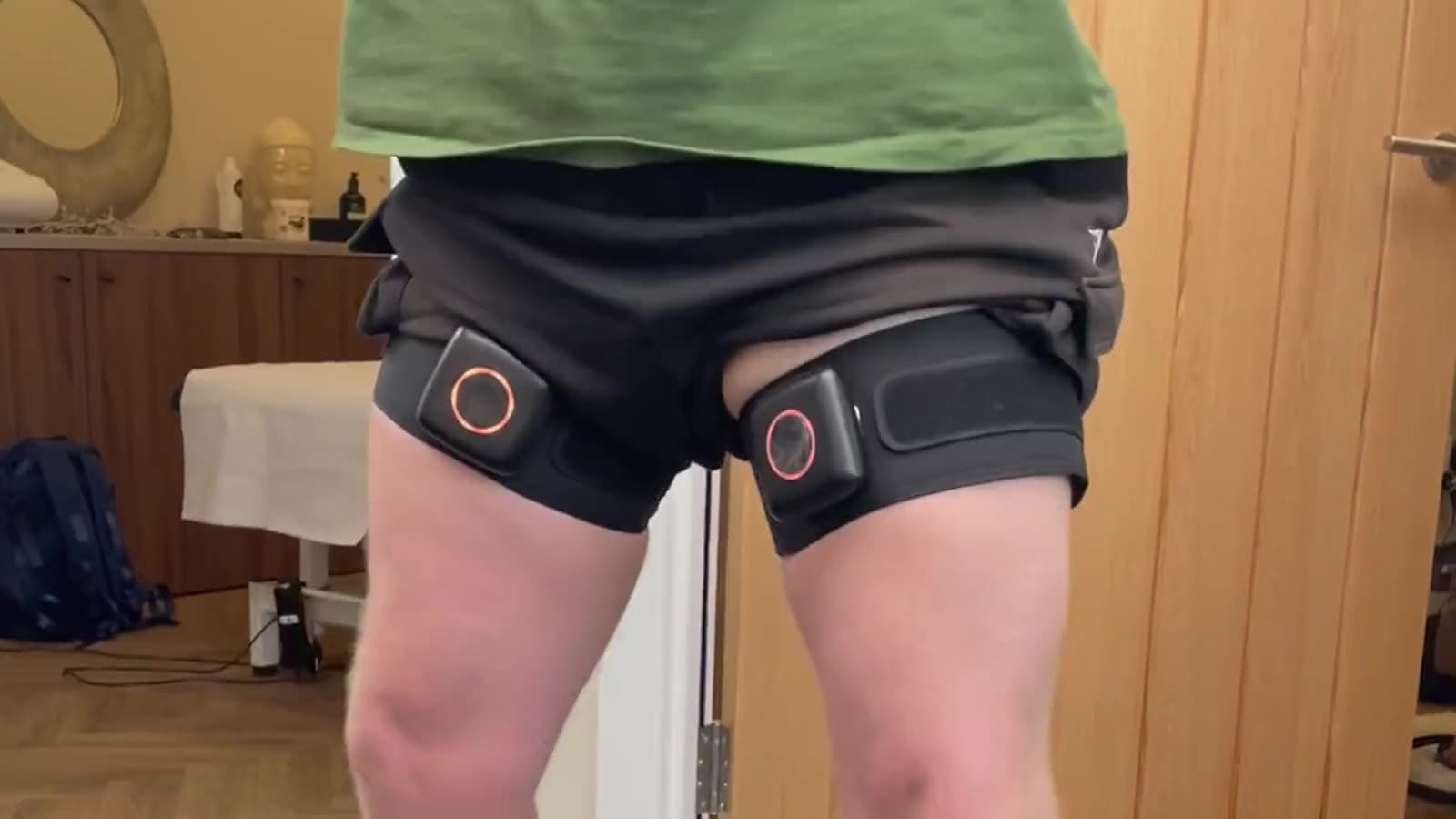
Throughout, the on-site rehabilitation gym means strengthening is progressed and supervised properly, and movement and gait analysis helps identify whether something correctable — how you are loading the joint day to day — is making symptoms worse than the joint itself would otherwise cause.
What the plan usually looks like
Osteoarthritis is a long-term, joint-specific condition, so the plan is built for the medium and long term rather than a short course of treatment: an initial assessment, a structured, progressive exercise programme built around your specific joint and goals, weight management advice where relevant, a defined review point, and — where appropriate — a conversation about surgical options at the right time, not too early and not too late.
How many appointments this takes depends on the person and the joint, and you will get an honest view at the first appointment rather than a number chosen in advance. Many people with osteoarthritis benefit from an occasional check-in over the longer term, rather than a single block of treatment.
What to expect
From first assessment to progress check.
A straightforward three-step process. Each stage is designed to give you clarity, momentum, and confidence that you are heading in the right direction.
- 01
First assessment
We take a full history, assess how you move, and identify the underlying cause. You leave with a clear picture of what is happening and why.
- 02
Your treatment plan
A structured plan built around hands-on treatment, targeted exercise, and the right technology, paced to your body, your schedule, and your goals.
- 03
Progress check
We re-test, refine, and keep you moving forward. Regular check-ins make sure the plan is working and adjust before small issues become setbacks.
“Thank you Ryan for all of your expertise, I don't think that I would have recovered this quickly without your guidance and knowledge.”
“First time with Louise, who I saw with a shoulder injury. She made me feel at ease and went into a lot of detail and certainly put across she knew what she was talking about. She spent the time listening to me without me feeling like I was being rushed. Excellent result and no hesitation in recommending her.”
“Nick helped me get back to full fitness after a painful Achilles injury. Nick explained the recovery process and managed my expectations of what was involved. Steady and very effective rehabilitation - thank you!”
Questions
Arthritis FAQs
On the tendon side of the same joints, see our tendon pain page and our Insights explainer on hip pain and gluteal tendinopathy in Milton Keynes.
No — this is one of the most common and unhelpful myths about arthritis. Every major guideline, including NICE's, recommends exercise as a core, first-line treatment for osteoarthritis, not something to avoid because the joint is “worn.” Appropriate loading does not accelerate the condition, and inactivity tends to make pain, stiffness and function worse, not better.
Further reading: our physiotherapy hub, the NICE guideline on osteoarthritis (NG226), and the NHS guide to osteoarthritis.
Related conditions
Other problems we treat.
Knee pain
The joint most often affected, and where the exercise evidence for osteoarthritis is strongest.
Read moreAnkle & foot pain
Our subspecialty, where arthritic and non-arthritic foot and ankle problems often overlap.
Read morePost-surgical rehabilitation
What comes after, if an arthritic hip or knee reaches joint replacement.
Read more
If an arthritic joint is deciding what you can and cannot do, an assessment and a structured exercise plan is the place to start.
Or call 01908 330 243