
Physiotherapy
Rehab after ACL reconstruction in Milton Keynes: from surgery to return to sport

The short version
- ACL recovery is a staged journey of many months; the rehab is as important as the surgery.
- Early on: restore movement, reduce swelling, and reactivate the quadriceps.
- Middle: progressively rebuild strength, control and single-leg function.
- Return to sport should be criteria-based, guided by strength, symmetry and hop tests.
- Objective testing guides safe progression and reduces re-injury risk.
Recovery after ACL reconstruction is a months-long, staged journey in which the rehabilitation matters at least as much as the surgery, and getting it right, especially rebuilding strength and not rushing the return to sport, is what determines both how well you recover and how likely you are to injure the knee again. An ACL reconstruction rebuilds the torn ligament. The rehabilitation over the following months restores strength, control and confidence. Return to sport too early, or with the operated leg still weak, and the re-injury risk is high; do it properly, guided by objective milestones, and the outcomes are far better.
The early phase
In the first weeks after surgery, the priorities are settling swelling, regaining full range of movement (especially full straightening), and reawakening the quadriceps, which almost always shuts down after ACL surgery. This early quadriceps weakness is a major rate-limiter, and where the muscle is very reluctant, neuromuscular electrical stimulation can help it re-engage. This phase is not about strength yet; it is about laying the foundations of a moving, controlled knee with a firing thigh muscle, which everything later depends on.
Rebuilding strength and control
Through the middle months, rehabilitation shifts to progressively rebuilding strength, particularly of the quadriceps and the whole leg, and restoring single-leg control and confidence. This is the heart of ACL rehab and where the operated leg gradually catches up with the other. Progressive loading in the gym, single-leg work, and control and landing drills build the capacity the knee needs for sport. It is worth being patient here: the operated leg regains its confidence long before its strength, and closing that strength gap is what protects the graft.
Criteria-based return to sport
Returning to sport should be earned, not timed. The evidence is clear that going back too soon, and with the operated leg still weaker, raises the risk of re-injury, and that meeting a set of return-to-sport criteria substantially lowers it. That is why we base the return on objective measures, strength, left-right symmetry and hop tests, rather than on the calendar or how the knee feels. Research also supports not rushing: re-injury risk falls with each month up to around nine months, provided the criteria are met. We cover the testing side in detail in our guide on force plate testing for ACL return to sport.
Why Hanbury Health is different
ACL rehab is where objective testing and sport experience genuinely change outcomes, and both are central here. We rebuild strength properly in the rehab gym, use neuromuscular stimulation early where the quads are slow to fire, and, crucially, guide your return to sport with VALD force-plate testing that measures whether the operated leg has truly caught up, before clearing you to return. With a team experienced in returning athletes to competition and a surgeon-integrated pathway, your ACL recovery is measured, staged and coordinated from surgery to sport. See how our physiotherapy service in Milton Keynes is set up, or read our companion pieces on force plate testing for ACL return to sport and what is the Neubie.
Frequently asked questions
How long is recovery after ACL reconstruction?
It is a staged journey of many months. Return to pivoting sport is typically around nine to twelve months or more. The timing is guided by meeting objective criteria.
Why is my thigh so weak after ACL surgery?
The quadriceps commonly shuts down after ACL surgery. Reactivating it, sometimes with electrical stimulation, and then progressively strengthening it, is a central early priority.
When can I return to sport after an ACL reconstruction?
When you meet return-to-sport criteria: adequate strength, left-right symmetry and hop-test performance, at whatever point that happens. Rushing back raises re-injury risk.
Does the rehab really matter that much?
Yes. The quality and completeness of rehabilitation strongly influence both your recovery and your re-injury risk. It is at least as important as the surgery itself.
Where can I do ACL rehab in Milton Keynes?
Hanbury Health in Milton Keynes offers staged ACL rehabilitation with objective VALD force-plate testing and a surgeon-integrated pathway.
References
- Grindem H, Snyder-Mackler L, Moksnes H, Engebretsen L, Risberg MA. Simple decision rules can reduce reinjury risk by 84% after ACL reconstruction: the Delaware-Oslo ACL cohort study. British Journal of Sports Medicine, 2016;50(13):804-808.
- Effects of Neuromuscular Electrical Stimulation on Quadriceps Strength and Knee Function After ACL Surgery: A Systematic Review and Meta-analysis. 2025.
Ready to put this into practice?
Hanbury Health is the only place in Milton Keynes where physiotherapy is overseen by a foot-and-ankle surgeon, with on-site diagnostic ultrasound and a surgeon-led pathway if you ever need more than physiotherapy.
About the author: Nick Allen is a director of Hanbury Health and a Chartered Physiotherapist (BSc (Hons), HCPC-registered, MCSP), with extensive experience in professional and endurance sport, currently Lead Physiotherapist for Great Britain Badminton. Rehabilitation across the physiotherapy service is medically reviewed by Prof Arul Ramasamy, a consultant foot-and-ankle surgeon.
General information, not medical advice. Written by Nick Allen. Medically reviewed by Prof Arul Ramasamy MA PhD MBA FRCS(Tr+Orth). Last reviewed: 25 July 2026.
Related insights
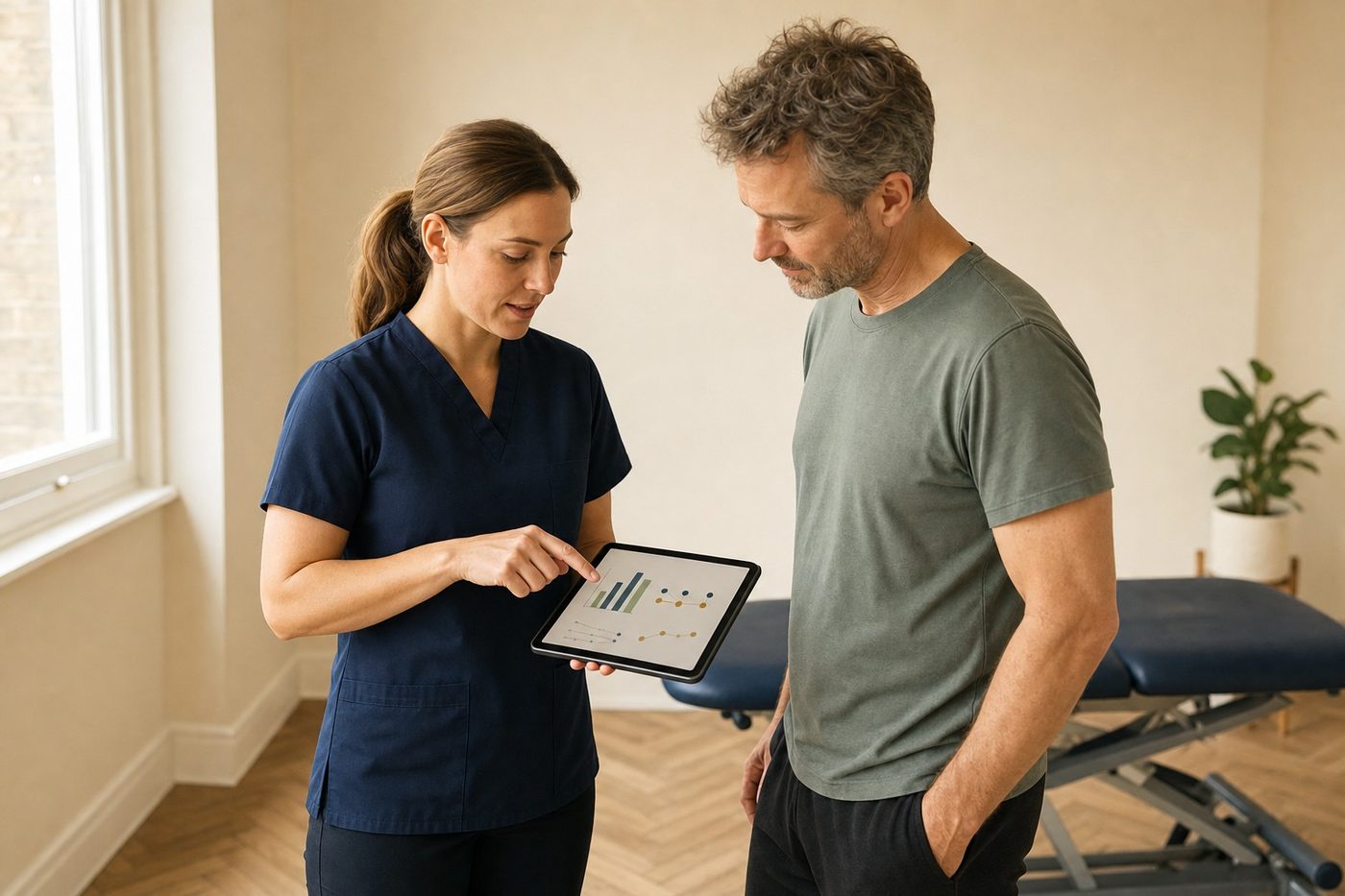
Physiotherapy
How do you know you're ready to return to sport after injury?
Why a calendar date is the wrong marker, what strength, movement and psychological testing actually shows, and how the gap between pain-free and match-fit gets closed.
Allen9 min readRead the article
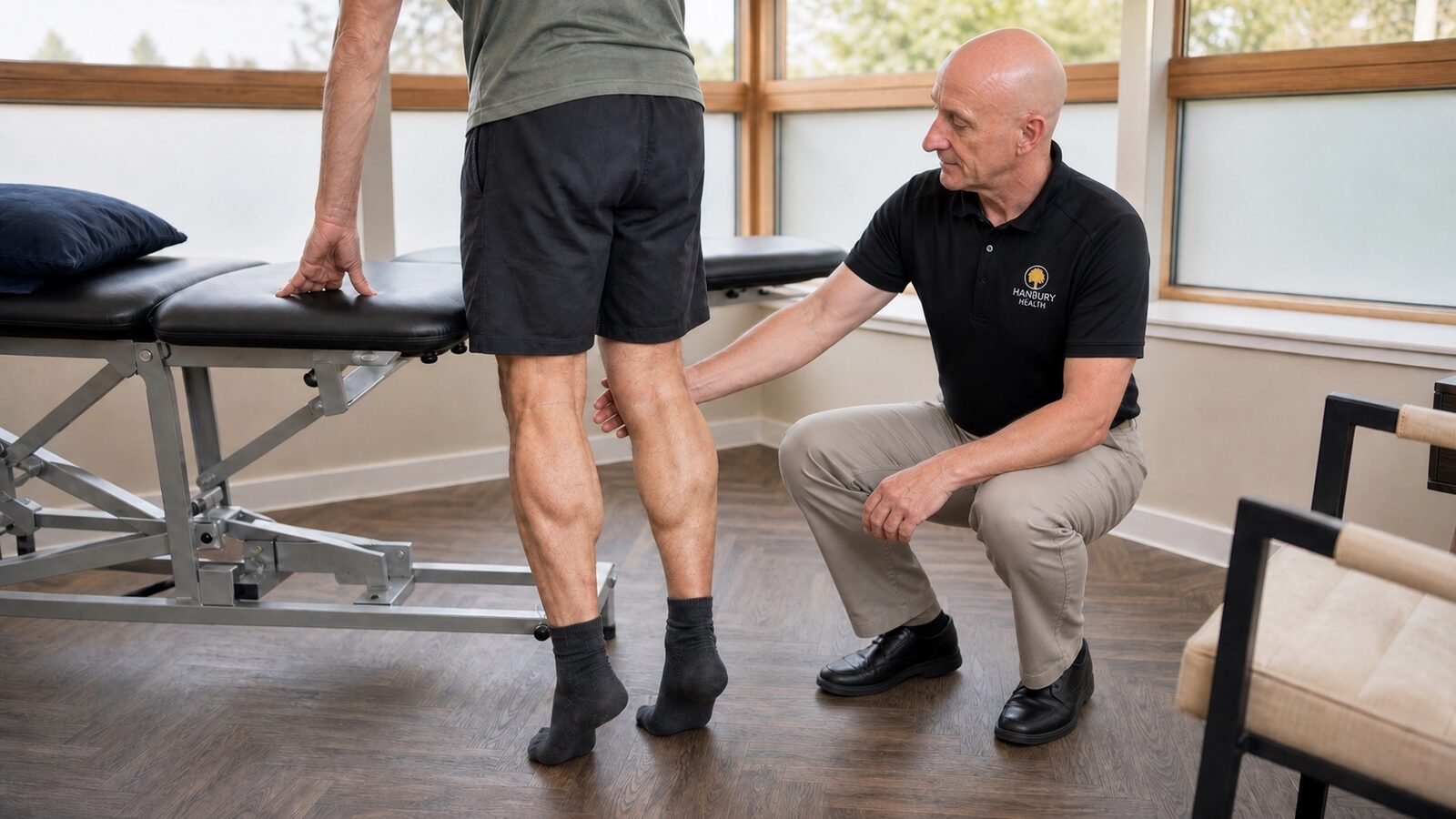
Physiotherapy
Achilles tendon rupture in Milton Keynes: recovery and rehabilitation
Recognising a rupture, the surgery-or-not decision, and the staged rehabilitation that largely determines the outcome.
Jones9 min readRead the article
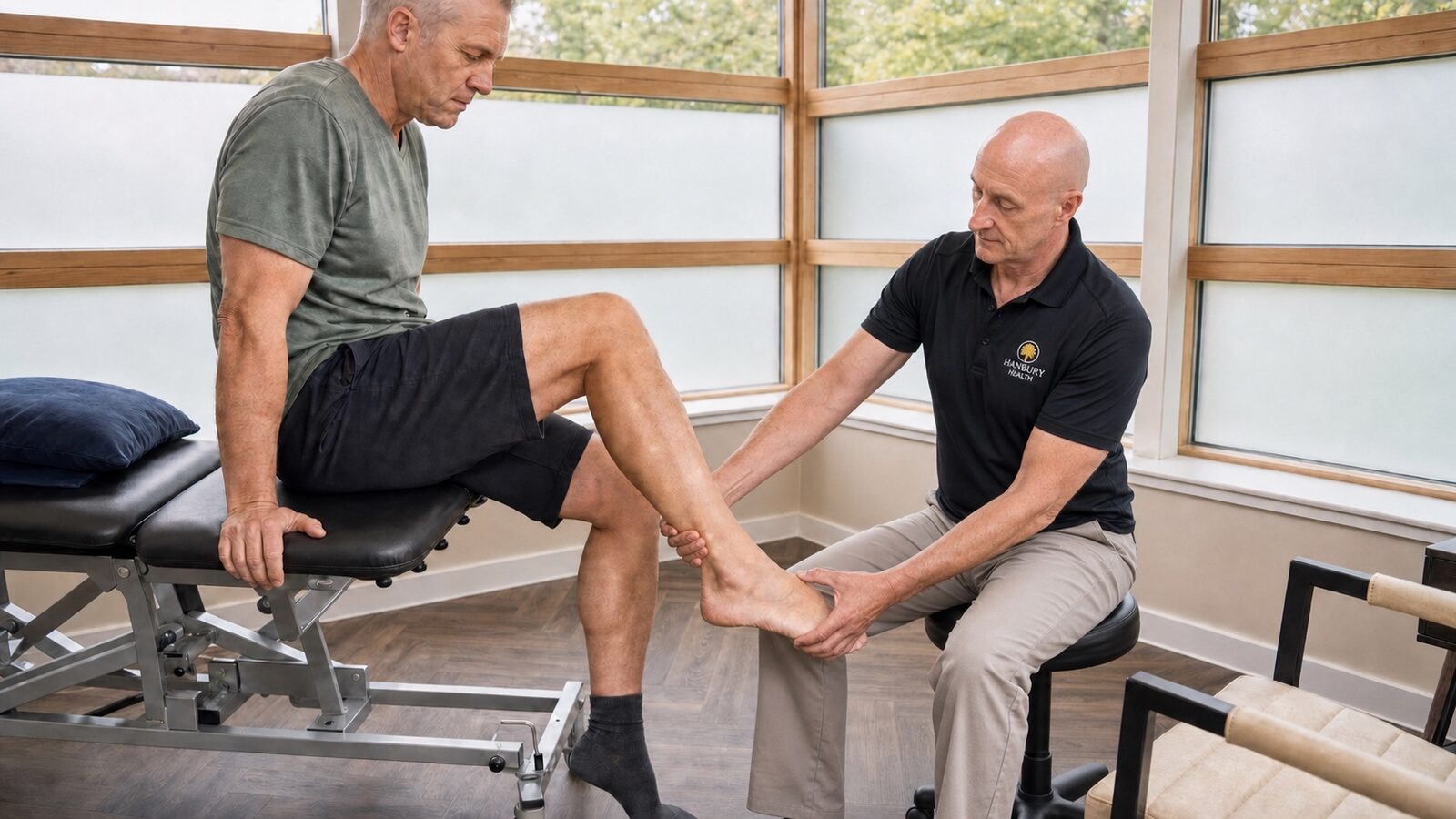
Physiotherapy
What causes Achilles tendinopathy, and why does loading beat rest?
What Achilles tendinopathy actually is, why rest alone rarely fixes it, and the loading programme that gives you the best chance of a full recovery.
Jones9 min readRead the article


Stay informed
More from the Hanbury team.
New articles on recovery, movement, physiotherapy and performance, sent when there's something worth reading. No spam, unsubscribe any time.