
Recovery · Treatments
Contrast Therapy in Milton Keynes: Infrared Heat, Red Light and a Precisely Timed Ice Shower
Written and medically reviewed by Prof Arul Ramasamy MA PhD MBA FRCS(Tr+Orth)
Consultant Orthopaedic Surgeon and Medical Director, Hanbury Health · Milton Keynes
Published:
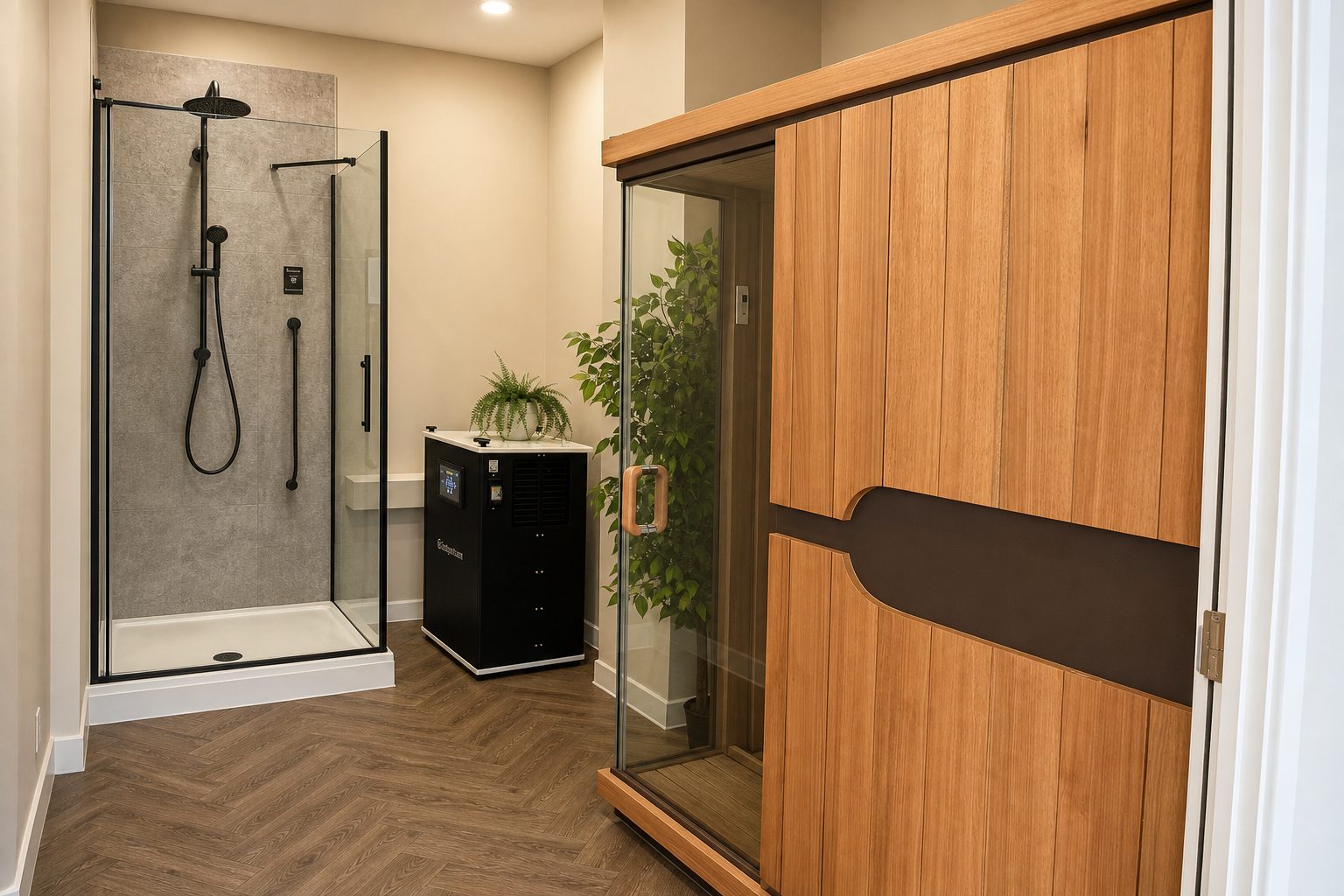
Heat opens the body up. Cold snaps it shut. Contrast therapy uses that swing deliberately, deep infrared and red light heat, followed immediately by a precisely timed ice-cold shower, to drive a powerful change in circulation and leave you clear-headed and loose. It's the oldest recovery ritual in the world, made precise. And of everything in our recovery suite, the heat side of it carries the strongest population-level evidence for living longer. This article explains what contrast therapy is, how it works, what the science says, and who it's for.
What contrast therapy is
Contrast therapy is the deliberate alternation of heat and cold. At Hanbury it means time in an infrared sauna to raise your core temperature and open the circulation, followed straight away by a short, sharp ice-cold shower to reverse it. Heat, then cold, repeated or in sequence, is a practice cultures have used for centuries, from Finnish saunas and cold lakes to Roman baths. What's changed is the precision: exact temperatures and exact timing, applied with intent.
Contrast therapy is used here as a recovery and wellbeing tool. Nothing in this article has been evaluated by the MHRA or FDA, and it is not intended to diagnose, treat, cure or prevent any disease. We use it inside a clinically informed setting.
The heat: infrared and red light
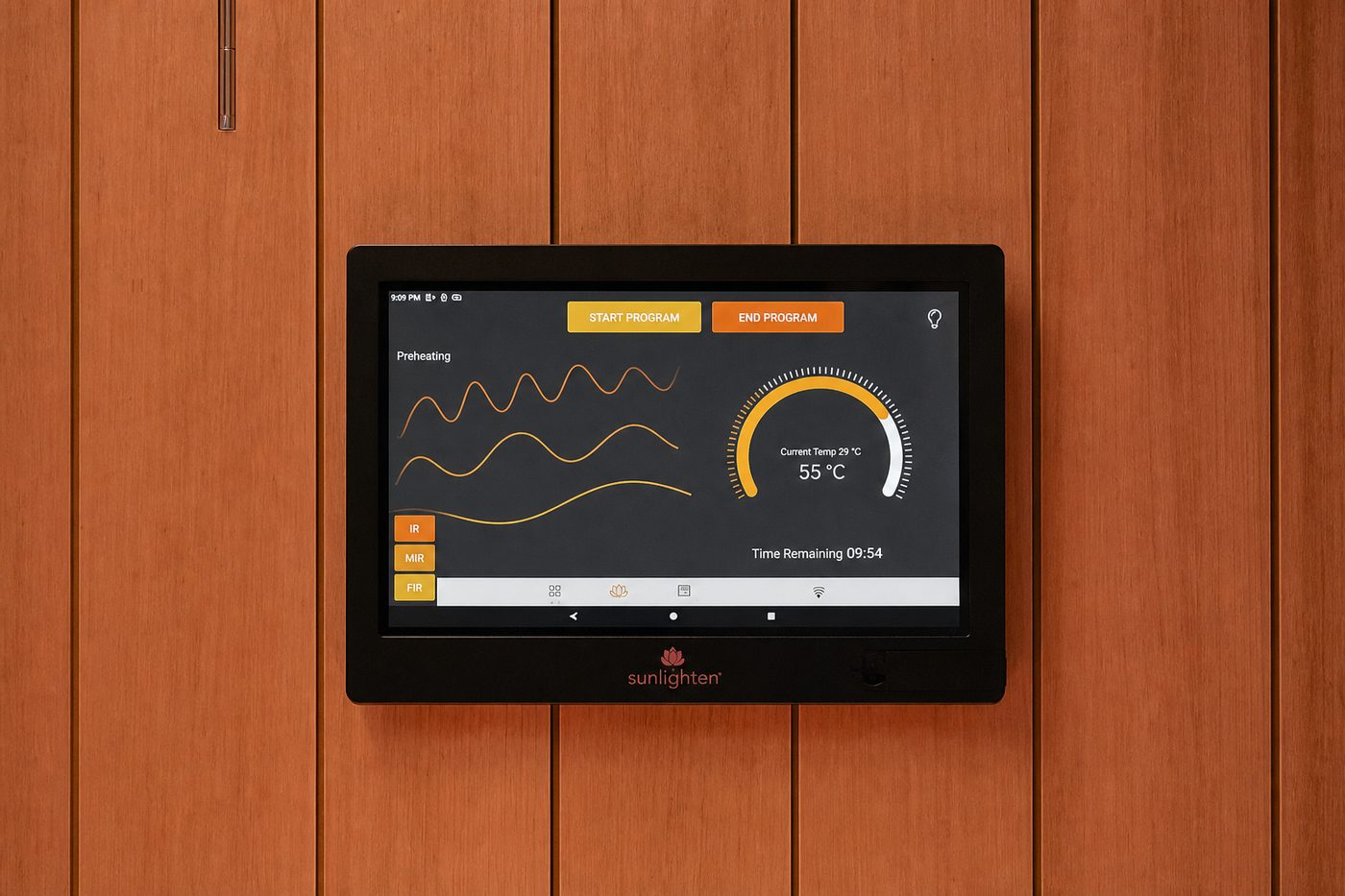
The heat comes from a Sunlighten mPulse infrared sauna. Unlike a traditional sauna that simply heats the air, an infrared sauna warms your body directly with light, so you get a deep, comfortable heat at a lower, more tolerable air temperature. The mPulse delivers four wavelengths independently, near-, mid- and far-infrared plus red light, so the session can be tuned toward recovery, relaxation, cardiovascular support or skin.
The red light and near-infrared are the bonus. Delivered close to the skin, these wavelengths are the basis of photobiomodulation, light absorbed at the cellular level to support tissue and skin, which is why red light has become a recovery and skin-health tool in its own right. Add the sauna's low-EMF heaters and chromotherapy lighting, and the heat phase does more than make you sweat: it opens the circulation, relaxes the body, and primes you for the cold.
The cold: a precisely timed ice shower
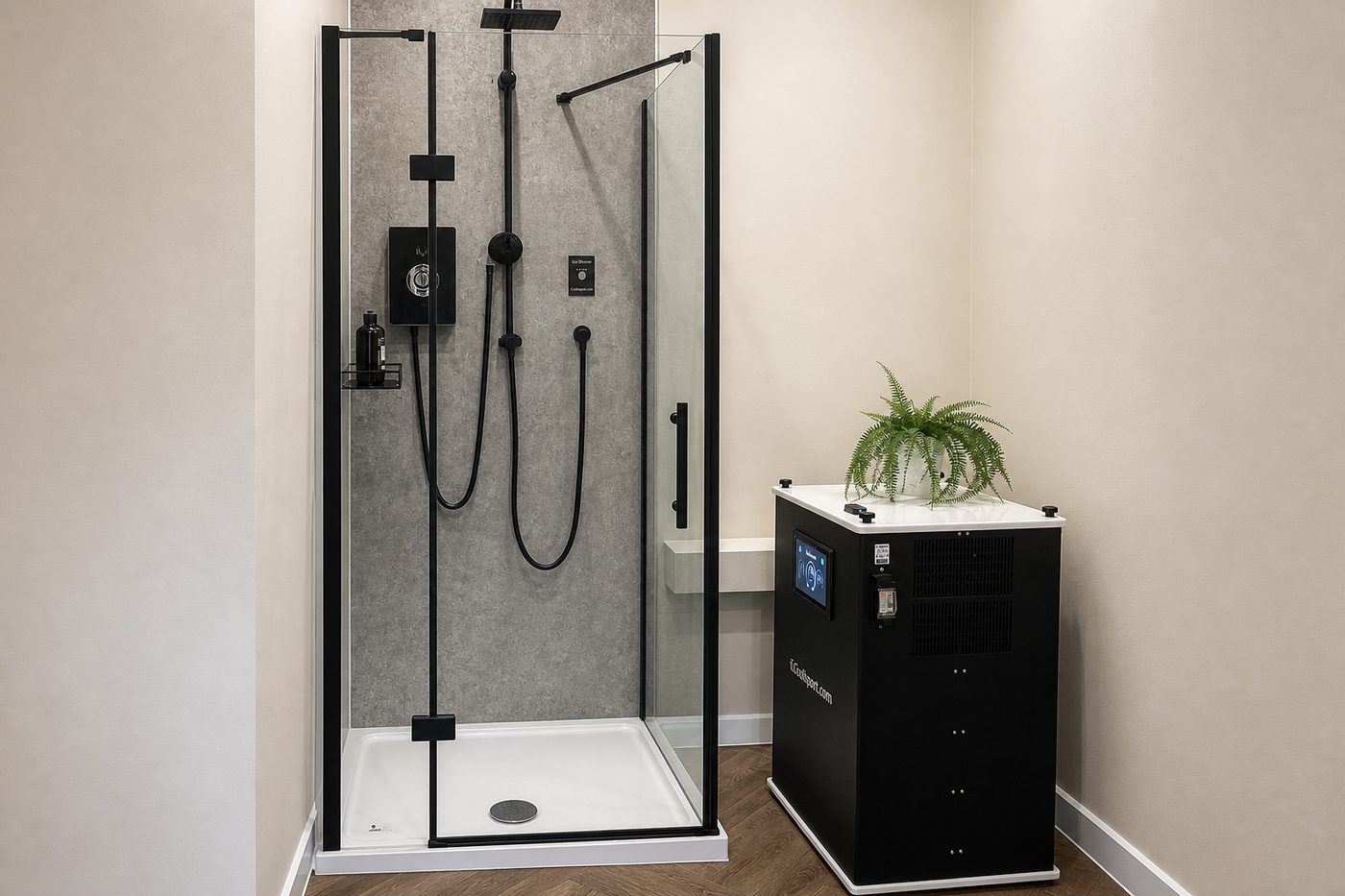
The cold comes from an iCoolSport ice shower, an automated system delivering water chilled to around 4–8°C for a precisely timed 30–40 seconds, the range its makers established with athletes and sports-medicine specialists as ideal for recovery. It's controlled, repeatable and, notably, quicker than an ice bath: a short, sharp cold stimulus.
Coming straight out of the heat, that cold hits hard and does the real work of the contrast, slamming the circulation into reverse and delivering the head-clearing, invigorating jolt people come back for.
Who it's for
Contrast therapy suits people chasing very different things from the same session:
- Athletes and trainers, for recovery and the circulatory flush after hard efforts.
- Anyone focused on long-term health, drawn by the cardiovascular and longevity evidence around regular heat exposure.
- People who want the relaxation, sleep and mood benefits, the sauna's calm followed by the cold's lift.
- Anyone interested in skin and cellular health through red light and infrared.
You don't need to be an athlete. If you want one session that works on your recovery, your circulation and your head at once, this is it.
How it works
The mechanism is vascular. Heat causes your blood vessels to dilate, circulation to increase and your heart rate to climb, a response that, in several ways, mimics the cardiovascular effect of light exercise. Cold does the opposite: it drives rapid vasoconstriction, pulling blood toward the core. Swing quickly from one to the other and you create a pumping action through the circulatory system, vessels widening and narrowing, blood and fluid moving, metabolic by-products clearing faster than passive rest would manage.
Layered on top are two more effects. The heat and red light support the skin and tissue at a cellular level, and the cold triggers a release of endorphins and noradrenaline that produces the sharp lift in mood and alertness. Both heat and cold are hormetic stressors, small, controlled challenges the body adapts to and grows more resilient against, in the same family as exercise.
What the evidence shows
This is where contrast therapy stands apart from the rest of the suite. Heat exposure has some of the strongest long-term health data of any recovery practice, though it's important to be precise about what that data is.
In large Finnish population studies followed over two decades, people who used a sauna frequently had substantially lower rates of fatal cardiovascular disease and all-cause mortality than infrequent users, with the biggest reductions in those using it four or more times a week. These are observational findings in traditional Finnish saunas, so they show a strong association rather than proof of cause, and they don't transfer automatically to infrared saunas, which are less studied. But the mechanisms, repeated cardiovascular loading, improved vascular function, lower blood pressure, are shared, and the signal is hard to ignore.
For recovery and soreness specifically, contrast water therapy shows modest benefits over rest, in line with the wider recovery literature. And red light and near-infrared (photobiomodulation) have a growing evidence base for skin and tissue support. As with everything we offer: a clear mechanism, honest expectations, and no overclaiming.
Contrast therapy for recovery
Used after training, the sequence is straightforward: heat to open the circulation and relax the muscles, then cold to flush it through and switch the nervous system back toward calm. The alternation moves blood and clears the by-products of exertion more actively than lying still. It pairs naturally with the rest of the suite, many people use it in the same visit as cryotherapy, compression or Shiftwave, building a fuller recovery session around it.
Contrast therapy for mood, skin and relaxation
The part people underestimate is how good it feels. The sauna phase is deeply relaxing, quiet, warm, screen-free time that's increasingly rare, and the cold finish leaves a clean, alert, elevated feeling that can last for hours. The red light and infrared add a skin-and-cellular dimension that a plain hot room doesn't. For anyone whose real problem is that they never switch off, contrast therapy is one of the most enjoyable ways to reset both body and mind at once.
Where this fits into longevity and healthspan
Few interventions have longevity evidence as striking as regular heat exposure. The Finnish cohort data tie frequent sauna use to lower cardiovascular and all-cause mortality, and the proposed mechanism, heat as a mild, repeated cardiovascular load that improves vascular function and blood pressure, is exactly the kind of "exercise-adjacent" stress that supports healthy ageing. The cold adds autonomic and metabolic stimulus; the red light adds cellular and skin support. Together they make contrast therapy one of the more compelling healthspan tools we offer.
We use it alongside our HealthSpan Medicine and Performance Testing, so the same markers we can measure, blood pressure, cardiovascular and recovery metrics, inform how you use it. Contrast therapy sits inside that same measured plan, alongside the rest of your healthspan strategy.
What a session is like here
You start in the infrared sauna, choosing a program suited to your goal, recovery, relaxation or cardiovascular support, and settle into the deep, comfortable heat for the guided duration. When you're warmed through, you step straight to the iCoolSport ice shower for a precisely timed 30–40 seconds of chilled water. The contrast is the point: the sharper the swing from hot to cold, the stronger the effect. You leave warm at the core, clear in the head, and noticeably lighter.
Who it's not for: safety and contraindications
Heat and cold are both demanding on the cardiovascular system, so contrast therapy isn't for everyone. Speak to us or your own medical provider first if any of the following apply: pregnancy; uncontrolled high blood pressure, a heart condition, or a history of heart attack or stroke; unstable angina or significant cardiovascular disease; Raynaud's phenomenon or cold hypersensitivity; a tendency to faint with heat; or if you're taking medication that affects heat tolerance, blood pressure or hydration. Don't use it under the influence of alcohol, and stay well hydrated. We screen everyone before a first session, if you're unsure, ask.
Why we offer contrast therapy at Hanbury
As a clinician, I pay most attention to the interventions with hard outcomes behind them, and heat exposure is rare among recovery tools in having population-level data linking it to lower cardiovascular and all-cause mortality. That evidence is what moved contrast therapy from "nice to have" to something we genuinely wanted to offer. From there it was about doing it properly: a best-in-class Sunlighten infrared and red light sauna for the heat, and an automated, precisely controlled iCoolSport ice shower for the cold, so the contrast is delivered accurately and consistently every time. The ritual is ancient; the delivery is precise.
How to try contrast therapy in Milton Keynes
Contrast therapy is part of our wider recovery suite at Hanbury Health, available from £65. It works beautifully on its own and pairs naturally with the rest of the suite in a single visit. Full pricing and membership options are on the Recover pillar page.
Frequently asked questions
What is contrast therapy?
Contrast therapy is the deliberate alternation of heat and cold, at Hanbury, an infrared and red light sauna followed by a precisely timed ice-cold shower, used to drive circulation, support recovery, and lift mood and alertness.
What's the difference between an infrared sauna and a traditional sauna?
An infrared sauna warms your body directly with light rather than heating the air, so you get a deep, comfortable heat at a lower, more tolerable temperature. Ours (a Sunlighten mPulse) also delivers red light and near-infrared for skin and cellular support.
Does contrast therapy actually work?
The circulatory effect of alternating heat and cold is real, and regular sauna use has strong observational links to better cardiovascular health and longevity. For post-exercise recovery the benefit over rest is modest. Most people notice they feel relaxed, clear-headed and lighter straight away.
How long is a contrast therapy session?
You spend a guided period in the sauna, then a precisely timed 30–40 seconds in the ice-cold shower. The exact sauna duration depends on the program and your tolerance.
Is contrast therapy safe? Who should avoid it?
Heat and cold both load the cardiovascular system, so it isn't for everyone. Anyone pregnant, with uncontrolled blood pressure, heart or circulatory disease, a history of heart attack or stroke, or who faints with heat should consult a medical provider first, and no one should use it after alcohol. We screen everyone before a first session.
How much does contrast therapy cost in Milton Keynes?
Contrast therapy is part of our recovery suite, available from £65. Current pricing and membership options are on our recovery page.
Where can I try infrared sauna and contrast therapy in Milton Keynes?
Contrast therapy, infrared and red light sauna with an ice-cold shower finish, is available at Hanbury Health in Milton Keynes. You can book through our website.
Book your recovery visit in Milton Keynes
To experience contrast therapy, book a visit at Hanbury Health in Milton Keynes, infrared and red light sauna followed by a precisely timed ice shower, from £65, on its own or alongside the rest of our recovery suite.
Medical disclaimer: Contrast therapy, infrared saunas and cold exposure are used here as general wellbeing and recovery tools. They are not intended to diagnose, treat, cure or prevent any disease, and the statements above have not been evaluated by the MHRA or FDA. Sauna longevity findings are from observational studies of traditional saunas and show association, not proof of cause. This article is for general information and is not medical advice. Always consult a qualified healthcare professional about your individual circumstances, particularly regarding cardiovascular conditions.
Written and medically reviewed by Prof Arul Ramasamy MA PhD MBA FRCS(Tr+Orth), Consultant Orthopaedic Surgeon and Medical Director, Hanbury Health, Milton Keynes.