
Movement
What are the health benefits of yoga?

The short version
- Builds strength, flexibility and balance, and counts towards muscle-strengthening exercise.
- Helps with everyday aches, including lower back pain, and supports mobility as you age.
- Reduces stress and supports mood, with evidence for easing anxiety and low mood.
- Improves balance and coordination, which matters increasingly with age.
- Suitable for almost everyone; the practice adapts to you.
- Most people feel calmer and move more easily within a few weeks of regular practice.
Yoga combines physical postures, breathing and focus to improve both body and mind, and the benefits are wide-ranging and well supported: greater strength, flexibility and balance, help with everyday aches including lower back pain, and real benefits for stress, mood and general wellbeing. It is one of the few forms of exercise that works on the body and the nervous system at the same time, which is a large part of why people find it so sustaining. Importantly, you do not need to be flexible, sporty or young to start; yoga meets you where you are and progresses from there. Many people come to yoga looking for one specific thing, less stiffness, better sleep, a way to unwind, and stay for the fact that it quietly delivers on several fronts at once, which is unusual for a single weekly activity and part of why it has such staying power compared with more narrowly focused workouts.
Try a reformer Pilates class at Hanbury Health, Milton Keynes.
How does yoga build strength, flexibility and balance?
Yoga is often thought of as just stretching, but holding and moving through postures builds genuine strength, particularly in the core, back, hips and shoulders, while improving flexibility and joint mobility. The NHS notes that yoga is a safe and effective way to improve strength, flexibility and balance, and that two sessions a week can count towards your muscle-strengthening activity. Balance and coordination improve too, which is valuable at any age and especially important for staying steady and preventing falls later in life. Because postures are held, yoga also builds a form of strength called isometric or static strength, muscles working hard without changing length, which complements the more dynamic strength you might build elsewhere and is particularly useful for joint stability.
How quickly do the benefits of yoga show up?
Change is gradual but genuinely noticeable if you practise regularly. In the first few weeks, most people notice they feel calmer after class and move a little more easily in everyday life, getting up from the floor, reaching overhead, turning to look over a shoulder. Over one to three months of consistent practice, flexibility and strength improve more clearly, postures that felt awkward become familiar, and the stress-relief benefits deepen as the breathing and focus become second nature. Two to three sessions a week produces the clearest results, though even one class a week, kept up consistently, is a genuinely worthwhile place to start and tends to lead naturally into a second session once the habit is established.
Can yoga help with everyday aches and back pain?
Because yoga builds strength and mobility together, it is widely used to help manage common aches, and there is reasonable evidence that regular practice can help with lower back pain in particular. A network meta-analysis of 75 trials and over 5,000 participants found yoga produced significantly better pain relief and physical function than conventional rehabilitation or no intervention for people with chronic low back pain. Gentle, controlled movement keeps joints mobile and muscles supple, and stronger supporting muscles take strain off areas that tend to grumble. Many of the everyday aches people carry, a stiff neck from a desk job, tight hips from a lot of sitting, a nagging shoulder, respond well to the combination of stretching and gentle strengthening that a typical class provides, precisely because it addresses both the tightness and the weakness together. As with any exercise, if you have a specific injury or a diagnosed condition, it is worth getting individual advice first so the practice is adapted safely.
How does yoga affect stress, mood and the nervous system?
This is where yoga is distinctive. The combination of movement, slow breathing and attention has a calming effect on the nervous system, and the evidence here is encouraging: reviews have found yoga can reduce symptoms of anxiety and low mood, and it is widely valued as a way to manage stress. For many people this mental side is the main reason they keep practising, and it is a genuine, researched benefit rather than a vague claim. Unlike exercise that revs you up, yoga is one of the few forms of movement that actively teaches your body how to downshift, which is a skill in itself and one that tends to carry over into the rest of your day, calmer reactions to a stressful meeting, an easier time settling at the end of the evening. We explore this further in our guide on yoga for stress, anxiety and sleep.
Who is yoga for?
Almost anyone. Yoga scales from very gentle, restorative practice through to strong, dynamic styles, so it suits complete beginners, older adults, people rebuilding after time away from exercise, and experienced movers alike. You do not need to be flexible to begin, flexibility is a result, not a requirement, and a good class offers modifications so you work at the right level for you. If that is your worry, see do you need to be flexible for yoga?
How much does yoga cost, and how do you book?
Getting started with yoga at Hanbury does not require any upfront commitment beyond turning up to a class. Everything is booked directly through Momence, Hanbury's online booking platform: you browse the timetable, choose a class at a level that suits you, and reserve your place in a couple of minutes, no phone call or waiting list. You can try a single class on a pay-as-you-go basis to see whether the style and instructor suit you, then move onto a flexible credits or membership once you have a sense of how often you would like to attend, so your commitment grows at your own pace as you get a feel for the practice. See classes, prices and timetable.
Why Hanbury Health is different
The evidence in this guide holds wherever you practise, strength, flexibility, balance and calm are not exclusive to any one address. What genuinely differs between studios is what happens when a class surfaces something that needs a closer look. Hanbury's teaching descends from Yogomotiv, the Buckinghamshire studio awarded Best Customer Service in 2020 and named Pilates Studio of the Year, now continuing as part of Hanbury Health, so the practice here carries a decade of local heritage. But the reason that heritage matters is what it now sits inside: physiotherapy, performance testing and recovery under the same roof, so an ache worth investigating, or a practice that should support a longer-term health goal, never has to leave the building. A studio built purely around a class timetable cannot offer that, however good its instructors are.
Frequently asked questions
Is yoga good for you?
Yes. The evidence supports benefits for strength, flexibility, balance, everyday aches including back pain, and mental wellbeing including stress and low mood.
Do I need to be flexible to do yoga?
No. Flexibility is a result of practising, not a requirement to start. Classes offer modifications so you work at your own level.
Does yoga count as exercise?
Yes. It improves strength, flexibility and balance, and two sessions a week can count towards muscle-strengthening activity.
Can yoga help back pain?
There is reasonable evidence that regular yoga can help with lower back pain. If you have a specific injury or condition, get individual advice so the practice is adapted safely.
Where can I do yoga in Milton Keynes?
Hanbury Health in Milton Keynes offers yoga classes for all levels, taught within an integrated health setting, built on the heritage of Yogomotiv.
How much does yoga cost at Hanbury?
Classes are bookable individually or through flexible credits or membership, whichever suits how often you want to attend, all booked through Momence.
References
- NHS. A guide to yoga.
- Woodyard C. Exploring the therapeutic effects of yoga and its ability to increase quality of life. International Journal of Yoga, 2011;4(2):49-54.
- Li Y, Yan L, Hou L, et al. Exercise intervention for patients with chronic low back pain: a systematic review and network meta-analysis. Frontiers in Public Health, 2023;11:1155225.
Ready to put this into practice?
Hanbury Health is the only place in Milton Keynes where reformer Pilates and yoga are taught inside a full clinical team, built on the award-winning heritage of Yogomotiv, now part of Hanbury Health.
About the author: Sarah Ramasamy is Co-Founder and Director of Movement at Hanbury Health. She has taught yoga and Pilates for over 20 years and founded Yogomotiv, the award-winning Milton Keynes studio now part of Hanbury, where she leads the reformer Pilates, mat Pilates and yoga programme.
General information, not medical advice. Written by Sarah Ramasamy. Medically reviewed by Prof Arul Ramasamy MA PhD MBA FRCS(Tr+Orth). Last reviewed: 25 July 2026.
Related insights

Movement
Why red light therapy doesn't belong in a Pilates class (and what actually works instead)
Why a red light panel glowing in a Pilates class isn't red light therapy, what proper dosing actually needs, and how to get both done properly in Milton Keynes.
Ramasamy8 min readRead the article
Movement
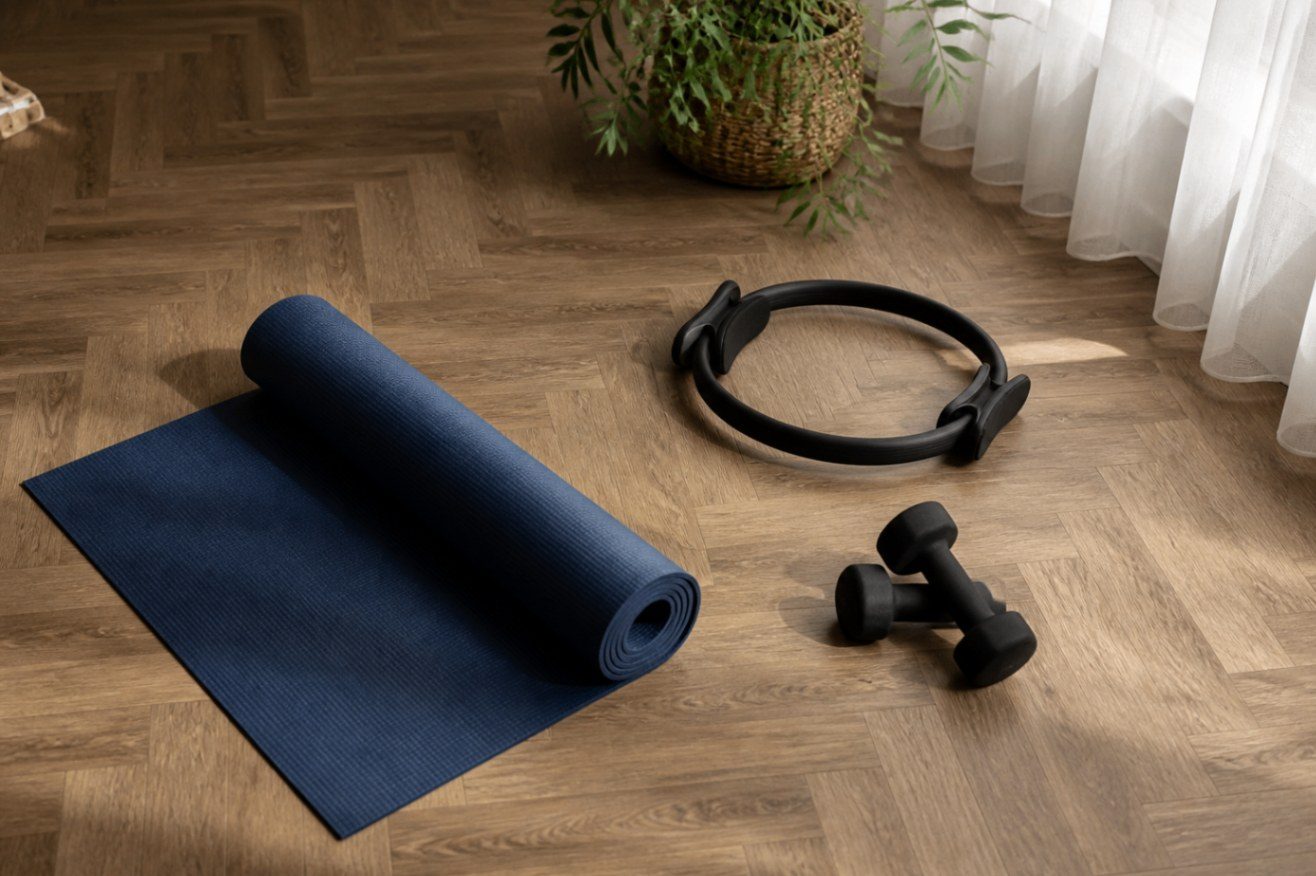
What's the best exercise for perimenopause: yoga, Pilates or strength?
Why yoga, Pilates and strength training each address different parts of perimenopause, why a combination works best, and how to build a routine backed by clinical guidance.
Ramasamy8 min readRead the article
Movement
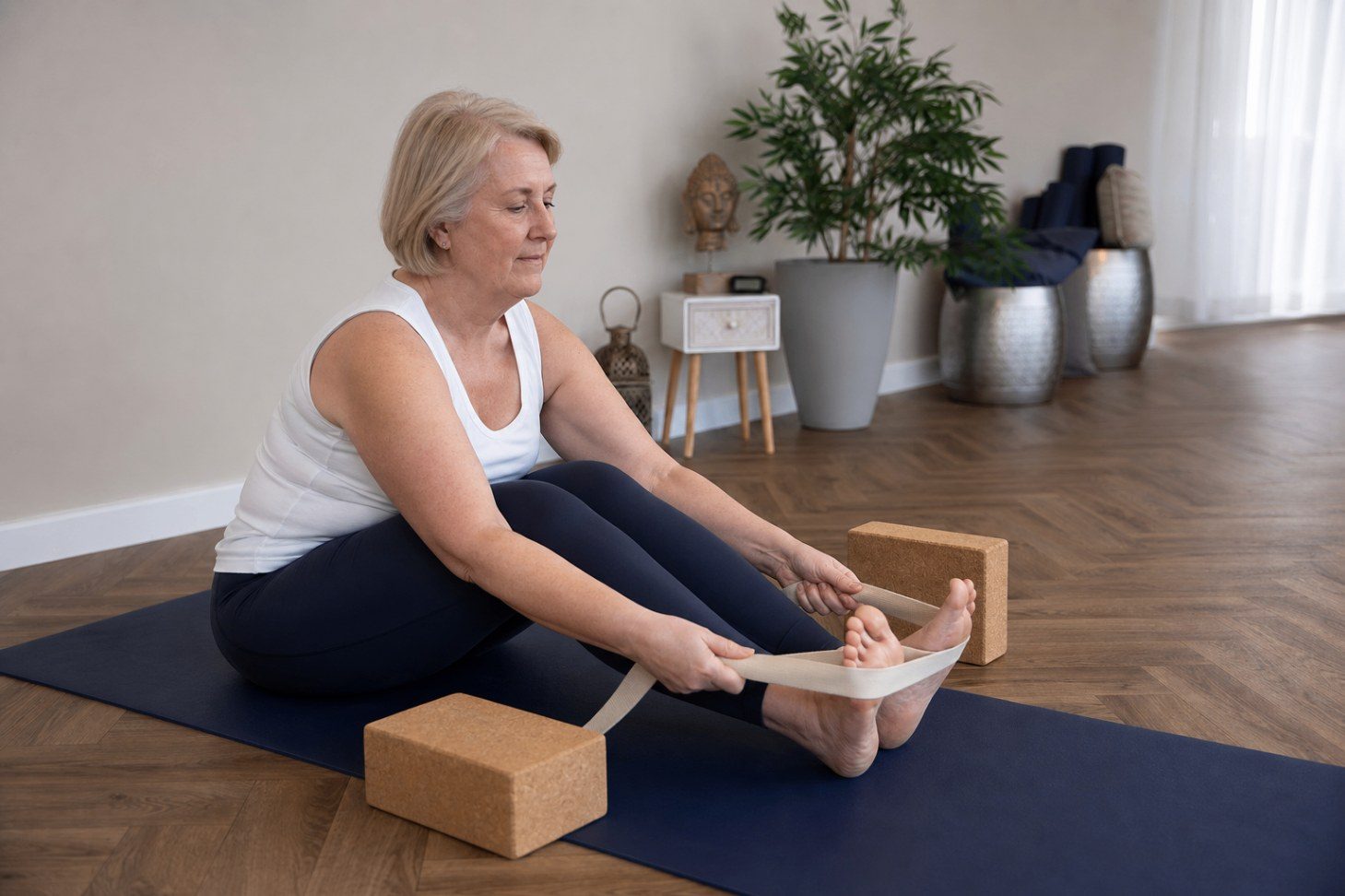
Do you need to be flexible to start yoga?
Flexibility is a result of yoga, not a requirement to start. Why the myth persists, what a first class is really like, and how to begin with confidence.
Ramasamy6 min readRead the article


Stay informed
More from the Hanbury team.
New articles on recovery, movement, physiotherapy and performance, sent when there's something worth reading. No spam, unsubscribe any time.