
Movement
Why red light therapy doesn't belong in a Pilates class (and what actually works instead)

The short version
- A Reformer Pilates class with a red light panel on in the background gives you a great Pilates session and very little, if any, measurable red light therapy.
- Red light therapy needs a specific, measured dose. Too little does nothing, and past a point more light stops helping, so leaving a panel on is not the same as dosing it properly.
- Distance matters more than most people expect. Intensity drops off fast, so a wall panel a few feet away while you move is a completely different exposure to lying close and still.
- Medical-grade red light therapy means a CE-marked device delivering red and near-infrared light at a controlled dose, in a dedicated session where you stay close and still throughout.
- You lose nothing by keeping them separate. You get properly coached Reformer Pilates, and, if you want it, red light therapy actually dosed to do something.
- At Hanbury Health both exist, as two different things done properly rather than one blended half-heartedly into the other.
If you have taken a Reformer Pilates class under a red light panel and wondered whether it is actually doing anything for you, the honest answer is: probably not much. Not because red light therapy does not work. It is genuinely useful. But a panel glowing on the studio wall while you move through a flow cannot deliver what a proper red light therapy session is built to deliver, and it was never designed to.
That is not a knock on your Pilates class. Reformer Pilates does what it does, controlled resistance, alignment, core control, coached movement, and it does it well on its own terms. Red light therapy does something completely different, and it needs conditions a moving class simply does not have. Blending the two under one red glow does not combine their benefits. It just means neither one is getting a fair shot.
Do both properly, separately. Book the Beginners Reformer Course, three sessions for £33, or book medical-grade red light therapy on its own, from £39 for a single session.
Reformer Pilates booking opens in a new tab.
Why is red light suddenly showing up in Pilates studios?
Red light panels have become a popular addition to boutique fitness spaces over the last couple of years, often installed as ambient studio lighting rather than as a piece of therapeutic equipment with its own protocol. It looks calming, it photographs well, and it fits the general wellness aesthetic a lot of studios are going for. None of that is dishonest exactly, but it does blur a line worth being clear about: a red bulb in the room is different from a dosed red light therapy session.
If a studio near you has one, it is not doing you any harm sitting there while you train. The question is just whether it is giving you what red light therapy actually promises, and for most setups it is not, for reasons that come down to how this kind of light needs to be delivered.
What does red light therapy actually need to work?
Red light therapy, more precisely called photobiomodulation, works by exposing your skin and the tissue beneath it to specific wavelengths of red and near-infrared light, which cells absorb and use to support processes like circulation, tissue repair and inflammation. That much is genuinely well established. The part that gets skipped over in most marketing is that it only works within a fairly specific set of conditions.
The first is dose. Photobiomodulation follows what researchers call a biphasic dose-response, meaning the relationship between how much light and how much benefit is not a straight line where more is always better. According to a review by Huang, Sharma, Carroll and Hamblin published in Dose-Response, low doses of light can have little to no effect, moderate doses produce the biggest benefit, and doses pushed too high can start working against you, reducing or reversing the effect entirely.1 That pattern shows up consistently across cell studies and animal experiments, which is part of why some clinical trials of red light therapy have come back disappointing. They simply were not dosing it right. A separate review of the wider evidence base by Zein, Selting and Hamblin, published in the Journal of Biomedical Optics, found published protocols cluster around 4 to 10 joules of light energy per square centimetre of tissue, with some going up to 50 J/cm² at the skin surface, and that ineffective results were put down to over-dosing about as often as under-dosing.2 There is still no one universally agreed number, but there is broad agreement that the number matters.
The second is distance. Light intensity falls off sharply the further you are from its source, which is basic physics, not a red light therapy quirk. Standing several feet from a wall-mounted panel receives a fraction of the light you would get lying directly beneath or beside one. Move around during a class, and that distance is constantly changing too.
The third is time. Getting a therapeutic dose is not just about having the light on, it is about your skin being exposed to the right amount for long enough, consistently, in one sitting. A class built around movement, instruction and changing positions was never designed around that requirement, because it is not trying to be.
Why does a panel on the studio wall not meet any of that?
Put those three requirements next to a typical Pilates studio red light panel and the mismatch is fairly obvious. You are not a fixed distance from it, you are moving through a flow. The exposure time is not set by what your tissue needs, it is set by however long the class happens to run. And critically, most red light panels sold into studios and gyms are general wellness products, not certified medical devices built and tested to deliver a specific, verifiable dose. There is often no way to know what dose, if any, you are actually receiving.
| What matters | Panel in a moving class | Dedicated session at Hanbury Health |
|---|---|---|
| Dose | Unknown and unmeasured | Engineered within 3 to 15 J/cm² |
| Distance | Variable, several feet, always changing | Fixed and close for the whole session |
| Time | However long the class runs | Set by the protocol, not the timetable |
| Device | General wellness product | CE-marked medical device, LED, no UV |
None of that makes the panel dangerous. It just means it is very unlikely to be doing the specific cellular job red light therapy is supposed to do, while you are also trying to hold a plank or thread the needle. It is ambient lighting wearing the branding of a treatment.
What does a proper red light therapy session actually look like?
At Hanbury Health, medical-grade red light therapy runs on a CE-marked medical device rather than a decorative panel. It uses red light (around 630nm) and near-infrared light (around 940nm), alongside a blue wavelength (around 470nm), delivering a measured dose across the whole body at once, engineered within a 3 to 15 J/cm² range that sits inside the parameters the underlying research supports, rather than an amount nobody has checked.3 It is LED-based, heat-free, with no UV involved.
The session is built around the conditions red light therapy actually needs: you are close to the light and staying still for the whole thing, so the dose you are getting is consistent and known, not incidental to whatever else is happening in the room. It is booked and run as its own thing, not layered underneath another activity, and it sits in the recovery suite at Hanbury Health alongside cryotherapy, compression therapy and the Shiftwave chair.
So is red light in a Pilates studio completely pointless?
As ambient lighting, it is fine. Nobody needs to switch it off out of concern for their safety. The issue is expectation. If you are going to a class partly because there is a red light panel in the room, it is worth knowing you are very unlikely to be getting a measurable red light therapy dose from it, in the same way a massage chair left switched off in the corner would not give you a massage.
The fix is not to give up on either one. It is to stop expecting one to quietly do the other's job.
Where does Reformer Pilates actually fit in?
This is the part that is easy to lose in the red light conversation: Reformer Pilates does not need to borrow credibility from a light panel. What it is built to do, working through controlled resistance on the reformer's springs, building genuine core and postural control, correcting movement patterns with proper coaching, is valuable on its own, evidenced on its own, and worth turning up for on its own. If you are new to it, start with what reformer Pilates actually is and how the machine works, or whether reformer Pilates is good for beginners. If your reason for coming is a sore back, read how reformer Pilates is used for back pain.
If anything, separating the two makes each one better. You get full attention on your form and breathing during your class, without a light doing double duty in the background. And if you also want red light therapy, you get a session actually built to deliver it, rather than a watered-down version squeezed in around your workout.
Where can you do both properly in Milton Keynes?
Hanbury Health is the only place in Milton Keynes bringing coached Reformer Pilates and a CE-marked medical-grade red light therapy bed together under one team of experts, kept as two distinct things rather than one blended into the other. Reformer classes run through the Reformer Pilates and Yoga programme, and the medical-grade red light therapy bed sits in the recovery suite, bookable on its own.
Ready to try either, or both? Book the Beginners Reformer Course, three sessions for £33, or book medical-grade red light therapy on its own, from £39.
Reformer Pilates booking opens in a new tab.
Why is Hanbury Health different?
Most places that add a red light panel to a studio are trying to make one thing feel like two. At Hanbury Health, you actually get two things, done properly, by people who know the difference between ambient lighting and a dosed treatment, because they run both.
That matters beyond just getting your money's worth. Because Reformer Pilates, physiotherapy and the recovery suite sit inside the same team, if something comes up in a class, a pattern in how you are moving, a niggle that keeps returning, it does not just stay a passing comment. It can be picked up and looked at properly by experts who already understand your training, rather than you having to explain yourself again somewhere new. You are not choosing between a good workout and genuine recovery support. You get both, kept honest about what each one actually is.
Two different things, both worth doing properly
A red light panel in your Pilates class is not hurting you, it is just not doing what a real red light therapy session does. At Hanbury Health you can have both: coached Reformer Pilates for movement and strength, and a CE-marked medical-grade red light therapy bed for a dose that is actually measured, kept as two separate things so each one delivers what it is supposed to.
Frequently asked questions
Is a red light panel in a Pilates studio actually harmful?
No. Ambient red light is not dangerous to sit near while you train. The issue is not safety, it is that a wall-mounted panel switched on during a moving class is very unlikely to deliver a measurable therapeutic dose, so it is worth not relying on it for that.
What is the real difference between a red light panel and medical-grade red light therapy?
Mainly certification, dosing and distance. A medical-grade device like the bed at Hanbury Health is CE-marked and engineered to deliver a specific, measured dose, in the region of 3 to 15 J/cm², at a fixed close distance in a dedicated session. Most panels installed as studio lighting are general wellness products with no verified dose and no control over how far away you are or for how long.
Can I do Reformer Pilates and red light therapy on the same day?
Yes, there is no reason not to. They are separate interventions targeting different things, movement quality and strength versus cellular recovery, and doing them back to back at Hanbury Health is straightforward. They are just booked and delivered as two distinct sessions rather than one happening under the other.
Does more red light exposure mean better results?
No, and this is one of the more counterintuitive parts. Research on photobiomodulation shows a biphasic dose-response, where low doses do little, a moderate dose produces the strongest effect, and pushing the dose too high can reduce or reverse the benefit. More light left on for longer is not automatically better, which is exactly why a dosed, measured session matters more than ambient exposure.
Who should take extra care with red light therapy?
If you are pregnant, taking medication that increases light sensitivity, have an active skin condition or lesion, or have had recent isotretinoin treatment, tell the team before booking so they can advise you properly. As with any new therapy, it is worth flagging anything relevant beforehand.
Where in Milton Keynes can I get medical-grade red light therapy, not just ambient lighting?
The Hanbury Health recovery suite has a CE-marked medical-grade red light therapy bed, bookable on its own from £39 a session. It is part of the same recovery suite as cryotherapy, compression therapy and the Shiftwave chair, and it is kept entirely separate from the Reformer Pilates and Yoga programme, so each gets the attention it needs.
Will switching off the panel in my current Pilates class actually change anything?
Probably not much either way, since it likely was not delivering a measurable dose to begin with. What is worth changing is the expectation. Enjoy your class for what it is, and if you want genuine red light therapy, book a session built to deliver it properly.
References
- Huang YY, Sharma SK, Carroll J, Hamblin MR. Biphasic dose response in low level light therapy, an update. Dose-Response. 2011;9(4):602-618.
- Zein R, Selting W, Hamblin MR. Review of light parameters and photobiomodulation efficacy: dive into complexity. Journal of Biomedical Optics. 2018;23(12):120901.
- Body Boost Bed. Science & Technology (device specification: wavelengths, dose range, CE medical device marking). Accessed 20 August 2026.
Two different things, both worth doing properly
Hanbury Health is the only place in Milton Keynes where reformer Pilates and yoga are taught inside a full clinical team, built on the award-winning heritage of Yogomotiv, now part of Hanbury Health.
About the author: Sarah Ramasamy is Co-Founder and Director of Movement at Hanbury Health. She has taught yoga and Pilates for over 20 years and founded Yogomotiv, the award-winning Milton Keynes studio now part of Hanbury, where she leads the reformer Pilates, mat Pilates and yoga programme.
General information, not medical advice. Written by Sarah Ramasamy. Medically reviewed by Prof Arul Ramasamy MA PhD MBA FRCS(Tr+Orth). Last reviewed: 20 August 2026.
Related insights
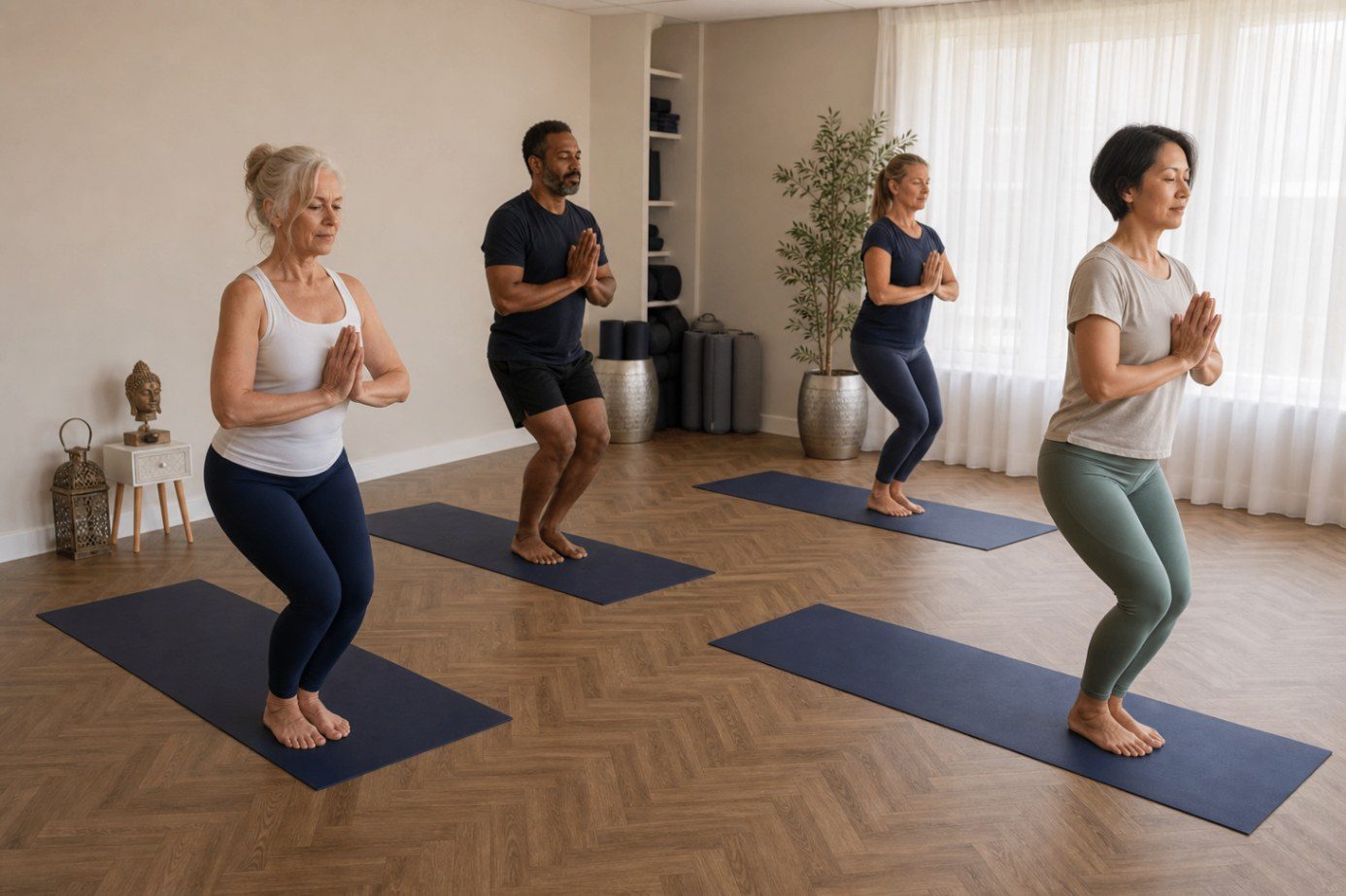
Movement
What are the health benefits of yoga?
Strength, flexibility, balance, back pain and mental wellbeing: the evidence for what regular yoga actually does for body and mind.
Ramasamy7 min readRead the article
Movement
What's the best exercise for perimenopause: yoga, Pilates or strength?
Why yoga, Pilates and strength training each address different parts of perimenopause, why a combination works best, and how to build a routine backed by clinical guidance.
Ramasamy8 min readRead the article
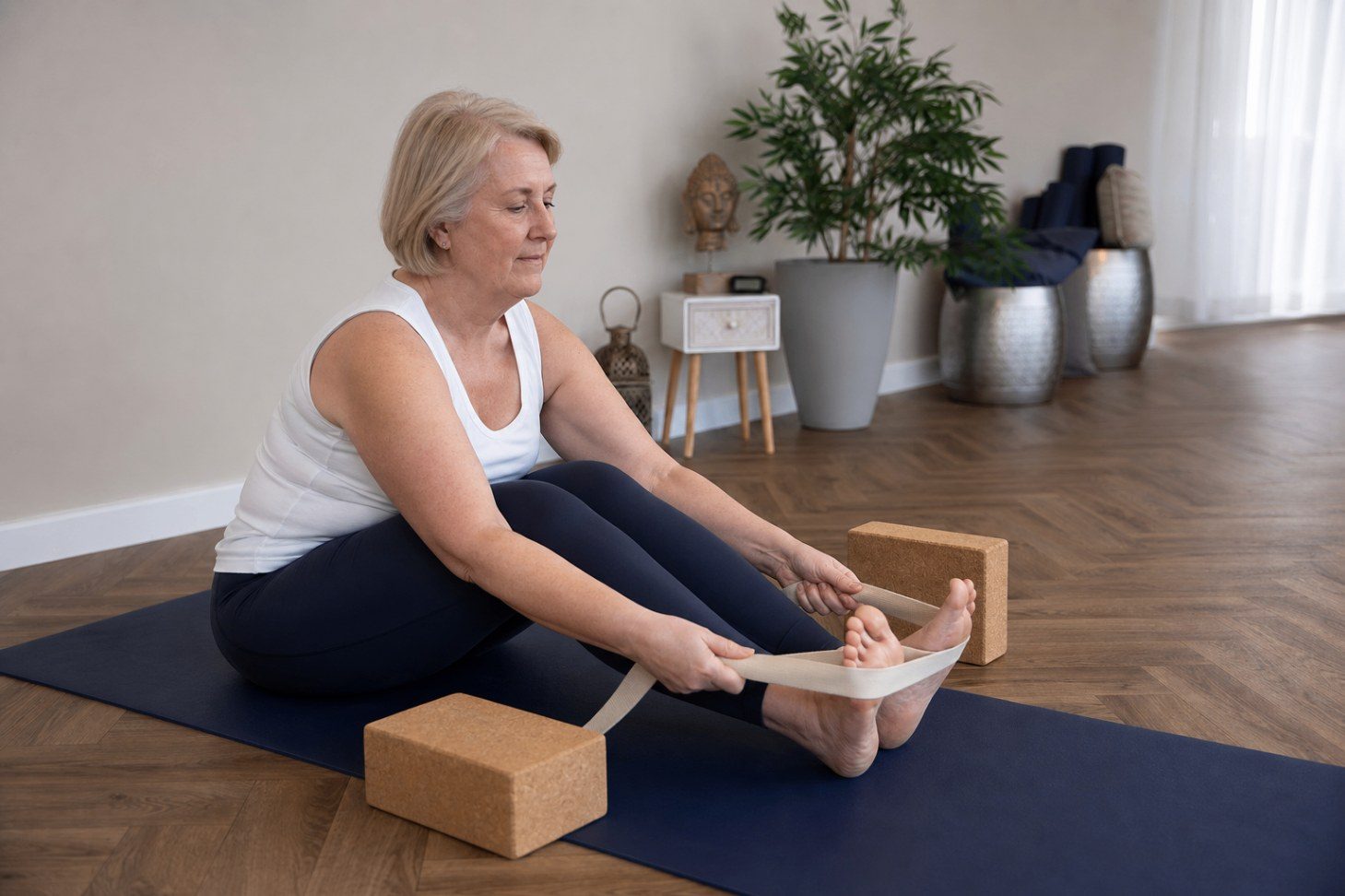
Movement
Do you need to be flexible to start yoga?
Flexibility is a result of yoga, not a requirement to start. Why the myth persists, what a first class is really like, and how to begin with confidence.
Ramasamy6 min readRead the article


Stay informed
More from the Hanbury team.
New articles on recovery, movement, physiotherapy and performance, sent when there's something worth reading. No spam, unsubscribe any time.