
Movement
Do you need to be flexible to start yoga?

The short version
- Flexibility is a result of practising yoga, not a requirement to start.
- Stiffer beginners often see the most noticeable early progress.
- Every posture can be adapted with props, blocks and modifications.
- Beginner-friendly classes are full of ordinary people at all stages, never a performance.
- Most people move more easily within a few weeks of regular practice.
- Beginner-friendly classes are bookable pay-as-you-go, no commitment required.
No. This is the single most common reason people put off trying yoga, and it has it exactly backwards: you do not need to be flexible to start yoga, because flexibility is one of the things yoga gives you, not a ticket you need to get in. Saying you are too stiff for yoga is a bit like saying you are too unfit to exercise. If you cannot touch your toes, you are not disqualified, you are precisely the person who stands to gain the most. Every posture can be adapted, and a good class expects a room full of different bodies at different stages. It is one of the most common things instructors hear at the start of a first class, "I should warn you, I'm really not flexible", said almost apologetically, as though it were a confession rather than exactly the reason to be there.
Try a reformer Pilates class at Hanbury Health, Milton Keynes.
Where does the "you must be flexible" myth come from?
Most people's image of yoga comes from photos of advanced practitioners folded into extraordinary shapes, and it is easy to assume that is the entry requirement. It is not. Those images show years of practice, not day one. Real classes are full of ordinary people, many of them stiff, tired or new to movement, working at their own level. The gap between the intimidating image and the welcoming reality is exactly what stops people starting, which is a shame, because the stiffer you are, the more noticeable your early progress tends to be. Social media has made this worse rather than better, because the clips that get shared are almost always the most visually striking postures performed by the most experienced people in the room, which is a bit like judging whether you should learn to swim by watching Olympic divers.
Why does yoga build the flexibility you think you need first?
Flexibility improves through regular, gentle loading of muscles and joints through their range of movement, which is precisely what yoga does. Postures take your body a little further than everyday life asks of it, held with breath and control, and over weeks the tissues adapt and the range increases. Alongside flexibility you build strength, balance and body awareness. So the very thing people feel they lack is one of the main things the practice develops, usually faster than they expect. Most modern life actively works against flexibility, long stretches sitting at a desk or in a car shorten and stiffen muscles in fairly predictable ways, which is exactly why so many people feel stiffer than they would like. Yoga is, in a sense, simply undoing that pattern in a structured, gentle way, so the improvements people notice are often less "gaining a new ability" and more "getting back the range of movement daily life has quietly taken away". If you are wondering whether reformer Pilates might suit you too, see is reformer Pilates good for beginners?
What is a first class actually like?
A beginner-friendly class is welcoming and unshowy. You will be guided through foundational postures at a manageable pace, with the instructor offering modifications, using a block under your hand, bending a knee, sitting on a cushion, so that each posture fits your body rather than forcing your body into the posture. You are never expected to keep up with anyone else or to achieve a particular shape. The aim is to move well within your range, breathe, and gradually expand what you can do. Props such as blocks, straps and bolsters are not a sign that you are struggling, they are standard equipment used by beginners and experienced practitioners alike, and a good instructor will show you how to use them from your very first class rather than treating them as a last resort.
How do you get started with confidence?
The simplest way to start is a beginners' or foundation class, where the pace and expectations suit newcomers. Wear comfortable clothes you can move in, arrive a few minutes early to let the instructor know you are new, and let go of any idea that you need to look a certain way. Consistency, even once a week to begin with, is what builds both flexibility and confidence. Within a few weeks most people notice they move more easily, both in class and in daily life. This tracks with a randomised controlled trial that found adults new to structured stretching-based yoga sessions showed statistically significant flexibility improvements, measured by the sit-and-reach test, within the first month of regular practice. It helps to mention your starting point to the instructor before class, whether that is "I've never done this before" or "I used to do yoga years ago and I'm starting again", so they can pitch their cues and offers of modification to you specifically rather than you having to work it out mid-posture. For a fuller picture of what yoga actually delivers over time, see the health benefits of yoga.
How much does yoga cost, and how do you book?
There is no barrier to entry beyond deciding to try a class. Everything is booked directly through Momence, Hanbury's online booking platform, where you can see the timetable, filter for beginner-friendly or gentle classes, and reserve your place in a couple of taps, with no phone call or waiting list. A single class is bookable on a pay-as-you-go basis, which is a sensible way to try yoga for the first time without committing to anything beyond that one session, and you can move onto flexible credits or membership later, once you know how often you actually want to come. See classes, prices and timetable.
Why Hanbury Health is different
Feeling too stiff to start is the single biggest reason people put off yoga, and it deserves an answer from instructors who have talked hundreds of beginners through exactly that worry. That confidence comes from a decade of actually doing it: the teaching here descends from Yogomotiv, the Buckinghamshire studio recognised for its Best Customer Service in 2020, now continuing as part of Hanbury Health, so meeting stiff, nervous, first-time bodies exactly where they are is a well-practised skill built over many years. It also means that if your stiffness turns out to be something more, a longstanding issue with a hip, a knee that has never quite felt right, there is a physiotherapy team a few steps away to look into it properly once the class has ended.
Frequently asked questions
Do I need to be flexible to do yoga?
No. Flexibility is a result of practising yoga, not a requirement to start. If anything, stiffer beginners often see the most noticeable early progress.
I can't touch my toes, can I still do yoga?
Absolutely. Postures are adapted with props and modifications so they suit your current range, and your flexibility improves over time.
Will I embarrass myself in a class as a beginner?
No. Beginner-friendly classes are full of people at all stages, and you are never expected to match anyone else or achieve a particular shape.
How long until I get more flexible?
Most people notice they move more easily within a few weeks of regular practice, even just once a week to begin with.
Where can I try a beginners' yoga class in Milton Keynes?
Hanbury Health in Milton Keynes offers beginner-friendly yoga classes with experienced instructors, built on the heritage of Yogomotiv.
How much does a beginner's yoga class cost?
Single classes are bookable individually through Momence, with flexible credits and memberships available once you know how often you would like to attend.
References
- NHS. A guide to yoga.
- NHS. Physical activity guidelines for adults aged 19 to 64.
- Fogawat K, Keswani J, Sharma H, Tewani GR, Kodali PB, Nair PMK. Randomized controlled trial investigating the role of yoga at workplace in improving fatigue, burnout, pain, strength, and quality of life among blue-collar workers. Journal of Education and Health Promotion, 2024;13:152.
Ready to put this into practice?
Hanbury Health is the only place in Milton Keynes where reformer Pilates and yoga are taught inside a full clinical team, built on the award-winning heritage of Yogomotiv, now part of Hanbury Health.
About the author: Sarah Ramasamy is Co-Founder and Director of Movement at Hanbury Health. She has taught yoga and Pilates for over 20 years and founded Yogomotiv, the award-winning Milton Keynes studio now part of Hanbury, where she leads the reformer Pilates, mat Pilates and yoga programme.
General information, not medical advice. Written by Sarah Ramasamy. Medically reviewed by Prof Arul Ramasamy MA PhD MBA FRCS(Tr+Orth). Last reviewed: 25 July 2026.
Related insights
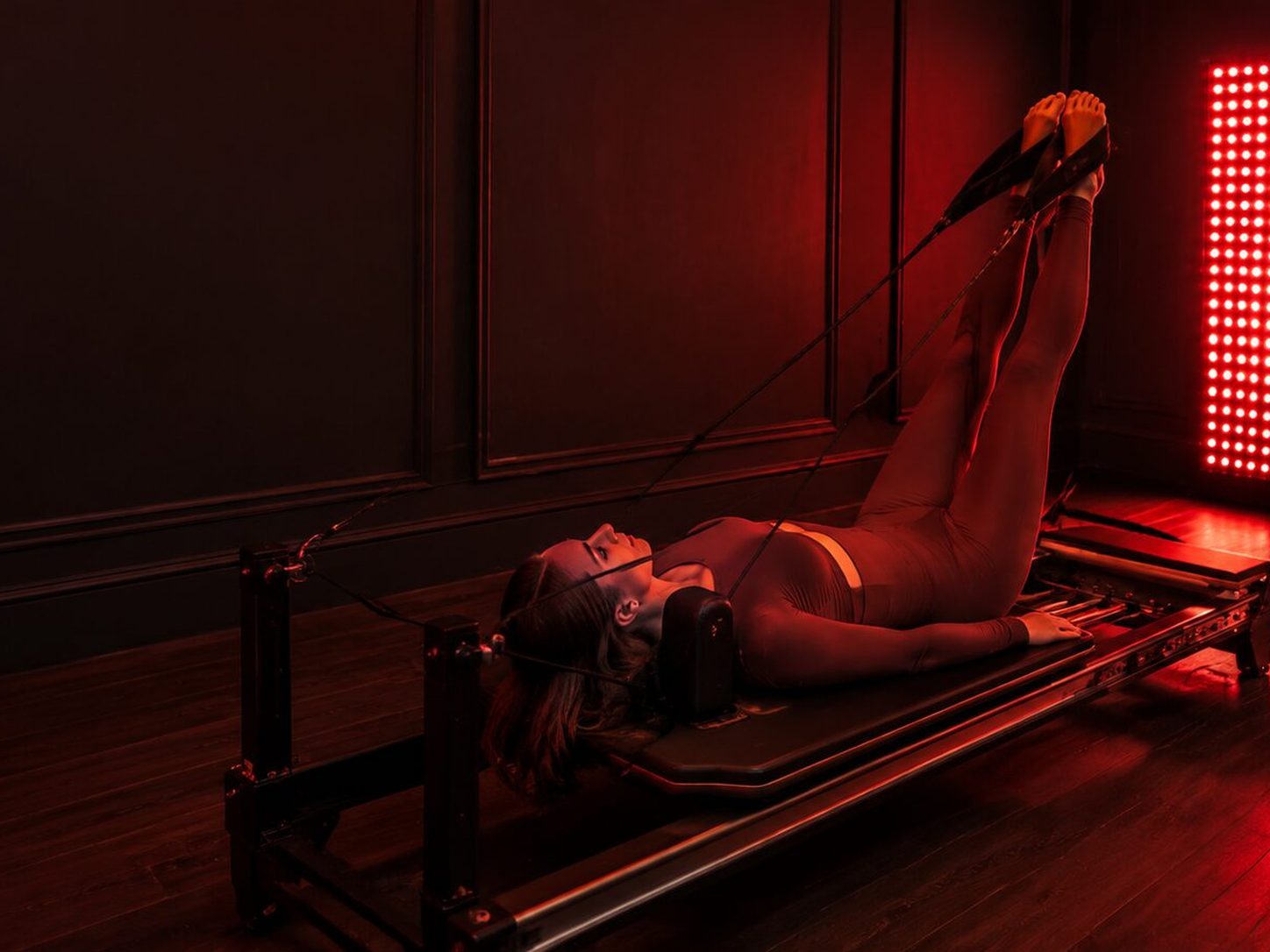
Movement
Why red light therapy doesn't belong in a Pilates class (and what actually works instead)
Why a red light panel glowing in a Pilates class isn't red light therapy, what proper dosing actually needs, and how to get both done properly in Milton Keynes.
Ramasamy8 min readRead the article
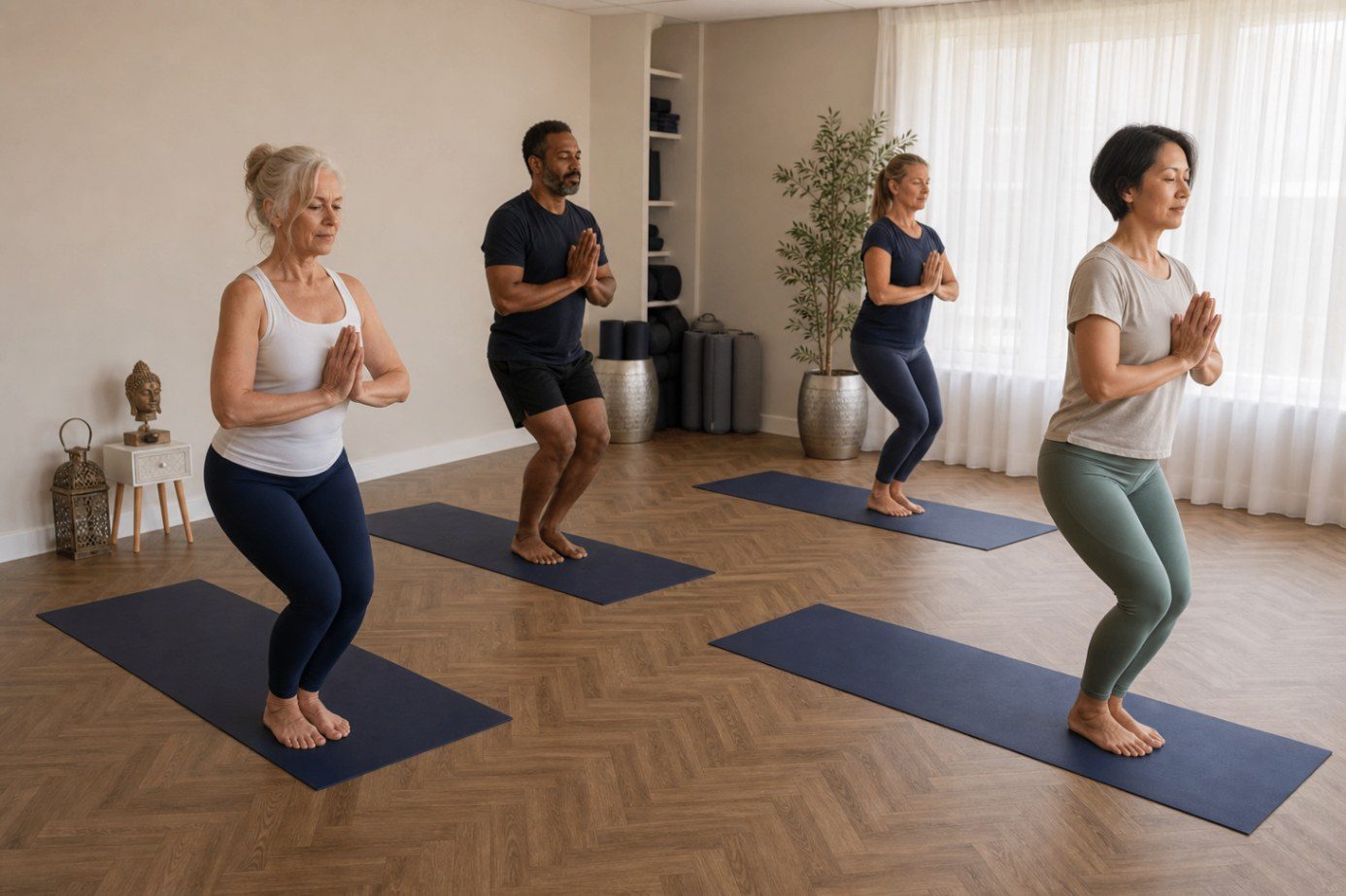
Movement
What are the health benefits of yoga?
Strength, flexibility, balance, back pain and mental wellbeing: the evidence for what regular yoga actually does for body and mind.
Ramasamy7 min readRead the article
Movement
What's the best exercise for perimenopause: yoga, Pilates or strength?
Why yoga, Pilates and strength training each address different parts of perimenopause, why a combination works best, and how to build a routine backed by clinical guidance.
Ramasamy8 min readRead the article


Stay informed
More from the Hanbury team.
New articles on recovery, movement, physiotherapy and performance, sent when there's something worth reading. No spam, unsubscribe any time.