
Movement
Can Pilates help protect bone density after menopause?

The short version
- Pilates counts as muscle-strengthening exercise, which is part of the bone-health picture.
- The strongest evidence for bone density favours resistance training plus weight-bearing impact.
- Pilates meaningfully improves balance, which helps prevent the falls that cause fractures.
- On its own, Pilates is less effective than resistance and impact training for building bone density.
- Combine it with dedicated resistance and impact work for a rounded bone-health plan.
- Reformer has a Beginners Course and Mat Pilates has a discounted intro offer, so trying either is low-risk.
Pilates can contribute to bone health after menopause as part of a broader exercise routine, but the honest picture is that it is not, on its own, the most effective exercise for building or protecting bone density. The strongest evidence for bone favours a combination of resistance (muscle-strengthening) exercise and weight-bearing impact, such as jogging, skipping or jumping. Pilates counts as muscle-strengthening and supports the strength, balance and posture that help prevent the falls that cause fractures, so it has a real and valuable place. But if protecting your bones is a priority, Pilates is best combined with dedicated resistance and impact work rather than relied on alone.
Try a reformer Pilates class at Hanbury Health, Milton Keynes.
Why does bone density matter after menopause?
The fall in oestrogen at menopause accelerates bone loss, which raises the risk of osteopenia, osteoporosis and fractures in later life. That makes the years around and after menopause an important window for protecting your bones. Exercise is one of the main tools available, because bone, like muscle, responds to being loaded: challenge it appropriately and it maintains or builds density; leave it unchallenged and it tends to decline. The question is which kinds of exercise load bone most effectively. Bone loss itself is silent, there is no ache or warning sign as density gradually declines, which is exactly why it tends to be overlooked compared with more noticeable menopause symptoms like hot flushes or disrupted sleep, even though the long-term consequences, a fracture from a fall that would once have been minor, can be serious. For the wider picture on movement through this life stage, see yoga for menopause symptoms.
What does the evidence say actually builds bone?
UK expert guidance is fairly clear on this. Consensus recommendations for bone health emphasise two things: muscle-strengthening (resistance) exercise, done a few days a week, and weight-bearing activities that include impact, such as brisk walking, jogging, skipping or jumping, which load the skeleton and stimulate bone. Progressive resistance training in particular is highlighted as effective for both muscle and bone. The general principle is that bone needs to be loaded with enough force, through resistance and impact, to prompt it to maintain or build density. This is the benchmark against which Pilates should be judged honestly.
Where does Pilates fit in?
Against that benchmark, Pilates has a genuine but supporting role. It is a form of muscle-strengthening exercise, and building and maintaining muscle is part of protecting bone and function. Just as importantly, Pilates improves balance, posture and core strength, which reduces the risk of falls, and since most fractures in later life result from falls, better balance is a meaningful contribution to bone-related health even where it is not directly building density. Pilates typically provides less of the higher-impact, heavier loading that most strongly stimulates bone. This tracks with a randomised trial of postmenopausal women with low bone mass, which found that eight months of high-intensity resistance and impact training produced significant gains in hip bone strength, while a matched low-intensity, Pilates-based programme was largely ineffective for the same measures. So it belongs in the mix, valued for strength and fall prevention, and complemented by resistance and impact work aimed squarely at bone. It is worth being specific about why balance matters so much here: a fall is often the single event that turns reduced bone density into an actual fracture, so an exercise that meaningfully lowers your chance of falling in the first place is protecting your bones just as surely as one that adds density to them, even though the two work through entirely different mechanisms. This fits a large 2026 Bayesian network meta-analysis of 423 trials and almost 34,000 older adults comparing 19 exercise types for balance, which found Pilates among the most effective specifically for dynamic balance, supporting its role in fall prevention even though it isn't the strongest option for building bone density directly.
How should you combine exercise for strong bones?
A sensible approach for bone health after menopause combines several elements: dedicated resistance or strength training a few days a week, some weight-bearing impact activity appropriate to your fitness and any existing bone condition, and Pilates for core strength, balance and posture. If you already have low bone density or osteoporosis, the type and intensity of impact needs to be tailored, and some high-impact activity may not be suitable, so it is important to get individual advice. The goal is a rounded programme, with Pilates as one valuable part of it. Reformer Pilates specifically offers a useful stepping stone into heavier resistance work for people who are not yet ready for a conventional gym environment, because the adjustable springs let you build genuine strength progressively, in a setting that feels far less intimidating than a weights room, before you decide whether to add dedicated resistance training alongside it. For a broader take on training through this stage, see the best exercise for perimenopause.
How much does it cost, and how do you book?
Getting started is designed to remove the guesswork. The Beginners Reformer Course is three sessions for £33, and Mat Pilates has an introductory offer of three classes for £15, both booked directly through Momence, Hanbury's online booking platform, with no phone calls or waiting list. Which to start with depends on your priorities: Reformer gives you adjustable spring resistance and a more guided, supported class, useful if you are easing back into exercise or want closer instructor input; Mat gives you a bodyweight-based class that is easy to combine with a home practice. Either is a genuine, low-commitment way to feel whether Pilates suits you, and either can be discussed with your instructor alongside your wider bone-health picture. See classes, prices and timetable.
Why Hanbury Health is different
Bone health after menopause is not something a reformer studio can meaningfully assess, however well it teaches Pilates. Hanbury can, because alongside classes built on the expertise of Yogomotiv, the award-winning Buckinghamshire studio now part of Hanbury Health, sits a healthspan and clinical team that can look at your bone health and overall risk directly, led by a founding orthopaedic surgeon. Rather than offering Pilates as a bone cure-all, the honest, evidence-based picture is paired with the medical guidance bone health after menopause actually needs, all under one roof. That distinction matters more here than almost anywhere else in the movement offer, because bone health is genuinely a medical question with a fitness component, not the other way round, and a studio that only ever talks about classes is, by definition, only ever giving you half the picture.
Frequently asked questions
Does Pilates build bone density?
It contributes as muscle-strengthening exercise and improves balance to prevent fall-related fractures, but for building bone density specifically, resistance and weight-bearing impact exercise are more effective. Combine them.
What is the best exercise for bones after menopause?
The evidence favours a combination of resistance (strength) training and weight-bearing impact activity, alongside balance work such as Pilates.
Is Pilates enough to protect my bones?
It is a valuable part of the picture, especially for strength and fall prevention, but on its own it is not the most effective for bone density. It is best combined with resistance and impact exercise.
I have osteoporosis, can I do Pilates?
Often yes, and it can help with strength and balance, but the programme should be adapted and high-impact or certain loaded movements may need modifying. Get individual advice first.
Where can I get a rounded bone-health plan in Milton Keynes?
Hanbury Health in Milton Keynes offers Pilates alongside healthspan and clinical support to help build an individually appropriate plan.
How much do Pilates classes cost at Hanbury?
The Beginners Reformer Course is three sessions for £33, and Mat Pilates has an introductory offer of three classes for £15, both booked through Momence.
References
- Brooke-Wavell K, et al. Strong, steady and straight: UK consensus statement on physical activity and exercise for osteoporosis. 2022.
- Royal Osteoporosis Society. Exercise and physical activity for osteoporosis and bone health.
- Kistler-Fischbacher M, Yong JS, Weeks BK, Beck BR. High-Intensity Exercise and Geometric Indices of Hip Bone Strength in Postmenopausal Women on or off Bone Medication: The MEDEX-OP Randomised Controlled Trial. Calcified Tissue International, 2022;111(3):256-266.
- Wang J, Guo S, Yang Y, et al. Exercise modalities for overall and domain-specific balance performance in older adults: a systematic review and Bayesian network meta-analysis. Ageing Research Reviews, 2026;121:103303.
Ready to put this into practice?
Hanbury Health is the only place in Milton Keynes where reformer Pilates and yoga are taught inside a full clinical team, built on the award-winning heritage of Yogomotiv, now part of Hanbury Health.
About the author: Sarah Ramasamy is Co-Founder and Director of Movement at Hanbury Health. She has taught yoga and Pilates for over 20 years and founded Yogomotiv, the award-winning Milton Keynes studio now part of Hanbury, where she leads the reformer Pilates, mat Pilates and yoga programme.
General information, not medical advice. Written by Sarah Ramasamy. Medically reviewed by Prof Arul Ramasamy MA PhD MBA FRCS(Tr+Orth). Last reviewed: 25 July 2026.
Related insights
Movement
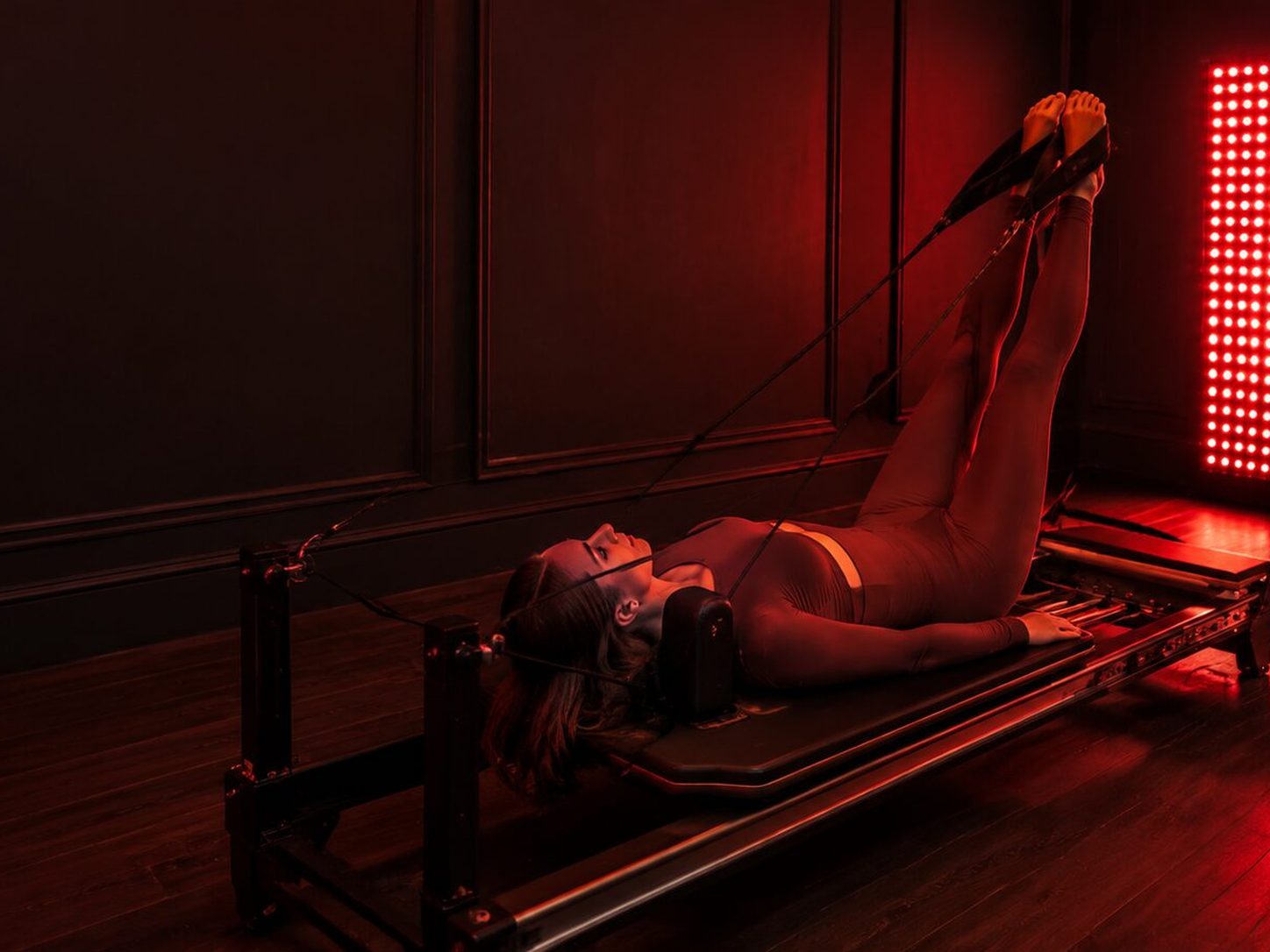
Why red light therapy doesn't belong in a Pilates class (and what actually works instead)
Why a red light panel glowing in a Pilates class isn't red light therapy, what proper dosing actually needs, and how to get both done properly in Milton Keynes.
Ramasamy8 min readRead the article
Movement
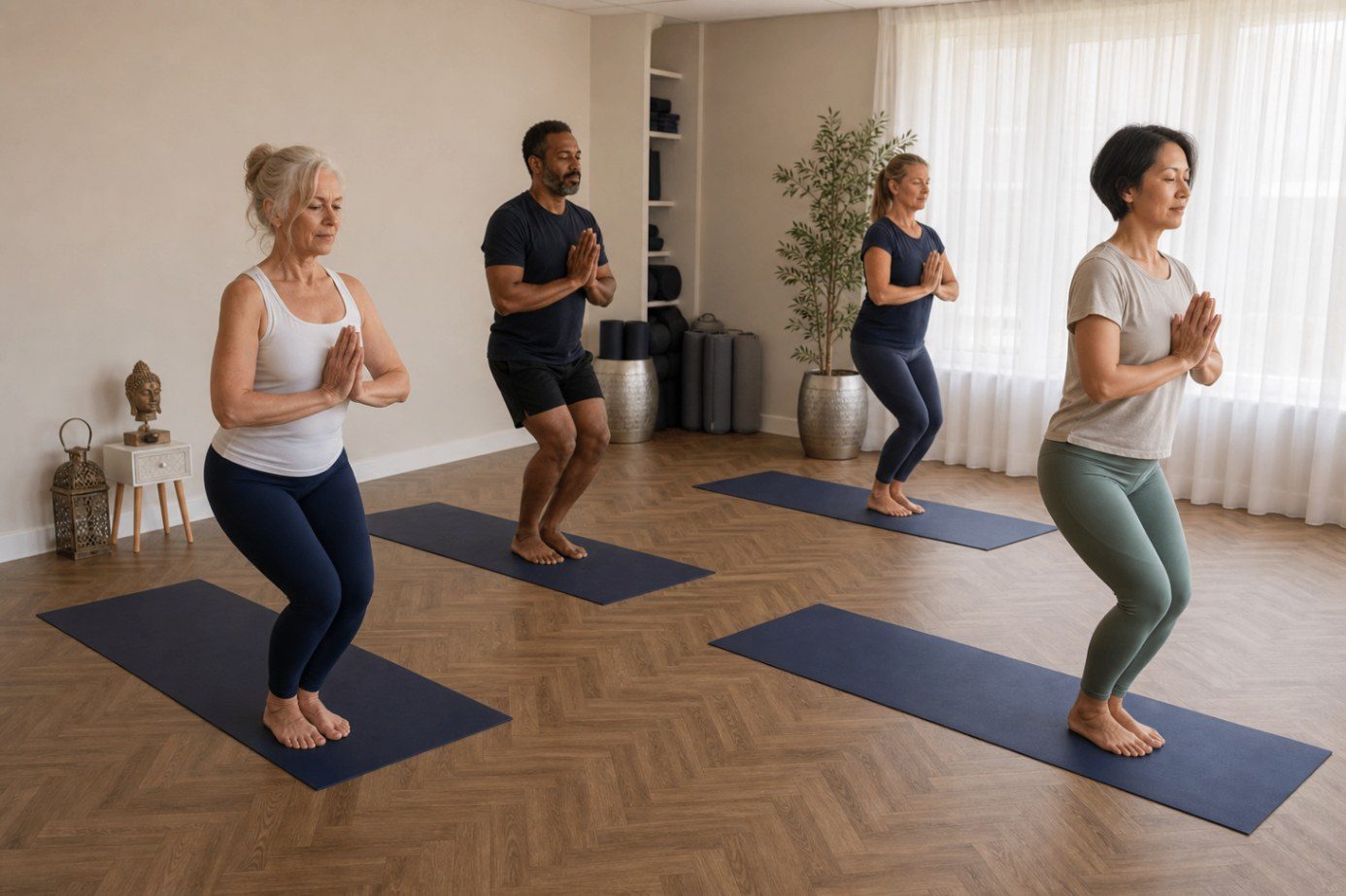
What are the health benefits of yoga?
Strength, flexibility, balance, back pain and mental wellbeing: the evidence for what regular yoga actually does for body and mind.
Ramasamy7 min readRead the article
Movement
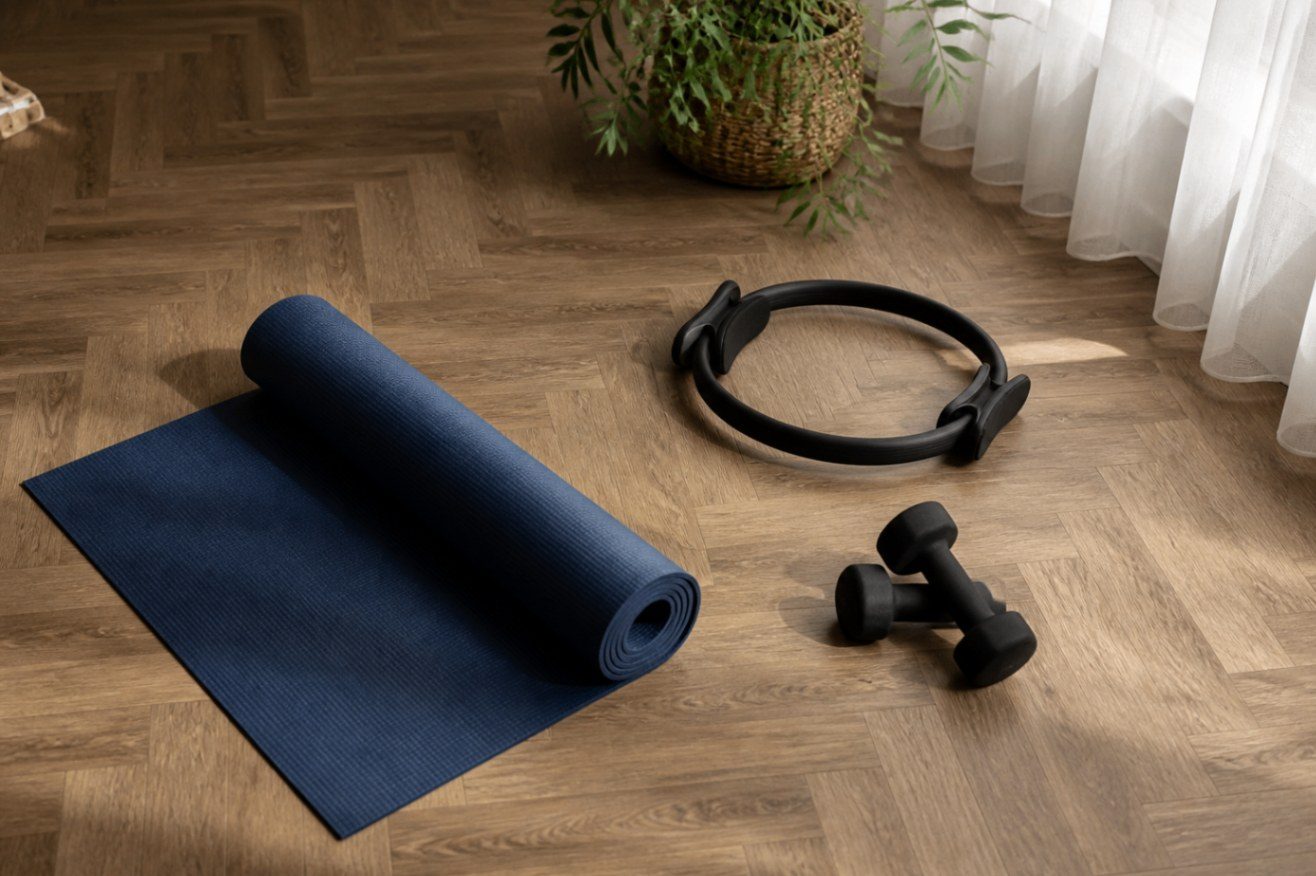
What's the best exercise for perimenopause: yoga, Pilates or strength?
Why yoga, Pilates and strength training each address different parts of perimenopause, why a combination works best, and how to build a routine backed by clinical guidance.
Ramasamy8 min readRead the article


Stay informed
More from the Hanbury team.
New articles on recovery, movement, physiotherapy and performance, sent when there's something worth reading. No spam, unsubscribe any time.