
Performance
Body composition testing in Milton Keynes: beyond the bathroom scale

The short version
- Your weight alone hides what matters: the ratio of lean mass to fat.
- Lean mass drives force and oxygen use; excess fat is passive weight to carry.
- Body composition affects performance, especially power-to-weight in many sports.
- Tracking it shows whether training is changing your body the way you want.
- At Hanbury we measure it with a Styku 3D scan, validated against DXA and highly reproducible for tracking change.
Body composition, how much of you is lean mass versus fat, tells you far more about your performance and health than your weight alone, which is why serious training benefits from measuring it properly rather than watching the scales. Two people at the same weight can have completely different bodies, and for performance what matters is the make-up: muscle produces force and uses oxygen, while excess fat is largely passive weight to carry. Measuring body composition, and tracking how it changes with training, turns a meaningless single number on the scales into useful information about your progress.
Why weight alone misleads
The bathroom scale measures one thing, total mass, and cannot tell muscle from fat or water. That is why the scale so often frustrates people who are training well: you can gain muscle and lose fat, improving your body and performance, while the number barely moves. For performance, the relevant questions are how much lean mass you have, how much fat, and how that is distributed, none of which the scale answers. Body composition testing replaces that single blunt number with a picture you can actually act on.
Why it matters for performance
Muscle is your engine's working tissue: it produces force and uses oxygen to generate energy. Fat, beyond the small amount that is essential, is mostly weight you carry without it contributing to power. In many sports, particularly weight-bearing ones like running, or anything involving climbing or jumping, your power-to-weight ratio, how much force you can produce relative to your body mass, is decisive. Improving body composition, building or preserving lean mass while managing fat, can therefore directly improve performance, and measuring it tells you whether you are moving in the right direction. Pair the picture with your resting metabolic rate to know how much you actually need to fuel it.
What a scan shows, honestly described
A body composition scan gives you your body-fat percentage and lean mass, a segmental breakdown (so you can see left-right or upper-lower differences), and circumference measurements, all repeatable so you can track change. It is worth being precise about the method: the Styku takes a detailed 3D scan of your body and derives your composition using models validated against DXA, the clinical reference method. In peer-reviewed studies this type of scanning shows close agreement with DXA for fat mass and lean mass, and near-perfect scan-to-scan reproducibility (test-retest reliability around 0.99). It is not a DXA itself, so DXA remains the ultimate reference, but for measuring your composition accurately and tracking how it changes over time, the Styku does both well. For a primer on the reference method itself, see what is a DEXA scan .
Why Hanbury Health is different
At Hanbury, body composition is measured with a Styku 3D scan as the foundation (Level 1) of the Performance Blueprint, and, importantly, the result is interpreted with you by an expert and set against the rest of your testing, rather than handed over as a printout. Because it sits alongside metabolism, aerobic and strength testing, your body composition is understood in the context of your whole performance and health, and re-scanning lets you track real change over time as part of the Hanbury Method. It is included from Level 1 (£197).
Frequently asked questions
What is body composition testing?
A measurement of what your body is made of, principally lean mass and fat, rather than just your total weight. It gives a far more useful picture for performance and health.
Why is body composition better than weighing myself?
The scale can't tell muscle from fat, so it misses real progress, like gaining muscle while losing fat. Body composition shows what is actually changing.
Is a 3D body scan as accurate as a DEXA?
The Styku 3D scan derives your body composition using models validated against DXA, and peer-reviewed studies show close agreement with DXA for fat mass and lean mass, plus near-perfect scan-to-scan reproducibility. DXA remains the reference method, but the Styku is both accurate and excellent for tracking change over time.
What is power-to-weight and why does it matter?
It is how much force you produce relative to your body mass, decisive in weight-bearing and climbing or jumping sports. Improving body composition can improve it.
Where can I get a body composition scan in Milton Keynes?
Hanbury Health offers Styku 3D body composition scanning within the Performance Blueprint, from Level 1.
References
- Body composition in performance testing. INSCYD (industry whitepaper).
- NHS. Keeping to a healthy weight and body composition.
- DeRouchey JD, et al. Reliability of the Styku 3D whole-body scanner for the assessment of body size in athletes. Measurement in Physical Education and Exercise Science. 2020;24(4):228-237. doi:10.1080/1091367X.2020.1791124.
- Bennett JP, Liu YE, Quon BK, et al. Assessment of clinical measures of total and regional body composition from a commercial 3D optical body scanner. Clinical Nutrition. 2022;41(1):211-218. doi:10.1016/j.clnu.2021.11.031.
Ready to put this into practice?
Hanbury Health is the only place in Milton Keynes bringing VO2 max, body composition and objective strength testing together in one visit, under clinical direction and read with you by an expert.
About the author: Nick Allen is a director of Hanbury Health and a Chartered Physiotherapist (BSc (Hons), HCPC-registered, MCSP), with extensive experience in professional and endurance sport, currently Lead Physiotherapist for Great Britain Badminton. Rehabilitation across the physiotherapy service is medically reviewed by Prof Arul Ramasamy, a consultant foot-and-ankle surgeon.
General information, not medical advice. Written by Nick Allen. Medically reviewed by Prof Arul Ramasamy MA PhD MBA FRCS(Tr+Orth). Last reviewed: 25 July 2026.
Related insights
Performance
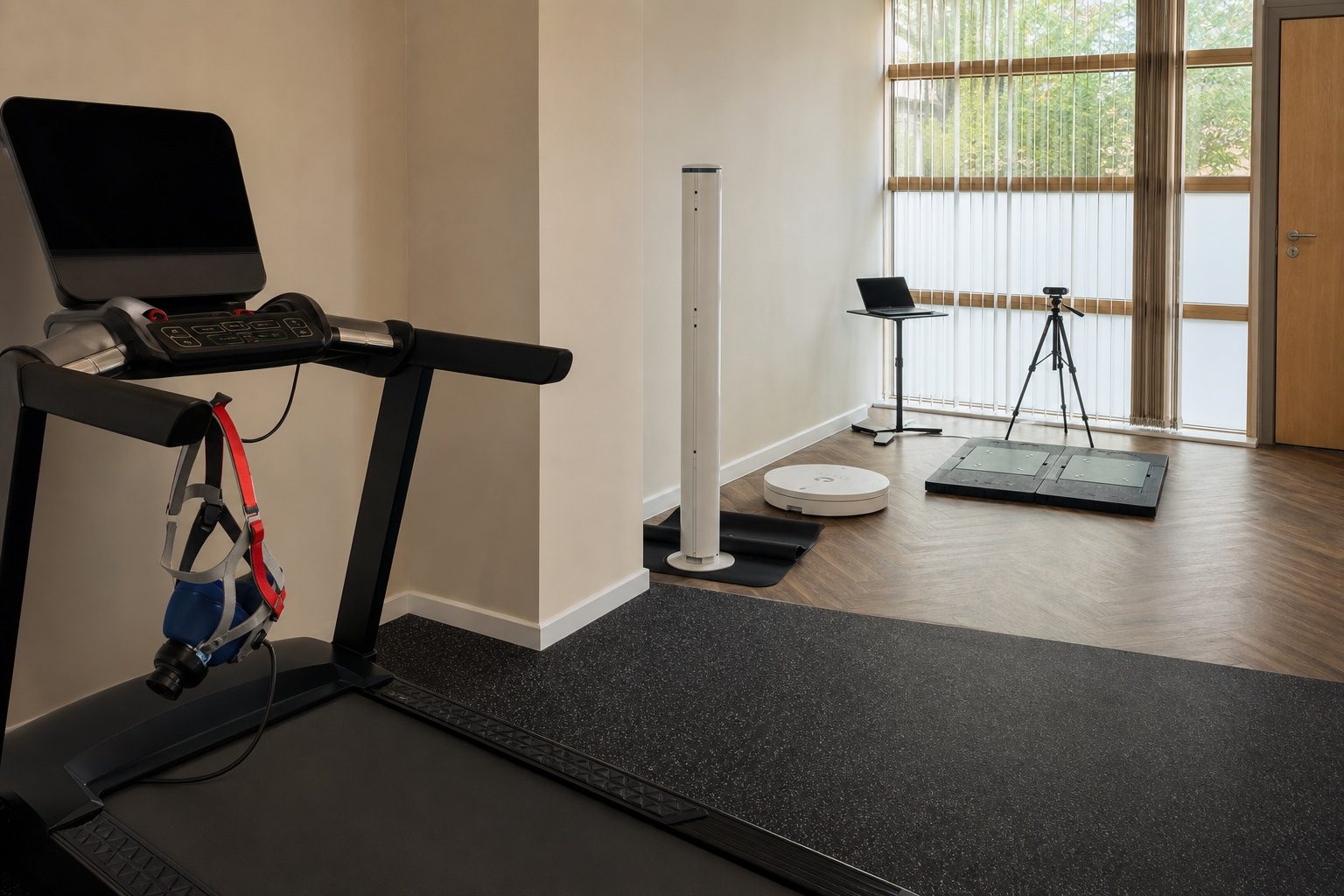
Performance testing in Milton Keynes: getting the complete picture
Why a complete, clinically-led assessment beats piecemeal testing, and the only place in Milton Keynes that brings VO2 max, body composition and strength together.
Allen7 min readRead the article
Performance
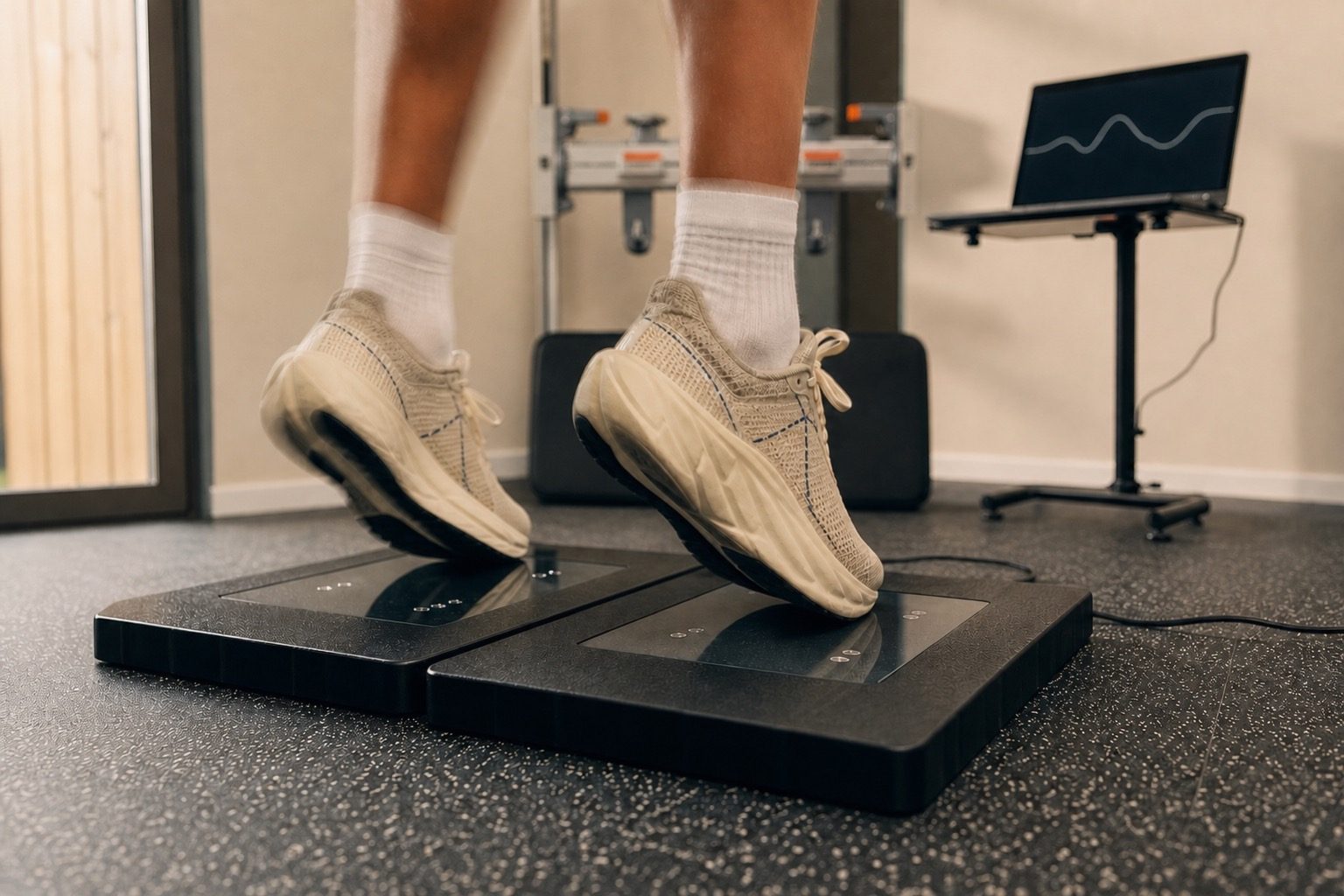
Force plate testing in Milton Keynes: power, jump performance and hidden asymmetry
How dual force plates quantify power, jump performance and left-right asymmetry, and why that data is useful for training and injury risk.
Allen7 min readRead the article

Performance
How to improve your VO2 max
The proven recipe: mostly easy aerobic training plus a small dose of hard intervals, consistent over months, guided by your real training zones.
Allen7 min readRead the article


Stay informed
More from the Hanbury team.
New articles on recovery, movement, physiotherapy and performance, sent when there's something worth reading. No spam, unsubscribe any time.