
Performance
Force plate testing in Milton Keynes: power, jump performance and hidden asymmetry

The short version
- Force plates measure the force you produce, very precisely, during jumps and other tasks.
- They quantify power, and how well you produce and absorb force.
- They reveal left-right asymmetries you cannot feel, associated with higher injury risk.
- The data guides training and monitors readiness and fatigue over time.
- At Hanbury we use dual VALD ForceDecks (Level 3 of the Blueprint).
Force plates measure the exact force your body produces during movements like jumps, hundreds of times a second, which lets us quantify your power, how well you produce and absorb force, and, crucially, any hidden differences between your left and right sides. Those left-right asymmetries are the headline: you can feel perfectly balanced and still be producing noticeably more power on one side, an imbalance associated with increased injury risk that no amount of training by feel will reveal. For performance, force plates turn power and balance from things you sense into things you can measure, track and improve.
What a force plate measures
A force plate is a precise platform that records the force passing through it many hundreds of times a second. From a simple movement like a countermovement jump, it captures how much force you produce, how quickly you produce it, how high you jump, and how you absorb the landing. Using two plates, one under each foot, it measures your left and right sides separately. That combination, force, speed of force, and left-versus-right, is a rich picture of your lower-body power and control that a tape measure or a coach's eye simply cannot provide.
Why asymmetry is the number that matters
The most valuable thing force plates reveal is often the one you would never notice: a difference in power or control between your two legs. After an old injury, or simply through dominance, many people quietly favour one side, and the eye cannot reliably see it. That matters because meaningful left-right asymmetry is associated with a significantly increased risk of injuries such as hamstring and ACL problems, as well as leaving performance on the table. Measuring it means you can address it deliberately, rather than discovering it when something tears. Force-plate studies of post-ACL-reconstruction athletes have measured this kind of asymmetry directly: one study found peak landing-force asymmetry of 12.7% in reconstructed limbs versus 1.7% in healthy controls, a difference invisible without instrumented testing. If you have had an ACL reconstruction, force plate testing for return to sport goes into more detail on that use case.
How the data improves training
Beyond spotting imbalances, force plate data guides and tracks training. It can show whether your power is improving, whether an imbalance is closing, and, over time, whether you are fresh or fatigued, since power output and how you produce force change when you are tired. That makes force plates useful not just for a one-off assessment but for monitoring, so training load and readiness can be managed with objective data rather than guesswork. For anyone serious about power-based performance, that feedback loop is genuinely valuable, and pairs well with objective strength and movement testing.
An honest note on injury risk
We describe the injury-risk link carefully and honestly. Asymmetry and certain force-plate findings are associated with increased injury risk, and reducing them is sensible, but we do not attach a single, precise "your risk is X times higher" figure to one measurement, because that overstates what any one number can tell you. The right use of the data is to identify and address meaningful imbalances and monitor readiness, as part of a broader plan, not to make dramatic individual predictions.
Why Hanbury Health is different
At Hanbury, force plate testing uses dual VALD ForceDecks within the Elite tier of the Performance Blueprint, and the results are interpreted by experts and set into a plan, including addressing any asymmetry and monitoring your progress, rather than handed over as raw numbers. Because it sits alongside strength, movement, aerobic and body composition testing, your power is understood in the context of your whole profile, and it connects straight into Hanbury's physiotherapy and training pathways if a finding needs acting on. It is part of Level 3 (£895).
Frequently asked questions
What does force plate testing measure?
The force you produce during movements like jumps, precisely and for each leg separately, giving your power, how fast you produce force, jump performance, landing control, and left-right asymmetry.
Why does left-right asymmetry matter?
Meaningful differences between sides are associated with increased injury risk and lost performance, and you usually cannot feel them. Measuring lets you address them deliberately.
Can force plates track my training?
Yes. They can monitor whether power is improving, whether an imbalance is closing, and whether you are fresh or fatigued, so training can be guided by data.
Do force plates predict injury?
They reveal factors associated with increased injury risk, which is useful for guiding training, but no single measurement gives a precise individual prediction, and we do not present it that way.
Where can I get force plate testing in Milton Keynes?
Hanbury Health offers VALD ForceDecks force plate testing within the Performance Blueprint (Level 3).
References
- Grindem H, Snyder-Mackler L, Moksnes H, Engebretsen L, Risberg MA. Simple decision rules can reduce reinjury risk after ACL reconstruction: the Delaware-Oslo ACL cohort study. British Journal of Sports Medicine, 2016;50(13):804-808.
- VALD Health. ForceDecks dual force plate system.
- Bakal DR, Morgan JJ, Lyons SM, Chan SK, Kraus EA, Shea KG (2022). Analysis of limb kinetic asymmetry during a drop vertical jump in adolescents post anterior cruciate ligament reconstruction. Clinical Biomechanics, 100, 105794.
Ready to put this into practice?
Hanbury Health is the only place in Milton Keynes bringing VO2 max, body composition and objective strength testing together in one visit, under clinical direction and read with you by an expert.
About the author: Nick Allen is a director of Hanbury Health and a Chartered Physiotherapist (BSc (Hons), HCPC-registered, MCSP), with extensive experience in professional and endurance sport, currently Lead Physiotherapist for Great Britain Badminton. Rehabilitation across the physiotherapy service is medically reviewed by Prof Arul Ramasamy, a consultant foot-and-ankle surgeon.
General information, not medical advice. Written by Nick Allen. Medically reviewed by Prof Arul Ramasamy MA PhD MBA FRCS(Tr+Orth). Last reviewed: 25 July 2026.
Related insights
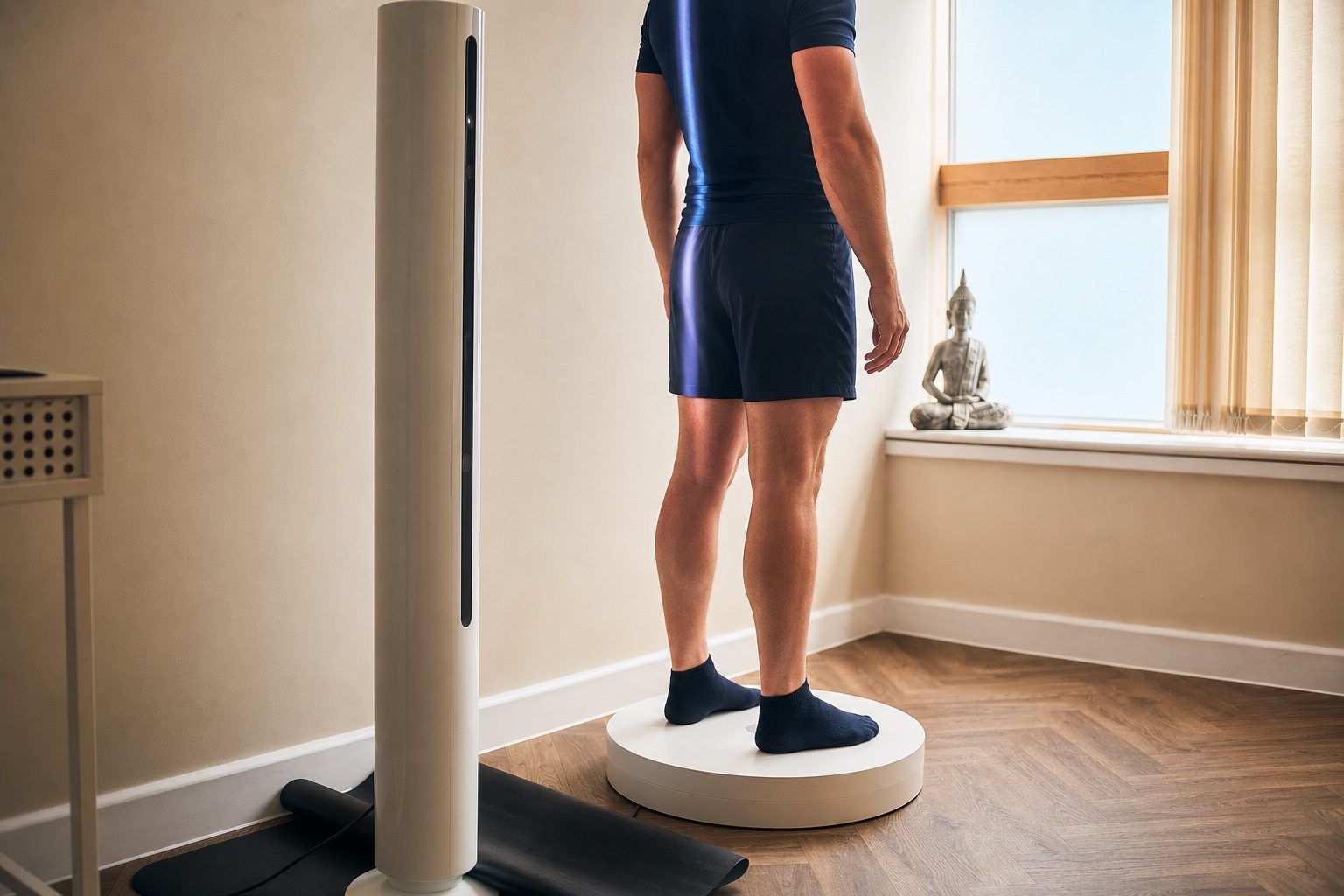
Performance
Body composition testing in Milton Keynes: beyond the bathroom scale
Why lean mass and power-to-weight matter more than the scale, how a Styku 3D scan measures it, and what the numbers mean for training.
Allen7 min readRead the article
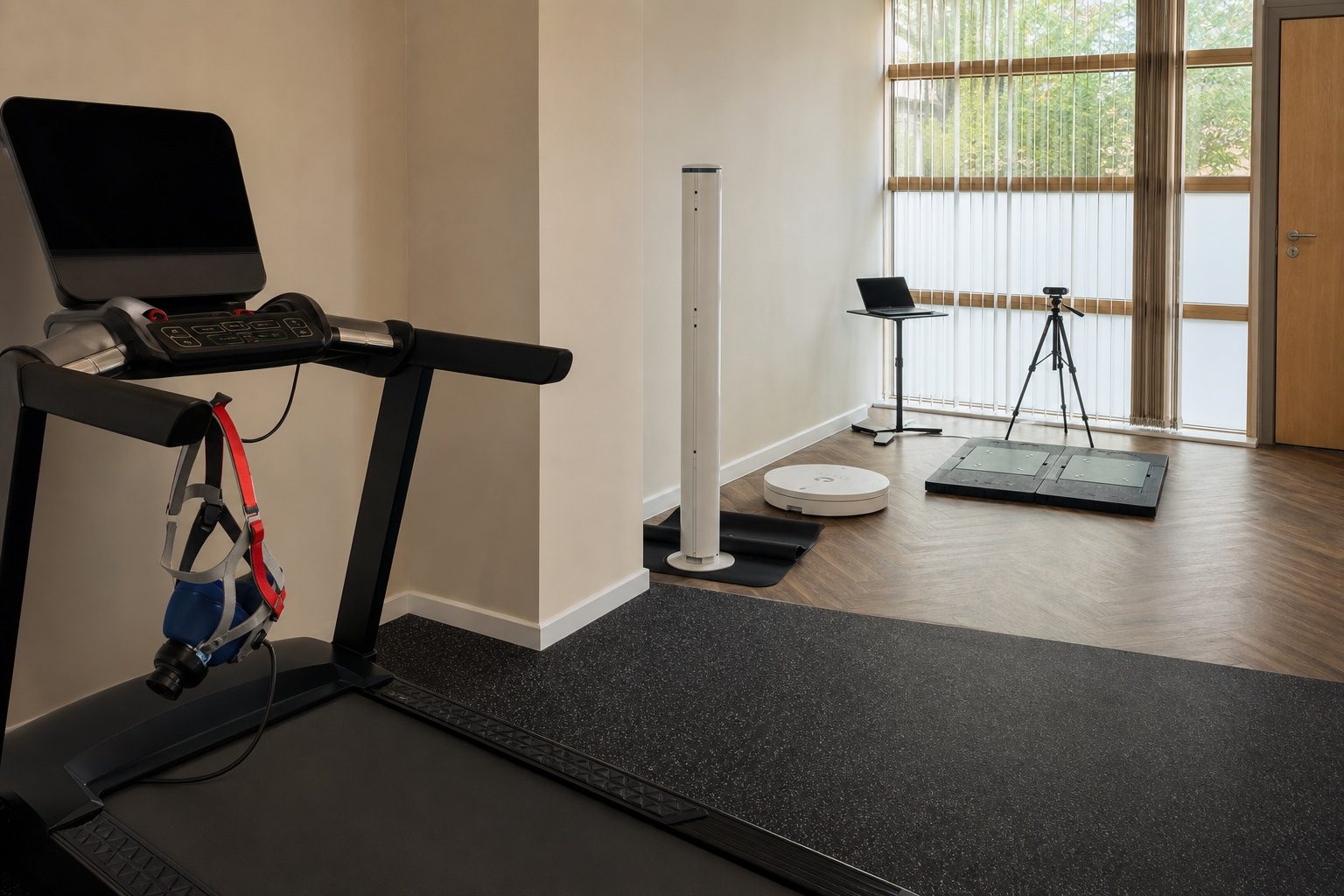
Performance
Performance testing in Milton Keynes: getting the complete picture
Why a complete, clinically-led assessment beats piecemeal testing, and the only place in Milton Keynes that brings VO2 max, body composition and strength together.
Allen7 min readRead the article

Performance
How to improve your VO2 max
The proven recipe: mostly easy aerobic training plus a small dose of hard intervals, consistent over months, guided by your real training zones.
Allen7 min readRead the article


Stay informed
More from the Hanbury team.
New articles on recovery, movement, physiotherapy and performance, sent when there's something worth reading. No spam, unsubscribe any time.