
Performance
How to improve your VO2 max

The short version
- VO2 max is your aerobic ceiling, and for most people it can be improved.
- The proven recipe is mostly easy training plus a small dose of hard intervals.
- High-intensity intervals push the ceiling up; easy aerobic work builds the base that supports them.
- Consistency across months matters more than any single heroic session.
- Training to your measured zones, not a watch estimate, makes every session count.
You improve your VO2 max by combining a large amount of easy aerobic training with a smaller amount of hard, high-intensity work, repeated consistently over months. Most people can raise their VO2 max meaningfully, and the biggest gains come from training the right amounts at the right intensities rather than simply training harder more often.
Can you actually improve your VO2 max?
Yes. Your genetics set a broad range, but training moves you within it, and for most people there is plenty of room. People starting from an untrained base tend to see the largest gains, often in the region of ten per cent or more with structured training, whilst well trained athletes improve more slowly but still improve. VO2 max naturally declines with age, but consistent training slows that decline substantially, so improving it is worthwhile at any age.
The training that works: mostly easy, some hard
The approach with the strongest evidence behind it is often called polarised training: spend the large majority of your time, commonly around eighty per cent, at an easy aerobic intensity, and a small minority at genuinely hard intensities. The easy work builds the aerobic base, the mitochondria and the blood supply that let your muscles use oxygen, whilst the hard work provides the stimulus that lifts the ceiling. Getting this balance right is the single most common thing recreational athletes get wrong, usually by making their easy days too hard and their hard days not hard enough. Our guides to training zones and to Zone 2 training explain how to keep the two genuinely separate.
High-intensity intervals: the direct stimulus
Hard intervals near your maximum are the most direct driver of a higher VO2 max. A well known example is the four by four protocol, four bouts of around four minutes at a hard effort with a few minutes of easy recovery between them, performed once or twice a week. These sessions are demanding, so they need proper recovery around them, and they work best sitting on top of a solid base of easy aerobic training rather than replacing it.
Do not neglect strength and consistency
Strength training supports your engine by improving efficiency and resilience, so you hold good form as you tire and stay free of the niggles that interrupt training. Beyond the sessions themselves, the boring factors decide most of your progress: turning up week after week, sleeping enough, and fuelling properly, which is where knowing your real metabolism helps. The athlete who trains sensibly for six months beats the one who trains brilliantly for three weeks and then stops.
How long does it take to improve VO2 max?
You can expect to feel fitter within a few weeks of consistent training, but meaningful, measurable change in VO2 max usually takes two to three months of steady work. The exact rate depends on your starting point, your training history and how consistent you are. This is precisely why measuring at the start and re-testing later is useful: it shows whether your plan is actually working rather than leaving you to guess.
| Timeframe | What to expect |
|---|---|
| Weeks 1-3 | You feel fitter and sessions feel easier, before the number moves. |
| Weeks 4-8 | Early, measurable change in VO2 max with consistent training. |
| Weeks 8-12+ | Meaningful gains; a good point to re-test and confirm the plan is working. |
Why measured zones get you there faster
At Hanbury, improving your VO2 max starts with measuring it. Your VO2 max is measured directly from your breath during the uVida test, taken to the point of exhaustion, and the same test gives us your personal training zones and an estimate of your anaerobic threshold, so your easy days are genuinely easy and your hard days land in the right place. Your results are read with you by an expert and set into a plan as part of the Hanbury Method of Test, Train, Track and Transform, with re-testing to prove the change. VO2 max and training-zone testing is available in Milton Keynes from Level 2 of the Performance Blueprint (£495), with the Blueprint starting from £197.
Frequently asked questions
How can I improve my VO2 max quickly?
There is no shortcut, but the fastest sustainable route is consistent training that mixes plenty of easy aerobic work with a small amount of hard intervals, done to your real training zones. Most people see measurable change in two to three months.
What exercises improve VO2 max?
Any activity that raises your heart rate steadily works, such as running, cycling, rowing or brisk uphill walking. The key is the pattern: mostly easy aerobic sessions plus one or two hard interval sessions a week.
How long does it take to improve VO2 max?
You will usually feel fitter within a few weeks, with meaningful change in your VO2 max over two to three months of consistent training. Your starting point and consistency set the pace.
Does Zone 2 training improve VO2 max?
Zone 2 builds the aerobic base that makes hard sessions effective and repeatable, so it supports a higher VO2 max even though the hard intervals provide the direct stimulus. The two work together.
Can older adults improve their VO2 max?
Yes. VO2 max declines with age, but training slows that decline and can improve it at any age, which is one of the strongest reasons to keep training as you get older.
Where can I get VO2 max testing in Milton Keynes?
Hanbury Health offers VO2 max and training-zone testing within the Performance Blueprint in Milton Keynes, from Level 2 (£495).
References
- Seiler S. What is best practice for training intensity and duration distribution in endurance athletes? International Journal of Sports Physiology and Performance. 2010;5(3):276-291.
- Kaminsky LA, Arena R, Myers J. Reference standards for cardiorespiratory fitness measured with cardiopulmonary exercise testing: data from the FRIEND registry. Mayo Clin Proc. 2015;90(11):1515-1523. doi:10.1016/j.mayocp.2015.07.026.
- NHS. Physical activity guidelines for adults.
Ready to put this into practice?
Hanbury Health is the only place in Milton Keynes bringing VO2 max, body composition and objective strength testing together in one visit, under clinical direction and read with you by an expert.
About the author: Nick Allen is a director of Hanbury Health and a Chartered Physiotherapist (BSc (Hons), HCPC-registered, MCSP), with extensive experience in professional and endurance sport, currently Lead Physiotherapist for Great Britain Badminton. Rehabilitation across the physiotherapy service is medically reviewed by Prof Arul Ramasamy, a consultant foot-and-ankle surgeon.
General information, not medical advice. Written by Nick Allen. Medically reviewed by Prof Arul Ramasamy MA PhD MBA FRCS(Tr+Orth). Last reviewed: 25 July 2026.
Related insights
Performance
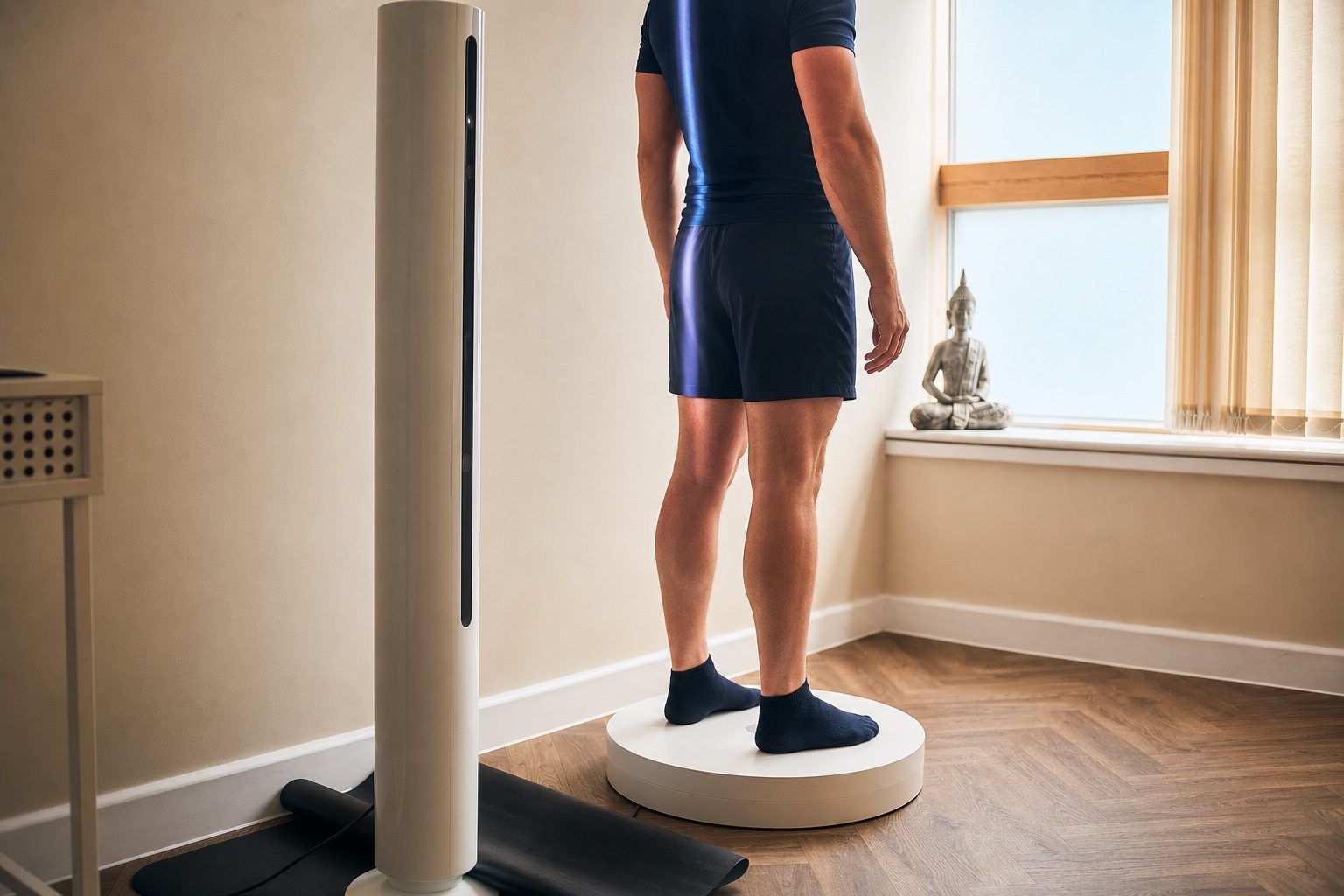
Body composition testing in Milton Keynes: beyond the bathroom scale
Why lean mass and power-to-weight matter more than the scale, how a Styku 3D scan measures it, and what the numbers mean for training.
Allen7 min readRead the article
Performance
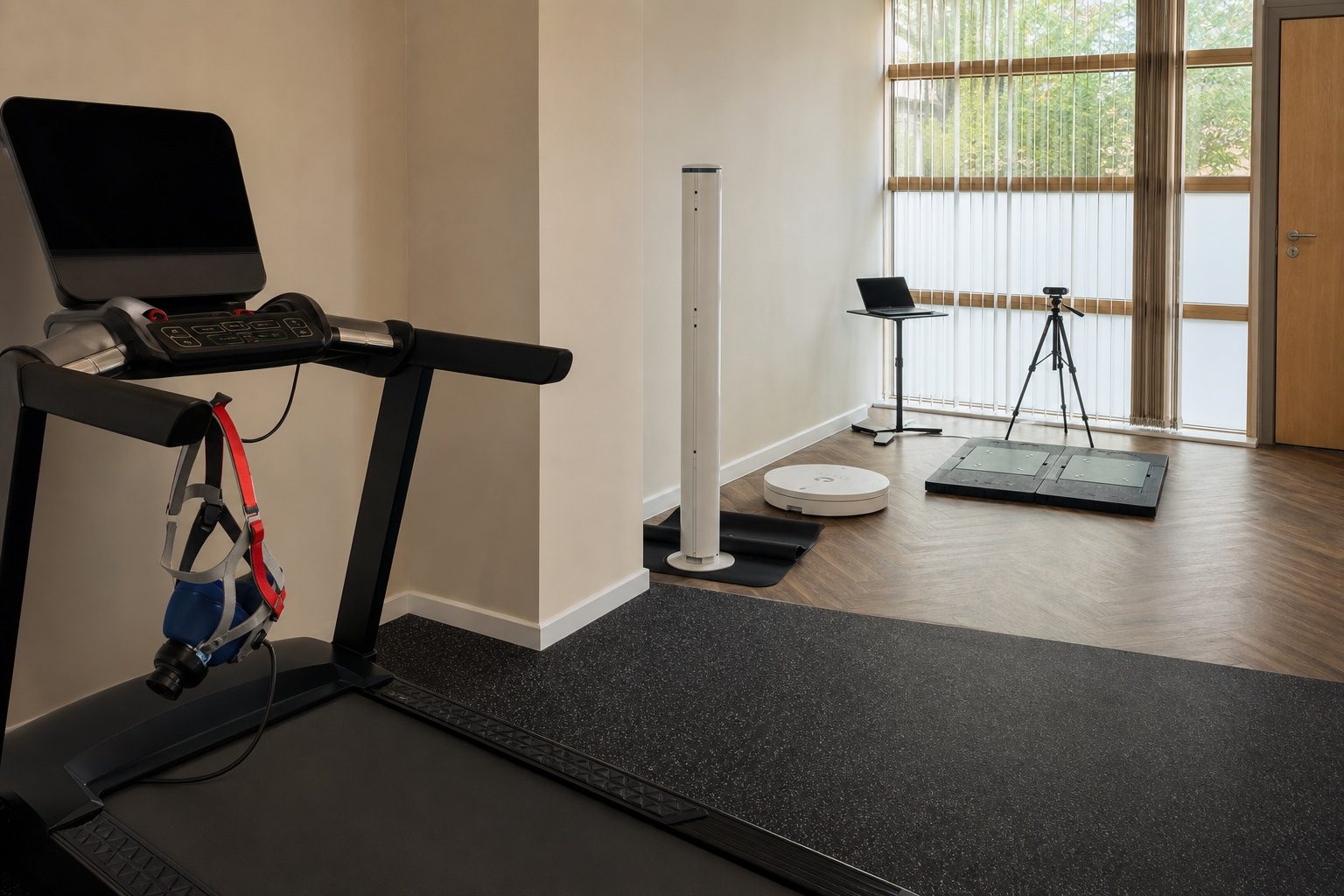
Performance testing in Milton Keynes: getting the complete picture
Why a complete, clinically-led assessment beats piecemeal testing, and the only place in Milton Keynes that brings VO2 max, body composition and strength together.
Allen7 min readRead the article
Performance
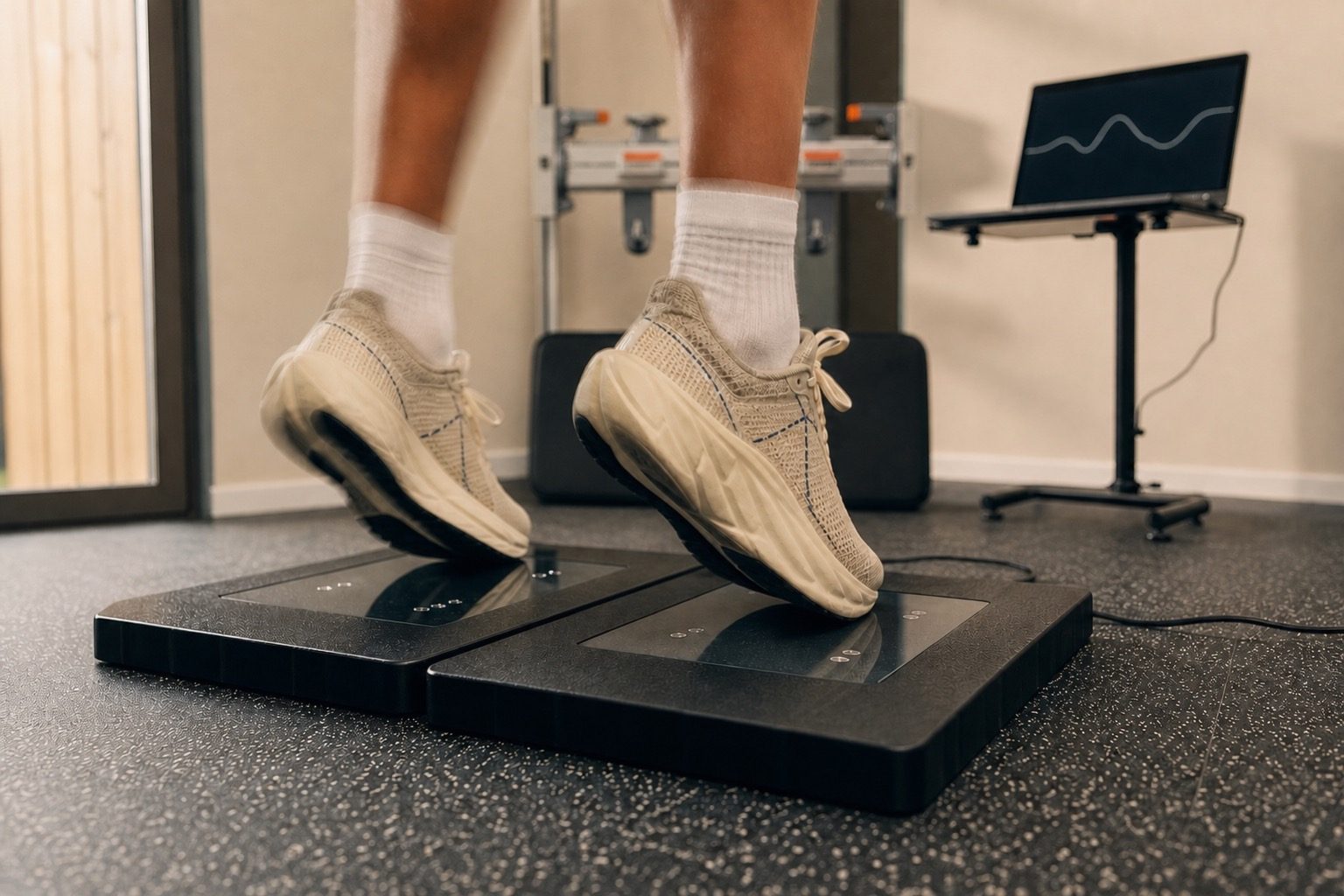
Force plate testing in Milton Keynes: power, jump performance and hidden asymmetry
How dual force plates quantify power, jump performance and left-right asymmetry, and why that data is useful for training and injury risk.
Allen7 min readRead the article


Stay informed
More from the Hanbury team.
New articles on recovery, movement, physiotherapy and performance, sent when there's something worth reading. No spam, unsubscribe any time.