
Move · Physiotherapy
Growing athletes and adolescent physiotherapy in Milton Keynes
Most of the young people we see are athletes with a sports injury that needs the same structured rehabilitation an adult would get, adjusted for a body that is still growing, plus training advice that helps them come back stronger and get injured less often. A smaller number are dealing with a growth-plate condition instead, such as a sore heel or an aching knee that tracks with a growth spurt rather than an injury. A growth plate is still developing tissue, not yet solid bone, which is exactly why it needs a different assessment, and a different answer, than an adult’s would.
Not sure what you need? Call 01908 330 243
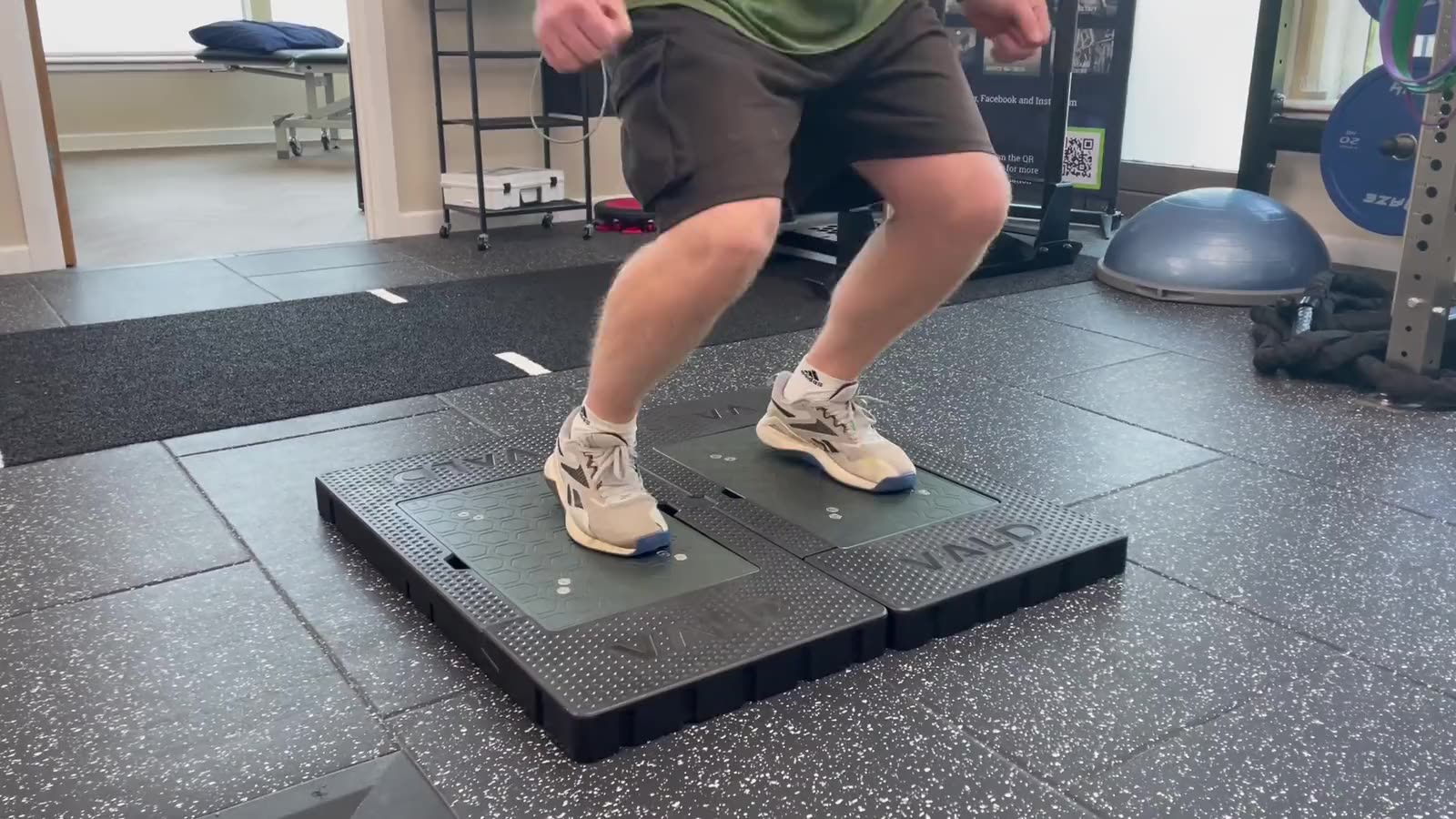
How we manage growing athletes
Most of the young people we see are not dealing with a specific paediatric diagnosis. They are school or club-level athletes who have picked up a sports injury and need the same structured rehabilitation an adult would get, adapted for a body that is still growing. Nick Allen and Simon Jones both worked pitch-side with adolescent athletes at Stowe School, and Simon continues to work with Cambridge University sport, so this is territory they know from years of seeing it in person.
Training advice and education sit alongside treatment, not after it. Where an injury is linked to how a young athlete is training, loading or recovering, that gets addressed directly, because reducing the chance of it coming back, and building habits that carry them safely through the next growth spurt and the next season, matters as much as resolving what brought them in.
For the smaller number of adolescent patients whose pain is coming from the growth plate itself rather than a specific injury, we assess and manage that too, and explain the difference clearly to both the young person and their parents. What that looks like is below.
What this usually is
This section looks specifically at growth-plate conditions, the smaller group where pain is coming from the growth plate itself rather than a sports injury.
Growth plates (physes) and their attachment points (apophyses) are areas of active growing cartilage, not yet solid bone, and they are a genuine site of relative weakness in a growing skeleton — which is why the same load that would just strain an adult's tendon can instead irritate the bone attachment itself in a child or teenager. According to PubMed (Nguyen & Caine, Seminars in Musculoskeletal Radiology, 2024, DOI: 10.1055/s-0044-1786151).
Osgood-Schlatter disease is pain and a bony lump at the top of the shin bone, just below the kneecap, where the thigh muscle's tendon attaches. It is the most common growth-related overuse condition we see, typically ages 10 to 15, worse with running, jumping and kneeling, and it tracks closely with growth spurts and rapid increases in training load. The adult equivalent of this anterior knee pain pattern is covered in our Insights explainer on runner's knee and patellofemoral pain.
Sever's disease (calcaneal apophysitis) is heel pain at the back of the growth plate in the heel bone, typically ages 8 to 14, worse with running and jumping sports — the most common cause of heel pain in this age group, and, because this is our subspecialty, an area we assess with particular attention to the whole foot and ankle mechanics, not just the sore spot.
Sinding-Larsen-Johansson syndrome is a close cousin of Osgood-Schlatter, affecting the growth plate at the lower tip of the kneecap rather than the shin, with the same underlying mechanism and a similar approach to managing it.
The growth spurt itself changes injury risk, independent of any single condition. As girls move through the adolescent growth spurt, longitudinal studies have found measurable changes in landing technique, knee laxity, and the balance between quadriceps and hamstring strength, changes thought to contribute to the well-documented rise in ACL injury risk during and after this period. According to PubMed (Wild, Steele & Munro, Medicine & Science in Sports & Exercise, 2013, DOI: 10.1249/MSS.0b013e31826a507e; Wild, Munro & Steele, American Journal of Sports Medicine, 2016, DOI: 10.1177/0363546516629419). This is one of the reasons we pay close attention to where a young athlete is in their growth, not just their age.
None of the conditions above are "damage" in the way an adult tendon tear is — they are a normal skeletally-immature response to load, and the overwhelming majority resolve completely once the growth plate closes. That does not mean they should be ignored, run through, or self-diagnosed at home — see the section below.
When it is worth getting checked
Seek urgent medical attention the same day, at A&E or an urgent care service, if you have
- Sudden, significant pain after a specific fall or impact, with an inability to weight-bear, swelling, or visible deformity — possible growth plate (physeal) fracture, a different and more urgent picture from gradual-onset apophysitis pain, and one that genuinely can affect future growth if missed
- A hot, red, significantly swollen joint, especially with fever — possible septic arthritis or osteomyelitis, which can progress quickly in children and is a genuine emergency
Speak to your GP the same day, or ask us to assess it before starting any hands-on treatment, if your child has
- Hip, groin, thigh or knee pain with a limp, particularly in an early-to-mid teenage boy who is overweight for his age — possible slipped capital femoral epiphysis (SCFE). Knee pain is a well-documented, commonly missed presentation of hip pathology in this age group: of 20 patients with delayed SCFE diagnosis in one series, 12 had self-referred to a chiropractor or physiotherapist and received hip manipulation before diagnosis. According to PubMed (Rahme et al., Journal of Pediatric Orthopaedics B, 2006, DOI: 10.1097/01.bpb.0000188251.24771.c9). Every young person presenting to us with hip, groin, thigh or knee pain gets a hip screen as standard, precisely because of this.
- Hip or knee pain and a limp in a younger child, roughly ages 4 to 10, without a clear recent injury — possible Legg-Calvé-Perthes disease, which needs medical assessment rather than physiotherapy first
- Pain in more than one joint at once, or pain with fever, unexplained weight loss, or night pain that is not related to the day's activity
For straightforward, activity-related growth pain in one area, physiotherapy is a sensible starting point — and, per the point above, that starting point includes a hip check for anything above the knee, not an assumption. This page is general information and does not replace an individual assessment — if anything above applies to your child, please contact your GP or A&E rather than relying on this page alone.
What your first appointment involves — and what it costs
Sixty minutes: a full history including sport, training load and growth pattern, an examination (including a hip screen for any hip, thigh or knee presentation), an explanation both you and your child can understand and repeat, hands-on treatment where appropriate, a plan, a review point, and onward referral if that is the better next step.
Pricing
Clear, simple fees.
The same rate applies to adults and children/adolescents.
Initial assessment
£110
60 minutes, including history, examination, diagnosis, and your first plan.
Follow-up appointment
£70
Ongoing treatment, progress checks, and plan adjustments.
Using private medical insurance? See the FAQ below.
How we treat it here
Assessment first — including, as standard, a hip screen for any young person presenting with hip, groin, thigh or knee pain, because of how often hip pathology in this age group is mistaken for a purely local knee problem. According to PubMed (Katz, Pediatric Annals, 2006, DOI: 10.3928/0090-4481-20060201-10).
For Osgood-Schlatter disease and Sinding-Larsen-Johansson syndrome, the mainstay is load management, not blanket rest: reducing the specific activities that are provoking it while keeping the young person moving and training in the ways that do not, alongside quadriceps and hip strengthening as symptoms allow. High-quality trial evidence specifically for this condition is limited, which we say plainly rather than overstate — the consensus approach across paediatric sports medicine is activity modification and education, and the natural history is genuinely reassuring: near-universal resolution once the growth plate matures.
For Sever's disease, a systematic review of the available evidence found it is generally low-quality, but the limited data available suggested orthotic support gave better short-term pain relief than heel raises alone. According to PubMed (James, Williams & Haines, Journal of Foot and Ankle Research, 2013, DOI: 10.1186/1757-1146-6-16). Because this is our subspecialty, we bring a fuller foot and ankle assessment to it — looking at the whole mechanics of the foot, not treating the heel in isolation.
For the growth-spurt injury-risk window itself, particularly in adolescent girls in jumping, cutting and change-of-direction sport, we use this evidence to justify targeted landing mechanics and neuromuscular control work during this period specifically, rather than only reacting once an injury has already happened.
Throughout, education is a genuinely large part of the treatment — for the young person and for parents. Being told plainly that this is a normal, well-understood, self-limiting part of growing, not damage, and not something that means stopping sport altogether, changes how families approach it and, often, how quickly things settle.
Where something does not fit this pattern — a hip finding on the screening exam, a presentation that is not settling as expected, or anything from the red flags above — we refer you on promptly to the right specialist rather than continuing to treat it as straightforward growth pain.
What the plan usually looks like
This is built around load and growth, not a fixed number of sessions: an assessment, a load-management plan that keeps the young person as active as reasonably possible rather than sidelined, a defined review point, and progression as symptoms settle and training resumes. Because these conditions track with growth, review points are often spaced out over months rather than weeks — there is rarely a need for intensive, frequent treatment for a condition that is fundamentally about giving a growth plate time and the right load, not fixing a structural problem.
How many appointments this takes depends on the young person, the sport, and how things are progressing, and you will get an honest view at the first appointment rather than a number chosen in advance.
What to expect
From first assessment to progress check.
A straightforward three-step process. Each stage is designed to give you clarity, momentum, and confidence that you are heading in the right direction.
- 01
First assessment
We take a full history, assess how you move, and identify the underlying cause. You leave with a clear picture of what is happening and why.
- 02
Your treatment plan
A structured plan built around hands-on treatment, targeted exercise, and the right technology, paced to your body, your schedule, and your goals.
- 03
Progress check
We re-test, refine, and keep you moving forward. Regular check-ins make sure the plan is working and adjust before small issues become setbacks.

Referring consultant
“Growing bodies aren't small adult bodies, and this is one of the few teams locally who genuinely treat them that way. Parents leave reassured, not just told to rest and come back if it doesn't settle.”
“Thank you Ryan for all of your expertise, I don't think that I would have recovered this quickly without your guidance and knowledge.”
“First time with Louise, who I saw with a shoulder injury. She made me feel at ease and went into a lot of detail and certainly put across she knew what she was talking about. She spent the time listening to me without me feeling like I was being rushed. Excellent result and no hesitation in recommending her.”
“Nick helped me get back to full fitness after a painful Achilles injury. Nick explained the recovery process and managed my expectations of what was involved. Steady and very effective rehabilitation - thank you!”
Questions
Growing athlete FAQs
For the adult pattern these conditions are often confused with, see our tendon pain page.
Not usually, and complete rest is rarely necessary or even the most helpful thing. The general approach for growth-related conditions like Osgood-Schlatter and Sever's disease is managing the specific load that aggravates it, not stopping activity altogether — we will tell you honestly if your child's specific case is an exception.
Further reading: our physiotherapy hub, and our Insights explainers on runner's knee and patellofemoral pain, ankle sprain recovery, movement and gait analysis, how to know if you are ready to return to sport and what to do after an injury. For general information on bilateral, night-time aching, see NHS: growing pains.
Related conditions
Other problems we treat.
Knee pain
The adult-presentation version of Osgood-Schlatter and Sinding-Larsen-Johansson's territory.
Read moreAnkle & foot pain
The adult-presentation version of Sever's disease's territory.
Read moreTendon pain
The adult tendinopathy pattern these growth-plate conditions are often confused with.
Read more
If a growing athlete has a knee or heel that keeps flaring up, an assessment is the place to start.
Or call 01908 330 243