
Move · Physiotherapy
Back pain physiotherapy in Milton Keynes
Most back pain is not caused by anything sinister, and most of it settles. What makes the difference is a proper assessment, an explanation that makes sense, and a plan you can actually follow.
Not sure what you need? Call 01908 330 243
What this usually is
Most back pain does not come from one identifiable structure. It involves the muscles, the joints and the discs of the lower back together, alongside how sensitive the area has become and how you have been moving since it started. That is why a single label often does not fit, and why two people with similar scans can have very different symptoms.
It shows up in different ways: a dull ache low in the back, stiffness that is worst first thing in the morning, pain around the tailbone, or pain that spreads into a buttock or leg (see sciatica below). Some people arrive with a scan report already in hand describing a disc bulge, general wear and tear, or narrowing around the spinal canal. Those labels can sound alarming, but findings like these are common in people with no back pain at all — see the FAQ for the evidence behind that.
That is also why imaging is rarely the first step. In the early weeks it seldom changes what needs to happen next, in line with the NICE guideline on low back pain and sciatica (NG59). The more useful information comes from what makes it worse, what makes it easier, what you have stopped doing, and how it has changed since it began. Recurrence is common and does not mean the problem is getting worse or that something has been damaged.
Most back pain improves with time whatever you do. Physiotherapy does not replace that natural process. What it aims to do is help you stay as active as possible while it settles, give you an explanation of what is driving it, and reduce the chances of it coming back or dragging on.
When it is worth getting checked
Same-day A&E — cauda equina syndrome
- difficulty passing urine or loss of bladder or bowel control
- numbness or altered sensation around the saddle area (inner thighs, buttocks, genitals)
- weakness that is getting worse in both legs
Speak to your GP before booking physiotherapy if you have
- back pain following a significant fall or accident
- unexplained weight loss, fever or night sweats
- a history of cancer
- pain that is constant and progressive, unrelated to movement, or that consistently wakes you at night
- weakness in one leg or foot that is getting worse
- a first episode of significant back pain outside the usual age range (under 20 or over 55)
- long-term steroid use or a bone density condition such as osteoporosis
- a recent infection, or fever alongside new back pain
For everything else, physiotherapy is a sensible starting point. You do not need a GP referral and you do not need a scan to be seen. This page is general information and does not replace an individual assessment — if anything above applies to you, please contact your GP or A&E rather than relying on this page alone.
What your first appointment involves — and what it costs
Sixty minutes: a full history, an examination, an objective baseline where relevant, an explanation you can repeat to someone else, hands-on treatment where appropriate, a plan, a review point, and onward referral if that is the better next step.
Pricing
Clear, simple fees.
The same rate applies to adults and children/adolescents.
Initial assessment
£110
60 minutes, including history, examination, diagnosis, and your first plan.
Follow-up appointment
£70
Ongoing treatment, progress checks, and plan adjustments.
Using private medical insurance? See the FAQ below.
How we treat it here
Assessment first. A full history, an examination of how you move and how much you can load the area, and a neurological screen where the picture calls for one — checking the reflexes, muscle strength and sensation in your legs, to see whether a nerve is involved and, if so, which one. Then an explanation of what we believe is happening, in language you can repeat to someone else.
Treatment is usually a combination. Hands-on work has a genuine role in settling symptoms and restoring movement, but it works as part of a plan rather than as the plan. The part that changes the trajectory is graded loading: getting the back doing more, in a controlled way, at a rate it tolerates.
Where it helps, we measure rather than assume. Objective strength and asymmetry measurement gives a baseline you can see, so progress is demonstrated rather than reported, and the on-site rehabilitation gym means the progression happens under supervision instead of being handed over as a sheet of exercises.
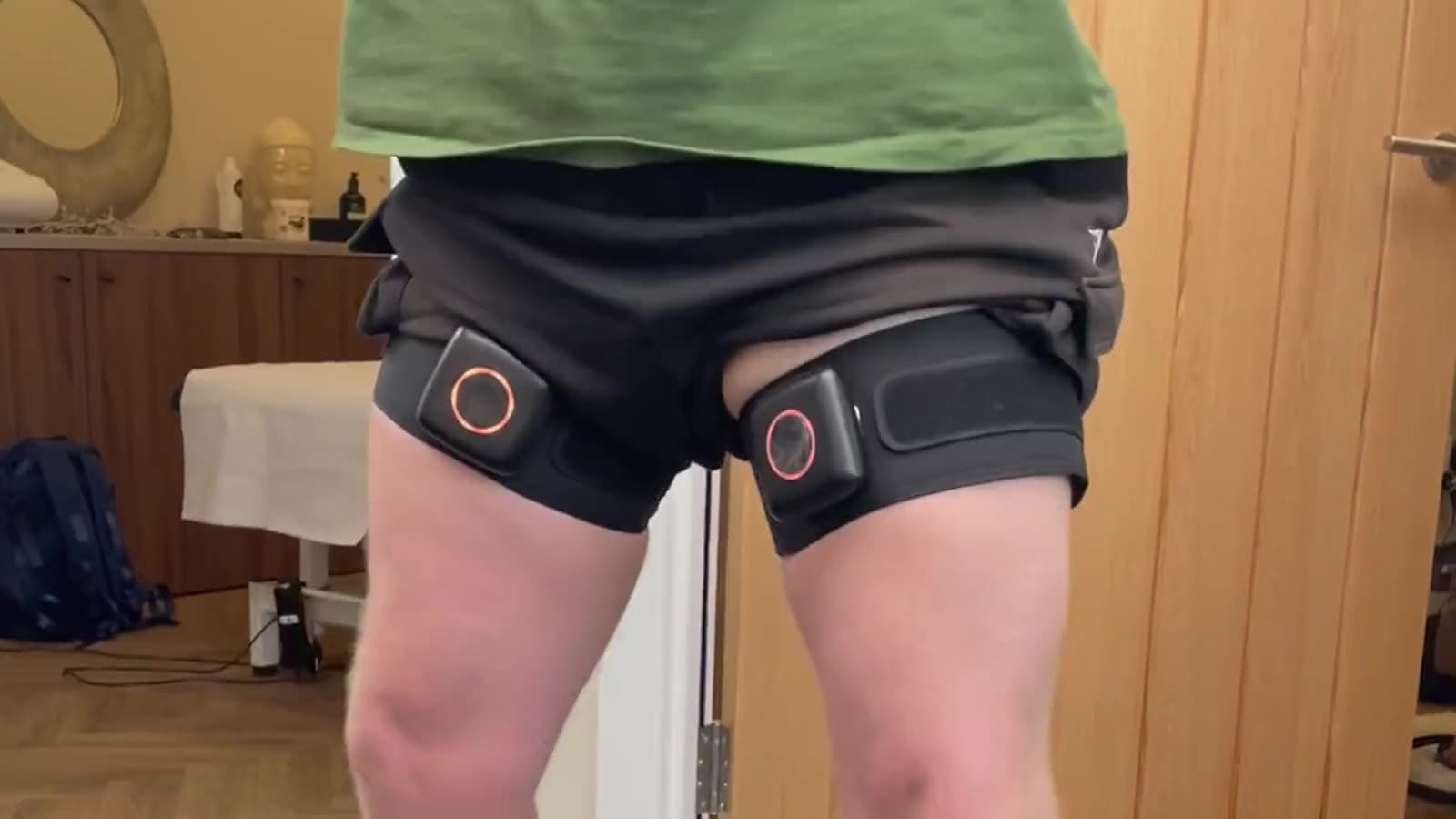
Shockwave has no role in ordinary back pain, and we do not use it here. The Neubie neuromuscular device may have a role instead, where pain is making it hard to engage or strengthen the muscles supporting your back — used alongside movement and exercise, the same way it is used elsewhere on site, not as a stand-alone or passive treatment. It can help with pain relief in the early stages and with re-activating and strengthening those muscles once you are moving again.
If the picture is unclear, or if progress stalls when it should not have, we refer you on promptly to the right spinal consultant for a further opinion and any investigation that’s needed, rather than leaving you to find that route yourself.
What the plan usually looks like
An assessment, then an initial plan, then a defined point at which we look again at whether it is working. If it is, we progress it. If it is not, we reassess rather than repeat.
How many appointments this takes depends on the person and the problem, and we will give you an honest view at the first appointment rather than a number chosen in advance. We do not keep people in treatment that is not helping them. When you are ready to manage it yourself, you leave with something specific to keep doing, because the point is that it does not come back.
What to expect
From first assessment to progress check.
A straightforward three-step process. Each stage is designed to give you clarity, momentum, and confidence that you are heading in the right direction.
- 01
First assessment
We take a full history, assess how you move, and identify the underlying cause. You leave with a clear picture of what is happening and why.
- 02
Your treatment plan
A structured plan built around hands-on treatment, targeted exercise, and the right technology, paced to your body, your schedule, and your goals.
- 03
Progress check
We re-test, refine, and keep you moving forward. Regular check-ins make sure the plan is working and adjust before small issues become setbacks.
“Thank you Ryan for all of your expertise, I don't think that I would have recovered this quickly without your guidance and knowledge.”
“First time with Louise, who I saw with a shoulder injury. She made me feel at ease and went into a lot of detail and certainly put across she knew what she was talking about. She spent the time listening to me without me feeling like I was being rushed. Excellent result and no hesitation in recommending her.”
“Nick helped me get back to full fitness after a painful Achilles injury. Nick explained the recovery process and managed my expectations of what was involved. Steady and very effective rehabilitation - thank you!”
Questions
Back pain FAQs
No. Most back pain is assessed and treated without imaging, and a scan in the early weeks rarely changes what needs to happen. If your assessment suggests imaging would change the plan, we will say so and arrange it.
Further reading: Reformer Pilates for back pain, what happens at a first physiotherapy appointment, and the NHS guide to back pain.
If your back pain is not settling, a proper assessment is the place to start.
Or call 01908 330 243