
Movement
Is reformer Pilates good for back pain and posture?

The short version
- A stronger, better-coordinated core supports and stabilises the lower back.
- Recent meta-analyses show clinically meaningful improvements in pain and function.
- Better posture follows from strength, flexibility and improved body awareness together.
- Significant, persistent or "red flag" back pain needs an assessment before, not instead of, classes.
- Hanbury can assess your back and adapt your classes under one roof.
For many people, yes: reformer Pilates can genuinely help with everyday back pain and posture by building the deep core and back muscles that support and stabilise the spine. Pilates is built around core strength and controlled movement, and a stronger, more coordinated core acts like an internal brace for your lower back, taking strain off it and encouraging better alignment. The evidence for Pilates and low back pain is reasonably supportive, with recent reviews suggesting meaningful improvements in pain and function, though it is fair to say the research is mixed and Pilates works best as part of an active, well-guided approach. If you have significant or persistent back pain, it is worth getting a proper assessment first.
Try a reformer Pilates class at Hanbury Health, Milton Keynes.
Why does core strength help your back?
Your lower back does not work in isolation; it relies on the surrounding muscles, the deep abdominals, the muscles around the pelvis, and the back extensors, to support and stabilise it. When these are weak or poorly coordinated, the spine is less well supported and back pain is more likely. Pilates targets exactly these muscles, and the reformer's spring resistance and moving carriage demand constant core engagement to stay stable and aligned. Building that deep, supportive strength is like fitting your spine with a better internal brace, which reduces strain and often eases pain. This matters particularly for the kind of everyday back pain that builds up gradually rather than arriving from a single injury, the ache that develops after years of sitting, driving or repetitive lifting, where the underlying issue is very often that the supporting muscles have quietly weakened without you noticing until the pain shows up. For a broader primer on the equipment itself, see what is reformer Pilates?
How does reformer Pilates compare with mat-based exercise for back pain?
The reformer has one genuine advantage over floor-based core work for people managing back pain: adjustable, supportive resistance. On a mat, a challenging core exercise is challenging for everyone in the room in the same way, which can mean pushing through discomfort to keep up, exactly the wrong instinct if your back is already sensitive. On the reformer, the springs can be set lighter for a tender day and increased gradually as you get stronger, and the carriage and straps provide support that a mat cannot, so you can build strength through positions that might otherwise aggravate things. That adjustability is part of why reformer Pilates is so often recommended, informally and in some rehabilitation settings, specifically for people rebuilding after a back problem.
How does reformer Pilates improve posture?
Poor posture is often a mix of weak supporting muscles, tightness, and habits built up over years of sitting. Reformer Pilates addresses several of these at once: it strengthens the postural and core muscles, improves flexibility and joint mobility, and, crucially, trains body awareness, so you notice and correct how you hold yourself. Over time, standing and sitting well starts to feel more natural over time. Better posture, in turn, tends to reduce the everyday aches that poor alignment creates. Many people carry posture patterns for years without realising it, a rounded upper back from screen time, a tilted pelvis from long periods sitting, until an instructor points it out during a class, which is often the first time anyone has actually named what has been contributing to the discomfort.
What does the evidence say?
Being straight about the research matters here. The NHS recognises Pilates as helpful for core strength, posture and back pain, and it is often recommended as part of managing low back pain. The formal evidence is genuinely mixed: some older reviews found the studies too small or varied to draw firm conclusions, while more recent meta-analyses have concluded that Pilates provides clinically meaningful improvements in pain and disability compared with minimal treatment. A fair summary is that reformer Pilates is a reasonable, well-supported option for many people with everyday or chronic low back pain, especially as part of an active approach, rather than a guaranteed fix.
When should you see a physiotherapist first?
Pilates is not the right first step for every back. You should get a proper assessment before relying on classes if your pain is severe, is not settling, follows a significant injury, or comes with warning signs such as numbness, weakness or pins and needles spreading down a leg, or any problems with bladder or bowel control, which need prompt medical attention. For a specific diagnosed back problem, a physiotherapy assessment can tell you whether Pilates is appropriate and how it should be adapted, so you strengthen safely as your back recovers.
How much does it cost, and how do you book?
New Reformer clients begin with the Beginners Reformer Course so your instructor can understand your history, including any back concerns, before setting your springs and choosing your exercises. The course is three sessions for £33, a low-commitment way to find out how your back responds before deciding on anything further. Classes are booked directly through Momence. If a physiotherapy assessment makes more sense as a first step, that is booked separately through Cliniko, with your physiotherapist able to guide you on when and how to bring Pilates into your recovery. Either route starts with a conversation about your specific back, not a generic class booking. See classes, prices and timetable.
Why Hanbury Health is different
Back pain is exactly where a studio's limits show. Plenty of Milton Keynes reformer studios can offer a good class; far fewer can tell you whether Pilates is the right thing for your specific back, or adapt it properly if it is not. Hanbury's reformer Pilates is built on the expertise of Yogomotiv, now part of Hanbury Health, but it also sits inside a full physiotherapy team under the same roof, led by a founding orthopaedic surgeon. That means your back can be assessed, your classes adapted, and your progress tracked on one coordinated pathway, rather than hoping a general studio class happens to suit your particular problem. If your instructor notices something during a class that looks worth a closer look, a persistent asymmetry, a movement you consistently avoid, they can flag it directly to the physiotherapy team rather than you having to describe it second-hand at a separate appointment weeks later, which is the kind of continuity a single-discipline studio simply cannot offer.
Frequently asked questions
Can reformer Pilates help my back pain?
For many people, yes, by strengthening the deep core and back muscles that support the spine. The evidence is encouraging though mixed, and it works best as part of an active approach.
Is reformer Pilates safe if I already have back pain?
Often, but not always. If your pain is significant, persistent or comes with warning signs, get a physiotherapy assessment first so classes can be adapted safely or another approach chosen.
How does Pilates improve posture?
It strengthens postural and core muscles, improves flexibility, and trains body awareness, so holding yourself well becomes more natural over time.
How long before Pilates helps my back?
Many people notice improvements in a few weeks of regular, well-guided practice, though this varies with the individual and the underlying problem.
Where can I do reformer Pilates for back pain in Milton Keynes?
Hanbury Health in Milton Keynes offers reformer Pilates alongside on-site physiotherapy, so your back can be assessed and your classes adapted if needed.
How much does reformer Pilates for back pain cost?
New clients begin with the Beginners Reformer Course, 3 sessions for £33, booked through Momence; a physiotherapy assessment, if needed first, is booked separately through Cliniko.
References
Ready to put this into practice?
Hanbury Health is the only place in Milton Keynes where reformer Pilates and yoga are taught inside a full clinical team, built on the award-winning heritage of Yogomotiv, now part of Hanbury Health.
About the author: Sarah Ramasamy is Co-Founder and Director of Movement at Hanbury Health. She has taught yoga and Pilates for over 20 years and founded Yogomotiv, the award-winning Milton Keynes studio now part of Hanbury, where she leads the reformer Pilates, mat Pilates and yoga programme.
General information, not medical advice. Written by Sarah Ramasamy. Medically reviewed by Prof Arul Ramasamy MA PhD MBA FRCS(Tr+Orth). Last reviewed: 25 July 2026.
Related insights
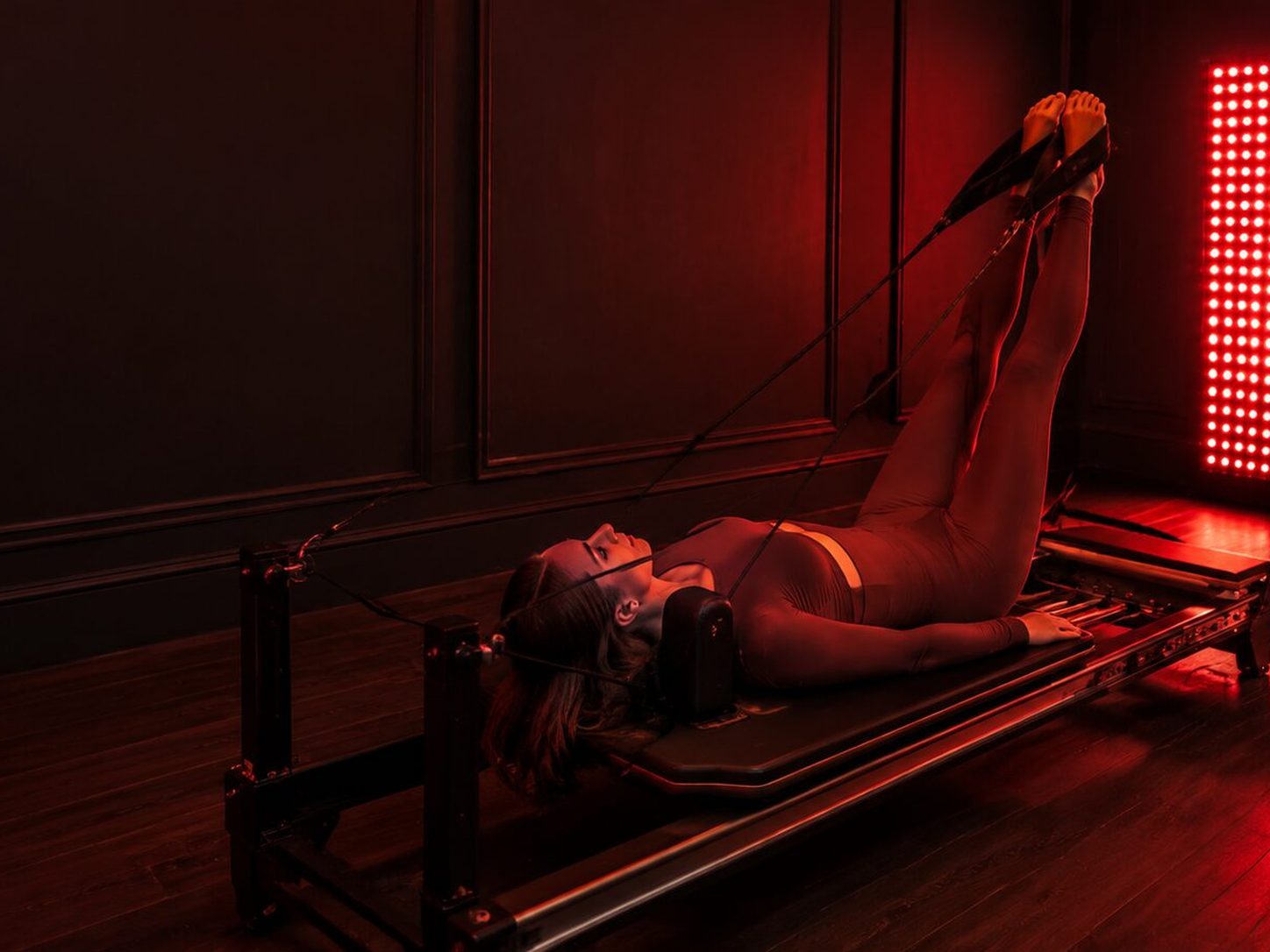
Movement
Why red light therapy doesn't belong in a Pilates class (and what actually works instead)
Why a red light panel glowing in a Pilates class isn't red light therapy, what proper dosing actually needs, and how to get both done properly in Milton Keynes.
Ramasamy8 min readRead the article
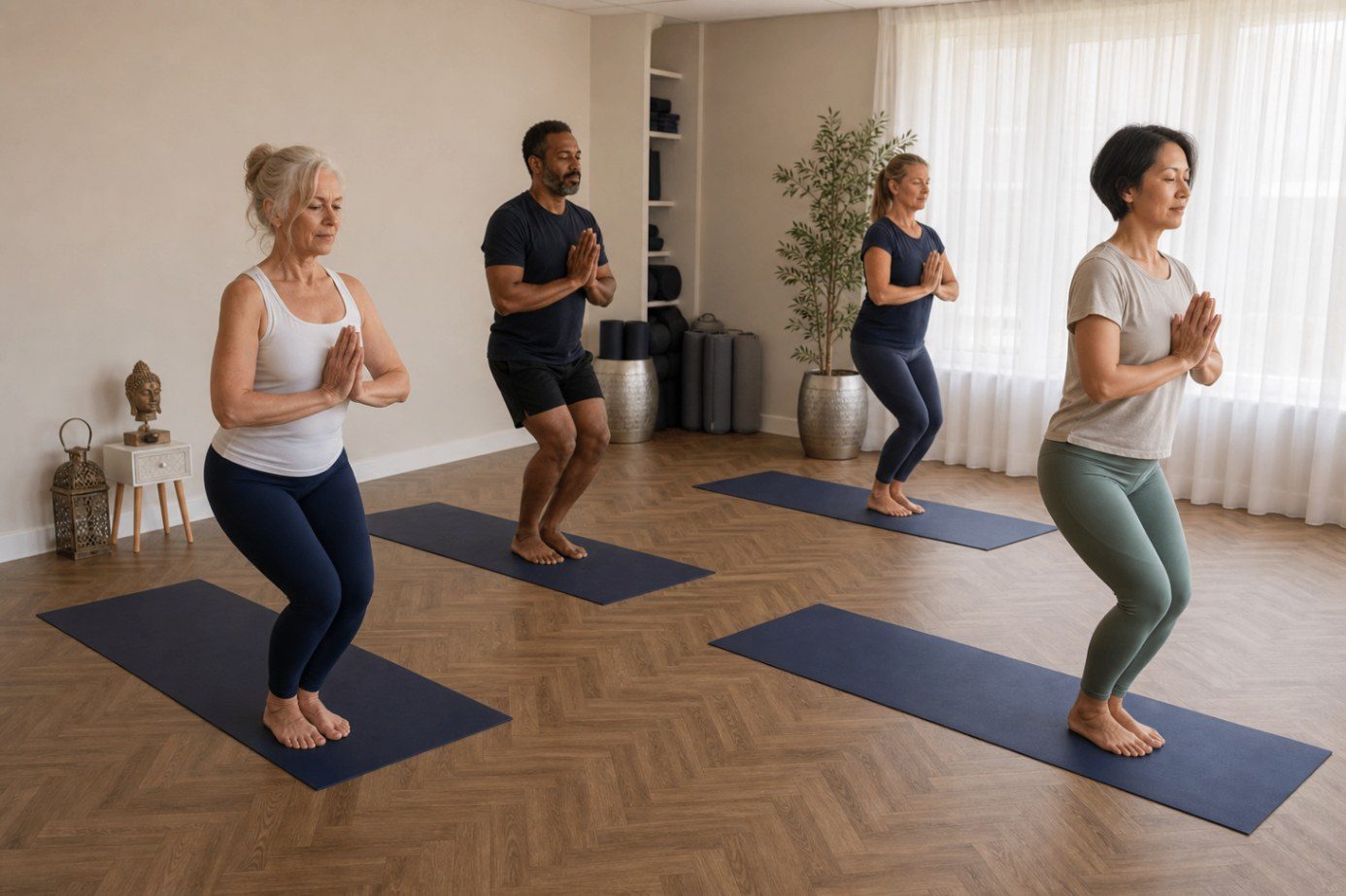
Movement
What are the health benefits of yoga?
Strength, flexibility, balance, back pain and mental wellbeing: the evidence for what regular yoga actually does for body and mind.
Ramasamy7 min readRead the article
Movement
What's the best exercise for perimenopause: yoga, Pilates or strength?
Why yoga, Pilates and strength training each address different parts of perimenopause, why a combination works best, and how to build a routine backed by clinical guidance.
Ramasamy8 min readRead the article


Stay informed
More from the Hanbury team.
New articles on recovery, movement, physiotherapy and performance, sent when there's something worth reading. No spam, unsubscribe any time.