
Move · Physiotherapy
Sports injury physiotherapy in Milton Keynes
Our team worked pitchside in professional rugby, cricket, badminton and motorsport — the same testing-led, milestone-driven approach used there is what treats your sports injury here, whatever level you play at.
Not sure what you need? Call 01908 330 243
What this covers
Sports injuries cover a wide range: acute problems like ankle sprains, muscle strains, ligament tears and joint dislocations, and overuse problems like tendinopathy, stress reactions and pain that builds gradually with training load rather than arriving in a single moment. Some come from a single incident, others build over weeks of training you didn't realise was adding up.
We see the same injuries whether you play five-a-side on a Sunday or compete professionally, and we treat them to the same standard. Nick Allen and Simon Jones have a combined background across professional rugby, cricket, badminton and motorsport, including Nick's work as Head of Medical Services at Northamptonshire County Cricket Club and Simon's time with the Barbarians, the PGA European Tour and Aston Martin's GT racing team at Le Mans. What that experience changes is not who gets seen, but how thoroughly: the same assessment standard, the same testing, and the same attention to getting you back doing what you actually want to do.
Recovery here is not measured against a calendar. It's measured against you: your own strength, movement and readiness, tracked and re-tested until you hit the marks that matter for your sport or activity, not a fixed number of weeks.
When it's worth getting checked urgently
Seek urgent medical attention the same day, at A&E or an urgent care service, if you have
- a joint that is visibly deformed, or that has dislocated and not gone back into place
- a suspected broken bone, especially if the limb looks abnormal or can't take any weight at all
- rapidly increasing swelling, pain out of proportion to the injury, or numbness, tingling or pallor in the limb (possible compartment syndrome)
Speak to your GP or come in for an assessment promptly if you have
- a joint that keeps giving way or locking
- a suspected complete tendon or ligament rupture, such as a sudden inability to push off or point your foot after a calf or heel injury
- significant swelling that hasn't started to settle after 48 to 72 hours
- ongoing inability to bear weight after a day or two
For everything else, physiotherapy is a sensible first step. You don't need a GP referral or a scan to be seen. This page is general information and doesn't replace an individual assessment — if anything above applies to you, please contact your GP or A&E rather than relying on this page alone.
What your first appointment involves — and what it costs
Sixty minutes: how the injury happened, how it has behaved since, an examination of how you move and load the area, objective baseline testing where it adds real information, an explanation you can repeat to someone else, hands-on treatment where it helps, a plan, a review point, and prompt referral to a specialist if that's the better next step.
Pricing
Clear, simple fees.
The same rate applies to adults and children/adolescents.
Initial assessment
£110
60 minutes, including history, examination, diagnosis, and your first plan.
Follow-up appointment
£70
Ongoing treatment, progress checks, and plan adjustments.
Using private medical insurance? See the FAQ below.
Testing, not guesswork
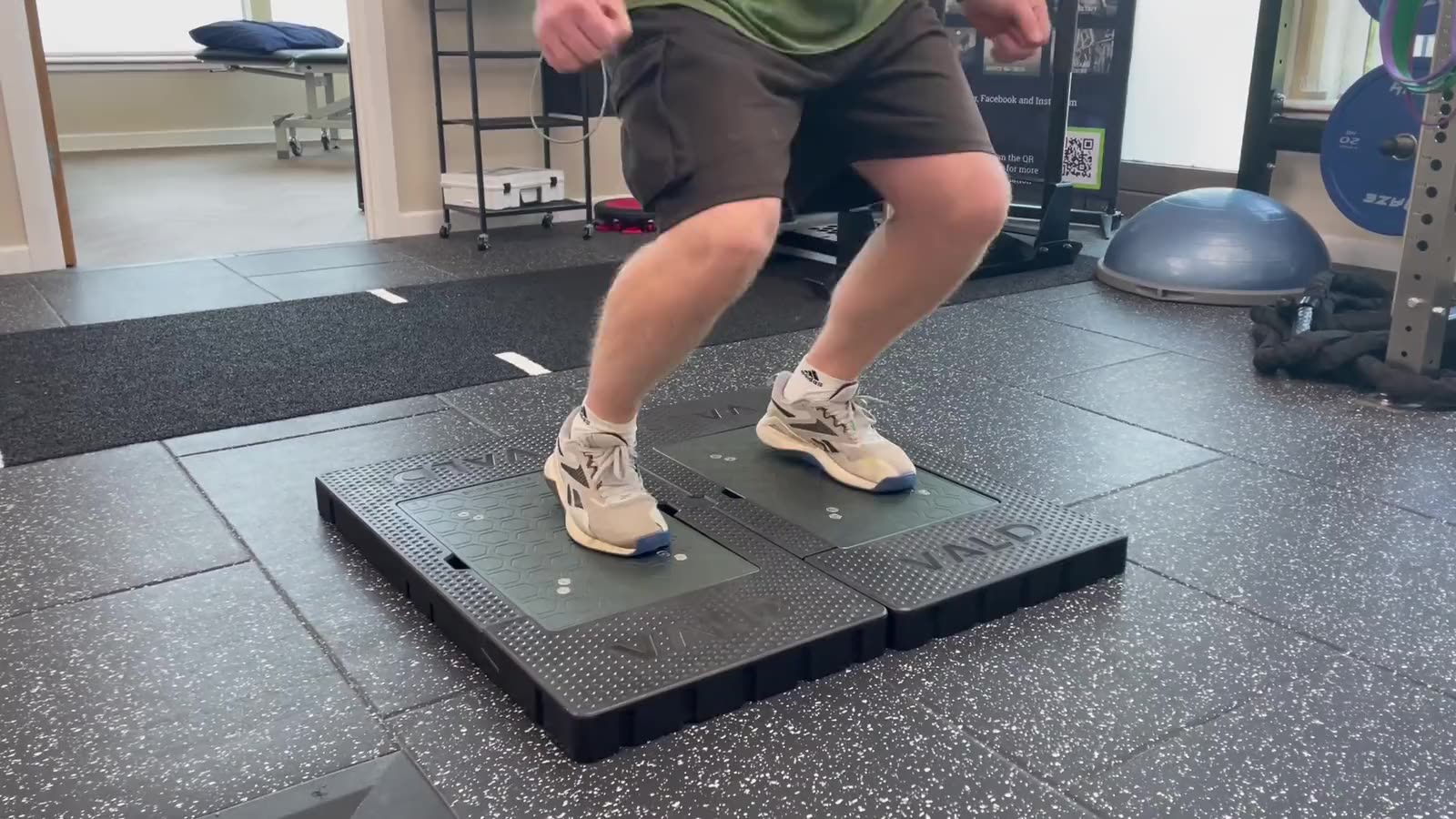
The same equipment used to assess professional athletes is used here. VALD ForceDecks and ForceFrame force-plate testing measure how much force each side of your body produces and compare your injured side directly against the uninjured one. HumanTrak 3D movement analysis shows how you actually move, land and change direction, catching things a strength number alone can miss. Where it's relevant, diagnostic ultrasound adds a direct look at the tissue itself.
What this gives you is a baseline, then repeat measurements at each stage, so progress is something you can see rather than something you're told. You move on to the next stage of your rehabilitation when your numbers say you're ready, not when a set number of weeks has passed. For a full breakdown of the return-to-sport testing battery and the thresholds we use for athletes heading back to competition, see our Return to Sport Protocol.
A rehabilitation gym built to do it properly
Being told what exercises to do is not the same as doing them well. Our on-site rehabilitation gym means every session is coached and progressed by your physiotherapist, not handed over as a sheet to work through alone, so the loading is correct and the technique doesn't quietly create a second problem somewhere else. Blood Flow Restriction training lets us build strength safely at lower loads early in your recovery, when your injured tissue isn't ready for heavy weights. As you progress, our Strength & Conditioning coaching closes the gap between feeling better and genuinely being ready to train and compete again.
Treatment, recovery, and staying out of here next season
Hands-on treatment has a role: manual therapy to help settle symptoms and restore movement, Shockwave therapy for stubborn tendon problems, and Neubie neuromuscular stimulation where pain is limiting how well you can activate and strengthen the area. All of it sits alongside a loading-based plan rather than replacing one.
Recovery is built into the plan, not treated as an afterthought. That means practical advice on training load, sleep and how to reintroduce the activities you're missing, using the same recovery principles applied to professional squads, scaled to your training week. You also have direct access to our on-site recovery suite, including whole-body cryotherapy, compression boots and contrast therapy, so recovery support sits alongside your rehabilitation rather than being something you have to seek out separately.
Getting back is not the finish line. What often caused a sports injury in the first place tends to show up in the same testing and movement analysis used during rehabilitation, so before you're discharged we build a specific plan, whether that's a change to training load, a technique adjustment, or a targeted strength programme, aimed at reducing the chance of the same injury happening again.
Complex cases get a team, not a guess
When a case isn't progressing the way it should, or the diagnosis needs a second opinion, it's discussed directly between your physiotherapist and the right specialist, whether that's a consultant orthopaedic surgeon or a sports medicine physician, so you're referred on promptly rather than left to find that route yourself. It's the same coordinated, team-based approach used behind the scenes in professional sport, applied to your case.
What to expect
From first assessment to progress check.
A straightforward three-step process. Each stage is designed to give you clarity, momentum, and confidence that you are heading in the right direction.
- 01
First assessment
We take a full history, assess how you move, and identify the underlying cause. You leave with a clear picture of what is happening and why.
- 02
Your treatment plan
A structured plan built around hands-on treatment, targeted exercise, and the right technology, paced to your body, your schedule, and your goals.
- 03
Progress check
We re-test, refine, and keep you moving forward. Regular check-ins make sure the plan is working and adjust before small issues become setbacks.
“Thank you Ryan for all of your expertise, I don't think that I would have recovered this quickly without your guidance and knowledge.”
“First time with Louise, who I saw with a shoulder injury. She made me feel at ease and went into a lot of detail and certainly put across she knew what she was talking about. She spent the time listening to me without me feeling like I was being rushed. Excellent result and no hesitation in recommending her.”
“Nick helped me get back to full fitness after a painful Achilles injury. Nick explained the recovery process and managed my expectations of what was involved. Steady and very effective rehabilitation - thank you!”
Questions
Sports injury FAQs
Related, but not the same. This page covers assessment, treatment, recovery and prevention for sports injuries generally. Our Return to Sport Protocol is the detailed, five-stage testing pathway we use once you're working specifically toward getting back to training and competition. Most people move through both: this page for the injury itself, the protocol for the phased return.
Further reading: our physiotherapy hub, our Insights explainers on ACL reconstruction rehabilitation and hamstring strain recovery, and the NHS guide to recovering from a sports injury.
Related conditions
Other problems we treat.
Knee pain
Ligament, meniscus, and tracking problems, a common site for sports injuries specifically.
Read moreAnkle and foot pain
Sprains and overuse problems further down the leg, treated with the same testing-led approach.
Read moreTendinopathies
Achilles, patellar and other tendon problems, resolved with graded loading and shockwave where needed.
Read more
Picked up a sports injury and want it treated properly the first time? Start with a physiotherapy assessment.
Or call 01908 330 243
Already working toward a return to competition? See our Return to Sport Protocol.