
Movement
What is reformer Pilates, and how does it work?

The short version
- Reformer Pilates is Pilates performed on a spring-resisted machine called a reformer, invented by Joseph Pilates in the early 20th century.
- The carriage, springs, straps and footbar let you train strength, control and mobility in positions you cannot access on a mat.
- Springs provide adjustable resistance and, importantly, assistance, so exercises can be made easier or harder in seconds.
- A typical class is 45 to 55 minutes, works the whole body, and suits most people including beginners, older adults and those returning to exercise.
- It differs from mat Pilates and works well alongside physiotherapy.
Try a reformer Pilates class at Hanbury Health, Milton Keynes.
What is reformer Pilates?
Reformer Pilates is Pilates performed on a purpose-built machine called a reformer. The reformer was invented by Joseph Pilates in the early 20th century and is now one of the most widely used pieces of equipment in mind-body movement. It looks a little like a padded bed on rails, with a moving carriage, adjustable springs, long straps, a footbar and shoulder rests. You use it lying down, sitting, kneeling or standing.
The machine makes the same principles, precise movement, breath, control, and whole-body strength, accessible in far more positions than a mat allows. The springs provide resistance when you push or pull the carriage, and they can also support your body weight, so an exercise can be scaled to almost any level in seconds.
How does the reformer machine actually work?
The core mechanism is simple. The carriage slides along two rails and is connected to the frame by a set of springs of different tensions. You add or remove springs to change how heavy the carriage feels. Long straps attached to a pulley at the head end let you work the arms, legs or trunk against that spring load. A footbar at the foot end gives you a fixed surface to press against, and adjustable head, shoulder and box positions let you find leverage that suits your body.
In practice, that means one machine can deliver a squat, a hamstring stretch, a rotational core exercise, an overhead press and a plank variation, all with the same setup and only small adjustments. The resistance is smooth and continuous. Free weights can feel jerky through a movement, and that smoothness is one reason the reformer is often kinder to joints than gym equipment while still building real strength.
What is a reformer Pilates class like?
A class typically lasts 45 to 55 minutes and works the whole body in a deliberate order. A good teacher will guide you through a warm-up, then move through footwork on the footbar, upper-body work with the straps, core and rotational sequences, hip and leg strength work, and a mobility or stretch finish. Numbers are usually small, often six to eight people, so the teacher can adjust your springs and your position individually.
You do not need to be flexible or strong to start. Every exercise has an easier and a harder version, and the teacher will show you which to pick. Most people find the first class humbling and the second class much easier, because a lot of it is learning the machine.
Who is reformer Pilates for?
It suits a much wider group of people than the marketing imagery suggests. Beginners and people who have never done Pilates before do well, because the machine gives you feedback and support that a mat cannot. Older adults find the springs help them into and out of positions safely, while still challenging balance and strength. Runners, cyclists and gym-goers use it as a strength and control session that complements their main sport. People rehabilitating an injury often use it under the guidance of a physiotherapist because loads can be graded precisely. For a beginner-focused walkthrough, read is reformer Pilates good for beginners?
How is reformer Pilates different from mat Pilates?
Both come from the same tradition and share the same principles, but they feel different in the body. Mat Pilates uses gravity and your own body weight, so it teaches you to control load without any external help. Reformer Pilates adds the springs, which can make an exercise harder by adding resistance, or easier by supporting part of your weight. That two-way property is what makes the reformer so useful for beginners and for anyone with a specific limitation. Most regulars end up doing both.
Is reformer Pilates a good workout?
Yes, and it is a more complete one than most people expect. A full class trains strength, mobility, core control and coordination. It is not primarily a cardiovascular workout, so if your goal is cardiovascular fitness you will still want to walk, cycle, run or swim alongside it. As a strength and control practice, though, it holds up against most gym programmes for general health, and it is often kinder to joints while doing so.
What should I expect from my first class?
Arrive a few minutes early so the teacher can show you the machine, set your springs and check anything you need to be careful with. Wear comfortable clothing you can move in, leggings or shorts are fine, and grippy socks are useful; many people buy a pair at their first class. Expect to concentrate more than in a typical gym session, because a lot of reformer work is about precise movement rather than sheer effort. For a full walkthrough see reformer Pilates: what to expect in your first class.
How often should I do it?
Twice a week is the point at which most people notice a real change in how their body feels. Once a week is still useful, especially alongside other training. Three times a week is common for people who use it as their main strength practice. The reformer is designed to be done regularly, and the technique rewards repetition.
Where can I try reformer Pilates in Milton Keynes?
At Hanbury Health in Milton Keynes we teach small-group reformer Pilates on the same equipment used in professional and clinical settings, in a movement space built on the award-winning heritage of Yogomotiv. Classes are coordinated with the rest of the Hanbury approach, so if you also see one of our physiotherapy or performance experts, the two sides talk. See our reformer Pilates and yoga service page for class formats, teachers and current intro offers, or return to the Movement Insights hub for more reading.
Frequently asked questions
What is reformer Pilates in simple terms?
Reformer Pilates is Pilates done on a spring-resisted machine called a reformer. The moving carriage, springs and straps let you train strength, control and mobility in more positions than a mat allows, and the springs can make exercises either easier or harder.
How does the reformer machine work?
A padded carriage slides along rails and is attached to the frame by springs. You add or remove springs to change resistance, and use straps, a footbar and shoulder rests to work the arms, legs and trunk against that load.
Is reformer Pilates a good workout?
Yes. A full class trains whole-body strength, mobility, core control and coordination. It is not primarily cardiovascular, so most people pair it with walking, cycling, running or swimming for heart and lung fitness.
How is reformer Pilates different from mat Pilates?
Both share the same principles, but mat Pilates uses only body weight and gravity, while reformer Pilates uses springs that can add resistance or support you. Neither is better; most regulars do both.
Is reformer Pilates suitable for beginners?
Yes. Class sizes are small, the teacher will set your springs and adjust your positions, and every exercise has an easier version. Most people find the first class humbling and the second much easier.
How often should I do reformer Pilates?
Twice a week is the point at which most people notice a real change. Once a week is useful alongside other training, and three times a week is common for people who use it as their main strength practice.
References
- Wells C, Kolt GS, Bialocerkowski A. Defining Pilates exercise: a systematic review. Complementary Therapies in Medicine. 2012;20(4):253-262.
- Cruz-Ferreira A, Fernandes J, Laranjo L, Bernardo LM, Silva A. A systematic review of the effects of Pilates method of exercise in healthy people. Archives of Physical Medicine and Rehabilitation. 2011;92(12):2071-2081.
- Byrnes K, Wu PJ, Whillier S. Is Pilates an effective rehabilitation tool? A systematic review. Journal of Bodywork and Movement Therapies. 2018;22(1):192-202.
Ready to put this into practice?
Hanbury Health is the only place in Milton Keynes where reformer Pilates and yoga are taught inside a full clinical team, built on the award-winning heritage of Yogomotiv, now part of Hanbury Health.
About the author: Sarah Ramasamy is Co-Founder and Director of Movement at Hanbury Health. She has taught yoga and Pilates for over 20 years and founded Yogomotiv, the award-winning Milton Keynes studio now part of Hanbury, where she leads the reformer Pilates, mat Pilates and yoga programme.
General information, not medical advice. Written by Sarah Ramasamy. Medically reviewed by Prof Arul Ramasamy MA PhD MBA FRCS(Tr+Orth). Last reviewed: 25 July 2026.
Related insights
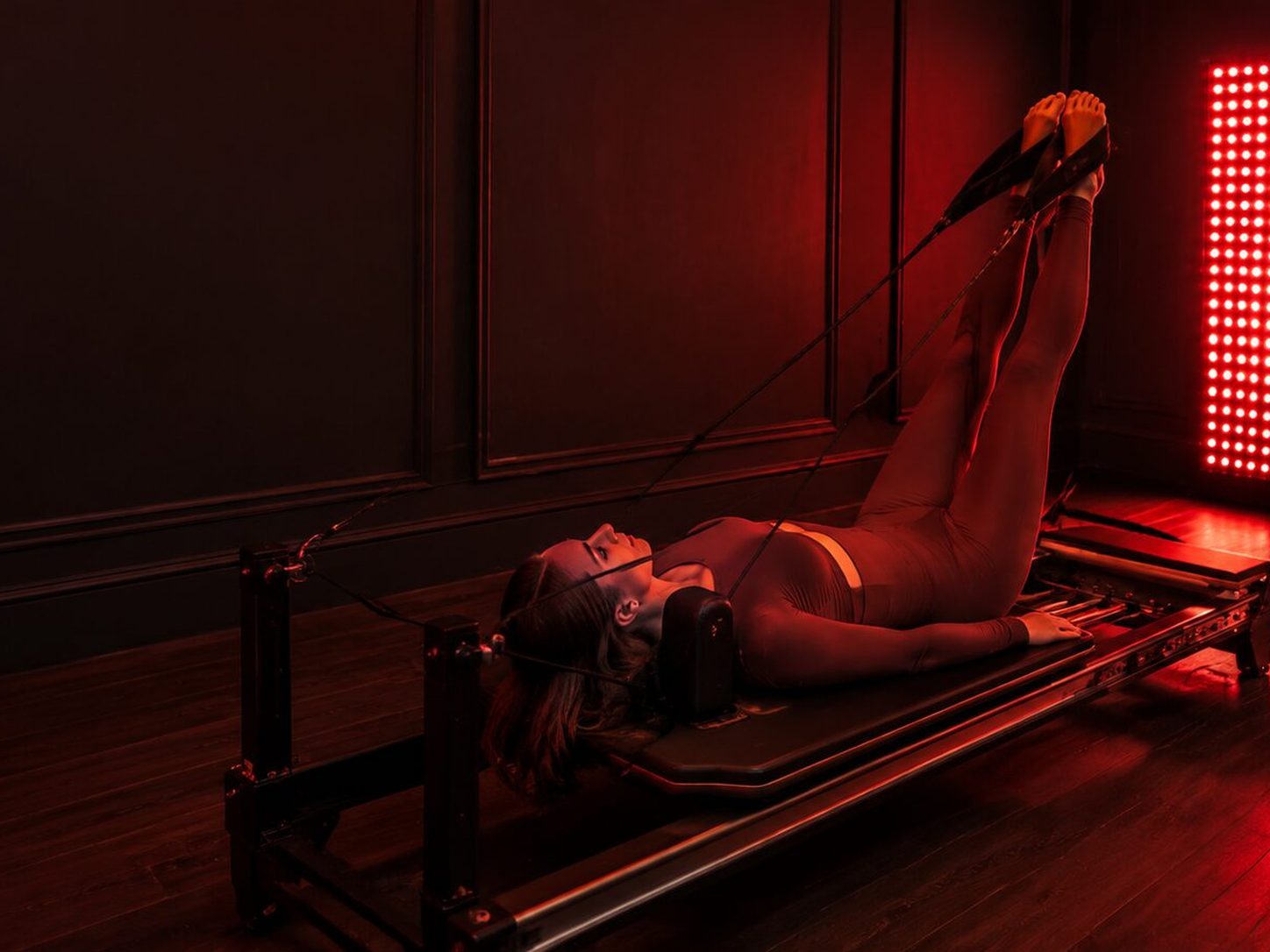
Movement
Why red light therapy doesn't belong in a Pilates class (and what actually works instead)
Why a red light panel glowing in a Pilates class isn't red light therapy, what proper dosing actually needs, and how to get both done properly in Milton Keynes.
Ramasamy8 min readRead the article
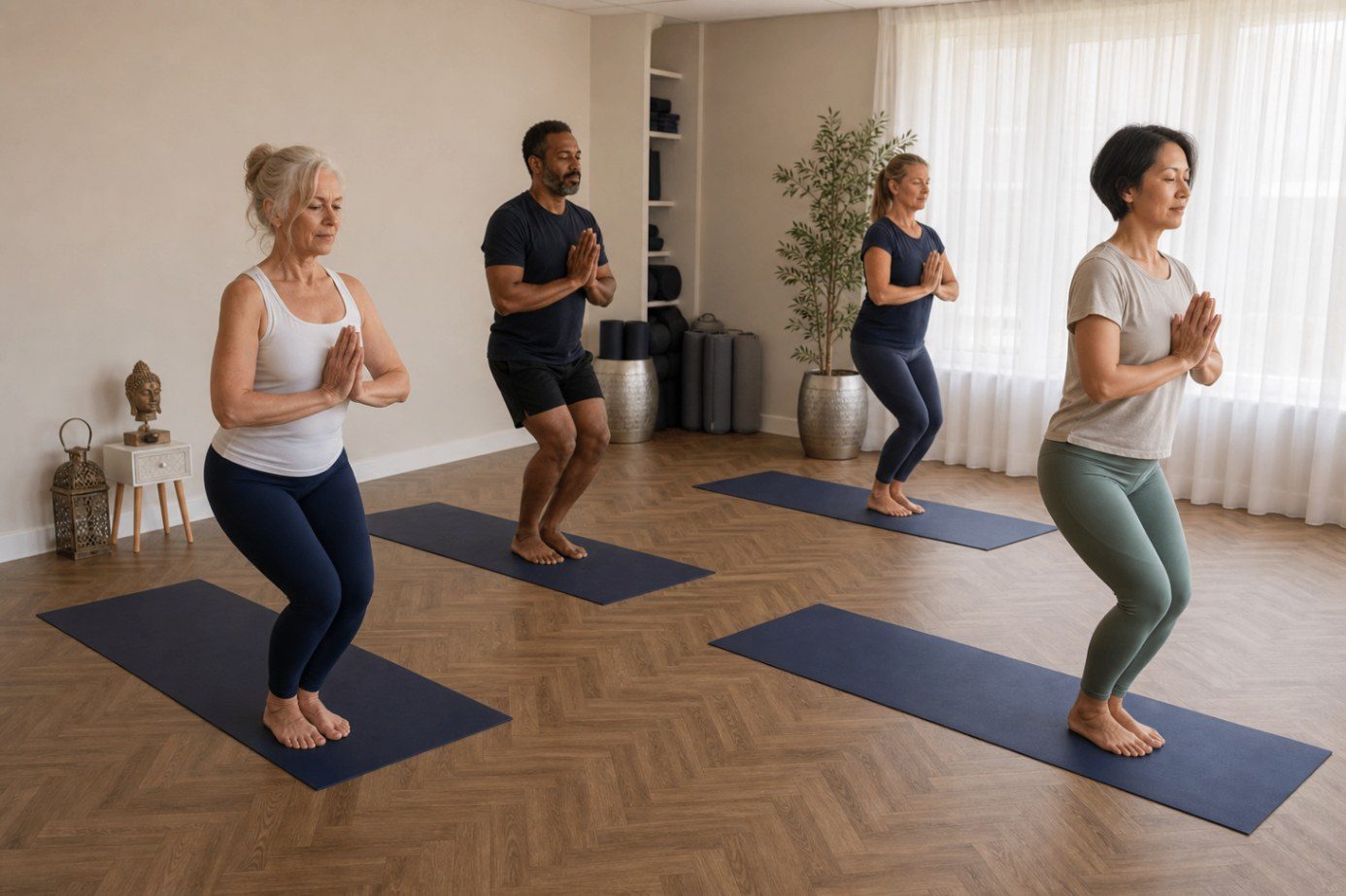
Movement
What are the health benefits of yoga?
Strength, flexibility, balance, back pain and mental wellbeing: the evidence for what regular yoga actually does for body and mind.
Ramasamy7 min readRead the article
Movement
What's the best exercise for perimenopause: yoga, Pilates or strength?
Why yoga, Pilates and strength training each address different parts of perimenopause, why a combination works best, and how to build a routine backed by clinical guidance.
Ramasamy8 min readRead the article


Stay informed
More from the Hanbury team.
New articles on recovery, movement, physiotherapy and performance, sent when there's something worth reading. No spam, unsubscribe any time.