
Performance
Strength and movement testing in Milton Keynes

The short version
- Strength and movement quality strongly influence performance and injury risk.
- Both can be measured objectively, using dedicated tests instead of estimates by eye or by what you lift.
- Isometric strength testing measures the force you produce, safely and precisely.
- Grip strength is a quick, useful marker of overall strength.
- Markerless movement capture assesses how you actually move (squat, single-leg, balance).
Strength and the quality of how you move are two of the biggest drivers of both performance and injury risk, and both can now be measured objectively using isometric strength testing, grip testing and markerless movement capture. Most people, and many coaches, assess strength by what you can lift and movement by how it looks, but both are crude. Measuring the actual force your muscles produce, and capturing how your joints move in three dimensions, turns "you seem strong" and "you move okay" into specific numbers you can target, track and compare side to side. This is not a small effect: a 2025 systematic review and meta-analysis of 16 randomised controlled trials (7,459 athletes) found strength training reduced overall injury risk by 30%, with the best results when strength work was combined with balance and movement-pattern training, cutting knee injuries by 29% and ankle injuries by 32%. The one exception was the shoulder, where strength training alone was not enough to move the needle, underlining why how you train, not just how strong you get, matters.
Measuring strength without max lifting
Traditional strength testing means finding out how much you can lift once, a one-rep max, which is useful but demanding and not ideal for everyone, especially anyone returning from injury. Isometric strength testing offers an alternative: you push or pull against a fixed frame as hard as you can, and the device measures the peak force you produce, and the difference between your two sides, without the risk or fatigue of maximal lifting. It is precise, repeatable and safe, which makes it excellent both for performance monitoring and for anyone rebuilding strength who is not ready to lift heavy.
Grip strength: a small test that says a lot
Grip strength is quick to measure and surprisingly informative. Beyond its obvious relevance to sports that involve gripping, grip strength correlates with overall strength and is a well-recognised marker of general fitness. As a fast, low-effort measurement, it adds a useful data point to a strength profile and is easy to re-test over time. It is one of those simple measures that punches above its weight, which is why it is included in a thorough assessment. In a study of nearly 140,000 adults across 17 countries, grip strength was independently associated with all-cause and cardiovascular mortality risk, a stronger predictor than systolic blood pressure, which is part of why it is used as a marker of long-term health that extends well beyond hand strength.
Measuring how you move
How you move, the quality of your squat, your single-leg control, your balance, is as important as how strong you are, because good movement lets you use your strength and protects you from injury, while poor movement does the opposite. Markerless movement capture assesses this objectively: cameras track how your joints move through tasks like squatting and single-leg work, producing objective measurements of movement quality. This reveals things such as control problems or side-to-side differences that the eye misses, and, because it is measured, progress can be re-checked over time. For the physiotherapy-focused view of the same principle, see movement and gait analysis.
Why measuring all three together matters
Strength, grip and movement quality each tell part of the story, and together they build a genuine picture of your physical foundation for performance. Strong muscles that you cannot control well, or good movement without the strength to back it, are both limitations, and measuring all three shows where yours lies. Combined with force plate power testing, this gives a complete, objective profile of your strength, power and movement, exactly what a serious training or return-to-sport plan should be built on.
| Measure | What it tells you |
|---|---|
| Isometric strength | Force you produce safely against a fixed frame, no max lifting. |
| Grip strength | A quick, recognised marker of overall strength. |
| Movement quality | How you squat, control a single leg, and balance. |
Why Hanbury Health is different
At Hanbury, strength and movement are measured with genuine, objective technology within the Elite tier of the Performance Blueprint: VALD ForceFrame for maximal isometric strength, VALD Dynamo for grip and portable strength testing, and VALD HumanTrak markerless capture for movement quality. Crucially, the results are interpreted by experts, ForceFrame measures maximal isometric force rather than one-rep-max lifting, which also reassures anyone returning from injury, and everything connects into Hanbury's physiotherapy and training pathways. It is part of Level 3 (£895).
Frequently asked questions
How do you measure strength objectively?
With isometric strength testing, pushing or pulling against a fixed frame while the device measures your peak force and left-right differences, safely and repeatably, without maximal lifting.
Why measure grip strength?
It is quick and informative: relevant to gripping sports and a recognised marker of overall strength and long-term health, and easy to re-test over time.
What is movement quality testing?
An objective assessment of how you move, squat, single-leg control, balance, using markerless capture, revealing control problems and side-to-side differences the eye misses.
Do I have to lift maximally to test my strength?
No. Isometric testing measures the force you produce against a fixed frame, which is safe and ideal even for people returning from injury who are not ready to lift heavy.
Where can I get strength and movement testing in Milton Keynes?
Hanbury Health offers VALD ForceFrame, Dynamo and HumanTrak testing within the Performance Blueprint (Level 3).
References
- VALD Health. Human movement and performance technology (ForceFrame, Dynamo, HumanTrak).
- NHS. Physical activity guidelines for adults (strengthening activities).
- Leong DP, Teo KK, Rangarajan S, et al. (2015). Prognostic value of grip strength: findings from the Prospective Urban Rural Epidemiology (PURE) study. The Lancet, 386(9990), 266-273.
- Chen Z, Wang J, Zhao K, He G (2025). Adherence to Strength Training and Lower Rates of Sports Injury in Contact Sports: A Systematic Review and Meta-analysis. Orthopaedic Journal of Sports Medicine.
Ready to put this into practice?
Hanbury Health is the only place in Milton Keynes bringing VO2 max, body composition and objective strength testing together in one visit, under clinical direction and read with you by an expert.
About the author: Nick Allen is a director of Hanbury Health and a Chartered Physiotherapist (BSc (Hons), HCPC-registered, MCSP), with extensive experience in professional and endurance sport, currently Lead Physiotherapist for Great Britain Badminton. Rehabilitation across the physiotherapy service is medically reviewed by Prof Arul Ramasamy, a consultant foot-and-ankle surgeon.
General information, not medical advice. Written by Nick Allen. Medically reviewed by Prof Arul Ramasamy MA PhD MBA FRCS(Tr+Orth). Last reviewed: 25 July 2026.
Related insights
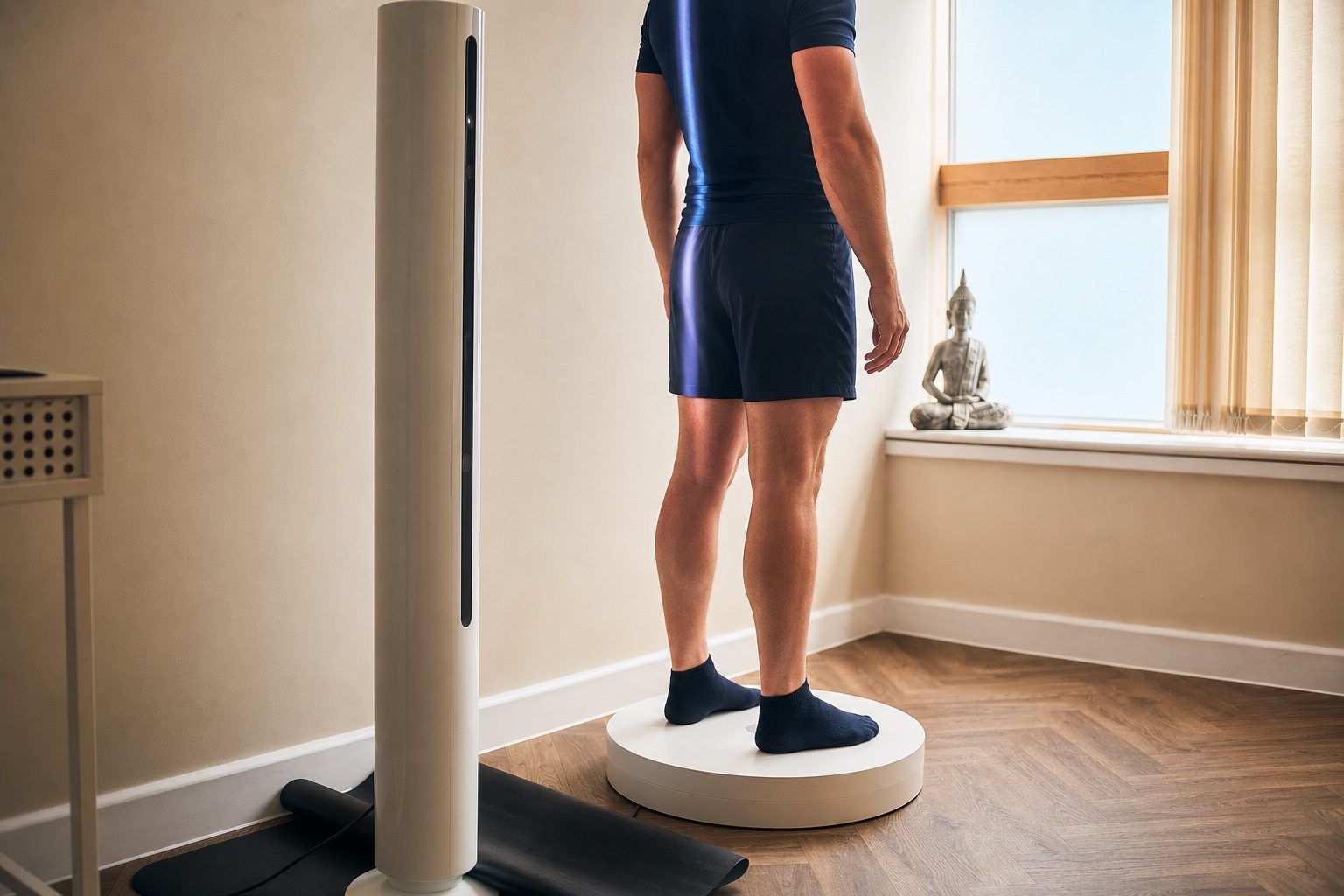
Performance
Body composition testing in Milton Keynes: beyond the bathroom scale
Why lean mass and power-to-weight matter more than the scale, how a Styku 3D scan measures it, and what the numbers mean for training.
Allen7 min readRead the article
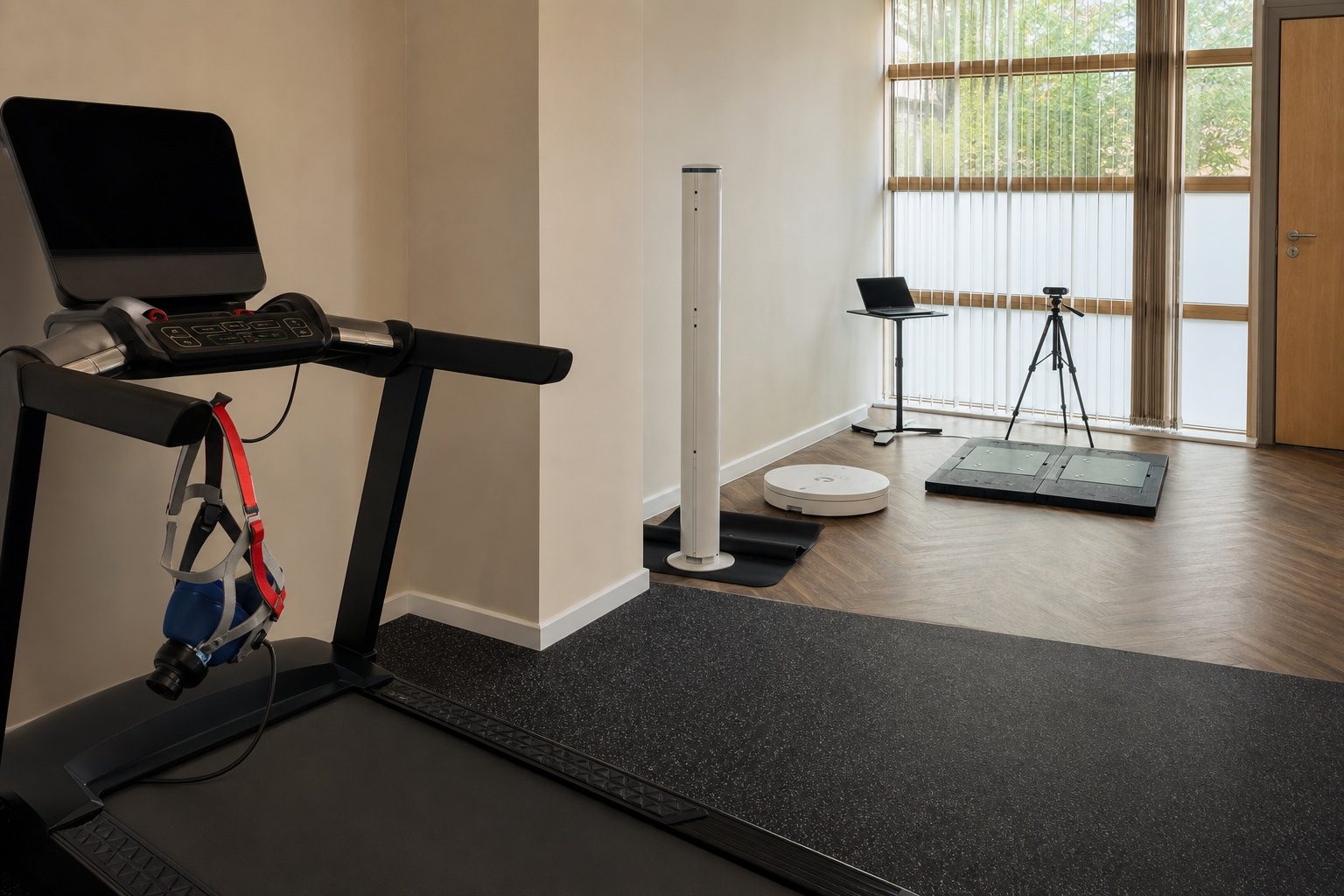
Performance
Performance testing in Milton Keynes: getting the complete picture
Why a complete, clinically-led assessment beats piecemeal testing, and the only place in Milton Keynes that brings VO2 max, body composition and strength together.
Allen7 min readRead the article
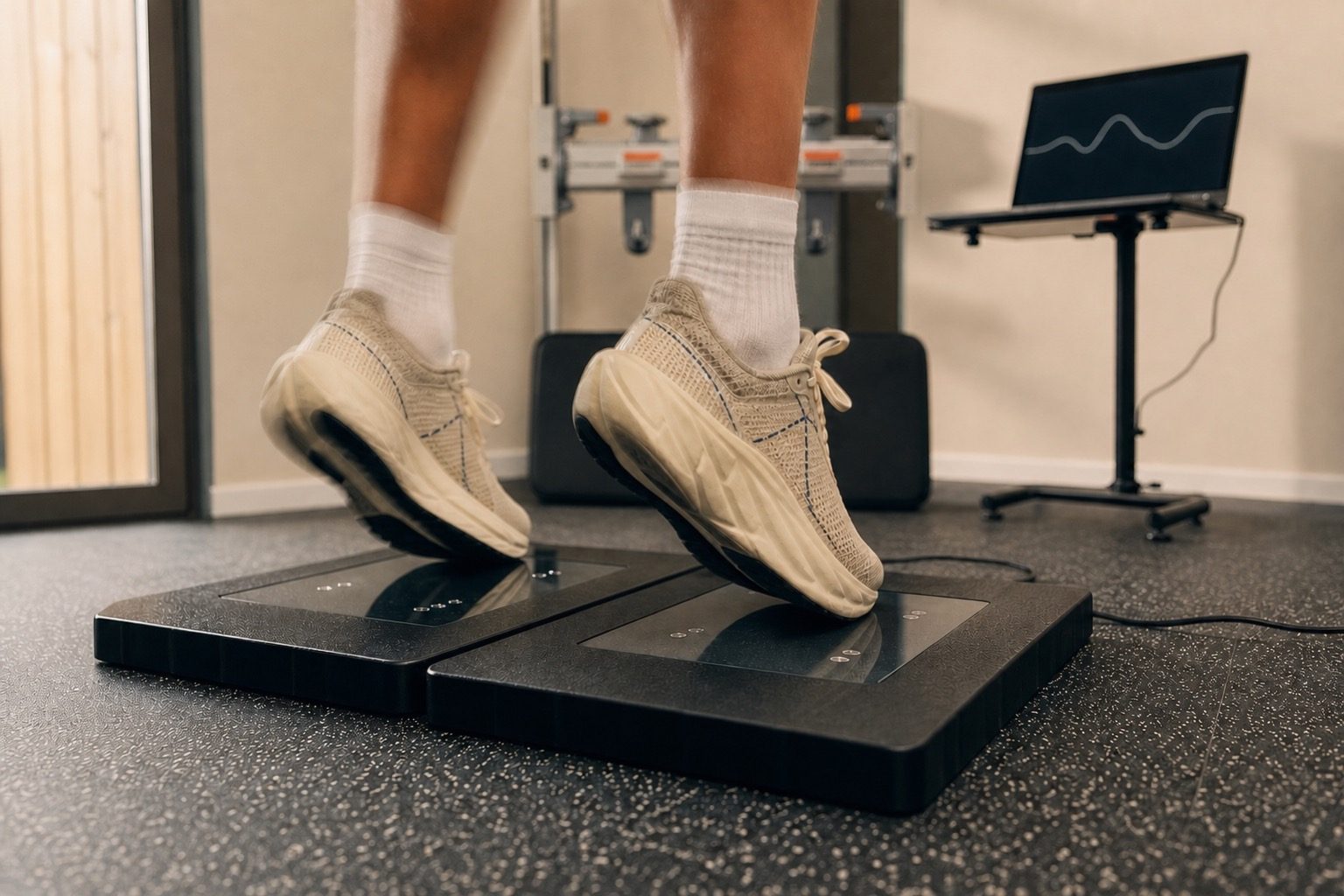
Performance
Force plate testing in Milton Keynes: power, jump performance and hidden asymmetry
How dual force plates quantify power, jump performance and left-right asymmetry, and why that data is useful for training and injury risk.
Allen7 min readRead the article


Stay informed
More from the Hanbury team.
New articles on recovery, movement, physiotherapy and performance, sent when there's something worth reading. No spam, unsubscribe any time.