
Performance
Runner performance testing in Milton Keynes

The short version
- Endurance is driven by your aerobic engine (VO2 max), efficiency and power-to-weight.
- Testing gives you real training zones, so easy days are easy and hard days count.
- Body composition testing informs power-to-weight without unhealthy guesswork.
- Metabolic testing helps you fuel long runs and recovery properly.
- Force-plate and asymmetry testing help you stay injury-free and running consistently.
If you are a runner chasing a personal best or simply wanting to train more effectively, performance testing gives you the three things that most influence endurance, your aerobic engine, your fuelling and your power-to-weight, as real numbers rather than guesses, plus the injury-risk insights that keep you training consistently. Running rewards consistency, and consistency depends on training at the right intensities, fuelling properly and not breaking down. Testing directly informs all three, which is why so many serious runners plateau on feel alone but progress once they train from data.
Your aerobic engine and zones
For endurance, your aerobic capacity is the foundation, and training zones are how you develop it efficiently. VO2 max testing gives you a direct, measured value for your engine, taken from a breath-by-breath test to exhaustion rather than a formula or watch estimate, and, just as importantly, sets your personal training zones from that actual test. That matters enormously for runners, because so much endurance training should be genuinely easy to build your aerobic base, and a lot of runners unknowingly run their easy days too hard and their hard days too easy. Getting your zones right, from data, is often the single biggest change to how effectively you train.
Fuelling and power-to-weight
Two more measured numbers help runners directly. Metabolic testing shows your real resting energy needs, the base for fuelling your training, long runs and recovery properly, which is often where under-fuelled runners quietly limit themselves. Body composition testing informs power-to-weight, which matters in running because you carry your body over every stride; the goal is a healthy, performance-supporting composition, tracked with data, rather than the unhealthy weight-chasing that testing done well specifically helps you avoid. Measured, these become tools for performance rather than sources of anxiety.
Staying injury-free
The best training plan is worthless if you keep breaking down, and running's repetitive loading makes runners prone to overuse injuries. Force-plate and movement testing can reveal left-right asymmetries and control issues associated with increased injury risk, so they can be addressed before they become a lay-off. For a runner, staying healthy enough to train consistently is arguably the biggest performance lever of all, and objective testing is one of the best ways to protect it. We cover the day-to-day side in our guide to recovery for runners .
Putting it together
Individually, each of these numbers is useful; together they build a runner's complete profile, engine, fuelling, power-to-weight and injury risk, interpreted as a plan. That is what turns testing from a collection of interesting figures into a genuine performance advantage: knowing which of these is your limiter, working on it, and re-testing to confirm progress. It is the difference between hoping your training is working and knowing it is.
| Test | Why it matters for runners |
|---|---|
| VO2 max & zones | Aerobic engine and the right training intensities |
| Metabolic testing | Fuelling long runs and recovery |
| Body composition | Power-to-weight without unhealthy guesswork |
| Force plate / movement | Asymmetries linked to overuse injury |
Why Hanbury Health is different
Hanbury's Performance Blueprint gives runners this full picture in one place: VO2 max and training zones (uVida), body composition (Styku), metabolic testing, and, at the top tier, force-plate and movement testing for asymmetry and injury risk, all interpreted by an expert and set into a plan. Because it connects into Hanbury's physiotherapy and recovery services, anything that could hold you back or break you down can be acted on. For runners who want to stop guessing and start improving with intent, it is a genuine edge, from £197.
Frequently asked questions
What performance testing is most useful for runners?
VO2 max and training-zone testing for your aerobic engine and intensities, metabolic testing for fuelling, body composition for power-to-weight, and force-plate/movement testing for injury risk.
Will testing make me faster?
Testing itself does not; training on the resulting real numbers, correct zones, proper fuelling, addressing weaknesses and staying injury-free, is what helps you improve, tracked by re-testing.
Do I need to be a fast runner to benefit?
No. Testing helps runners at all levels train more effectively and stay healthy. It is about training with intent, not about how fast you already are.
Can testing help prevent running injuries?
It can reveal factors such as asymmetries associated with increased injury risk, so they can be addressed. Staying consistent by avoiding injury is a major performance lever for runners.
Where can runners get tested in Milton Keynes?
Hanbury Health offers the Performance Blueprint for runners, from £197, covering aerobic fitness, fuelling, body composition and (at Level 3) strength and movement.
References
- Assessment of Maximal Oxygen Uptake (VO2 Max) in Athletes and Nonathletes. PMC, 2024.
- NHS. Physical activity guidelines for adults.
- Bickel N. Die Ergebnisse zweier Spiroergometriesysteme (Metalyzer 3B/Cortex und DYNOSTICS) eines Stufentests auf dem Radergometer im Vergleich [Master's thesis]. DHGS; 2020. Validation of the uVida/DYNOSTICS analyser against a laboratory reference system (VO2peak agreement ~1%).
Ready to put this into practice?
Hanbury Health is the only place in Milton Keynes bringing VO2 max, body composition and objective strength testing together in one visit, under clinical direction and read with you by an expert.
About the author: Nick Allen is a director of Hanbury Health and a Chartered Physiotherapist (BSc (Hons), HCPC-registered, MCSP), with extensive experience in professional and endurance sport, currently Lead Physiotherapist for Great Britain Badminton. Rehabilitation across the physiotherapy service is medically reviewed by Prof Arul Ramasamy, a consultant foot-and-ankle surgeon.
General information, not medical advice. Written by Nick Allen. Medically reviewed by Prof Arul Ramasamy MA PhD MBA FRCS(Tr+Orth). Last reviewed: 25 July 2026.
Related insights
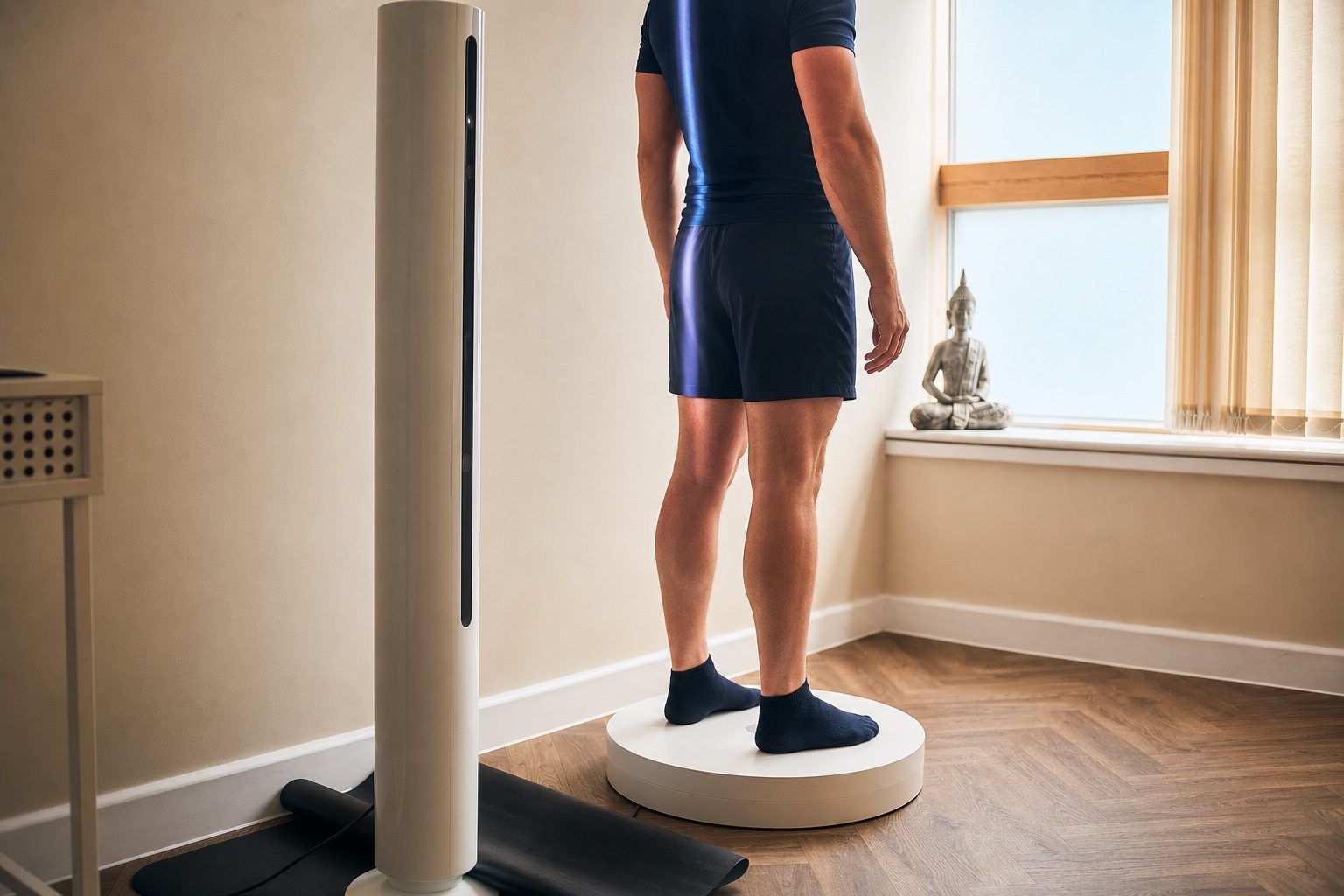
Performance
Body composition testing in Milton Keynes: beyond the bathroom scale
Why lean mass and power-to-weight matter more than the scale, how a Styku 3D scan measures it, and what the numbers mean for training.
Allen7 min readRead the article
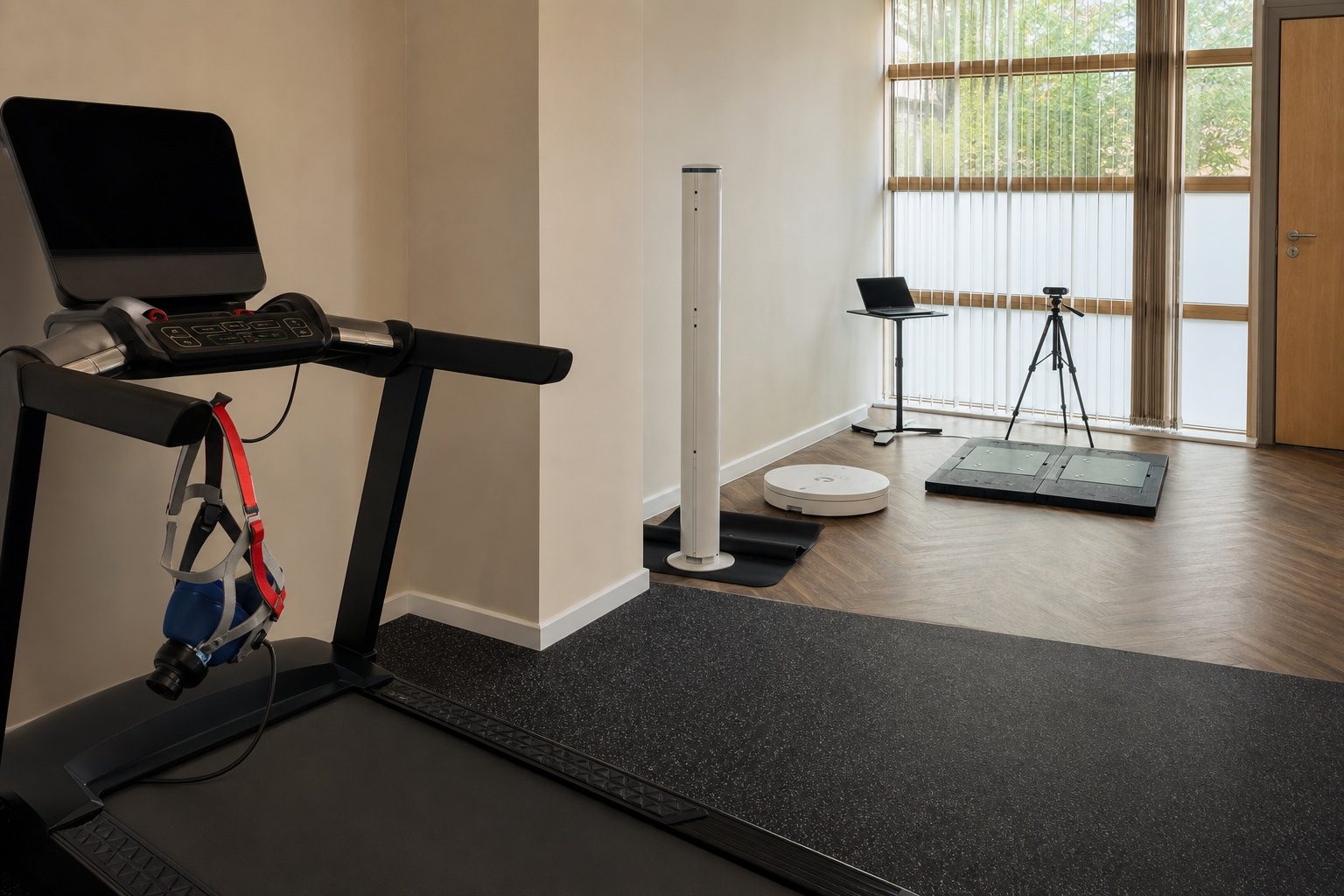
Performance
Performance testing in Milton Keynes: getting the complete picture
Why a complete, clinically-led assessment beats piecemeal testing, and the only place in Milton Keynes that brings VO2 max, body composition and strength together.
Allen7 min readRead the article
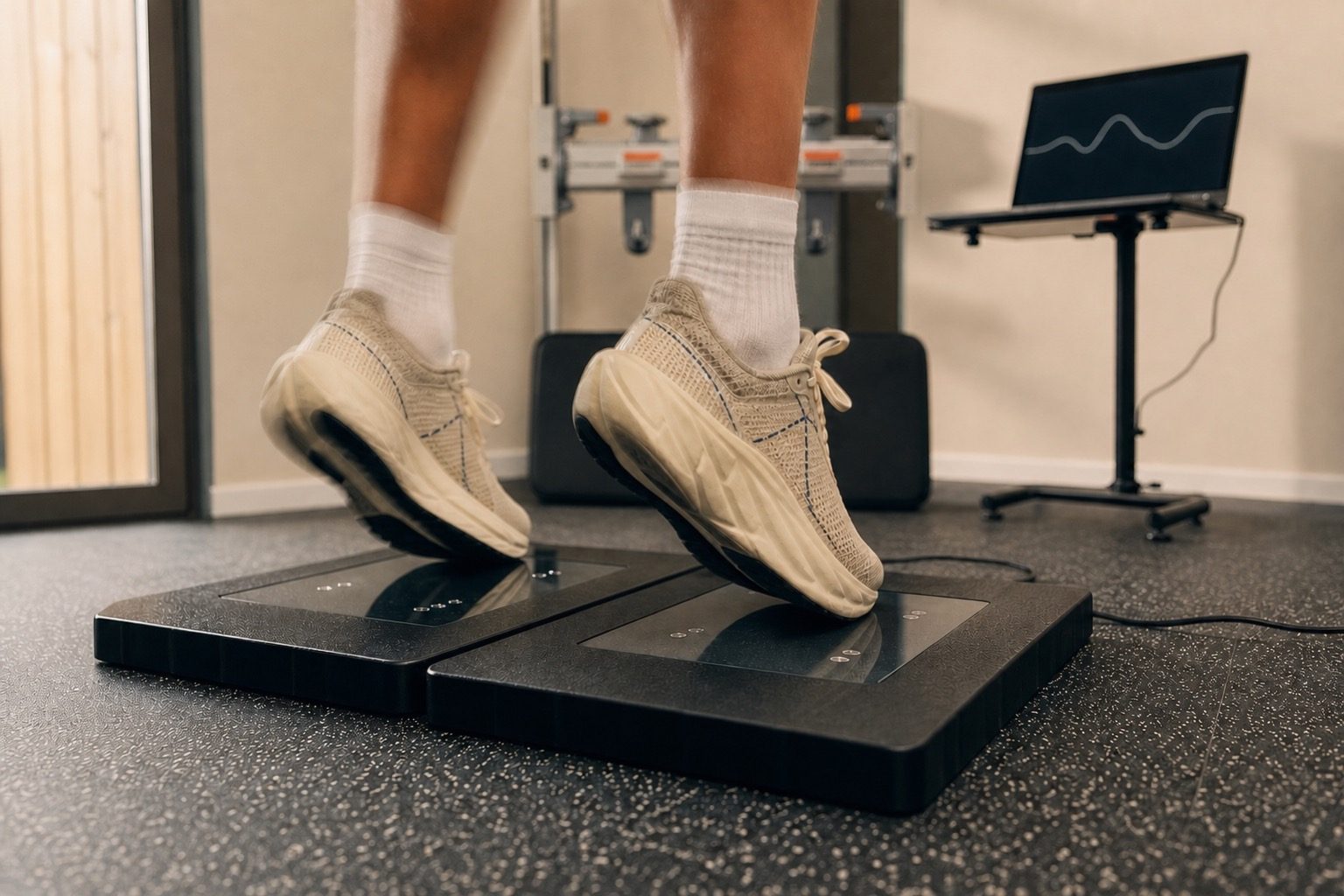
Performance
Force plate testing in Milton Keynes: power, jump performance and hidden asymmetry
How dual force plates quantify power, jump performance and left-right asymmetry, and why that data is useful for training and injury risk.
Allen7 min readRead the article


Stay informed
More from the Hanbury team.
New articles on recovery, movement, physiotherapy and performance, sent when there's something worth reading. No spam, unsubscribe any time.