
Performance
VO2 max and training zones: your aerobic engine, measured

The short version
- VO2 max is your maximum rate of oxygen use, a strong marker of aerobic fitness.
- A "good" score depends on age, sex and sport, so compare like with like.
- Testing also sets your personal training zones, so you train at the right intensity.
- Smartwatch estimates of both can be well off; direct testing removes the guess.
- At Hanbury we measure VO2 max directly with a uVida breath-by-breath test taken to exhaustion, then set your zones from it.
VO2 max is the maximum amount of oxygen your body can use during hard exercise, and it is one of the best single measures of your aerobic fitness, or "engine." The higher your VO2 max, the more oxygen your muscles can use to produce energy, which is why it tracks so closely with endurance performance. Testing it also gives you your personal training zones, so your easy days are genuinely easy and your hard efforts are genuinely hard.
What VO2 max actually tells you
VO2 max is measured in millilitres of oxygen per kilogram of body weight per minute, and it reflects how well your heart, lungs and muscles work together to deliver and use oxygen. Because endurance performance is fundamentally about sustaining energy production aerobically, VO2 max is one of the most reliable indicators of cardiorespiratory fitness. It is not the only thing that matters, efficiency, threshold and durability count too, but it is the foundational number that describes the size of your aerobic engine, and it responds to training, so it is worth knowing and tracking.
What counts as a good VO2 max?
The honest answer is "it depends," which is why context matters more than a single league table. A good score depends on your age, sex and sport, so the sensible approach is to compare your result to your age and sex band first, then to others in your sport tested the same way. VO2 max typically peaks in the early twenties and gradually declines with age, and women's values are on average lower than men's for physiological reasons. Rather than chasing an arbitrary number, the useful comparison is you against your own baseline over time, which is exactly what re-testing provides.
As a rough guide, here is how directly measured VO2 max (ml/kg/min) compares across age and sex, using US reference data from the FRIEND registry of laboratory exercise tests. Find your age band and sex, then see where your number sits.
Men (VO2 max, ml/kg/min)
| Age | Fair (25th) | Average (50th) | Good (75th) | Excellent (90th) |
|---|---|---|---|---|
| 20-29 | 40.1 | 48.0 | 55.2 | 61.8 |
| 30-39 | 35.9 | 42.4 | 49.2 | 56.5 |
| 40-49 | 31.9 | 37.8 | 45.0 | 52.1 |
| 50-59 | 27.1 | 32.6 | 39.7 | 45.6 |
| 60-69 | 23.7 | 28.2 | 34.5 | 40.3 |
| 70-79 | 20.4 | 24.4 | 30.4 | 36.6 |
Women (VO2 max, ml/kg/min)
| Age | Fair (25th) | Average (50th) | Good (75th) | Excellent (90th) |
|---|---|---|---|---|
| 20-29 | 30.5 | 37.6 | 44.7 | 51.3 |
| 30-39 | 25.3 | 30.2 | 36.1 | 41.4 |
| 40-49 | 22.1 | 26.7 | 32.4 | 38.4 |
| 50-59 | 19.9 | 23.4 | 27.6 | 32.0 |
| 60-69 | 17.2 | 20.0 | 23.8 | 27.0 |
| 70-79 | 15.6 | 18.3 | 20.8 | 23.1 |
Values are ml/kg/min from treadmill cardiopulmonary exercise testing (Kaminsky et al., 2015). These are population reference points, not targets or a diagnosis; what counts as a good score also depends on your sport and your own history, so compare like with like.
Why training zones are the practical payoff
For everyday training, your zones may matter even more than the headline number. Training zones define the intensities, easy, moderate, threshold, hard, that develop different parts of your fitness, and getting them right is what makes a training plan work. Zones based on generic formulas or a smartwatch's estimate can be wrong, leaving you training too hard on easy days and not hard enough on key sessions, sometimes for months. Setting your zones from an actual test means your training targets your own physiology rather than a population average. Why training by feel can fail goes deeper on the practical trap.
An honest word on measurement
Precision matters here, so we describe our method accurately. The uVida is a breath-by-breath metabolic analyser, the same class of technology used in sports-science laboratories, and we take the test to the point of exhaustion. That means it measures the oxygen your body actually uses at maximal effort, which is a different exercise to estimating your VO2 max from a formula or a smartwatch. In a validation study, the uVida (DYNOSTICS) system was compared against a laboratory reference analyser and its peak oxygen-uptake readings differed by only about 1% on average, with strong agreement across the other breath-gas measures. As with any physiological test there is a small margin of natural day-to-day variability, and the published evidence base is still growing, but this is a direct, individual measurement of your aerobic engine, interpreted with you and turned into your training zones. For a broader primer on the number itself, see what is VO2 max .
Why Hanbury Health is different
At Hanbury, VO2 max and training-zone testing is done with a uVida metabolic mask, a breath-by-breath metabolic analyser worn while you work to exhaustion, as part of the Performance Blueprint. An expert reads your results with you and sets them into a plan. It sits alongside body composition, strength and movement testing, so your aerobic engine is understood alongside the rest of your performance, and it connects into the Hanbury Method of Test, Train, Track and Transform, with re-testing to prove your training is working. It is available from Level 2 of the Blueprint (£495).
Frequently asked questions
What is VO2 max in simple terms?
The maximum amount of oxygen your body can use during hard exercise, a strong measure of your aerobic fitness or "engine." Higher generally means better endurance capacity.
What is a good VO2 max?
It depends on your age, sex and sport. Compare to your age and sex band first, then to others in your sport tested the same way, and track your own change over time. See the age and sex reference table above for typical ranges.
How is VO2 max tested at Hanbury?
With a uVida breath-by-breath metabolic test taken to exhaustion, which measures your oxygen uptake directly and sets your personal training zones. The uVida (DYNOSTICS) analyser has been validated against a laboratory reference system. It is available from Level 2 of the Performance Blueprint.
Why do training zones matter?
They define the intensities that develop different parts of your fitness. Getting them right, from real data instead of a formula or watch estimate, is what makes training effective.
Where can I get VO2 max testing in Milton Keynes?
Hanbury Health offers VO2 max and training-zone testing within the Performance Blueprint (from Level 2).
References
- Assessment of Maximal Oxygen Uptake (VO2 Max) in Athletes and Nonathletes. Cureus / PMC, 2024.
- NHS. Physical activity guidelines for adults.
- Bickel N. Die Ergebnisse zweier Spiroergometriesysteme (Metalyzer 3B/Cortex und DYNOSTICS) eines Stufentests auf dem Radergometer im Vergleich [Master's thesis]. Deutsche Hochschule fur Gesundheit und Sport (DHGS); 2020. Validation of the uVida/DYNOSTICS analyser against a laboratory reference system (VO2peak agreement ~1%).
- Kaminsky LA, Arena R, Myers J. Reference standards for cardiorespiratory fitness measured with cardiopulmonary exercise testing: data from the Fitness Registry and the Importance of Exercise National Database (FRIEND). Mayo Clin Proc. 2015;90(11):1515-1523. doi:10.1016/j.mayocp.2015.07.026.
Ready to put this into practice?
Hanbury Health is the only place in Milton Keynes bringing VO2 max, body composition and objective strength testing together in one visit, under clinical direction and read with you by an expert.
About the author: Nick Allen is a director of Hanbury Health and a Chartered Physiotherapist (BSc (Hons), HCPC-registered, MCSP), with extensive experience in professional and endurance sport, currently Lead Physiotherapist for Great Britain Badminton. Rehabilitation across the physiotherapy service is medically reviewed by Prof Arul Ramasamy, a consultant foot-and-ankle surgeon.
General information, not medical advice. Written by Nick Allen. Medically reviewed by Prof Arul Ramasamy MA PhD MBA FRCS(Tr+Orth). Last reviewed: 25 July 2026.
Related insights
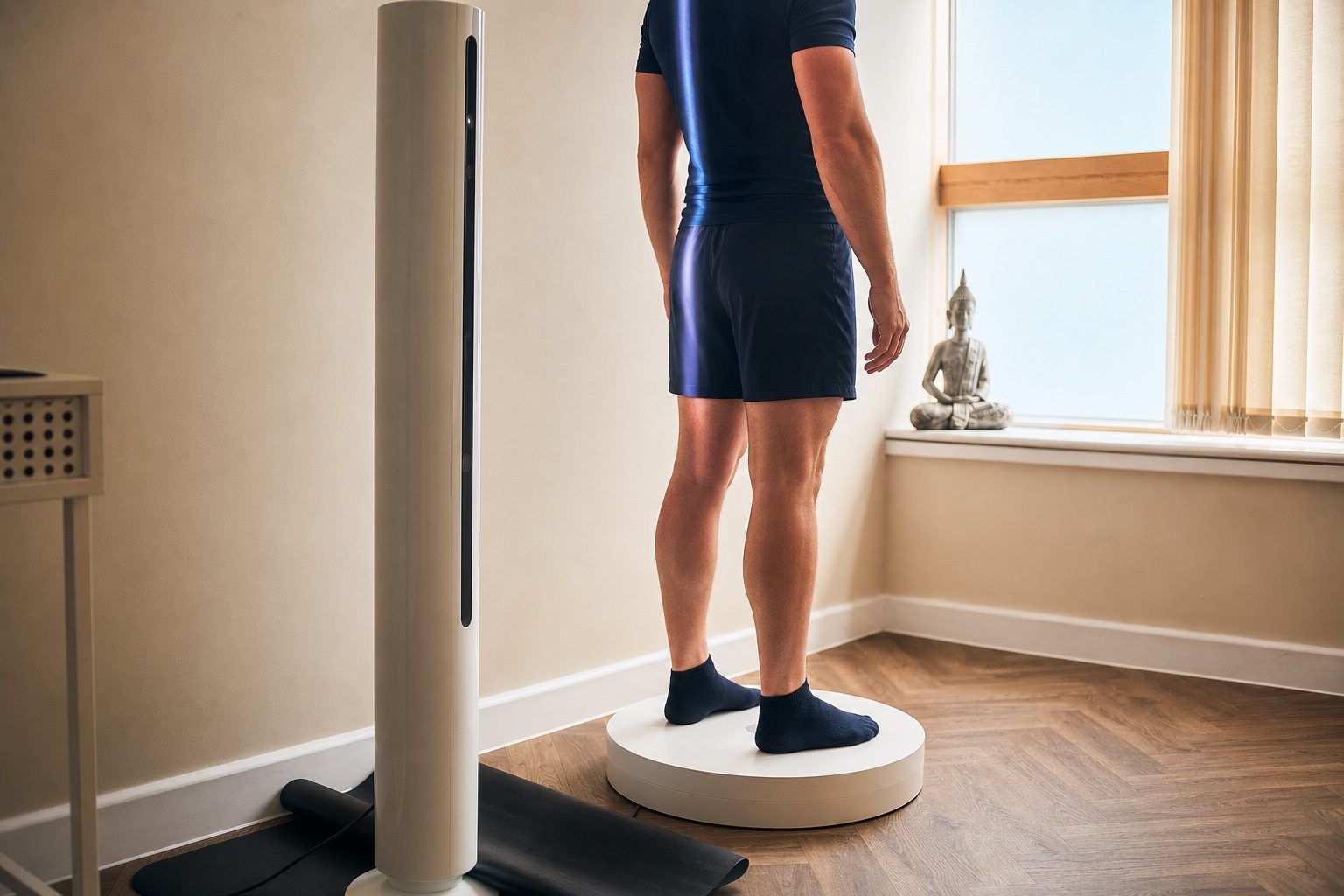
Performance
Body composition testing in Milton Keynes: beyond the bathroom scale
Why lean mass and power-to-weight matter more than the scale, how a Styku 3D scan measures it, and what the numbers mean for training.
Allen7 min readRead the article
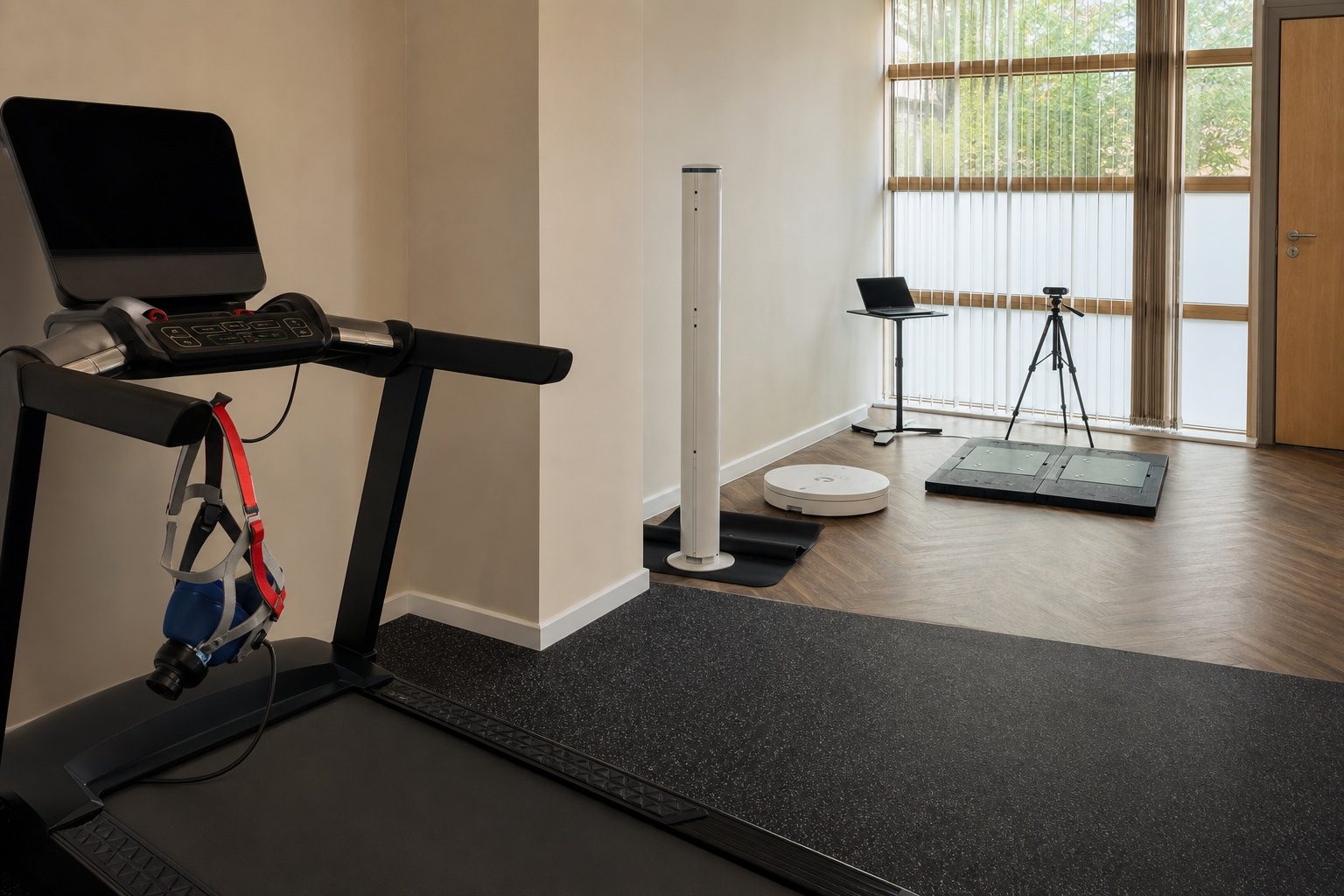
Performance
Performance testing in Milton Keynes: getting the complete picture
Why a complete, clinically-led assessment beats piecemeal testing, and the only place in Milton Keynes that brings VO2 max, body composition and strength together.
Allen7 min readRead the article
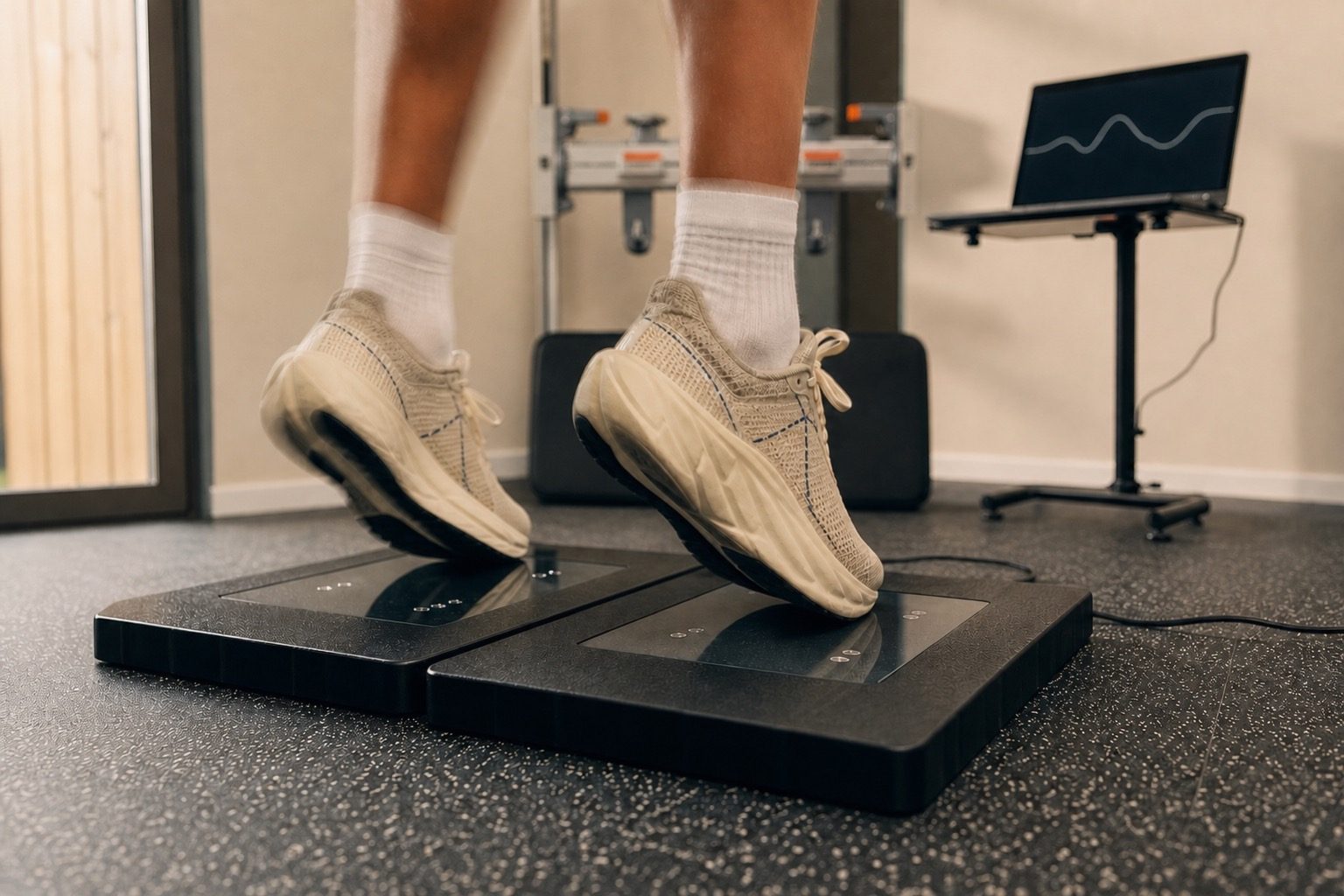
Performance
Force plate testing in Milton Keynes: power, jump performance and hidden asymmetry
How dual force plates quantify power, jump performance and left-right asymmetry, and why that data is useful for training and injury risk.
Allen7 min readRead the article


Stay informed
More from the Hanbury team.
New articles on recovery, movement, physiotherapy and performance, sent when there's something worth reading. No spam, unsubscribe any time.