
Physiotherapy
Achilles tendon rupture in Milton Keynes: recovery and rehabilitation

The short version
- An Achilles rupture is a complete tear, often a sudden snap during sport.
- It can be treated with surgery or without (functional non-surgical management); both need rehab.
- Recovery is a long, staged process, typically many months.
- Rehabilitation is central to the outcome whichever treatment route is chosen.
- Prompt, accurate diagnosis matters, and it is sometimes initially missed.
An Achilles tendon rupture is a complete tear of the tendon, usually felt as a sudden snap or a blow to the back of the ankle during sport, and whether it is treated with or without surgery, the recovery is a long, staged process in which high-quality rehabilitation is central to the outcome. It is a significant injury, most common in active people in midlife, but the news is more encouraging than many fear: modern management, whether surgical or non-surgical, combined with structured rehabilitation, gets most people back to their activities. What matters most is that it is diagnosed promptly and rehabilitated properly.
Recognising it
An Achilles rupture typically happens suddenly, a sharp pain or the sensation of being kicked or hit at the back of the ankle, often with an audible snap, usually during a push-off movement in sport. Afterwards, walking is difficult and pushing off is weak. It is worth knowing that ruptures are sometimes missed initially, because some people can still move the ankle using other muscles, so any sudden Achilles injury with these features deserves prompt assessment. Early, accurate diagnosis shapes the treatment and the timeline.
Surgery or not?
One of the most common questions is whether an Achilles rupture needs surgery. The honest answer is that both surgical and non-surgical (functional) management are legitimate, evidence-supported options, and modern non-surgical management with early functional rehabilitation achieves good outcomes for many people, avoiding surgical risks. Surgery may be preferred in certain cases. The decision depends on the individual, the injury and their goals, and is best made with a foot-and-ankle specialist. Crucially, whichever route is chosen, the rehabilitation that follows is what largely determines the result.
What rehabilitation involves
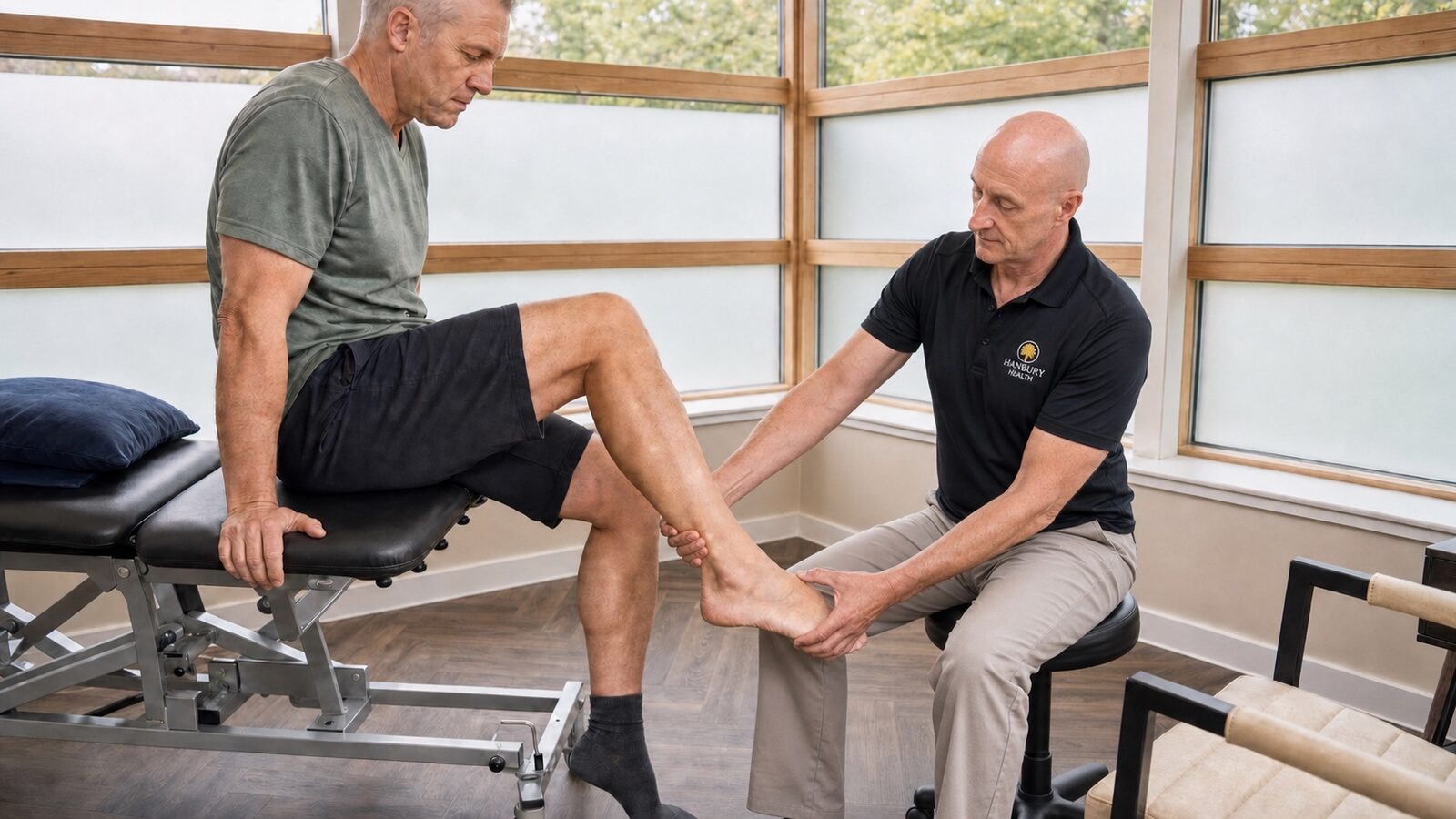
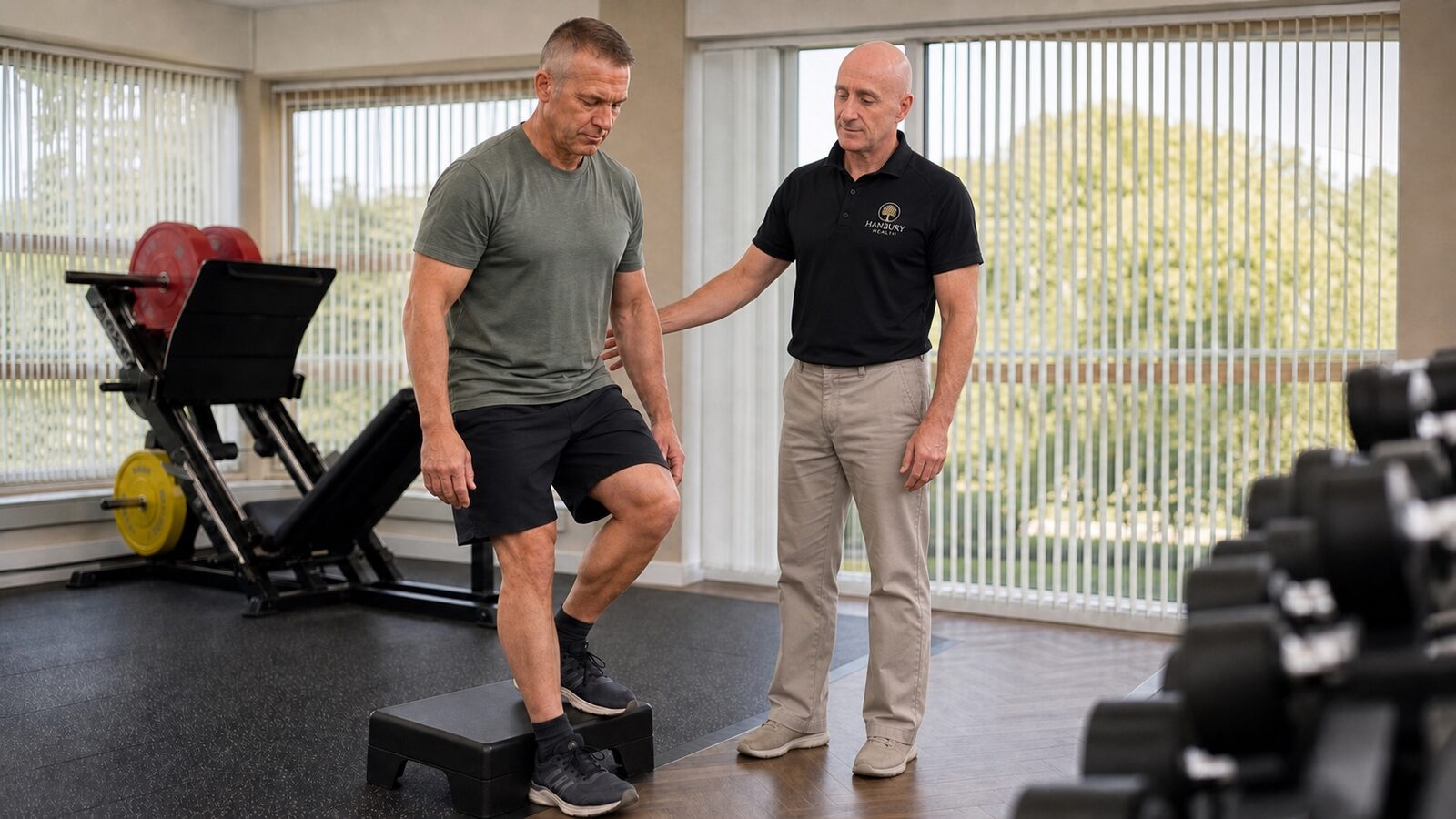
Rehab after an Achilles rupture is staged and progressive. Early on, the ankle is protected (often in a boot with heel wedges) while healing begins, with early controlled movement in modern protocols. Over the following months, rehabilitation gradually restores range of movement, then rebuilds calf and Achilles strength, and finally reintroduces walking, then higher-level loading and, for those returning to sport, running and jumping. Rebuilding calf strength is a particular focus, as it is commonly left deficient. The timeline is measured in months, and progressing sensibly through the stages is what produces a strong, functional tendon.
Why Hanbury Health is different
An Achilles rupture is exactly the kind of significant foot-and-ankle injury where specialist oversight matters, and here rehabilitation is overseen by Prof Arul Ramasamy, a foot-and-ankle surgeon. That means the surgery-or-not decision can be discussed with genuine specialist insight, the diagnosis is accurate, and the rehabilitation follows a modern, staged protocol delivered in a fully equipped rehab gym, with objective testing to confirm the calf and tendon have genuinely regained strength before return to sport. From diagnosis to full recovery, it is one coordinated, specialist pathway. See how our physiotherapy service in Milton Keynes is set up, or read our companion pieces on surgeon-led foot and ankle physiotherapy and Achilles tendinopathy.
Frequently asked questions
How long does an Achilles rupture take to recover?
It is a long recovery, typically many months, with return to sport often around six to twelve months. The timeline depends on the injury, treatment and rehabilitation.
Does an Achilles rupture need surgery?
Not necessarily. Both surgical and modern non-surgical (functional) management are legitimate options with good outcomes for many people. The decision is individual and best made with a specialist.
Can you walk with a ruptured Achilles?
Some people can still move the ankle using other muscles, which is why ruptures are sometimes missed. Walking is weak and push-off is difficult. Any sudden Achilles injury needs prompt assessment.
Is rehab important after an Achilles rupture?
Very. Whichever treatment route is chosen, structured rehabilitation, especially rebuilding calf strength, largely determines the outcome.
Where can I get Achilles rupture rehab in Milton Keynes?
Hanbury Health in Milton Keynes offers foot-and-ankle-surgeon-led assessment and staged rehabilitation for Achilles ruptures.
References
Ready to put this into practice?
Hanbury Health is the only place in Milton Keynes where physiotherapy is overseen by a foot-and-ankle surgeon, with on-site diagnostic ultrasound and a surgeon-led pathway if you ever need more than physiotherapy.
About the author: Simon Jones is a director of Hanbury Health and a Chartered Physiotherapist (MPhil, BSc (Hons), MCSP, HCPC-registered), with a particular interest in clinical diagnostics including diagnostic ultrasound. Rehabilitation across the physiotherapy service is medically reviewed by Prof Arul Ramasamy, a consultant orthopaedic surgeon.
General information, not medical advice. Written by Simon Jones. Medically reviewed by Prof Arul Ramasamy MA PhD MBA FRCS(Tr+Orth). Last reviewed: 25 July 2026.
Related insights

Physiotherapy
How do you know you're ready to return to sport after injury?
Why a calendar date is the wrong marker, what strength, movement and psychological testing actually shows, and how the gap between pain-free and match-fit gets closed.
Allen9 min readRead the article
Physiotherapy
What causes Achilles tendinopathy, and why does loading beat rest?
What Achilles tendinopathy actually is, why rest alone rarely fixes it, and the loading programme that gives you the best chance of a full recovery.
Jones9 min readRead the article
Physiotherapy
Rehab after ACL reconstruction in Milton Keynes: from surgery to return to sport
The staged journey after ACL reconstruction: early quadriceps reactivation, rebuilding strength and control, and criteria-based return to sport.
Allen10 min readRead the article


Stay informed
More from the Hanbury team.
New articles on recovery, movement, physiotherapy and performance, sent when there's something worth reading. No spam, unsubscribe any time.