
Physiotherapy
The three stages of frozen shoulder, and what shortens recovery

The short version
- Frozen shoulder is a genuine, self-limiting condition where the capsule around the shoulder joint becomes inflamed, thickens and stiffens.
- It has three overlapping stages: freezing (pain-dominant), frozen (stiffness-dominant) and thawing (recovery). The whole process typically takes 12 to 30 months.
- The right treatment depends on the stage. Aggressive stretching in the painful phase makes things worse.
- A well-placed cortisone injection early in the condition, combined with guided physiotherapy, can shorten the timeline meaningfully.
- Surgery, in the form of a hydrodilatation or manipulation under anaesthetic, is reserved for stubborn cases that have not responded to conservative care.
Frozen shoulder, or adhesive capsulitis, is a genuine and distinctive condition. The capsule that surrounds the shoulder joint becomes inflamed, thickens and contracts, leaving the shoulder painful and progressively stiff. It is self-limiting, but slow: without treatment the whole process typically takes 12 to 30 months. The right treatment depends on which stage you are in, and getting that right is what makes the biggest difference to how long recovery takes.
The three stages of frozen shoulder
Frozen shoulder progresses through three overlapping stages. The freezing phase, which typically lasts 2 to 9 months, is pain-dominant. Pain builds gradually, is often worst at night, and range of movement starts to reduce. The frozen phase, from 4 to 12 months, is stiffness-dominant. Pain tends to ease but the shoulder loses meaningful range, particularly external rotation. The thawing phase, from 5 to 24 months, is recovery. Range gradually returns, though not always to what it was.
Who gets it?
Frozen shoulder is most common between the ages of 40 and 60, more common in women, and more common in people with diabetes or thyroid disease. It can follow a period of shoulder immobilisation, for example after a fracture or surgery, but often appears without any clear trigger. It is not caused by lifting or a specific injury.
How is it diagnosed?
Frozen shoulder is a clinical diagnosis. The hallmark is loss of both active and passive range in a capsular pattern, with external rotation typically most affected. A physiotherapist will rule out the other things that can mimic it, including rotator cuff pathology, arthritis of the shoulder and referred pain from the neck. Imaging is not routine. It is used when the diagnosis is unclear or when a specific procedure is being planned.
How is it treated?
The right treatment depends on the stage. In the freezing phase, we focus on pain relief and gentle movement within a tolerable range. Aggressive stretching at this point makes things worse. A well-placed intra-articular cortisone injection in this window, combined with physiotherapy, has the best evidence for shortening the pain phase.
As the shoulder moves into the stiffness-dominant frozen phase, sustained low-load stretching and progressive strengthening become the priority. In the thawing phase, we rebuild strength and function so that you finish with a shoulder you can rely on. Hydrodilatation, where the joint capsule is stretched by injecting fluid under ultrasound guidance, and manipulation under anaesthetic are reserved for cases that have not moved with conservative care. The UK FROST trial showed all three approaches, physiotherapy with steroid injection, manipulation under anaesthetic and arthroscopic capsular release, are reasonable options with broadly similar outcomes at 12 months.
When should you see a physiotherapist?
Early. A stiffening, painful shoulder that is worst at night, particularly if you are between 40 and 60, or have diabetes, deserves a proper assessment before it settles into the frozen phase. Our physiotherapy team in Milton Keynes will diagnose the stage you are in, arrange a well-timed cortisone injection where appropriate, and build the right stage-by-stage programme with you. If your shoulder pain is more about weakness and overload than lost range, read our companion piece on rotator cuff and shoulder pain. For treatment in Milton Keynes, see our shoulder pain physiotherapy page.
Frequently asked questions
How long does frozen shoulder last?
Untreated, the whole process typically lasts 12 to 30 months. With early physiotherapy, a well-timed cortisone injection in the freezing phase, and stage-appropriate rehab, the timeline is often shortened meaningfully.
What causes it?
In most cases, we do not know. It is more common between the ages of 40 and 60, in women, in people with diabetes or thyroid disease, and sometimes after a period of shoulder immobilisation. It is not caused by lifting or by a specific injury.
Should I be stretching my shoulder every day?
Only in the right phase. Aggressive stretching during the painful freezing phase tends to flare things up and prolong the condition. Once the shoulder moves into the stiffness-dominant frozen phase, sustained low-load stretching becomes the right work.
Do cortisone injections help?
Yes, in the right window. A well-placed intra-articular steroid injection early in the freezing phase, combined with guided physiotherapy, is the best-supported way to shorten the pain phase and get moving. Injections given later, when stiffness dominates, are less effective.
Will I need surgery?
Most people do not. Hydrodilatation, where the joint capsule is stretched by injecting fluid under ultrasound guidance, and manipulation under anaesthetic are reserved for cases that have not responded to a fair trial of conservative care.
References
- Rangan A, Brealey SD, Keding A, et al. Management of adults with primary frozen shoulder in secondary care (UK FROST): a multicentre, pragmatic, three-arm, superiority randomised clinical trial. The Lancet, 2020.
- Kelley MJ, Shaffer MA, Kuhn JE, et al. Shoulder pain and mobility deficits: adhesive capsulitis. Clinical practice guidelines linked to the ICF. Journal of Orthopaedic and Sports Physical Therapy, 2013.
- Wang W, Shi M, Zhou C, et al. Effectiveness of corticosteroid injections in adhesive capsulitis of shoulder: a meta-analysis. Medicine, 2017.
- NICE Clinical Knowledge Summaries. Shoulder pain – frozen shoulder. National Institute for Health and Care Excellence.
Ready to put this into practice?
Hanbury Health's physiotherapy is built on Physix, the Milton Keynes practice established in 1998 and now part of Hanbury Health, a chartered team with three decades of elite sport, diagnostic ultrasound and evidence-led rehab.
About the author: Simon Jones is a director of Hanbury Health and a Chartered Physiotherapist (MPhil, BSc (Hons), MCSP, HCPC-registered), with a particular interest in clinical diagnostics including diagnostic ultrasound. Rehabilitation across the physiotherapy service is medically reviewed by Prof Arul Ramasamy, a consultant orthopaedic surgeon.
General information, not medical advice. Written by Simon Jones. Medically reviewed by Prof Arul Ramasamy MA PhD MBA FRCS(Tr+Orth). Last reviewed: 25 July 2026.
Related insights

Physiotherapy
How do you know you're ready to return to sport after injury?
Why a calendar date is the wrong marker, what strength, movement and psychological testing actually shows, and how the gap between pain-free and match-fit gets closed.
Allen9 min readRead the article
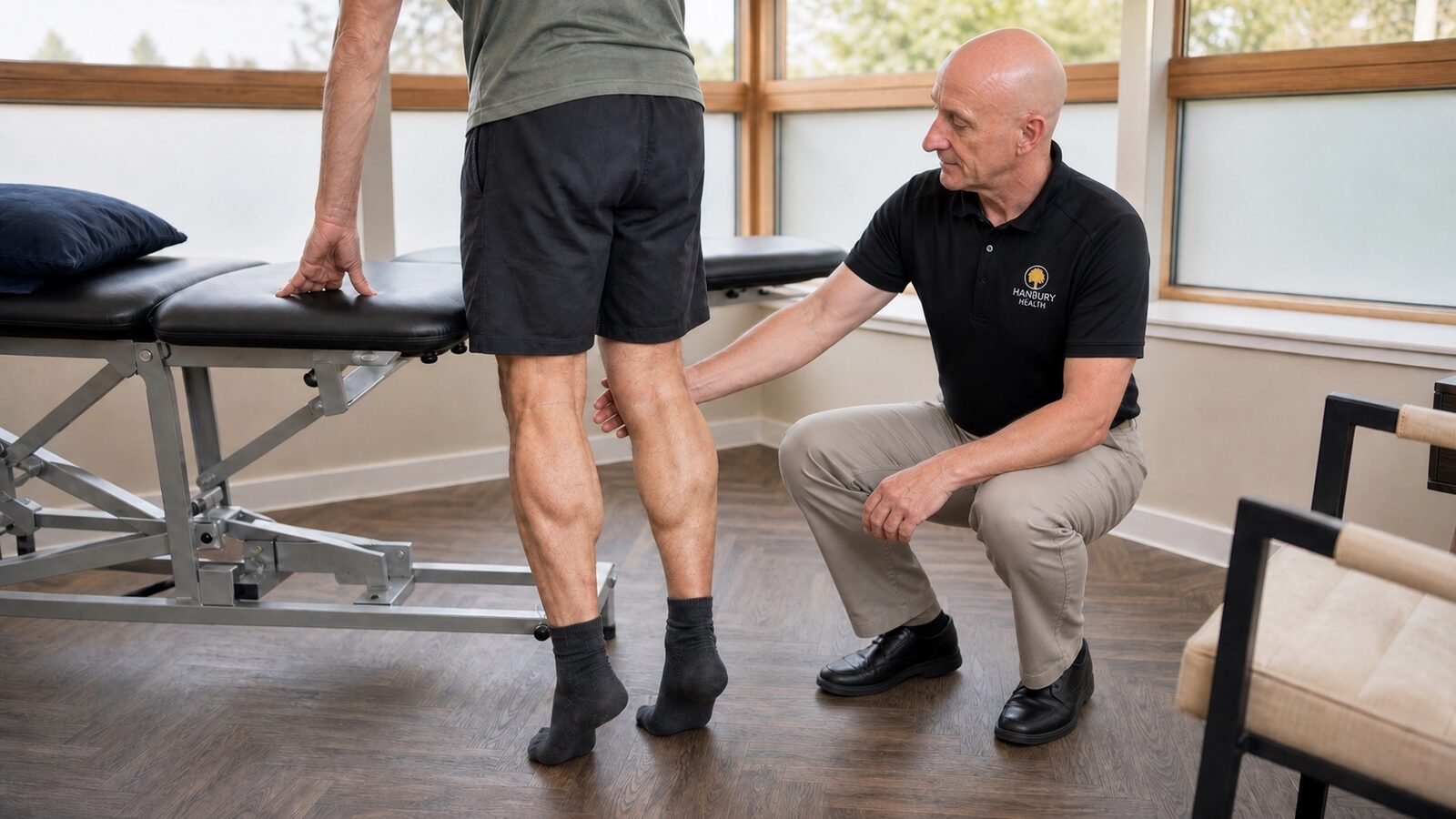
Physiotherapy
Achilles tendon rupture in Milton Keynes: recovery and rehabilitation
Recognising a rupture, the surgery-or-not decision, and the staged rehabilitation that largely determines the outcome.
Jones9 min readRead the article
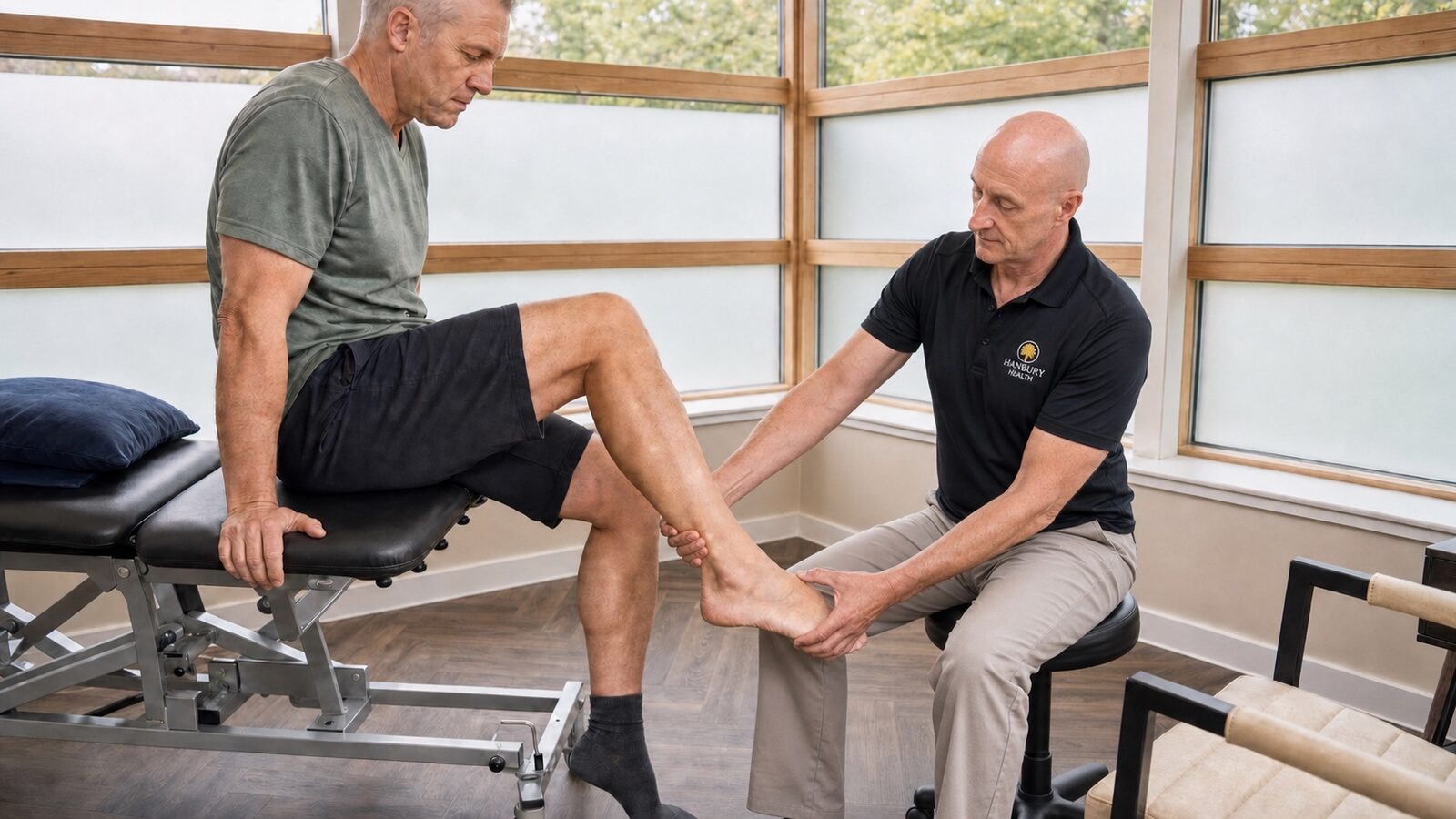
Physiotherapy
What causes Achilles tendinopathy, and why does loading beat rest?
What Achilles tendinopathy actually is, why rest alone rarely fixes it, and the loading programme that gives you the best chance of a full recovery.
Jones9 min readRead the article


Stay informed
More from the Hanbury team.
New articles on recovery, movement, physiotherapy and performance, sent when there's something worth reading. No spam, unsubscribe any time.