
Performance
Why training by feel fails: measure, don't guess

The short version
- Feel, smartwatches and generic formulas are estimates, not measurements, and can be well off.
- Building a plan on wrong numbers wastes effort in the wrong places.
- Direct measurement gives your real body composition, metabolism, zones, strength and movement.
- Measured data lets you target the right things and track whether they are improving.
- This is the core idea behind the Performance Blueprint: measured, not guessed.
Most people train from a combination of feel, a smartwatch estimate and a coach's best guess, and while that gets you started, it eventually caps your progress, because you cannot properly improve what you have never actually measured. Estimates are not measurements. A predictive calorie formula, a wrist-based fitness score, a training zone derived from a generic equation, each can be significantly wrong for you specifically, and if your plan is built on wrong numbers, effort leaks away in the wrong places. Measuring your body directly replaces the guesswork with your real data, and that is what makes your training time count.
The problem with estimates
Estimates are convenient, and for a beginner they are enough. The trouble is that they are built on averages, and you are an individual. A calorie calculator can be off by hundreds of kilocalories a day. A smartwatch's VO2 or zone estimate can put you in the wrong training intensity for months. Even a good coach, without measurement tools, is inferring your metabolism, your aerobic capacity and any left-right imbalance rather than seeing them. None of this means estimates are useless, but it does mean that at some point they stop being good enough to keep improving from.
| Source | What it gives you | Reliability |
|---|---|---|
| Feel or a coach's eye | A rough sense of effort | Variable |
| Smartwatch or formula | Estimated zones and VO2 | Can be a whole zone off |
| Hanbury measurement | Your real VO2 max, zones, composition, strength | Measured, individual |
What measuring changes
When you measure directly, several things change. You learn your actual resting metabolism, so you can fuel accurately instead of estimating. You get training zones from a real VO2 max test, so your easy days are easy and your hard days count. You see your body composition and can track whether training is changing it. And, at the top level, you discover things about your strength, power and movement, such as a left-right asymmetry, that you could never have felt. Each of these turns a guess into a decision, and collectively they let you focus your limited time and energy where it will actually help.
From data to a better plan
Measurement is not the point in itself, a better plan is. Real numbers let training be targeted: if your aerobic engine is your limiter, you know to build it; if an asymmetry is raising your injury risk, you address it; if your fuelling has been off, you fix it. And because you have a baseline, you can re-test and see whether the plan is working. This is the difference between training that drifts and training that is steered, and it is what separates people who plateau from people who keep progressing.
Being honest about what testing is
Measuring is powerful, but it is not magic, and we are careful not to overstate it. Some of our tools derive a value rather than reading it off a single instrument (the Styku 3D scan derives body composition using models validated against DXA rather than being a DXA itself), and testing supports good training rather than replacing it. But the core measures are real and well validated: your VO2 max is measured directly from your breath at maximal effort, your metabolism from your breath at rest, and your body composition from a scan that agrees closely with DXA. The honest claim is simple and strong enough: measured data beats guesswork, and having your real numbers, interpreted by an expert, lets you train with intent instead of hope. If you want to see who this suits, read who performance testing is for.
Why Hanbury Health is different
"Measured, not guessed" is the founding idea of the Performance Blueprint. At Hanbury we replace the smartwatch estimate and the PT's hunch with direct testing, body composition, metabolism, aerobic fitness, strength and movement, and, crucially, an expert reads the results with you and turns them into a plan, under a named clinical director. It then connects into the Hanbury Method, Test, Train, Track, Transform, with re-testing to prove it is working. That combination of real measurement and expert interpretation is what turns numbers into progress. It starts from £197.
Frequently asked questions
Is training by feel bad?
Not for beginners, where it is enough to start. But feel, smartwatches and generic formulas are estimates that eventually cap progress, because you cannot properly improve what you have never measured.
How accurate are smartwatch fitness numbers?
They are estimates and can be significantly off for an individual, for example putting you in the wrong training zone. They are useful for trends, less so for precise, individual guidance.
What does measuring actually change?
It gives you your real metabolism, training zones, body composition, strength and movement, so you can fuel and train accurately and track whether it is working.
Does testing replace a coach?
No. It supports good coaching and training by providing real data to work from. The best results come from measurement plus expert interpretation and a plan.
Where can I get measured rather than guess in Milton Keynes?
Hanbury Health's Performance Blueprint replaces estimates with direct testing, interpreted by an expert, from £197.
References
- Assessment of Maximal Oxygen Uptake (VO2 Max) in Athletes and Nonathletes. PMC, 2024.
- NHS. Physical activity guidelines for adults.
- Bickel N. Die Ergebnisse zweier Spiroergometriesysteme (Metalyzer 3B/Cortex und DYNOSTICS) eines Stufentests auf dem Radergometer im Vergleich [Master's thesis]. DHGS; 2020. Validation of the uVida/DYNOSTICS analyser against a laboratory reference system (VO2peak agreement ~1%).
Ready to put this into practice?
Hanbury Health is the only place in Milton Keynes bringing VO2 max, body composition and objective strength testing together in one visit, under clinical direction and read with you by an expert.
About the author: Nick Allen is a director of Hanbury Health and a Chartered Physiotherapist (BSc (Hons), HCPC-registered, MCSP), with extensive experience in professional and endurance sport, currently Lead Physiotherapist for Great Britain Badminton. Rehabilitation across the physiotherapy service is medically reviewed by Prof Arul Ramasamy, a consultant foot-and-ankle surgeon.
General information, not medical advice. Written by Nick Allen. Medically reviewed by Prof Arul Ramasamy MA PhD MBA FRCS(Tr+Orth). Last reviewed: 25 July 2026.
Related insights
Performance
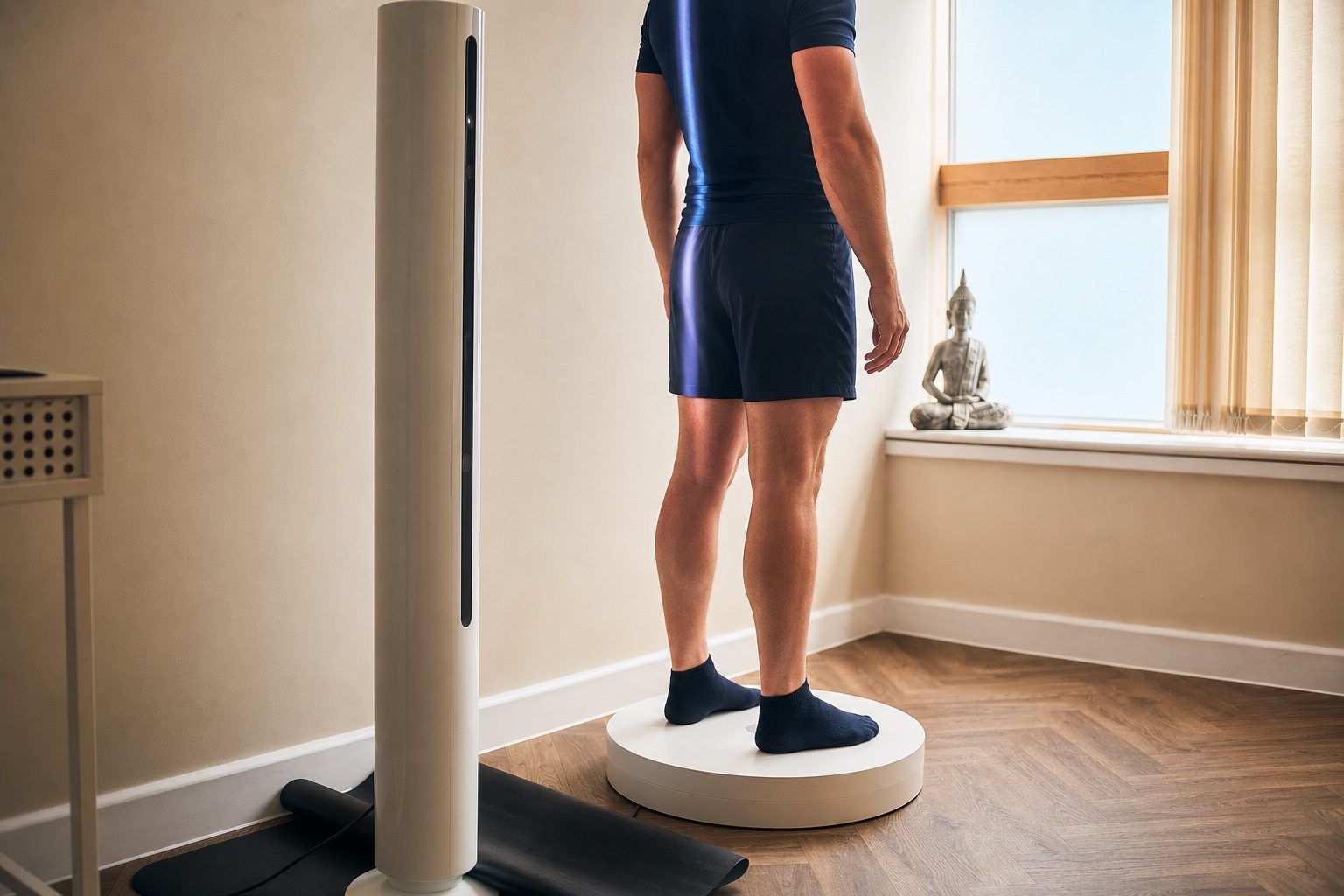
Body composition testing in Milton Keynes: beyond the bathroom scale
Why lean mass and power-to-weight matter more than the scale, how a Styku 3D scan measures it, and what the numbers mean for training.
Allen7 min readRead the article
Performance
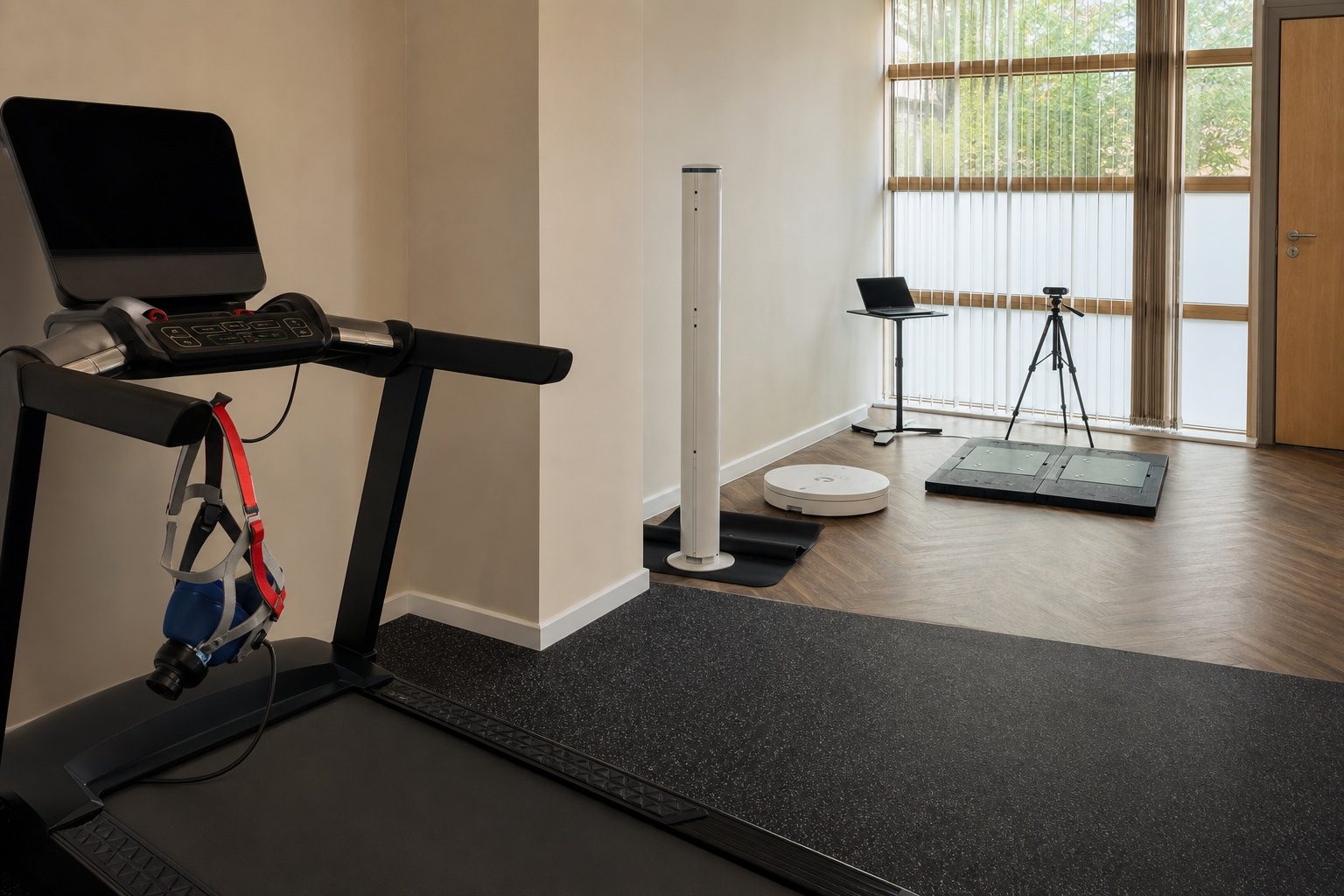
Performance testing in Milton Keynes: getting the complete picture
Why a complete, clinically-led assessment beats piecemeal testing, and the only place in Milton Keynes that brings VO2 max, body composition and strength together.
Allen7 min readRead the article
Performance
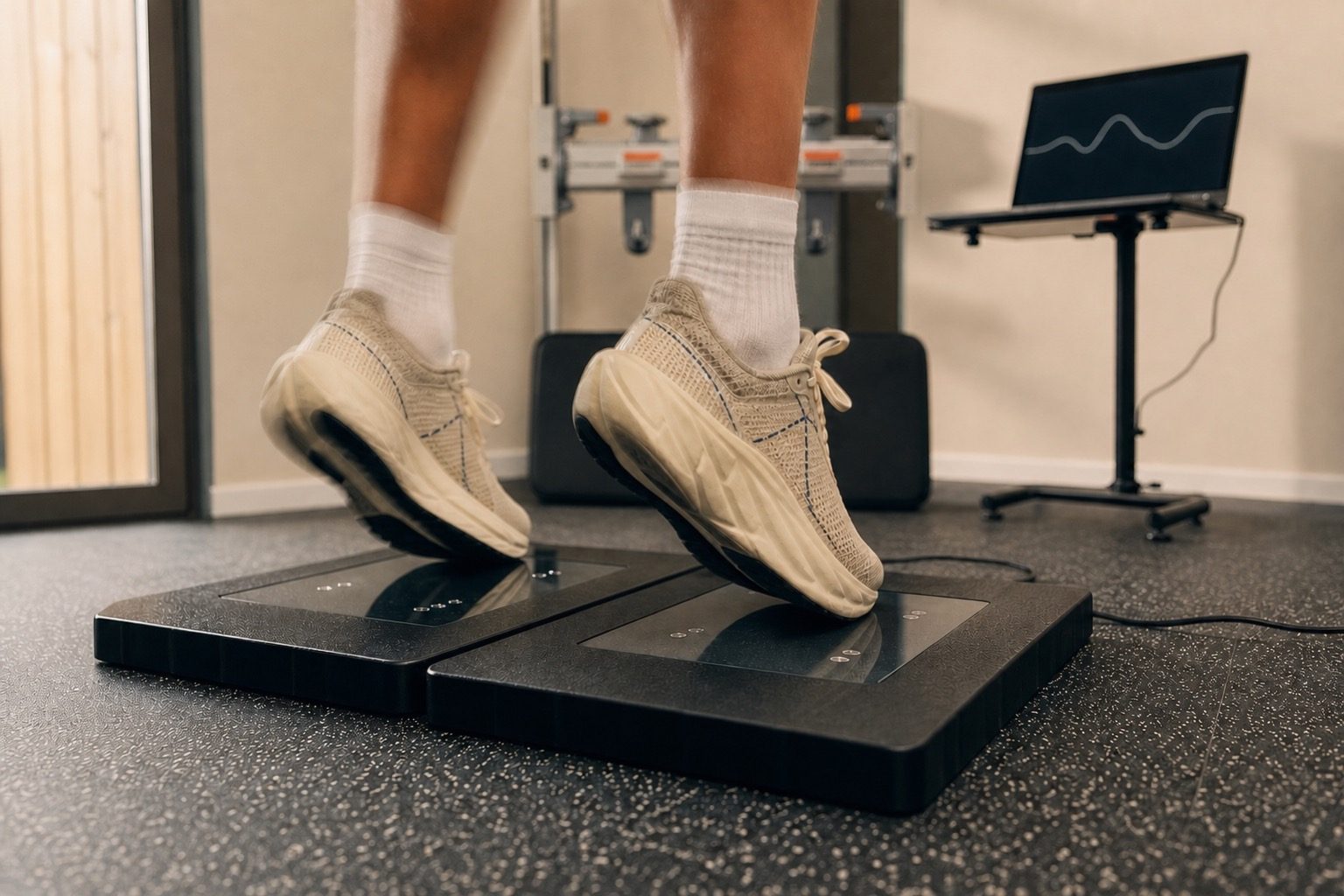
Force plate testing in Milton Keynes: power, jump performance and hidden asymmetry
How dual force plates quantify power, jump performance and left-right asymmetry, and why that data is useful for training and injury risk.
Allen7 min readRead the article


Stay informed
More from the Hanbury team.
New articles on recovery, movement, physiotherapy and performance, sent when there's something worth reading. No spam, unsubscribe any time.