
Recovery · Treatments
Lymphatic Drainage in Milton Keynes: Whole-Body Compression for Lighter Limbs
Written and medically reviewed by Prof Arul Ramasamy MA PhD MBA FRCS(Tr+Orth)
Consultant Orthopaedic Surgeon and Medical Director, Hanbury Health · Milton Keynes
Published:
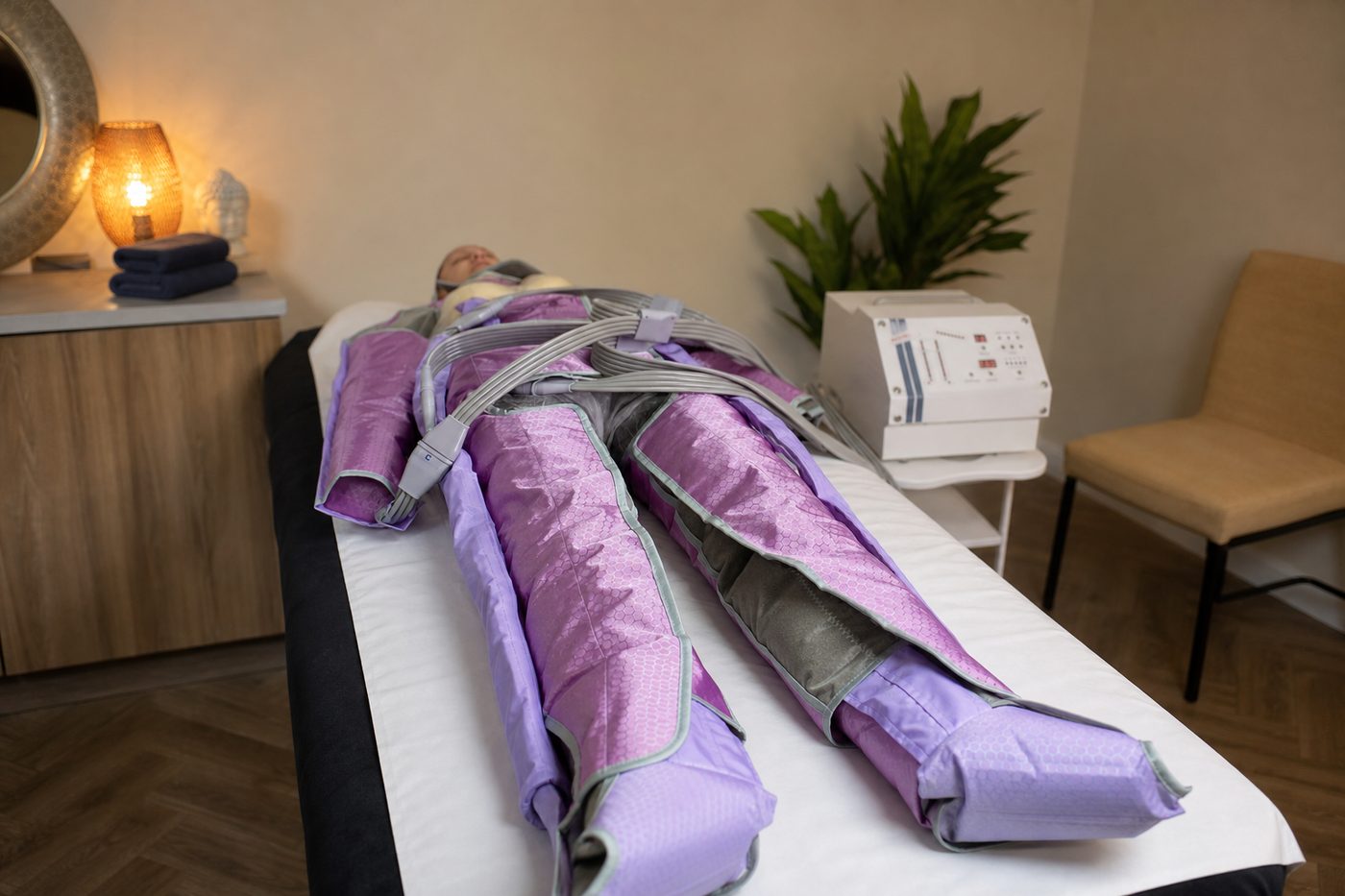
Your body has a second circulation you rarely think about. The lymphatic system carries fluid and waste away from your tissues, but unlike your blood, it has no pump of its own. It moves only when you do. When life is sedentary, still, or simply heavy going, that flow slows and fluid lingers, leaving you puffy, heavy and sluggish. Our lymphatic drainage suit is a whole-body way to get it moving again. At Hanbury Health it's the gentlest, most relaxing tool in our recovery suite, and the one that leaves your whole body, not just your legs, feeling lighter. This article explains what it is, how it works, and who it's for.
What the lymphatic suit is
The suit is a professional pressotherapy system, a Zemits Demeter 2.0, made up of 44 individual air chambers built into a full-body garment that wraps the legs, hips, abdomen and arms. Connected to a console, the chambers inflate and deflate in a controlled, repeating sequence, applying gentle, adjustable pressure (tuned to a comfortable level for you) that moves in waves across the body. You lie back; the suit does the rest.
Because it covers the whole body rather than a single limb, it works with the lymphatic system as a network, which is how that system actually functions.
Lymphatic drainage is used here as a recovery and wellbeing tool. Nothing in this article has been evaluated by the MHRA or FDA, and it is not intended to diagnose, treat, cure or prevent any disease. We use it inside a clinically informed setting.
The lymphatic system: why it needs a hand
It helps to understand what you're actually helping. Your lymphatic system is a body-wide network of vessels that drains excess fluid from your tissues, carries away waste, and returns it to the bloodstream. It's central to fluid balance and immune function, and, crucially, it has no heart to pump it. It depends almost entirely on movement: the squeeze of your muscles as you walk, breathe and move is what pushes lymph along.
Modern life works against that. Long hours sitting, long-haul travel, a stretch of poor sleep or reduced activity, or simply a demanding block that keeps you static, all of it slows lymphatic flow and lets fluid pool, which is the heaviness and puffiness you feel by the evening. The suit stands in for the movement your day didn't provide, mechanically encouraging that flow across the whole body.
How it differs from our compression boots
If you've read about our compression boots, this will sound related, and it is. Both use sequential pneumatic compression. The difference is coverage and intent. The boots focus on the legs, and are aimed squarely at lower-limb sports recovery, flushing tired, heavy legs after training. The lymphatic suit is whole-body: legs, hips, abdomen and arms together, aimed at the lymphatic system as a network and at whole-body heaviness rather than just the legs. Many people use the boots after leg-heavy training and the suit when the whole body feels congested, sluggish or puffy. They complement each other.
Who it's for
The suit suits a wide range of people:
- Anyone who feels heavy, puffy or "congested", after travel, a static week, or poor sleep.
- People who sit or stand for long hours and notice swelling by the evening.
- Athletes wanting whole-body recovery, not just the legs.
- Anyone who wants a deeply relaxing, completely passive treatment.
You don't need a diagnosis. If your body feels heavy and you want it to feel light, this is one of the easiest ways to get there.
How it works
The mechanism is the same principle your body already uses, delivered mechanically. The suit's chambers inflate in sequence, typically working inward and upward, in the direction lymph and venous blood are meant to travel, gently milking fluid along the vessels, then releasing to let them refill. Repeated across a session and across the whole body, this supports lymphatic drainage and venous return together: moving pooled fluid, encouraging circulation, and easing the sensation of heaviness. It's a rhythmic, whole-body version of what a brisk walk does for your circulation, except you're lying down with nothing to do.
How the lymphatic suit supports drainage and circulation
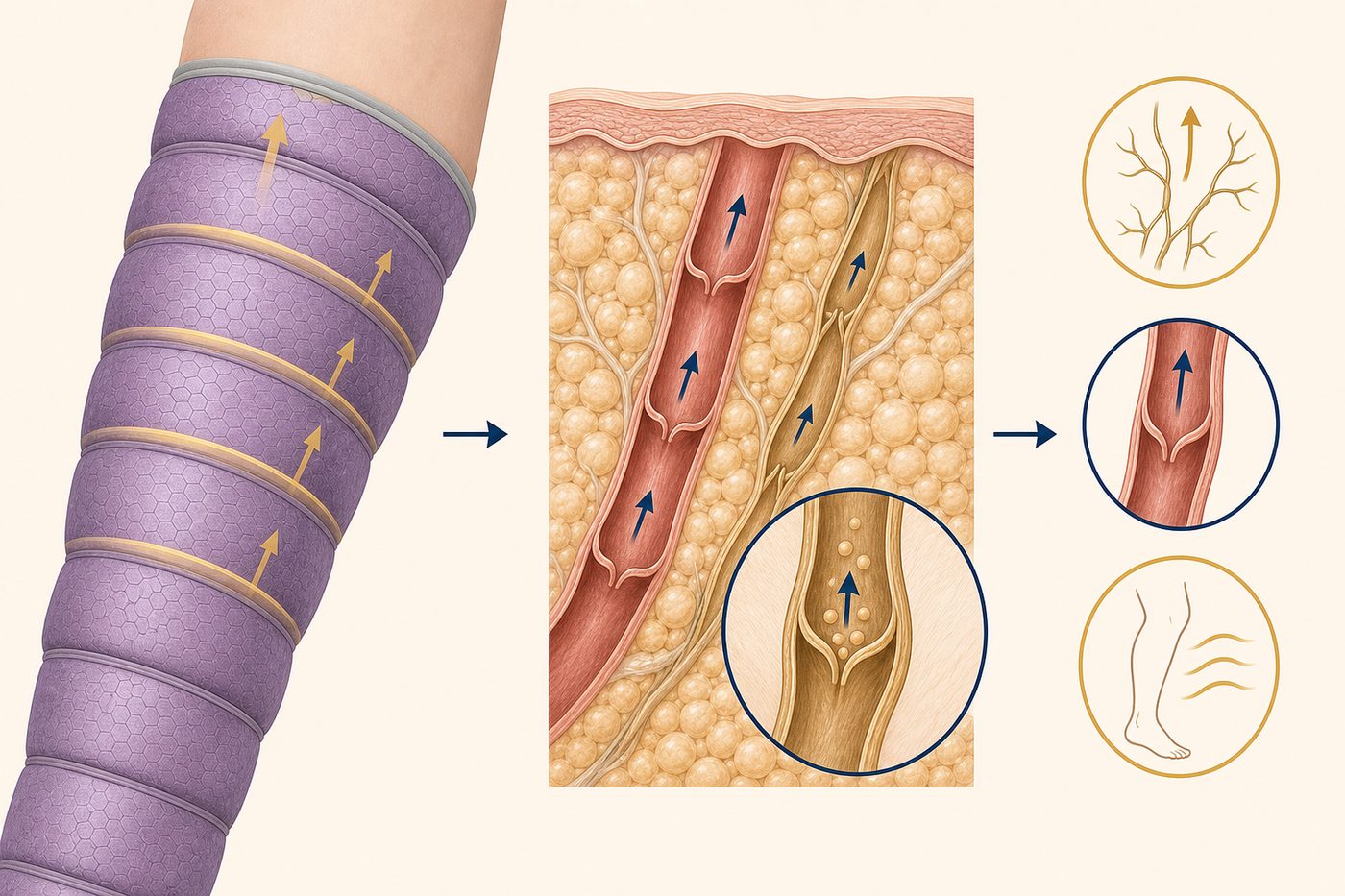
Chambers inflate in sequence, working inward and upward
Vein and lymphatic vessel both carry fluid back toward the heart
- Supports lymphatic drainage across the whole body
- Assists venous return
- Eases heaviness and puffiness
What the evidence shows
Here's the honest picture. The core mechanism is well founded: sequential pneumatic compression genuinely moves fluid, which is why versions of it are used medically to manage lymphoedema and to support circulation. For general recovery and the everyday feeling of heavy, swollen limbs, it reliably delivers that lighter-limbed result, and the recovery benefit over simply resting is real but modest, in line with the wider compression literature.
We're also careful about what we don't claim. Pressotherapy is often marketed for "detox", inch-loss or weight loss; the evidence doesn't support those claims, and we won't make them. What it does well is move fluid, support circulation, ease heaviness and relax the body, and that's plenty. As with everything in the suite: a clear mechanism, honest expectations, and no overselling.
For recovery and heaviness
Used for recovery, the appeal is whole-body and effortless. Where cryotherapy jolts and the ice shower shocks, the suit soothes, a slow, rhythmic squeeze that moves fluid and leaves the whole body feeling lighter and looser. It pairs naturally with the rest of the suite in a single visit, alongside contrast therapy, hyperbaric oxygen, red light therapy or Shiftwave, and it's a natural finish to a heavier recovery session.
For everyday life: travel, desk days and puffiness
Most people come back for the ordinary heaviness of modern life: puffy legs after a flight, swollen ankles after a day at a desk, the general sluggishness that follows a static, poorly-slept week. Half an hour in the suit is one of the most pleasant ways to reverse that. You lie down, and you get up feeling noticeably lighter and less congested. For people who never make time for recovery, it feels like rest.
Where this fits into longevity and healthspan
Good circulation and healthy fluid movement are quiet fundamentals of ageing well. Sluggish lymphatic flow and lower-limb fluid retention affect comfort, mobility and how you feel day to day, and sedentary living, which most modern life involves, works against both. Supporting circulation and lymphatic drainage is a gentle, low-effort way to counter that. We use the suit alongside our HealthSpan Medicine and Performance Testing so that the recovery you do sits within the same picture of you as the rest of your plan. Fluid movement is one of the fundamentals we track over years, alongside circulation, strength and sleep.
What a session is like here
A session is about as restful as it gets. You settle into a recliner, we fit the full-body suit, and set the pressure to a level that feels comfortable. Over roughly thirty minutes, the chambers inflate and release in gentle waves across your body while you do nothing at all, most people close their eyes, and many nearly fall asleep. When it finishes, you step out feeling lighter and loosened. There's no exertion, no heat, and nothing to recover from.
Who it's not for: safety and contraindications
Lymphatic compression is very well tolerated, but it isn't right for everyone. Speak to us or your own medical provider before a session if any of the following apply: a known or suspected blood clot (DVT); significant swelling caused by heart, kidney or liver failure; a skin infection, open wound or cellulitis in the area; severe peripheral arterial disease; recent surgery or a fracture; active or recent cancer (unless your specialist has advised it's appropriate); or pregnancy. We screen everyone before a first session, if you're unsure, ask, and we'll check.
Why we offer whole-body lymphatic drainage
Fluid balance and swelling are everyday territory for a surgeon, I spend a good deal of my working life thinking about why tissue swells and how to help it settle. Mechanical lymphatic drainage earns its place because the underlying principle is sound and genuinely useful: give the lymphatic system the movement it depends on, across the whole body, and heaviness eases. We chose a full-body, multi-chamber suit because the lymphatic system is a whole-body network. We keep our claims where the evidence is: fluid movement, circulation, comfort and relaxation.
How to try lymphatic drainage in Milton Keynes
Lymphatic drainage is part of our wider recovery suite and the Recover pillar at Hanbury Health, available from £52. It works beautifully on its own as a deeply relaxing session and pairs naturally with the rest of the suite in a single visit. Full pricing and membership options are on our recovery page.
Frequently asked questions
What is lymphatic drainage (pressotherapy)?
Lymphatic drainage here uses a whole-body compression suit with 44 air chambers that inflate and release in sequence across the legs, hips, abdomen and arms, gently supporting lymphatic and circulatory flow to ease heaviness and aid recovery.
What does lymphatic drainage help with?
It's used to ease the feeling of heavy, puffy or swollen limbs, support circulation after travel or long static days, aid whole-body recovery, and provide deep relaxation. We don't claim it for weight loss or "detox", the evidence doesn't support that.
How is the suit different from compression boots?
The compression boots treat the legs only and are aimed at lower-limb sports recovery. The lymphatic suit is whole-body, legs, hips, abdomen and arms, and works with the lymphatic system as a network, targeting whole-body heaviness rather than just the legs.
Does lymphatic drainage actually work?
The mechanism is well founded, sequential pneumatic compression genuinely moves fluid, which is why it's used medically for lymphoedema. For everyday heaviness and recovery it reliably leaves the limbs feeling lighter, with a modest recovery benefit over rest. It is not a weight-loss or detox treatment.
How long is a session and what does it feel like?
Around thirty minutes of gentle, rhythmic compression while you lie still. There's no heat and no effort, most people find it deeply relaxing and nearly drift off.
Is it safe? Who should avoid it?
It's very well tolerated but not for everyone. Anyone with a known or suspected blood clot, significant heart/kidney/liver-related swelling, a skin infection or open wound, severe arterial disease, recent surgery, active cancer, or who is pregnant should consult a medical provider first. We screen everyone before a first session.
How much does lymphatic drainage cost in Milton Keynes?
It's part of our recovery suite, available from £52. Current pricing and membership options are on our recovery page.
Where can I try lymphatic drainage in Milton Keynes?
Whole-body lymphatic drainage is available at Hanbury Health in Milton Keynes, on its own or alongside the rest of our recovery suite. You can book through our website.
Book your recovery visit in Milton Keynes
To try whole-body lymphatic drainage, book a visit at Hanbury Health in Milton Keynes, a deeply relaxing full-body compression session from £52, on its own or alongside the rest of our recovery suite.
Medical disclaimer: Lymphatic drainage (pressotherapy) is used here as a general wellbeing and recovery tool. It is not intended to diagnose, treat, cure or prevent any disease, including lymphoedema, and is not a weight-loss or "detox" treatment. The statements above have not been evaluated by the MHRA or FDA. This article is for general information and is not medical advice. Always consult a qualified healthcare professional about your individual circumstances, particularly regarding circulatory conditions or swelling.
Written by Prof Arul Ramasamy MA PhD MBA FRCS(Tr+Orth), Consultant Orthopaedic Surgeon and Medical Director, Hanbury Health, Milton Keynes.