
Recovery
Cryotherapy vs ice bath: which is better for muscle recovery?
The short version
- Both reduce muscle soreness, evidence doesn't crown a clear winner.
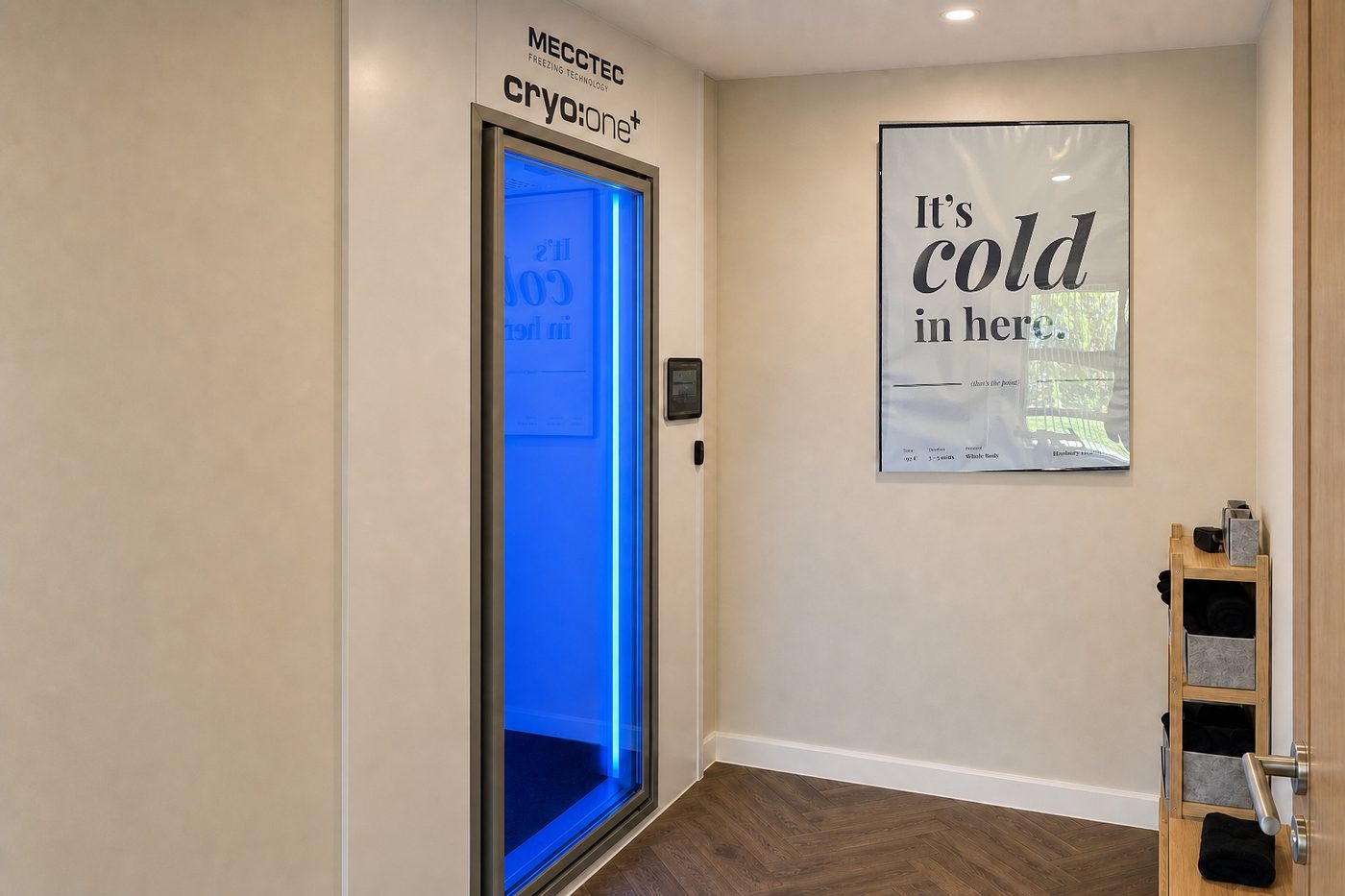
- Cryotherapy: −90°C, dry, three to four minutes, comfortable.
- Ice bath: 10–15°C, wet, ten minutes plus, genuinely unpleasant.
- Pick the one you'll actually keep doing, consistency drives the benefit.
- Place intense cold thoughtfully if you train primarily for muscle or strength.
Both cryotherapy and an ice bath use cold to reduce muscle soreness after hard exercise, and the evidence suggests both work, so the honest answer to "which is better" is that neither is clearly superior for recovery, and the right choice comes down to comfort, practicality and preference. A whole-body cryotherapy chamber gives a very cold, very short, dry exposure. An ice bath gives a milder but longer, wet, and more uncomfortable one. They reach a similar destination by different routes, and understanding the differences helps you pick the one you will actually stick with.
The quick comparison: cryotherapy is colder, shorter, dry and more comfortable; an ice bath is milder, longer, wet and harder to tolerate. Evidence supports cold for soreness either way.
How they differ
The key differences are temperature, medium and duration. A cryotherapy chamber is cooled to around minus 90°C, but because it uses dry air, which conducts heat away from the skin slowly, it is tolerable for only three to four minutes. An ice bath is far milder, typically around 10°C to 15°C, but because water pulls heat from the body far faster and surrounds you completely, it is used for longer, often ten minutes or more, and feels considerably more unpleasant. So the chamber is colder on paper but gentler in practice; the bath is warmer on paper but harder to endure.
What the evidence says
The research supports cold exposure for recovery, without crowning a clear winner. A Cochrane review found that cold-water immersion, the ice bath, reduces muscle soreness after exercise compared with doing nothing. Reviews of whole-body cryotherapy similarly report reduced muscle pain in most studies. Head-to-head, there is no strong evidence that one is decisively better than the other for recovery outcomes. Both deliver a cold stimulus that appears to reduce soreness and calm inflammation; the mechanism is broadly similar, and so, roughly, are the results. For a fuller breakdown of what the cold actually does, see the benefits of cryotherapy for recovery.
Comfort and practicality
This is where the real difference lies for most people. Cryotherapy is dry, quick and, for many, surprisingly bearable, which makes it easy to use regularly and easy to fit around a session. An ice bath is cheap and needs no special equipment, but it is cold, wet and genuinely uncomfortable, and preparing one takes time and ice. If the barrier to recovery is that you will not keep doing something unpleasant, the comfort and speed of cryotherapy is a real advantage. If cost and doing it at home matter most, an ice bath wins on access.
A note on adaptation
One shared caveat applies to both: if your goal is building muscle or maximum strength, routinely applying intense cold immediately after every resistance session may slightly blunt the muscle-building signal. This is not a reason to avoid cold, but a reason to place it thoughtfully, around your hardest sessions and your key events, rather than after everything. The principle is the same whichever cold you choose.
Why Hanbury Health is different
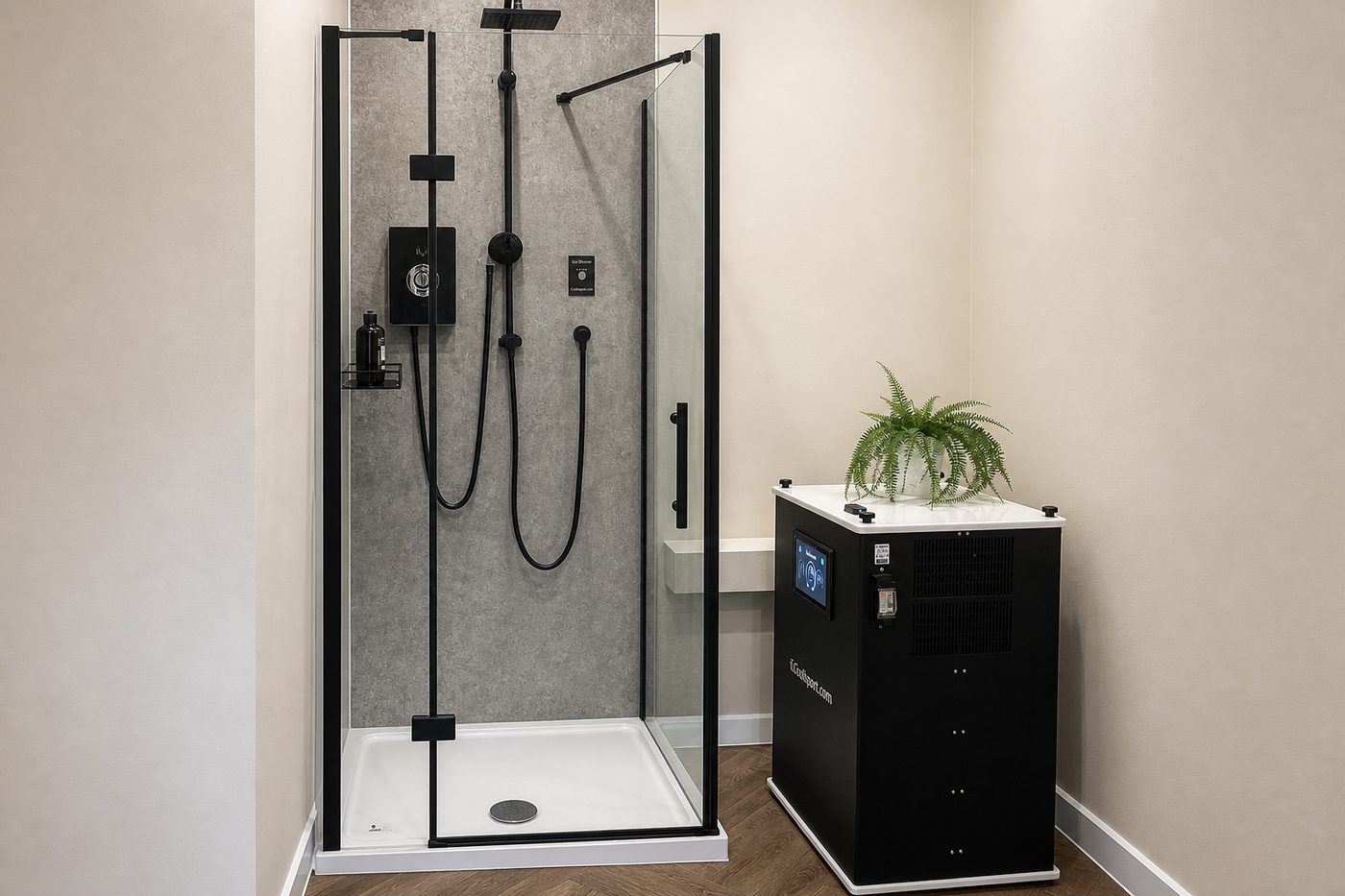
The advantage of coming to Hanbury for cold is that you are not locked into a single method. We offer whole-body electric cryotherapy, currently the only such chamber in Milton Keynes, and, separately, contrast therapy that pairs heat with an ice shower, so the form of cold can be matched to your goal and preference rather than dictated by the one machine a place happens to own. And because a clinician can advise on which suits you, and when to use it around your training, the choice is an informed one rather than a guess. See the full recovery suite for what fits alongside.
Frequently asked questions
Is cryotherapy better than an ice bath?
Not clearly. Both reduce soreness, and the evidence does not crown a decisive winner. Cryotherapy is more comfortable and quicker; an ice bath is cheaper and doable at home.
Which is colder?
The cryotherapy chamber, by temperature, but because it uses dry air it is more tolerable than a milder ice bath, which uses water that pulls heat away much faster.
Which is better for muscle soreness (DOMS)?
Both help. Cold exposure of either kind is supported for reducing soreness. Choose by comfort and what you will keep doing.
Can I do both?
Yes, though there is rarely a need to. Most people pick the one that fits their routine. Contrast therapy also combines heat and cold if you want variety.
Where can I try cryotherapy in Milton Keynes?
Hanbury Health is the only place in Milton Keynes offering whole-body cryotherapy, provided as part of a guided recovery circuit.
References
- Bleakley C, McDonough S, Gardner E, et al. Cold-water immersion (cryotherapy) for preventing and treating muscle soreness after exercise. Cochrane Database of Systematic Reviews, 2012.
- Rose C, Edwards KM, Siegler J, Graham K, Caillaud C. Whole-body Cryotherapy as a Recovery Technique after Exercise: A Review of the Literature. International Journal of Sports Medicine, 2017;38(14):1049-1060.
Ready to put this into practice?
About the author: Prof Arul Ramasamy is a consultant orthopaedic surgeon and a founder of Hanbury Health. He holds a PhD in bioengineering from Imperial College London, where he is a Visiting Professor, and is a Fellow of the Royal College of Surgeons (Trauma and Orthopaedics). He leads Hanbury's approach to recovery, performance and long-term health.
General information, not medical advice. Written by Prof Arul Ramasamy. Medically reviewed by Nick Allen BSc (Hons) MCSP. Last reviewed: 25 July 2026.
Related insights
Recovery
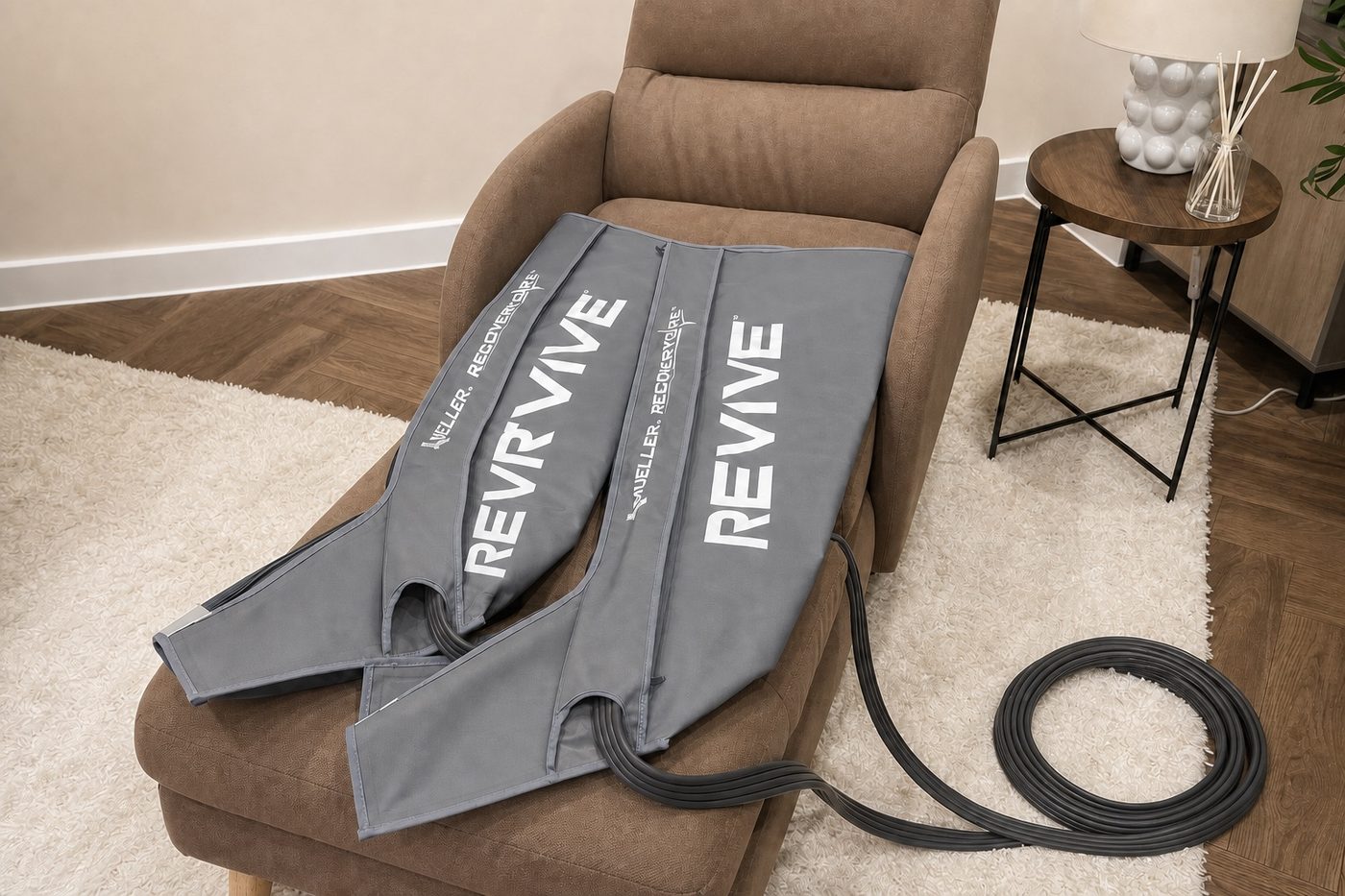
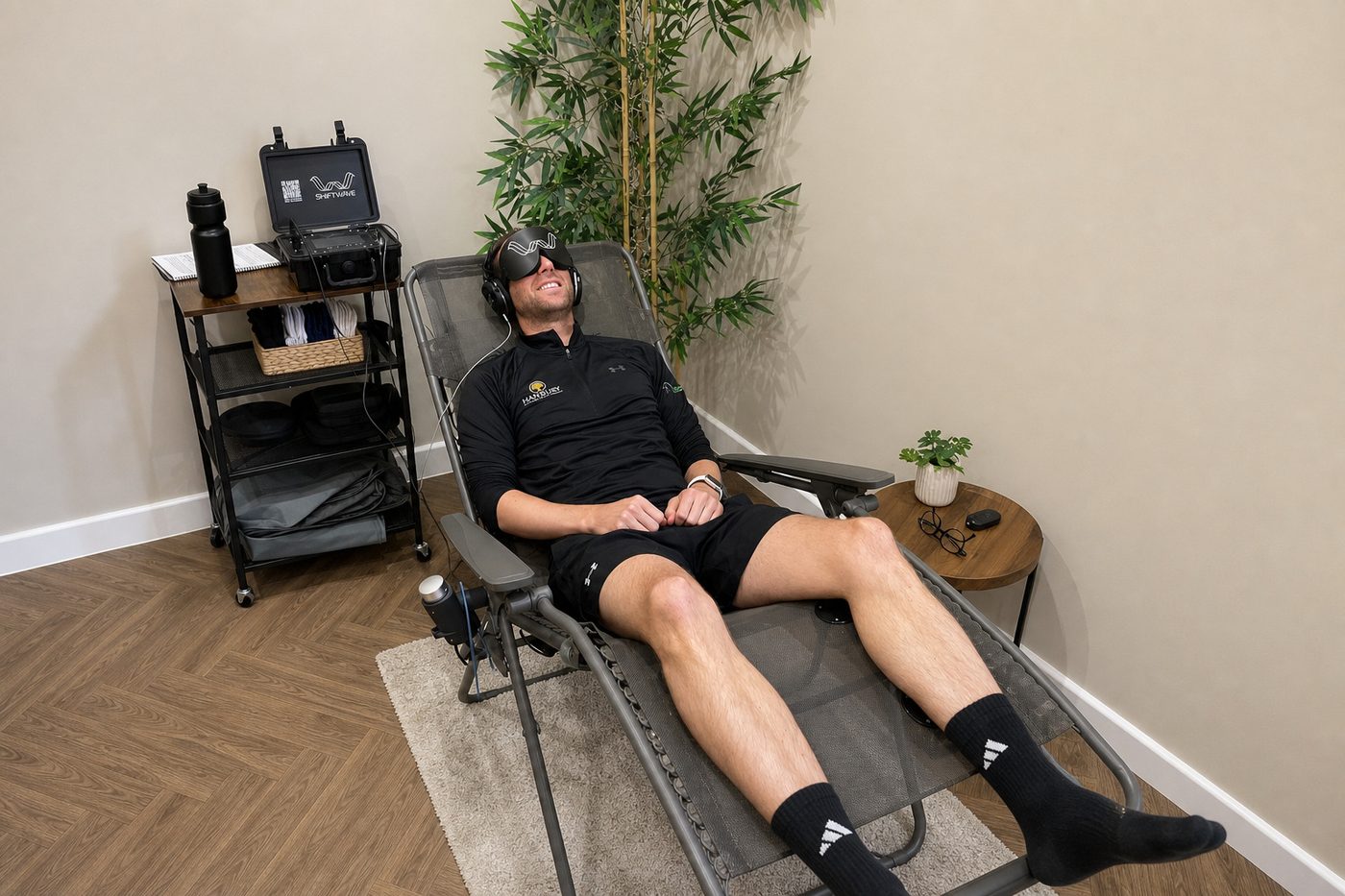
Compression boots or the Shiftwave chair: which do you actually need?
Heavy legs point to the compression boots, a wired nervous system to the Shiftwave chair. How to tell, and why the £75 circuit covers both.
Ramasamy8 min readRead the article
Recovery
How often should you do the Recovery Circuit, and how do you build it into a routine?
Once or twice a week suits most people. How to find your own rhythm with the £75 Recovery Circuit, and when to add the rest of the suite.
Ramasamy8 min readRead the article
Recovery
What does a Hyrox-specific recovery routine actually look like in Milton Keynes?
Match what you feel after a Hyrox race to the right tool: heavy legs, a wired nervous system, localised DOMS and cumulative training-block fatigue.
Ramasamy9 min readRead the article
Stay informed
More from the Hanbury team.
New articles on recovery, movement, physiotherapy and performance, sent when there's something worth reading. No spam, unsubscribe any time.