
Recovery
Compression boots or the Shiftwave chair: which do you actually need?
The short version
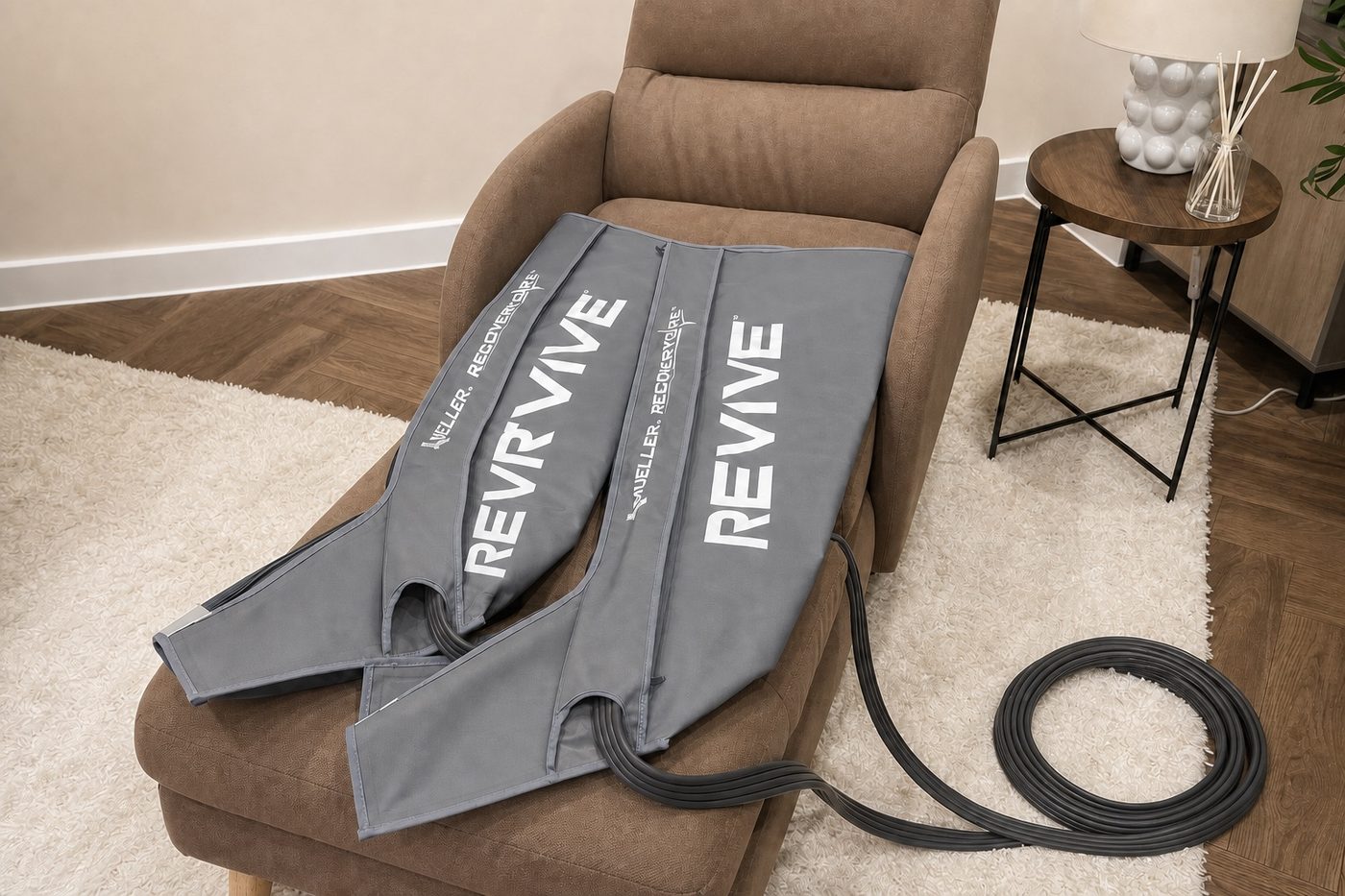
- Heavy, tired legs after training respond well to compression boots, which flush the lower legs and leave them feeling lighter within minutes.
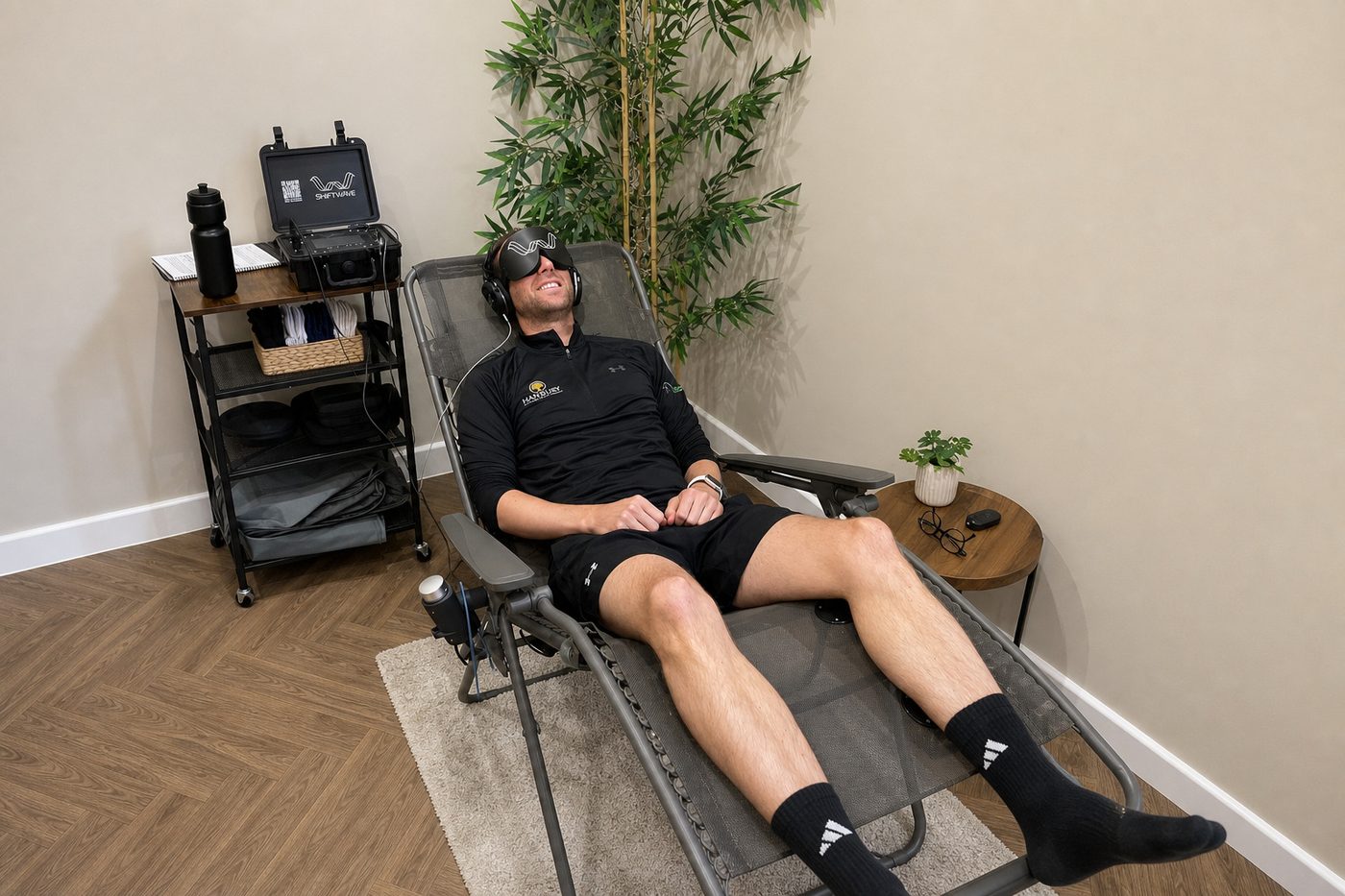
- A wired, cannot-switch-off nervous system responds to the Shiftwave chair, which pairs patented pulsed pressure waves with paced breathing to move you towards a rest-and-repair state.
- Most people do not have to choose. The £75 Recovery Circuit includes cryotherapy, compression boots and the Shiftwave chair in one guided visit.
- Neither is a fix for pain, injury or overtraining. They are recovery support, not a replacement for rest, load management or a physiotherapy assessment.
- You do not need to self-diagnose. The experts at Hanbury Health will help you read what your body is asking for on the day.
If your legs feel like lead after a long run, you probably want the compression boots. If your training has caught up with your nervous system rather than your muscles, the Shiftwave chair is the better place to start, and it is built on the same pulsed pressure wave and nervous-system regulation technology now used across the NFLPA, the UFC Performance Institute and EXOS. The good news is that you do not have to work this out on your own, and at Hanbury Health you do not even have to choose. Both are already part of one simple visit.
The short version
- Heavy, tired legs after training respond well to compression boots, which flush the lower legs and leave them feeling lighter within minutes.
- A wired, overtrained or cannot-switch-off nervous system responds to the Shiftwave chair, which uses patented pulsed pressure wave technology, paced with your breathing, to move you out of a sympathetic ("fight or flight") state and into a parasympathetic ("rest and repair") one.
- Most people do not need to pick one over the other. The £75 Recovery Circuit gives you cryotherapy, compression boots and the Shiftwave chair in a single guided visit.
- On some days your body is clearly asking for one more than the other, and that is fine. You can lean into what you need.
- Neither is a fix for pain, injury or overtraining. They are recovery support, not a substitute for rest, sensible training load or a physiotherapy assessment when something feels wrong.
- You do not need to self-diagnose. The experts at Hanbury Health can help you read what your body is actually asking for on a given day.
What is the actual difference between compression boots and the Shiftwave chair?
Compression boots are about your legs. You step into a pair of full-leg sleeves and the boots inflate in sequence, starting at the feet and working up, in rhythmic waves. It is sequential pneumatic compression, and the sensation is a firm, rolling squeeze that most people describe as instantly relieving, particularly if your legs feel swollen, heavy or achy after standing, running or a long day on your feet.
The Shiftwave chair is about the rest of you, and it is a more purpose-built piece of technology than it might look. It runs on patented BioDrive pressure wave technology, delivering a rhythmic pattern of mechanical pressure through the chair, paced against a guided breathing track, specifically to move your autonomic nervous system out of a sympathetic state and into a parasympathetic one. It does not target a specific muscle group. It targets the state your whole system is in, which is why the same underlying technology has been adopted by the NFLPA, the UFC Performance Institute and EXOS to manage recovery and readiness for professional athletes.
Put simply: compression boots work on tired legs. The Shiftwave chair works on an overloaded nervous system, the part of training hard that does not show up on a scan or in sore muscles but still limits how well you recover, sleep and perform. A lot of the time you have a bit of both going on, which is exactly why they sit together in the guided Recovery Circuit rather than being offered as a strict either-or choice.
Do I need compression boots or the Shiftwave chair after a hard session?
It depends what "hard" looked like.
After a long run, a heavy leg day, or back-to-back training sessions, most people feel it in their legs first. That is when compression boots tend to earn their place: the rolling compression helps tired legs feel lighter and less heavy fairly quickly.
After a stressful week, disrupted sleep, or training that has left you wired rather than simply muscle-sore, the Shiftwave chair tends to be the better fit. It is less about a specific body part and more about coming down from a state of alertness your body has not quite switched off from.
| What you feel | Likely better fit | Why |
|---|---|---|
| Heavy, swollen, aching legs | Compression boots | Sequential compression moves fluid up out of the lower limbs |
| Wired, poor sleep, cannot settle | Shiftwave chair | Paced pressure waves and breathing shift you towards a rest-and-repair state |
| Both, in the same week | The £75 Recovery Circuit | Cryotherapy, boots and the chair in one guided visit, in order |
There is real evidence behind both approaches, worth knowing in full rather than softened down. A 2024 systematic review and meta-analysis in Biology of Sport looked at intermittent pneumatic compression, the technology used in the boots, and found a genuine, if modest, effect on how sore people felt after exercise, even though it did not dramatically change measurable muscle function. In plain terms: people reported feeling less sore, which lines up with what most people notice in the boots themselves.
On the nervous-system side, the Shiftwave chair is built around a well-established mechanism rather than a vague idea of relaxation. Its pulsed pressure waves are paced against your breathing specifically to reduce sympathetic activity and raise parasympathetic activity, and slow, paced breathing is one of the more robustly evidenced ways to do exactly that. We are not going to overstate it. The device itself has not been the subject of independent published clinical trials, so we will not claim outcomes it has not been tested for. What is genuinely well evidenced is the physiological mechanism it is built on, and what is genuinely notable is that some of the most demanding performance environments in sport have adopted it for exactly the problem it is designed to solve.
Can heavy legs and a stressed, wired mind happen on the same day?
Yes, and for a lot of people training and working through a demanding stretch of life in Milton Keynes, that is the normal state of affairs rather than the exception. You might arrive after a long training block with legs that feel like they have done a shift down a mine, while your head is still running through everything else going on that week.
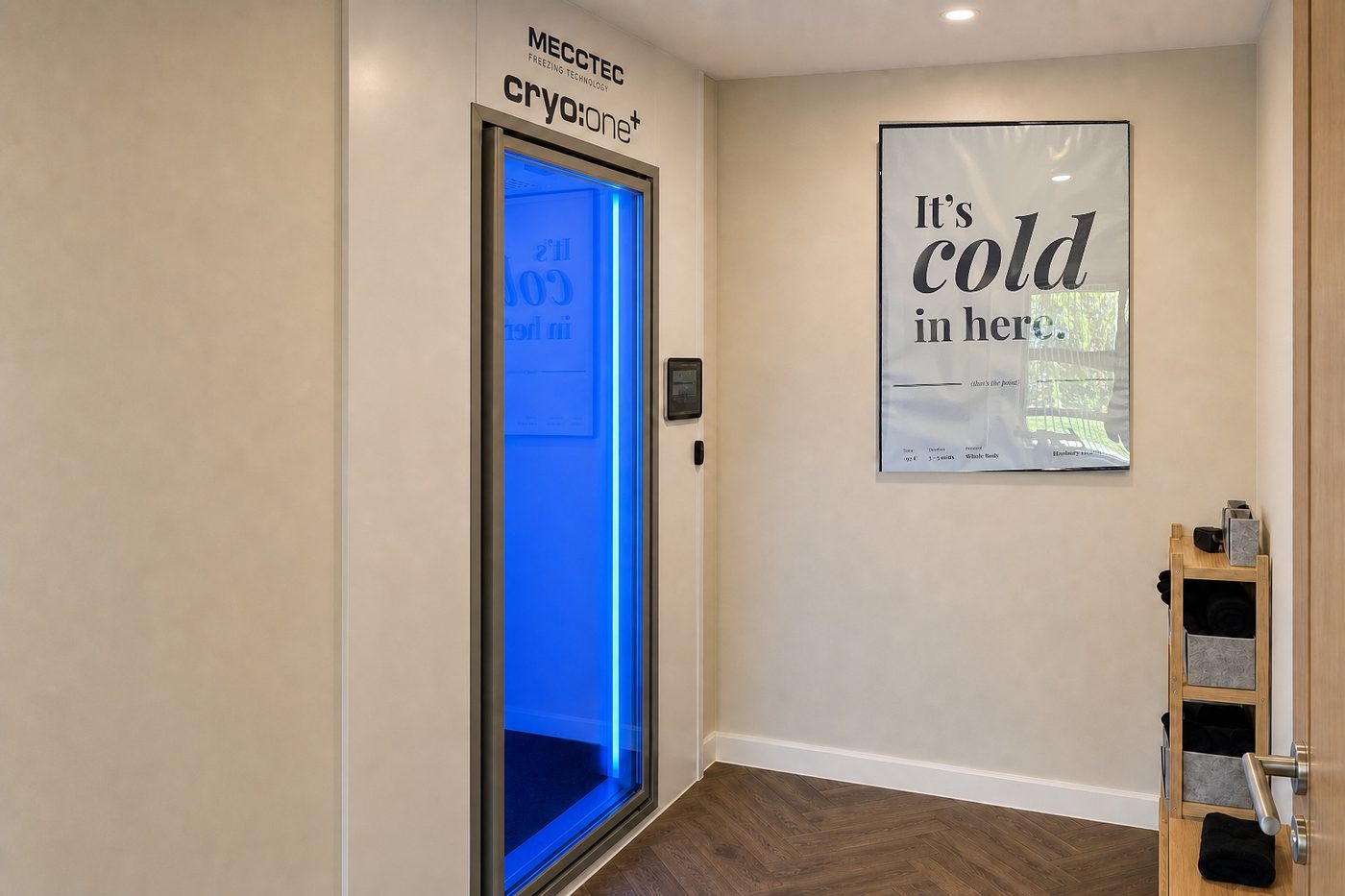
This is exactly why the Recovery Circuit exists as one visit rather than two separate decisions. You get cryotherapy first for a sharp, whole-body reset, then the compression boots for the legs, then the Shiftwave chair to bring the rest of you down with it. You are not choosing between legs and stress. You are getting both addressed, in order, in around an hour.
If you only have time for one on a particular day, that is still absolutely fine. Plenty of regulars, from serious amateur athletes training through a heavy Hyrox block to people simply trying to feel like themselves again after a demanding few months, will lean on the boots after a big leg session and book the Shiftwave chair in a week where sleep and stress are the bigger issue. Our guide to how to recover faster after a workout covers how to space that out across a training week.
Where can I try both in Milton Keynes?
Both compression boots and the Shiftwave chair are part of the seven-system recovery suite at Hanbury Health in Milton Keynes, alongside whole-body cryotherapy, contrast therapy, mild hyperbaric oxygen with molecular hydrogen, a medical-grade red light bed and a lymphatic drainage compression suit. You do not need to bring your own protocol or know which system does what before you arrive. That is what the visit itself is for.
If muscle soreness specifically is what is bothering you rather than a general heavy or wired feeling, it is worth reading our separate guide to the best recovery therapy for DOMS, which goes into more depth on that particular question.
How much does it cost, and how do I book?
The simplest way in is the £75 Recovery Circuit, which covers cryotherapy, compression boots and the Shiftwave chair in one guided visit, with someone on hand to walk you through each stage. It is designed as a low-commitment way to try the suite properly rather than guess at what might help.
If you already know you want to prioritise one system, or you want to explore the wider suite, contrast therapy, hyperbaric oxygen, the red light bed or the lymphatic drainage suit, those are all bookable individually and sit outside the £75 Circuit price. Full pricing for the whole suite is on our recovery therapy in Milton Keynes page. There is no need to commit to a course or a long-term plan before you have tried it.
Why Hanbury Health is different
You should not have to arrive already knowing exactly which piece of equipment fixes your particular kind of tired. That is not a reasonable thing to expect of anyone, and it is not how the recovery suite is meant to work.
At Hanbury Health you are not left to self-diagnose from a menu. The experts who run the recovery suite are used to reading the difference between heavy legs and a wired mind, and between someone who needs a firm reset and someone who needs to be brought down slowly. They will ask how your week has gone, what you have trained and how you are sleeping, and use that to help you get more out of the visit than you would by guessing.
That is the real benefit of doing this inside one coordinated team of experts rather than picking equipment off a shelf. You get a second opinion on what your body is actually asking for, from people who do this every day, so the guesswork is taken off your plate.
Frequently asked questions
Do I have to choose between compression boots and the Shiftwave chair?
No. Both are included in the £75 Recovery Circuit, along with cryotherapy, in one guided visit. You only need to prioritise one over the other if you are short on time or you know exactly what your body needs that day.
Are compression boots better for muscle recovery than the Shiftwave chair?
They are better for a specific job: tired, heavy legs. The Shiftwave chair is not trying to do that job, it works on your nervous system rather than muscle tissue. Neither is better in general, they suit different feelings.
Is the Shiftwave chair just relaxation, or does it actually help recovery?
It is a performance recovery tool built on patented pulsed pressure wave technology, engineered to move your autonomic nervous system out of a fight-or-flight state and into the rest-and-repair state your body recovers in. Recovery is not only physical: an overloaded nervous system limits how well you sleep, adapt to training and perform.
How often should I use compression boots or the Shiftwave chair?
There is no fixed rule. Many people find a rhythm around their training or their week, using the boots after heavier leg sessions and the Shiftwave chair during more stressful stretches. The team can help you find a sensible pattern rather than a rigid schedule.
Can I try compression boots and the Shiftwave chair in Milton Keynes without committing long-term?
Yes. The £75 Recovery Circuit is a single, low-commitment visit designed so you can try both, plus cryotherapy, before deciding whether to come back or explore the rest of the suite.
Will either of these help with DOMS?
They can help you feel more comfortable while your body recovers, particularly the compression boots. Neither removes DOMS outright. If DOMS is your main concern, our dedicated guide to the best recovery therapy for DOMS covers it in more detail.
Is this suitable if I am not an athlete, just tired and run down?
Yes. Plenty of people using the recovery suite are not training for anything in particular. They are working through a demanding stretch of life and want to feel more like themselves. Heavy legs and a wired mind are not unique to athletes.
References
- Maia F, Nakamura FY, Sarmento H, Marcelino R, Ribeiro J. Effects of lower-limb intermittent pneumatic compression on sports recovery: A systematic review and meta-analysis. Biology of Sport, 2024;41(4).
- Blum J, Rockstroh C, Goritz AS. Heart Rate Variability Biofeedback Based on Slow-Paced Breathing With Immersive Virtual Reality Nature Scenery. Frontiers in Psychology, 2019;10:2172.
- Shiftwave Pro, technology overview (BioDrive pulsed pressure wave system).
- Shiftwave Announces Multi-Year Deal with NFLPA, OneTeam Partners, and Exos to Enhance Athlete Health and Performance. OneTeam Partners, press release.
Ready to put this into practice?
About the author: Prof Arul Ramasamy is a consultant orthopaedic surgeon and a founder of Hanbury Health. He holds a PhD in bioengineering from Imperial College London, where he is a Visiting Professor, and is a Fellow of the Royal College of Surgeons (Trauma and Orthopaedics). He leads Hanbury's approach to recovery, performance and long-term health.
General information, not medical advice. Written by Prof Arul Ramasamy. Medically reviewed by Prof Arul Ramasamy MA PhD MBA FRCS(Tr+Orth). Last reviewed: 19 August 2026.
Related insights
Recovery
How often should you do the Recovery Circuit, and how do you build it into a routine?
Once or twice a week suits most people. How to find your own rhythm with the £75 Recovery Circuit, and when to add the rest of the suite.
Ramasamy8 min readRead the article
Recovery
What does a Hyrox-specific recovery routine actually look like in Milton Keynes?
Match what you feel after a Hyrox race to the right tool: heavy legs, a wired nervous system, localised DOMS and cumulative training-block fatigue.
Ramasamy9 min readRead the article
Recovery
Can recovery therapy help you sleep better and feel less wound up in Milton Keynes?
For anyone wound up by ordinary life rather than training. How guided nervous-system down-regulation helps sleep, and where to start.
Ramasamy8 min readRead the article
Stay informed
More from the Hanbury team.
New articles on recovery, movement, physiotherapy and performance, sent when there's something worth reading. No spam, unsubscribe any time.