
Recovery
How often should you do the Recovery Circuit, and how do you build it into a routine?
The short version
- Once or twice a week is a sensible starting rhythm for most people using the £75 Recovery Circuit, though some weeks call for more and some for less.
- You will feel it working through lighter legs, easier movement and a calmer nervous system, not through a number on a screen.
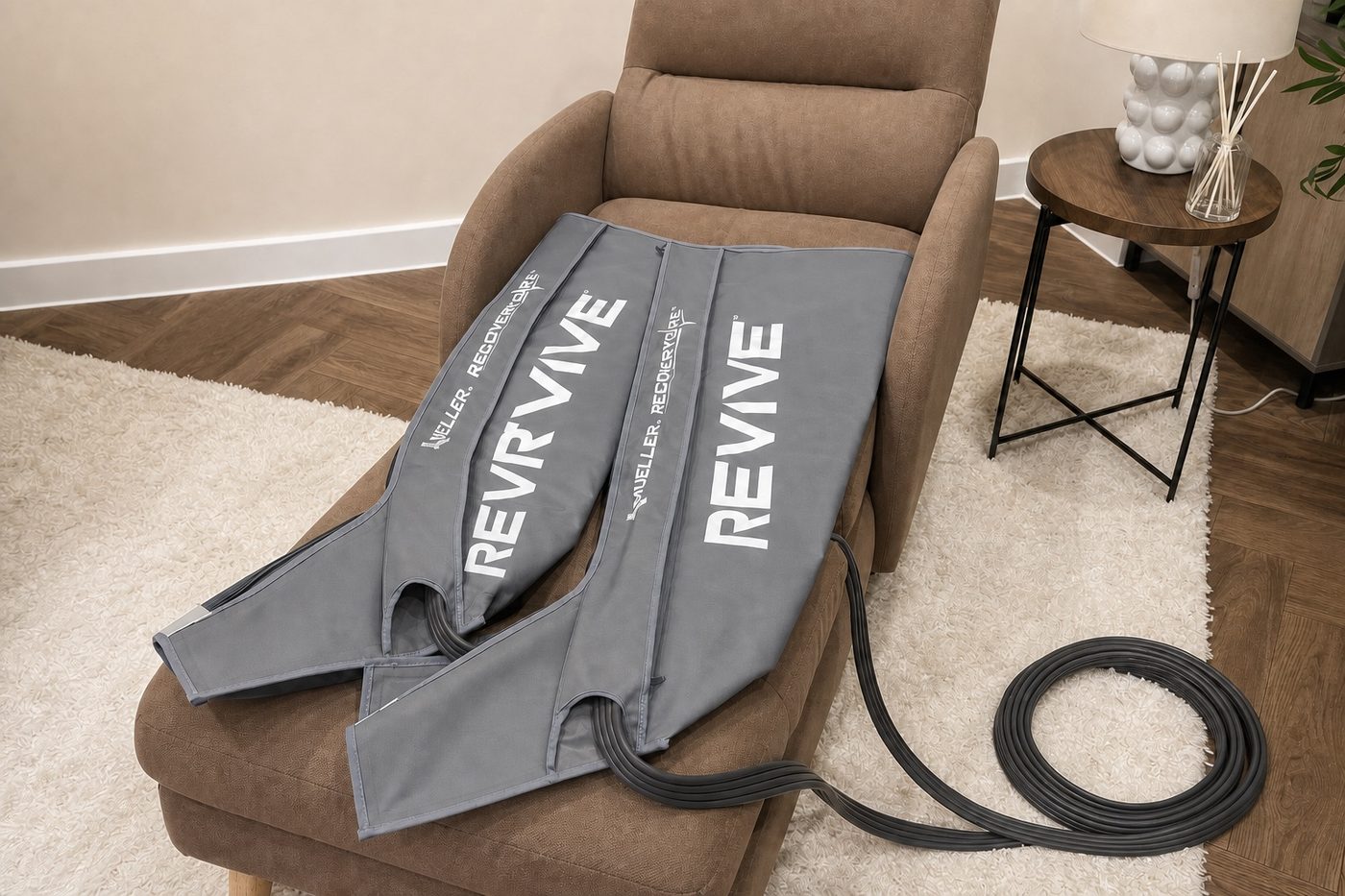
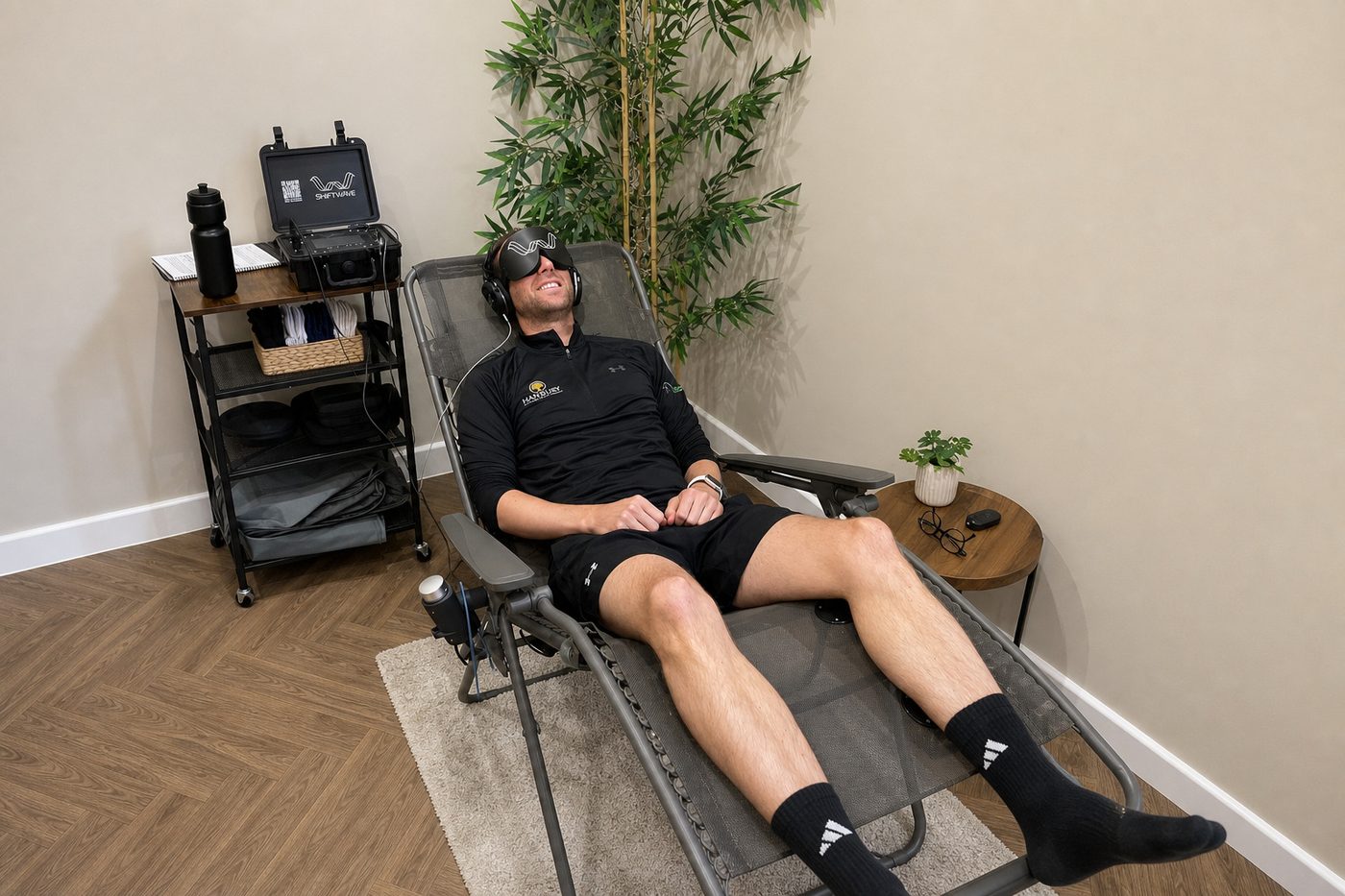
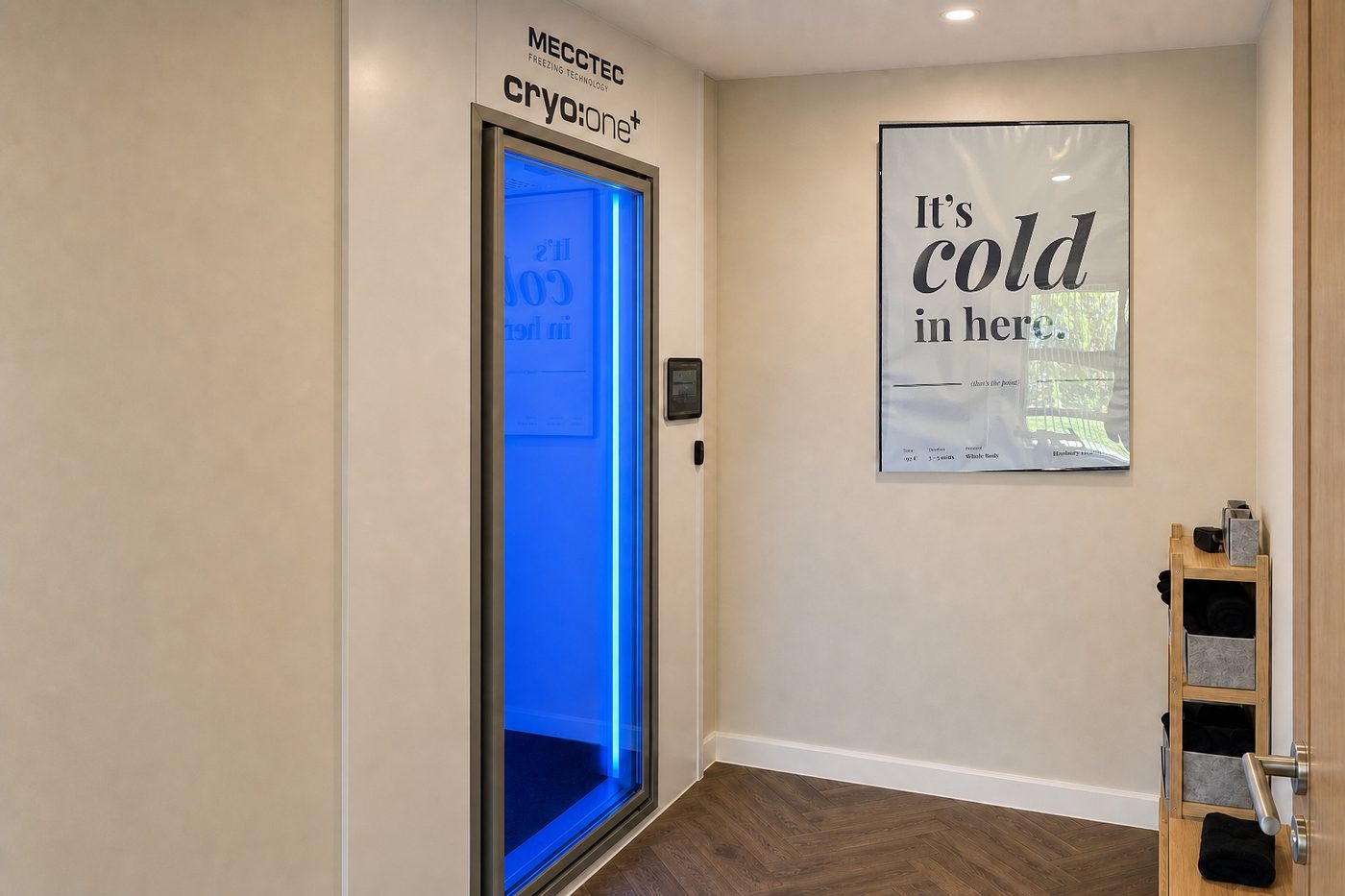
- The Circuit, cryotherapy then compression boots then the Shiftwave chair, is one guided session, so you do not need to sequence anything yourself.
- Heavier training blocks, like Hyrox prep or a return to running, tend to call for more regular visits than a quieter week.
- As your needs shift, you can layer in contrast therapy, the lymphatic drainage suit, red light or mild hyperbaric oxygen therapy alongside the Circuit.
- There is no minimum commitment. You can come once and see how it feels, or build it into a weekly habit.
If you are asking how often to come in, the honest answer is: it depends on your week, but most people find their rhythm somewhere between once and twice a week. There is no single correct number, and nobody at Hanbury Health will tell you that you need more than your body is actually asking for.
What matters more than hitting a target frequency is building something you will actually keep doing, something that fits around training, work and the rest of your life instead of adding one more thing to squeeze in.
How often should you do the Recovery Circuit?
There is not a research-backed magic number for how often to do a combined circuit like this one, and it would be dishonest to pretend otherwise. What Hanbury Health's experts generally suggest, based on what works for most people who come through the recovery suite, is once or twice a week as a starting point, adjusted up or down depending on what your training and life actually look like that week.
If you are moving through a demanding stretch, a heavy training block, a physical job, a run of broken sleep, more frequent visits tend to feel worthwhile. If things are quieter, once every week or two might be plenty. The point of the £75 price is that it is low-commitment enough to test this out for yourself rather than guessing.
What does a typical week look like with the Recovery Circuit?
For someone training three or four times a week, a common pattern is one Recovery Circuit visit after the hardest session of the week, when the legs feel heaviest and the nervous system could use the down-regulation the Shiftwave chair offers. Some people add a second visit midweek if they are building toward an event.
For someone who is not training hard but is dealing with an old injury, a demanding job, or a period of poor sleep, the rhythm often looks different again: a single weekly visit, timed to whatever day tends to catch up with them.
There is no wrong way to do this. The Circuit is built to flex around your week.
| Your week | A sensible rhythm | Worth adding |
|---|---|---|
| Heavy training block or event prep | Twice a week | Contrast therapy or the lymphatic drainage suit |
| Steady training, three or four sessions | Once a week, after the hardest session | Nothing needed |
| Quiet week, or a demanding job instead of training | Once a week or once a fortnight | Red light or the Shiftwave chair on its own |
Can you do cryotherapy, compression boots and the Shiftwave chair too often?
It is a fair question, and the short answer is that more is not automatically better. Whole-body cryotherapy works because it is a sharp, short stimulus, three to four minutes at minus 90 degrees, and a 2025 meta-analysis of 11 randomised controlled trials found that repeated whole-body cryotherapy sessions were linked with lower levels of an inflammatory marker (IL-1β) and higher levels of an anti-inflammatory one (IL-10) compared with control groups. That is encouraging, but it is evidence for a sensible, spaced-out pattern, not a case for doing it every day.
Compression boots are gentler by nature. A 2024 systematic review and meta-analysis in Biology of Sport looking at lower-limb intermittent pneumatic compression found the clearest benefit was for how sore and heavy legs felt, particularly around the 48-hour mark after hard exercise, when soreness usually peaks. The effect on actual muscle function and performance markers was smaller and less consistent, which is a useful reminder that compression boots are there to help your legs feel better, not to replace training adaptation.
The Shiftwave chair sits at the other end of the spectrum. It is not a high-stimulus intervention, so there is little reason to hold back on how often you use it if it is helping you switch off.
How do you build a recovery routine in Milton Keynes?
If you are local, the practical answer is simpler than it sounds. Milton Keynes is not a huge city, and the recovery suite at Hanbury Health is a short trip for most people who live or work nearby, which makes a weekly or twice-weekly rhythm realistic to keep up.
A lot of people build the Recovery Circuit into an existing pattern, straight after a Saturday morning session, on the way home from work on a Wednesday, or slotted in around a regular gym day. Because everything you need for the Circuit is set up and guided in one visit, you are not trying to coordinate three separate bookings or figure out the right order yourself.
For anyone training for a specific goal, whether that is a spring race, a Hyrox event, or just getting back to feeling capable after a break, our guide to recovering faster after a workout has more on building recovery around a structured training block.
When should you add contrast therapy, HBOT, red light or the lymphatic suit?
The £75 Recovery Circuit covers cryotherapy, compression boots and the Shiftwave chair. It does not include the rest of the seven-system suite, and that is by design. Those extras exist so you can add them in when your needs actually call for them, not because they are bundled in from day one.
Contrast therapy, infrared sauna followed by a precisely timed ice shower, is popular with people who want a longer, more immersive session, and pairs well with a harder training week. Our full guide to contrast therapy explains how a session is structured.
The lymphatic drainage compression suit tends to earn its place after a particularly heavy training load, when legs feel swollen or waterlogged. You can read more in our lymphatic drainage suit guide.
Mild hyperbaric oxygen therapy with molecular hydrogen is worth exploring if you are working through a slower-healing injury or simply want to support recovery at a deeper level over time. Details are in our mild hyperbaric oxygen therapy guide. The medical-grade red light bed already has its own detailed article if you want to understand how photobiomodulation works and where it fits.
None of these need to happen at once, and none of them replace the Circuit. Most people start with the £75 Circuit, get a feel for the recovery suite, and add extras only when a specific need shows up.
How much does it cost and how do you book?
The Recovery Circuit is £75 and covers cryotherapy, compression boots and the Shiftwave chair in one guided visit, in that order. It is the entry point into everything the recovery suite offers, and there is no requirement to book anything beyond it.
The team will arrange your visit with you, so you can talk through what your week looks like before you commit to a rhythm. If you want the full breakdown of pricing across the seven-system suite, including contrast therapy, hyperbaric oxygen, red light and the lymphatic suit, our guide to recovery therapy and pricing in Milton Keynes covers all of it in one place, and our guide to what the Recovery Circuit includes explains what a single visit gives you.
Why Hanbury Health is different
You do not need a spare room full of equipment, and you do not need to plan a special outing to get proper recovery support. The recovery suite at Hanbury Health is a short trip away for most people in and around Milton Keynes, which changes how a routine like this actually fits into a week.
It is the difference between recovery being something you have to organise your whole day around, and recovery being something you fold into a day you were already having. Pop in after a Saturday session, or on the way home midweek. Because the Recovery Circuit is one guided visit with everything already set up in the right order, there is nothing to plan once you are through the door.
That is what makes a weekly or twice-weekly rhythm realistic to keep up, instead of quietly falling off your calendar after a fortnight. You are not driving across town or rearranging your evening. You are building something small and repeatable into a life that is already full.
Frequently asked questions
Is the Recovery Circuit suitable for beginners, or do I need to be an athlete?
The Recovery Circuit is designed for anyone. Many people who use it are working through an old injury, a joint that does not move like it used to, or simply a demanding stretch of life, alongside a strong contingent of amateur athletes and Hyrox competitors. If you are new to recovery therapy, the guided three-part structure means there is nothing to figure out on your first visit.
How long does a Recovery Circuit session take?
A full circuit through cryotherapy, compression boots and the Shiftwave chair typically takes around 30 to 40 minutes, though timing can vary slightly depending on how long you spend in the chair.
Can I do the Recovery Circuit if I am sore from a hard workout?
Yes, this is one of the most common reasons people book it. If you are deciding between different recovery options for muscle soreness specifically, our DOMS decision guide walks through what tends to help and when.
What if I want more than the £75 Circuit offers?
You can add contrast therapy, mild hyperbaric oxygen therapy, red light therapy or the lymphatic drainage suit separately, whenever you feel you need them. None of these are included in the £75 price, and none are required to get value from the Circuit itself.
Is there a recovery suite near me in Milton Keynes?
The recovery suite at Hanbury Health is based in Milton Keynes and is easily reached whether you are coming from work, home or a nearby gym. Because it is a short trip, it is realistic to build into a regular weekly pattern.
Are there any reasons I should not do cryotherapy or contrast therapy?
Cryotherapy and contrast therapy are not right for everyone. If you have certain cardiovascular conditions, are pregnant, or have any concern about cold exposure or rapid temperature changes, it is worth discussing this with our experts before your first visit so they can advise on what is suitable for you.
Do I need to book the same three therapies every single visit?
The Recovery Circuit is fixed as cryotherapy, compression boots and the Shiftwave chair, in that order, for £75. If you would rather try a single therapy on its own, such as just the compression boots or just the Shiftwave chair, those can be booked individually too.
References
- Meta-analysis of randomised controlled trials on whole-body cryotherapy and inflammatory markers (IL-1β, IL-10), 2025.
- Systematic review and meta-analysis of lower-limb intermittent pneumatic compression for recovery. Biology of Sport, 2024.
Ready to put this into practice?
About the author: Prof Arul Ramasamy is a consultant orthopaedic surgeon and a founder of Hanbury Health. He holds a PhD in bioengineering from Imperial College London, where he is a Visiting Professor, and is a Fellow of the Royal College of Surgeons (Trauma and Orthopaedics). He leads Hanbury's approach to recovery, performance and long-term health.
General information, not medical advice. Written by Prof Arul Ramasamy. Medically reviewed by Prof Arul Ramasamy MA PhD MBA FRCS(Tr+Orth). Last reviewed: 19 August 2026.
Related insights
Recovery
Compression boots or the Shiftwave chair: which do you actually need?
Heavy legs point to the compression boots, a wired nervous system to the Shiftwave chair. How to tell, and why the £75 circuit covers both.
Ramasamy8 min readRead the article
Recovery
What does a Hyrox-specific recovery routine actually look like in Milton Keynes?
Match what you feel after a Hyrox race to the right tool: heavy legs, a wired nervous system, localised DOMS and cumulative training-block fatigue.
Ramasamy9 min readRead the article
Recovery
Can recovery therapy help you sleep better and feel less wound up in Milton Keynes?
For anyone wound up by ordinary life rather than training. How guided nervous-system down-regulation helps sleep, and where to start.
Ramasamy8 min readRead the article
Stay informed
More from the Hanbury team.
New articles on recovery, movement, physiotherapy and performance, sent when there's something worth reading. No spam, unsubscribe any time.