
Recovery
What are the benefits of cryotherapy for recovery?
The short version
- Best-supported benefit: less muscle soreness (DOMS) after hard training.
- Most people also report lower fatigue and a clearer, more alert feeling.
- Not a fat-burner and not a 'detox': it supports recovery, it does not replace training.
- Two to three sessions a week around hard training suits most people.
- Well tolerated by most healthy adults; a few conditions mean check first.
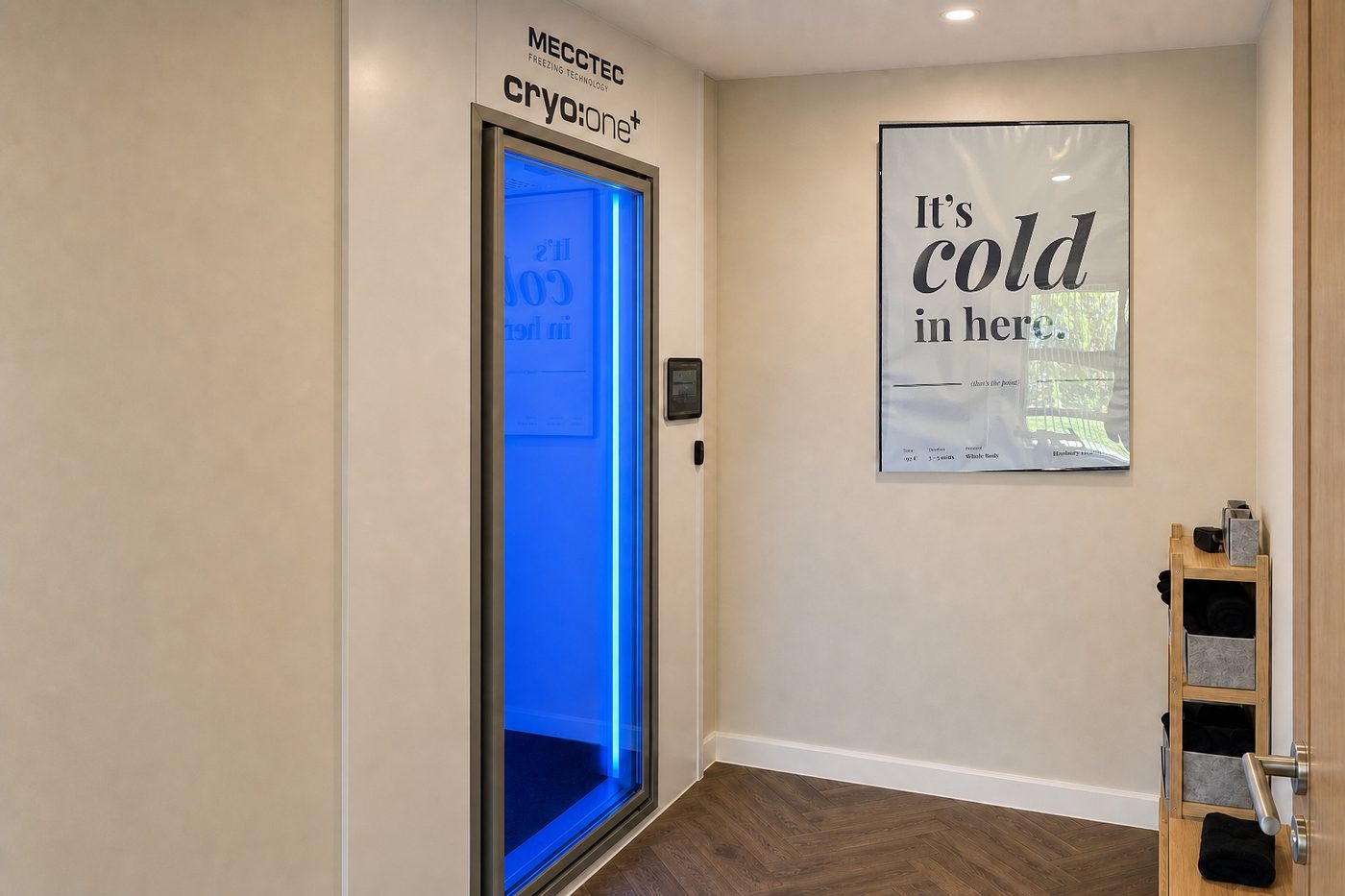
If you train hard and spend the next two days too sore to train well again, cryotherapy is one of the tools that can help. Its main benefit for recovery is simple: a short burst of extreme cold can reduce muscle soreness and the feeling of fatigue after demanding exercise, so you bounce back and keep training consistently. A three to four minute session in a whole body cryotherapy chamber sets off a fast circulatory and hormonal response that appears to ease post-exercise soreness and calm inflammation in the hours that follow.
It is a recovery aid, not a cure or a shortcut. It works best as one part of a structured routine rather than a fix on its own.
How does cryotherapy help recovery?
The cold prompts your body to protect its core, and that response is what carries the benefit. When your skin meets the extreme cold, blood vessels near the surface narrow to keep warm blood around your organs. When you step out and warm up, those vessels open again and fresh, oxygenated blood moves back through the tissues, alongside a sharp, temporary rise in noradrenaline, a signal involved in dampening pain and inflammation. Three things follow: reduced muscle soreness, lower perceived fatigue, and a calmer inflammatory response that can help you tolerate a demanding training block.
The main benefits
The best-supported benefit is less muscle soreness after hard sessions, which helps you feel ready to train again sooner, and consistency is what drives progress. Most people also notice a short-term lift in alertness and mood straight afterwards, a mix of physical release and mental clarity. It suits athletes and anyone carrying a high physical or mental load, as a deliberate point of recovery. And it is low-effort and quick, which makes it easy to keep up.
What cryotherapy will not do
Cryotherapy supports recovery. It does not treat injury or illness, and it does not cause weight loss. Claims that the cold burns hundreds of calories or detoxes the body are not supported by evidence, so we do not make them. One nuance: if you train for muscle growth or maximum strength, aggressively icing after every resistance session may slightly blunt the muscle-building signal, which is why timing and frequency matter.
Is cryotherapy safe? Who should take care?
For most healthy adults, a properly guided session is well tolerated. Speak to a doctor or one of our experts before booking if you are pregnant, have a heart condition, uncontrolled high blood pressure or a history of stroke, a cold-related condition such as Raynaud's, circulatory problems or deep vein thrombosis, or any open wounds or recent significant illness. A short conversation about your history is part of every visit, so anything that needs checking is picked up first.
Electric versus nitrogen cryotherapy: why the type matters
Not all whole-body cryotherapy is the same, and the difference comes down to how the cold is produced.
- How it is cooled. Nitrogen cryotherapy chills the chamber by evaporating liquid nitrogen. Electric, or refrigerated, cryotherapy cools ordinary air with powerful refrigeration, using no gas.
- Coverage. Because nitrogen vapour is not safe to breathe, nitrogen units are usually partial-body, with your head kept outside the chamber. An electric chamber uses breathable, oxygenated air, so the whole body, including the head, is treated at once, a genuine whole-body experience.
- Safety. In a nitrogen system the vapour can displace oxygen, risking light-headedness or, in a poorly ventilated space, oxygen deficiency, along with a risk of cold burns. Safety warnings, including from the FDA, have focused on these nitrogen systems. An electric chamber has no gas to displace oxygen and none of those gas-related risks.
- Even cooling. Nitrogen chambers can cool unevenly across the body, whereas refrigerated air is circulated evenly around you.
At Hanbury we use an electric, refrigerated chamber, which delivers the genuine whole-body cold stimulus safely and comfortably, without the risks associated with nitrogen. If you're weighing the cold options, cryotherapy versus an ice bath is worth reading too.
Why Hanbury Health is different
Two things set our cryotherapy apart. The first is access: Hanbury Health is currently the only place in Milton Keynes offering whole-body cryotherapy, using a true whole-body electric chamber, not a head-out nitrogen unit. The second is how it is used: cryotherapy here opens a clinician-overseen recovery circuit, timed around your training and rehabilitation where it helps. In short, you get the safest form of the treatment, used by people who know when it will actually benefit you.
Frequently asked questions
Does cryotherapy actually work for recovery?
For reducing muscle soreness and fatigue after hard exercise, the evidence is reasonably supportive, and many people notice a clear difference. It is most reliable used regularly around training, not as a one-off.
How cold is a session, and how long?
Around minus 90°C, for three to four minutes. Because the cold is dry, it is more tolerable than the number suggests.
Does cryotherapy help you lose weight?
No. Calorie-burning and detox claims are not supported by good evidence. Its value is in recovery.
How often should you have it?
For most people, two to three sessions a week around hard training. In rehabilitation, let your physio expert guide frequency.
Is cryotherapy available in Milton Keynes?
Yes, and Hanbury Health is currently the only place in Milton Keynes to offer whole-body cryotherapy. We use a true whole-body electric chamber, as part of a guided recovery circuit, with an intro visit for £75.
Is your cryotherapy nitrogen or electric?
Electric, using refrigerated air. That means breathable, oxygenated air, a genuine whole-body treatment including the head, and none of the oxygen-displacement or burn risks associated with nitrogen systems.
References
- Bleakley C, McDonough S, Gardner E, et al. Cold-water immersion (cryotherapy) for preventing and treating muscle soreness after exercise. Cochrane Database of Systematic Reviews, 2012.
- Rose C, Edwards KM, Siegler J, Graham K, Caillaud C. Whole-body Cryotherapy as a Recovery Technique after Exercise: A Review of the Literature. International Journal of Sports Medicine, 2017;38(14):1049-1060.
Ready to put this into practice?
About the author: Prof Arul Ramasamy is a consultant orthopaedic surgeon and a founder of Hanbury Health. He holds a PhD in bioengineering from Imperial College London, where he is a Visiting Professor, and is a Fellow of the Royal College of Surgeons (Trauma and Orthopaedics). He leads Hanbury's approach to recovery, performance and long-term health.
General information, not medical advice. Written by Prof Arul Ramasamy. Medically reviewed by Nick Allen BSc (Hons) MCSP. Last reviewed: 25 July 2026.
Related insights
Recovery
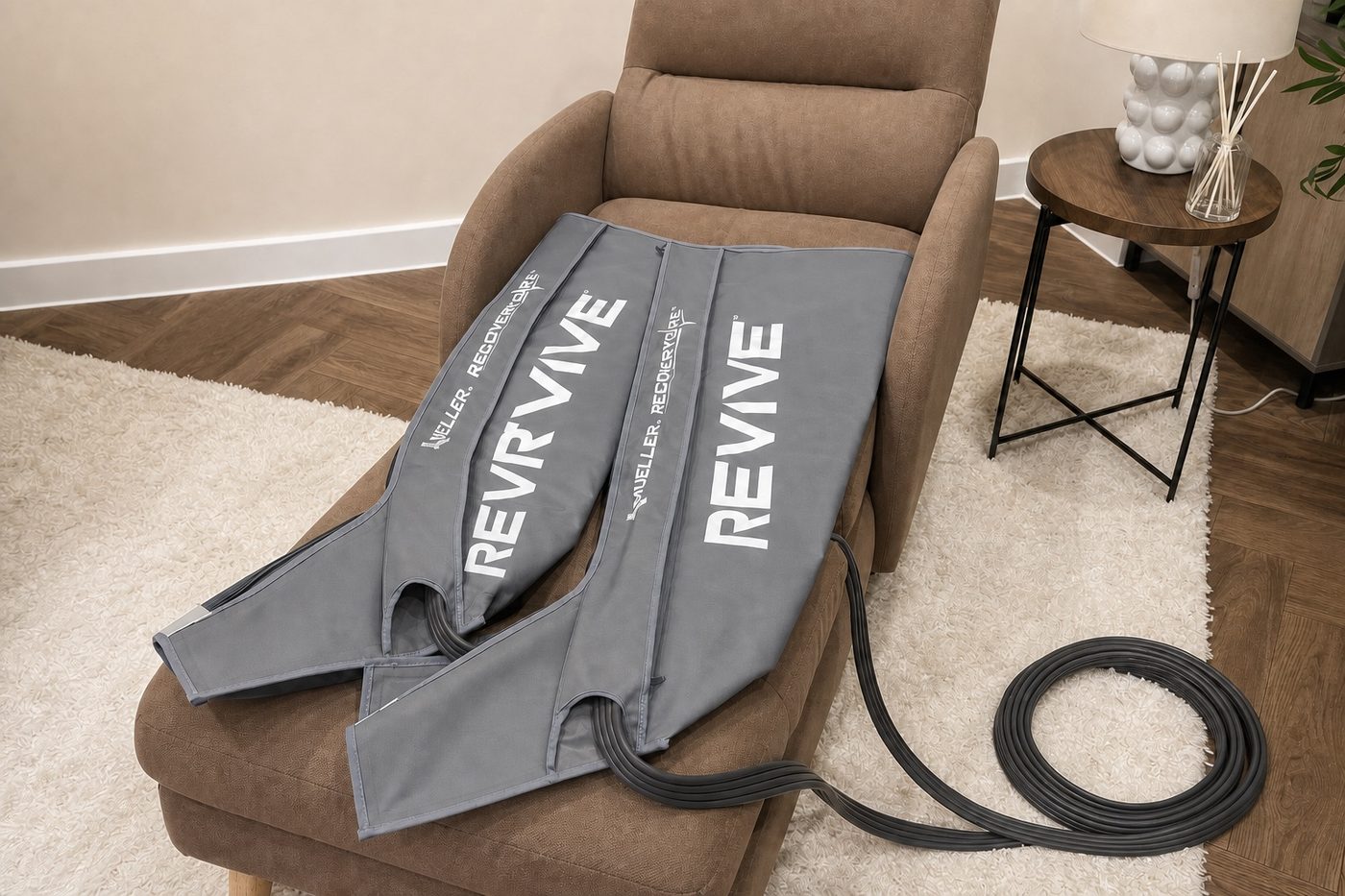
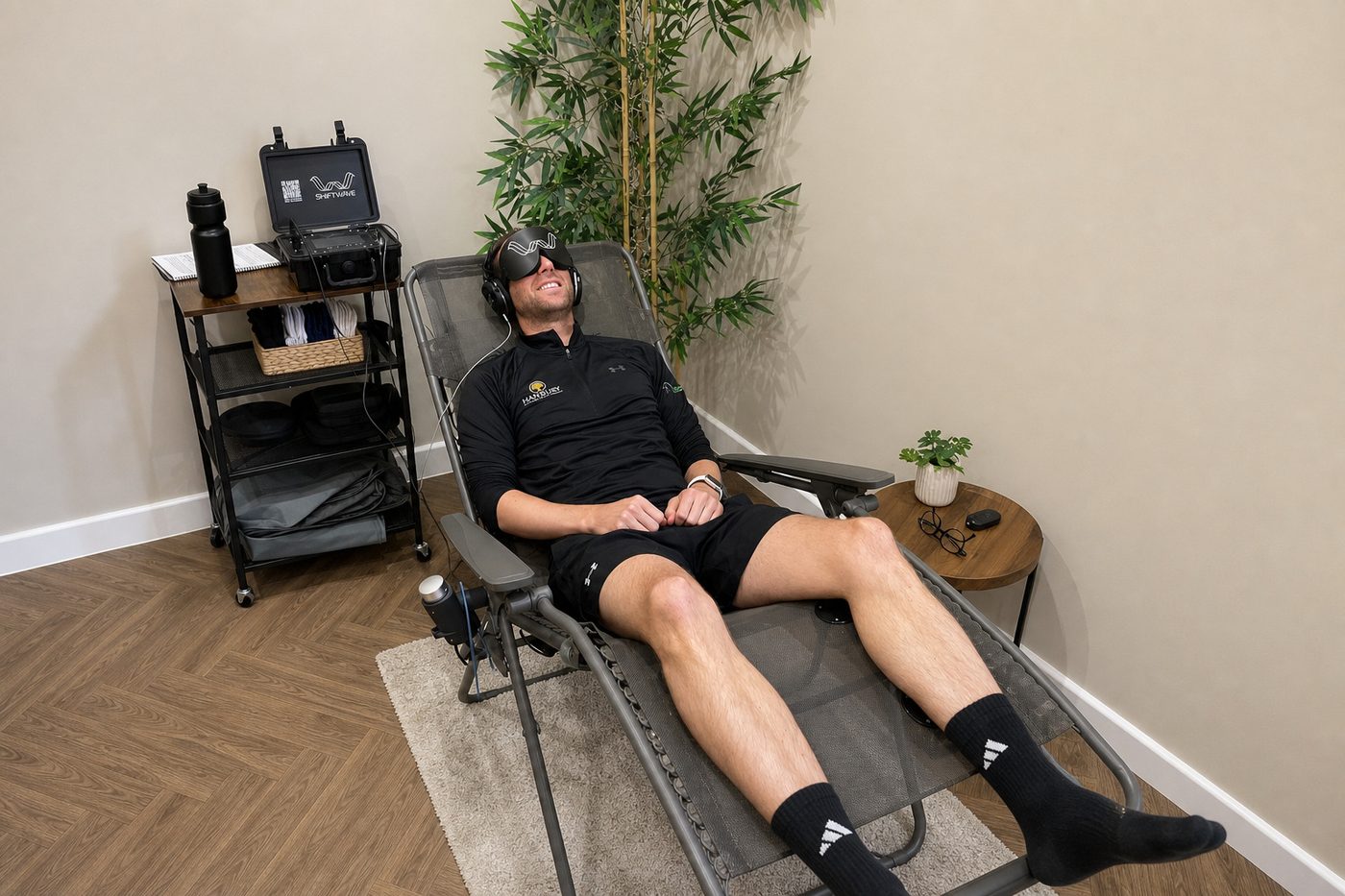
Compression boots or the Shiftwave chair: which do you actually need?
Heavy legs point to the compression boots, a wired nervous system to the Shiftwave chair. How to tell, and why the £75 circuit covers both.
Ramasamy8 min readRead the article
Recovery
How often should you do the Recovery Circuit, and how do you build it into a routine?
Once or twice a week suits most people. How to find your own rhythm with the £75 Recovery Circuit, and when to add the rest of the suite.
Ramasamy8 min readRead the article
Recovery
What does a Hyrox-specific recovery routine actually look like in Milton Keynes?
Match what you feel after a Hyrox race to the right tool: heavy legs, a wired nervous system, localised DOMS and cumulative training-block fatigue.
Ramasamy9 min readRead the article
Stay informed
More from the Hanbury team.
New articles on recovery, movement, physiotherapy and performance, sent when there's something worth reading. No spam, unsubscribe any time.