
Move · Physiotherapy
Post-surgical rehabilitation physiotherapy in Milton Keynes
Surgery fixes the structure; rehabilitation is what decides whether that structure actually gives you back the function you had before. The two are not interchangeable, and the gap between a technically successful operation and a genuinely good outcome is very often closed, or lost, in the months of physiotherapy that follow it — which is why we build rehab around your surgeon's own protocol, with objective testing to prove readiness rather than a diary date.
Still weighing your options? Read do you need surgery, or can physiotherapy help? A Milton Keynes surgeon's answer.
Not sure what you need? Call 01908 330 243
What this covers
Post-surgical rehabilitation is not one programme but a family of staged protocols, each specific to the operation and the tissue that was repaired, reconstructed or replaced. We commonly see people after:
Foot and ankle surgery — including ankle fracture fixation, Achilles tendon repair, ligament reconstruction and joint procedures. This is the area we are most directly set up for, with rehab that follows the operating surgeon's protocol from the first supervised session through to full return to activity.
ACL reconstruction and other ligament surgery, where rehab is staged from early quadriceps reactivation through strength restoration to criteria-based (not calendar-based) return to sport.
Joint replacement (hip and knee), where early, structured mobilisation is now central to modern recovery pathways rather than an afterthought.
Shoulder stabilisation and rotator cuff repair, where the rehab timeline is dictated by tissue-healing biology as much as by how the shoulder feels.
Whatever the operation, we work to your surgeon's specific post-operative protocol and communicate with their team where needed — we do not run a generic "post-op programme" that ignores what was actually done in theatre.
When it is worth getting checked
Seek urgent medical attention the same day, at A&E or contact your surgical team's emergency line, if you have
- Increasing redness, warmth, swelling, discharge or a fever around a surgical wound — possible infection
- Calf pain, swelling or warmth, or sudden breathlessness or chest pain — possible deep vein thrombosis or pulmonary embolism, a genuine emergency
- A sudden loss of a previously working repair — for example, a new inability to weight-bear or move a joint that had been progressing normally
- A wound that has opened, is bleeding significantly, or has a visible implant or hardware showing through it
Speak to your surgical team or GP before continuing physiotherapy if you have
- Pain that is significantly worse than expected for your stage of recovery, rather than gradually improving
- New numbness, tingling or weakness that was not present immediately after surgery
- Any concern that something does not feel right with the repair — you know your own recovery, and an early check is never wasted
For straightforward, on-protocol post-surgical rehabilitation, physiotherapy is exactly where to start, ideally with a plan agreed as early as possible after surgery — often before you have even left hospital, if your surgeon has issued a protocol. This page is general information and does not replace an individual assessment or your surgeon's specific instructions — if anything above applies to you, please contact your surgical team or A&E rather than relying on this page alone.
What your first appointment involves — and what it costs
Sixty minutes: a full history including your surgery, your surgeon's protocol and any restrictions, an examination, an objective baseline where relevant, an explanation you can repeat to someone else, hands-on treatment where appropriate, a staged plan, a review point, and liaison with your surgical team where needed.
Read more on what to expect at your first physiotherapy appointment in Milton Keynes.
Pricing
Clear, simple fees.
The same rate applies to adults and children/adolescents.
Initial assessment
£110
60 minutes, including history, examination, diagnosis, and your first plan.
Follow-up appointment
£70
Ongoing treatment, progress checks, and plan adjustments.
Using private medical insurance? See the FAQ below.
How we treat it here
Assessment first — establishing exactly what was done in surgery, what protocol your surgeon has specified (restrictions on weight-bearing, range of movement, or loading), and where you currently are in that timeline, before building the actual rehab plan.
For foot and ankle surgery, this is direct clinical territory: rehab is planned in the context of the surgery itself, not handed to a generic programme. The evidence on timing matters here — for example, a large UK multicentre trial is currently testing whether earlier weight-bearing after operatively managed ankle fracture (from two weeks post-surgery, rather than six) gives equivalent function with fewer of the costs of prolonged non-weight-bearing, reflecting a genuine and active shift in how this is approached (Bretherton et al., BMC Musculoskeletal Disorders, 2021. DOI: 10.1186/s12891-021-04560-7 — trial protocol; we follow your own surgeon's specific instruction, not a blanket rule, since practice here is still evolving).
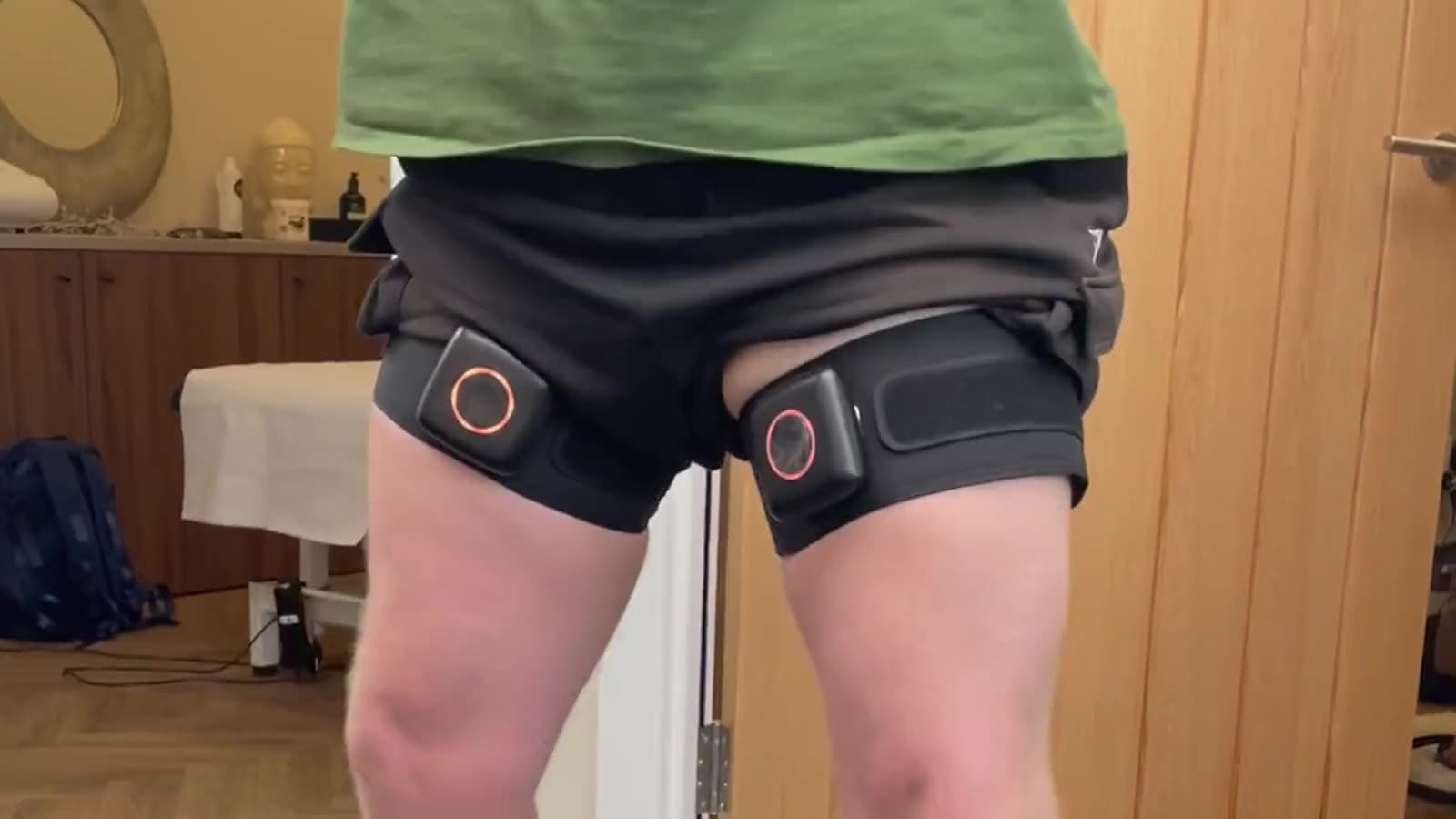
For ACL reconstruction, rehab is staged: early swelling control and quadriceps reactivation, progressive strengthening, then a return-to-sport phase gated by objective strength and movement testing rather than time alone. This staged, criteria-based approach — using the on-site strength and movement testing to confirm readiness — is the model our ACL-specific rehab follows.
For joint replacement (hip and knee), modern enhanced-recovery pathways build early, structured mobilisation into the plan from very soon after surgery, and reviews of these pathways report faster recovery, shorter hospital stays and improved patient satisfaction compared with older, more conservative approaches to post-operative movement (Bourazani et al., World Journal of Orthopedics, 2021. DOI: 10.5312/wjo.v12.i6.346).
For shoulder stabilisation and rotator cuff repair, timelines are set by tissue-healing biology (typically weeks before active movement begins in earnest), and rushing this is a common cause of setbacks — we follow your surgeon's protocol precisely rather than progressing on how the shoulder feels.
Throughout, the on-site rehabilitation gym and objective strength and movement testing mean progression is measured, not guessed, and where recovery is not tracking as expected, we flag it to your surgical team promptly rather than quietly persisting.
What the plan usually looks like
Post-surgical rehab is inherently staged and protocol-led — the plan is built around your surgeon's specific timeline for tissue healing, not a fixed number of sessions. Early stages focus on protecting the repair and controlling swelling and pain; middle stages rebuild strength and movement; later stages, where relevant, use objective testing to confirm you are genuinely ready for full activity or sport, rather than assuming readiness because enough weeks have passed.
How many appointments this takes depends on the surgery, the protocol and how you respond, and you will get an honest view at the first appointment rather than a number chosen in advance.
What to expect
From first assessment to progress check.
A straightforward three-step process. Each stage is designed to give you clarity, momentum, and confidence that you are heading in the right direction.
- 01
First assessment
We take a full history, assess how you move, and identify the underlying cause. You leave with a clear picture of what is happening and why.
- 02
Your treatment plan
A structured plan built around hands-on treatment, targeted exercise, and the right technology, paced to your body, your schedule, and your goals.
- 03
Progress check
We re-test, refine, and keep you moving forward. Regular check-ins make sure the plan is working and adjust before small issues become setbacks.
“Thank you Ryan for all of your expertise, I don't think that I would have recovered this quickly without your guidance and knowledge.”
“First time with Louise, who I saw with a shoulder injury. She made me feel at ease and went into a lot of detail and certainly put across she knew what she was talking about. She spent the time listening to me without me feeling like I was being rushed. Excellent result and no hesitation in recommending her.”
“Nick helped me get back to full fitness after a painful Achilles injury. Nick explained the recovery process and managed my expectations of what was involved. Steady and very effective rehabilitation - thank you!”
Questions
Post-surgical rehabilitation FAQs
Wondering who to see? Read physio vs osteopath vs chiropractor.
As early as your surgeon's protocol allows — often this is arranged before you leave hospital. Starting rehab promptly, within the limits your surgeon sets, is generally better than waiting for things to “settle” first.
Further reading: our physiotherapy hub, our Insights explainer on rehab after ACL reconstruction, and the NHS guide to recovering after knee replacement surgery.
Related conditions
Other problems we treat.
Ankle & foot pain
The foot and ankle problems that sit either side of surgery, from injury through to post-operative recovery.
Read moreKnee pain
The non-surgical picture alongside the ACL and joint replacement rehabilitation described here.
Read moreArthritis
The joint replacement decision point that often comes before post-surgical rehabilitation.
Read more
If you have surgery behind you and a recovery ahead of you, a protocol-led plan is the place to start.
Or call 01908 330 243