
Performance
Training zones explained

The short version
- Training zones are intensity bands that guide how hard each session should be.
- Common models split effort into three or five zones around two key thresholds.
- Zones from a real test are personal; zones from an age formula are a guess.
- The right zones keep easy days easy and hard days hard, which is where progress comes from.
- Hanbury sets your zones from your uVida test, including your estimated thresholds.
Training zones are intensity bands that tell you how hard to work in each session, from very easy through to all-out, and getting them right is what makes a training plan actually work. The most useful zones are anchored to your own physiology, your aerobic and anaerobic thresholds, rather than to a generic formula based only on your age.
What are training zones?
A training zone is simply a band of intensity. You can track it by heart rate, by pace or power, or by feel, but the purpose is always the same: to make sure each session is doing the job it is meant to do. Easy sessions should build your base without adding fatigue, and hard sessions should push the qualities you are trying to develop, and zones are how you tell them apart reliably rather than by mood.
The two thresholds that anchor your zones
Underneath every good zone system are two physiological turning points. The first is your aerobic threshold, the intensity above which effort starts to feel less easy, which marks the top of your genuinely easy training. The second is your anaerobic, or lactate, threshold, above which fatigue builds quickly. Zones are really just the bands sitting below, between and above these two points, which is why zones based on your measured thresholds are far more useful than zones based on a formula. Our guide to the lactate threshold explains the upper one in detail.
Three-zone versus five-zone models
Two models dominate. The simple three-zone model splits training into easy, which is below the aerobic threshold, moderate, which sits between the two thresholds, and hard, which is above the anaerobic threshold, and it is enough for most people to train well. The five-zone model, familiar from many sports watches, subdivides these further and is useful for structured athletes who want finer control. Neither is right or wrong; the three-zone model is harder to misuse, whilst the five-zone model rewards precision.
| 3-zone | 5-zone | Feels like | Purpose |
|---|---|---|---|
| Easy | Zone 1 - recovery | Very easy, chatty | Active recovery |
| Easy | Zone 2 - aerobic base | Conversational | Builds the aerobic engine |
| Moderate | Zone 3 - tempo | Comfortably hard | Sustained effort |
| Hard | Zone 4 - threshold | Hard, short sentences | Raises your threshold |
| Hard | Zone 5 - VO2 max | Very hard, near max | Raises your ceiling |
Why 220 minus age zones fail you
Most watches and apps build your zones from a formula, typically a percentage of an estimated maximum heart rate calculated as 220 minus your age. The problem is that this formula carries a large error for individuals, so your true maximum can be well above or below the estimate, and every zone built on it inherits that error. In practice this can place you a whole zone away from where you should be, which is enough to blunt months of training. This is the core reason a measured test beats a default setting.
How Hanbury sets your zones
At Hanbury, your zones come from your own physiology, not a formula. The uVida test, taken to the point of exhaustion, measures your VO2 max directly and estimates your aerobic and anaerobic thresholds from your breathing, and your personal zones are built from those. Your results are read with you by an expert and turned into a plan, with re-testing to keep the zones current as you improve, as part of the Hanbury Method. Training-zone testing is available in Milton Keynes from Level 2 of the Performance Blueprint (£495), with the Blueprint starting from £197. For a deeper look at the easy end, see our guide to Zone 2 training.
Frequently asked questions
How many training zones are there?
It depends on the model. A simple, reliable approach uses three zones, easy, moderate and hard, whilst many watches use a five-zone model that subdivides these. Both are anchored to the same underlying thresholds.
What are the five heart rate zones?
In a typical five-zone model they run from very easy recovery, through easy aerobic and moderate, up to threshold and then maximal effort. The exact boundaries should come from your own thresholds, not a generic formula.
Are the heart rate zones on my watch accurate?
Often not for you specifically, because most are built from an age formula that carries a large individual error. They are useful for trends, less so for precise guidance, which is why a measured test is worth it.
What is Zone 2?
Zone 2 is the easy, sustainable, conversational band that builds your aerobic base. It is important enough to have its own guide, which explains how to find and use it.
How are training zones calculated at Hanbury?
From your uVida test taken to exhaustion, which measures your VO2 max and estimates your aerobic and anaerobic thresholds, so your zones reflect your physiology rather than a formula.
Where can I get training-zone testing in Milton Keynes?
Hanbury Health offers training-zone testing within the Performance Blueprint in Milton Keynes, from Level 2 (£495).
References
- Seiler S. What is best practice for training intensity and duration distribution in endurance athletes? Int J Sports Physiol Perform. 2010;5(3):276-291.
- American College of Sports Medicine. ACSM's Guidelines for Exercise Testing and Prescription.
- NHS. Physical activity guidelines for adults.
Ready to put this into practice?
Hanbury Health is the only place in Milton Keynes bringing VO2 max, body composition and objective strength testing together in one visit, under clinical direction and read with you by an expert.
About the author: Nick Allen is a director of Hanbury Health and a Chartered Physiotherapist (BSc (Hons), HCPC-registered, MCSP), with extensive experience in professional and endurance sport, currently Lead Physiotherapist for Great Britain Badminton. Rehabilitation across the physiotherapy service is medically reviewed by Prof Arul Ramasamy, a consultant foot-and-ankle surgeon.
General information, not medical advice. Written by Nick Allen. Medically reviewed by Prof Arul Ramasamy MA PhD MBA FRCS(Tr+Orth). Last reviewed: 25 July 2026.
Related insights
Performance
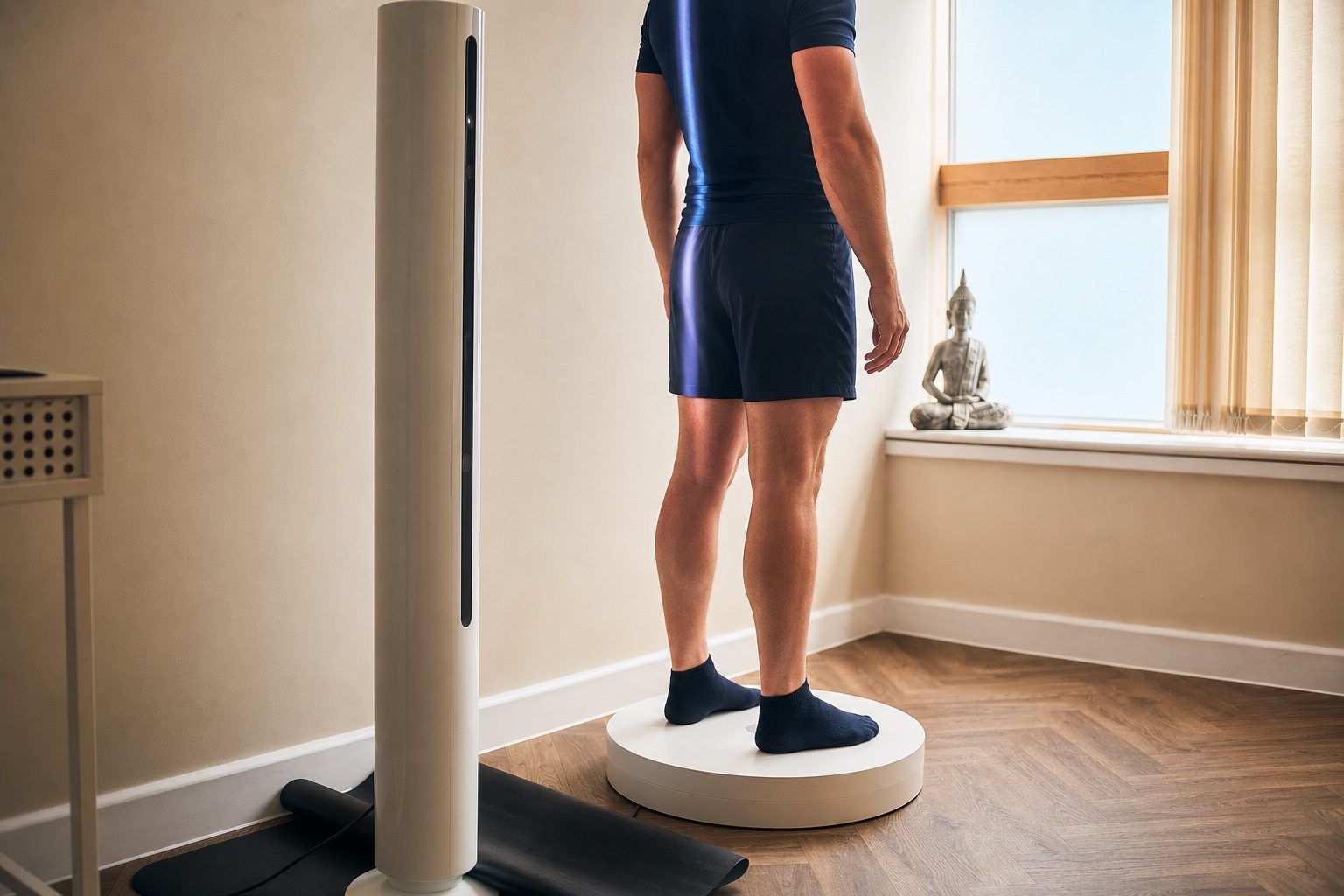
Body composition testing in Milton Keynes: beyond the bathroom scale
Why lean mass and power-to-weight matter more than the scale, how a Styku 3D scan measures it, and what the numbers mean for training.
Allen7 min readRead the article
Performance
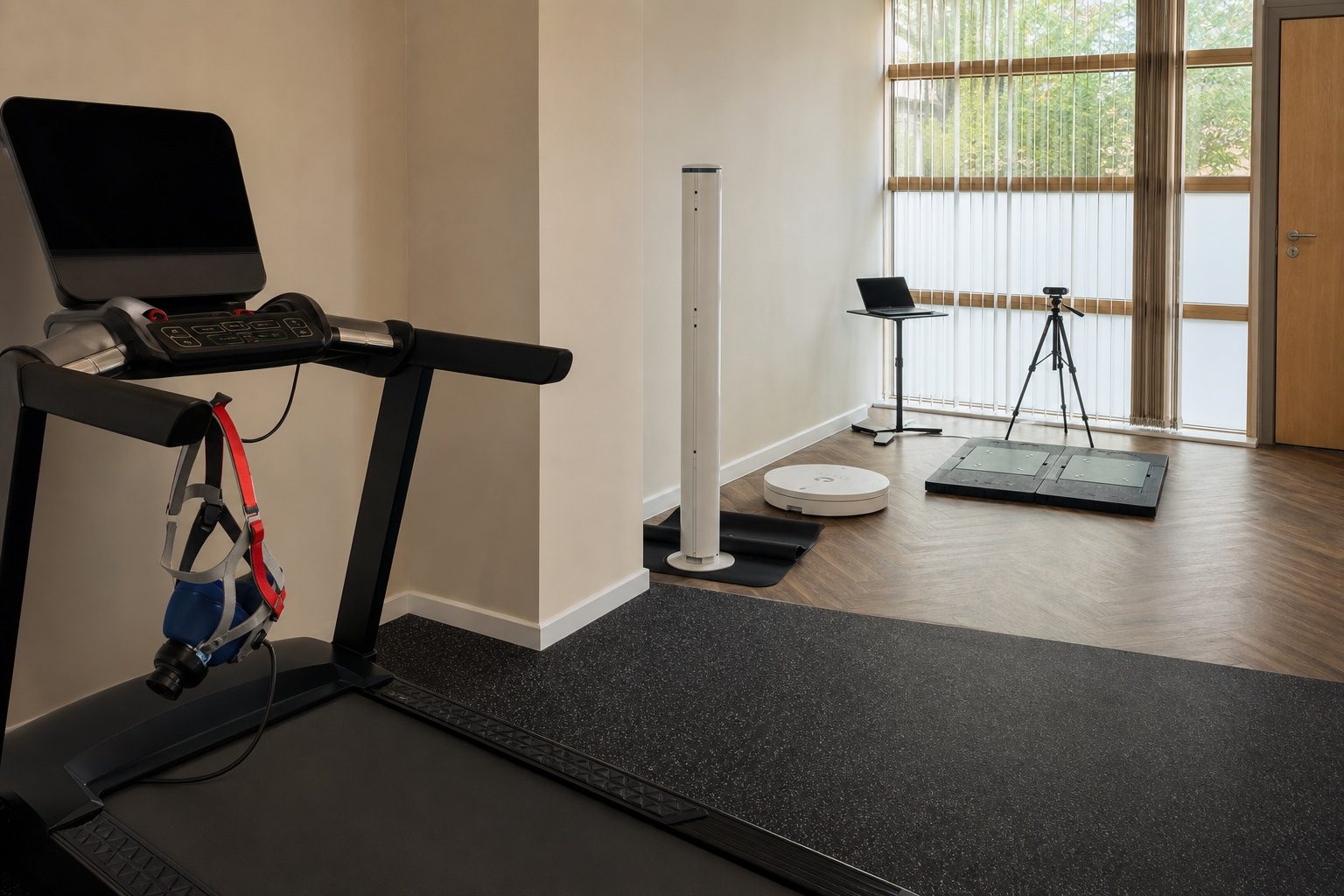
Performance testing in Milton Keynes: getting the complete picture
Why a complete, clinically-led assessment beats piecemeal testing, and the only place in Milton Keynes that brings VO2 max, body composition and strength together.
Allen7 min readRead the article
Performance
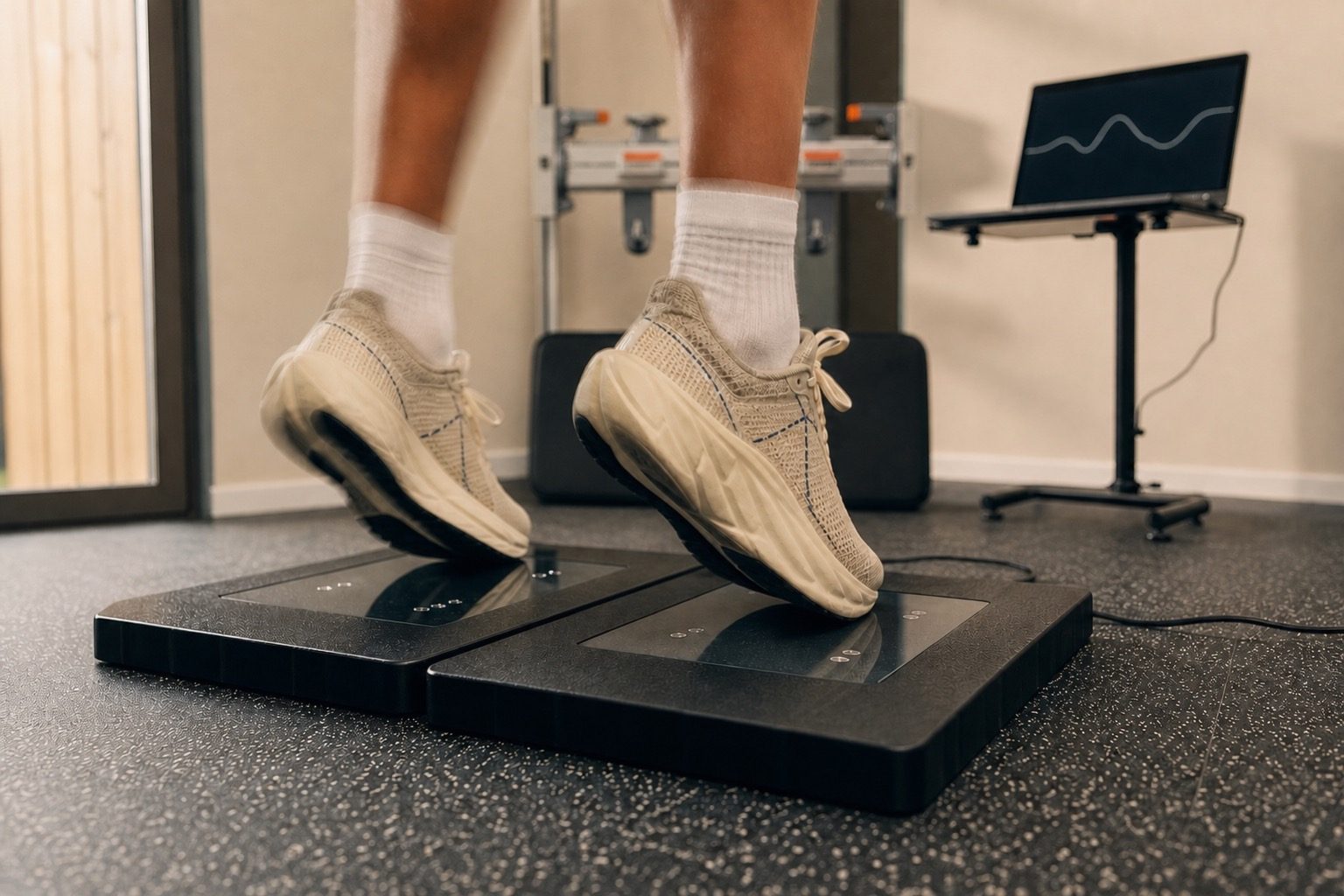
Force plate testing in Milton Keynes: power, jump performance and hidden asymmetry
How dual force plates quantify power, jump performance and left-right asymmetry, and why that data is useful for training and injury risk.
Allen7 min readRead the article


Stay informed
More from the Hanbury team.
New articles on recovery, movement, physiotherapy and performance, sent when there's something worth reading. No spam, unsubscribe any time.