
Performance
Lactate threshold, and how we estimate it without a blood test

The short version
- Your lactate, or anaerobic, threshold is the intensity you can just sustain before fatigue climbs fast.
- It often predicts endurance performance better than VO2 max alone.
- Classic lab testing uses blood samples; we estimate the same threshold from your breath gases.
- Knowing it sets the ceiling of your easy training and the target for your hard efforts.
- At Hanbury it comes from the uVida breath test, with no finger-pricks.
Your lactate threshold, also called your anaerobic threshold, is the exercise intensity above which fatigue starts to build quickly, and it is one of the best predictors of endurance performance. Traditionally it is measured with repeated finger-prick blood samples during an exercise test. At Hanbury we estimate the same threshold from your breathing during the uVida test, so you get the number that shapes your training without the needles.
What is the lactate threshold?
Lactate is a fuel your body produces and reuses constantly during exercise, and it is also a useful marker of how hard you are working. At lower intensities your body clears lactate as fast as it produces it, so levels stay steady. Your lactate threshold is the intensity at which production starts to outpace clearance and levels climb quickly, which in practical terms is close to the hardest pace you can hold for a prolonged effort before fatigue takes over.
Why it matters more than you might think
For endurance, your threshold often matters as much as your VO2 max. Two people with the same VO2 max can perform very differently if one can sustain a much higher fraction of it before hitting their threshold. Because the threshold sets your sustainable pace, it is a strong predictor of endurance performance, and it is highly trainable, so it is one of the most rewarding numbers to work on.
Blood testing versus breath testing
The classic laboratory method takes small blood samples from a fingertip or earlobe at increasing intensities to track when lactate rises, which is accurate but involves repeated pricks. There is a second, well established approach: as you cross the same physiological transition, your breathing changes in a characteristic way, and a breath-by-breath analyser can detect this ventilatory threshold, which tracks the lactate threshold closely. Hanbury uses the uVida breath analyser to estimate your anaerobic threshold from these gas-exchange changes. To be precise about the method, this is an estimate of the same transition from your breathing, not a blood lactate measurement, and for setting your training it does the job well and without needles.
| Classic lab test | At Hanbury (uVida) | |
|---|---|---|
| Method | Repeated finger-prick blood samples | Breath-by-breath gas analysis |
| Needles | Yes | No |
| What it finds | Blood lactate threshold | Estimated anaerobic (ventilatory) threshold |
| Use for training | Sets your zones | Sets your zones |
How your threshold sets your training
Your threshold is the natural dividing line in your training. Comfortably below it is where your easy, sustainable base work sits, including your Zone 2 training, whilst efforts at and just above it are your hard, quality sessions. Anchoring your training zones to your real threshold, rather than a percentage of a formula, is what stops your easy days creeping too hard and keeps your hard days genuinely productive. Our guides to training zones and Zone 2 training show how this fits together.
Can you raise your threshold?
Yes, and it often responds faster than VO2 max. A big base of easy aerobic training raises the platform, and controlled work at or just below threshold, sometimes called tempo or threshold work, lifts the ceiling. Because progress here is measurable, re-testing is a good way to confirm your training is moving the number.
Why Hanbury Health is different
At Hanbury, a single uVida test taken to exhaustion gives you three things at once: your directly measured VO2 max, an estimate of your anaerobic threshold, and your personal training zones built from them. Your results are read with you by an expert and set into a plan, not printed by an app, and re-testing tracks the change as part of the Hanbury Method. Threshold and VO2 max testing is available in Milton Keynes from Level 2 of the Performance Blueprint (£495), with the Blueprint starting from £197.
Frequently asked questions
Is lactate threshold the same as anaerobic threshold?
In everyday use, yes. Both describe the intensity above which fatigue builds rapidly. There are technical distinctions between specific thresholds, but for training purposes they point to the same transition.
Do you take blood to test my lactate threshold?
No. Hanbury does not do blood lactate testing. We estimate your anaerobic threshold from your breathing during the uVida test, which detects the same physiological transition without finger-pricks.
Lactate threshold versus VO2 max, which matters more?
Both matter. VO2 max is your aerobic ceiling; your threshold is how much of that ceiling you can sustain. For endurance events, the threshold is often the better predictor of performance.
What is a good lactate threshold?
It is usually expressed as a percentage of your VO2 max or your maximum heart rate, and trained endurance athletes can sustain a much higher percentage than untrained people. What matters most is your own number and whether it is improving.
How do I improve my lactate threshold?
Build a large base of easy aerobic training and add controlled efforts at or just below threshold. Re-testing shows whether it is moving.
Where can I get lactate or anaerobic threshold testing in Milton Keynes?
Hanbury Health estimates your anaerobic threshold from the uVida breath test within the Performance Blueprint in Milton Keynes, from Level 2 (£495), with no blood samples.
References
- Faude O, Kindermann W, Meyer T. Lactate threshold concepts: how valid are they? Sports Medicine. 2009;39(6):469-490.
- Seiler S. What is best practice for training intensity and duration distribution in endurance athletes? Int J Sports Physiol Perform. 2010;5(3):276-291.
- NHS. Physical activity guidelines for adults.
Ready to put this into practice?
Hanbury Health is the only place in Milton Keynes bringing VO2 max, body composition and objective strength testing together in one visit, under clinical direction and read with you by an expert.
About the author: Nick Allen is a director of Hanbury Health and a Chartered Physiotherapist (BSc (Hons), HCPC-registered, MCSP), with extensive experience in professional and endurance sport, currently Lead Physiotherapist for Great Britain Badminton. Rehabilitation across the physiotherapy service is medically reviewed by Prof Arul Ramasamy, a consultant foot-and-ankle surgeon.
General information, not medical advice. Written by Nick Allen. Medically reviewed by Prof Arul Ramasamy MA PhD MBA FRCS(Tr+Orth). Last reviewed: 25 July 2026.
Related insights
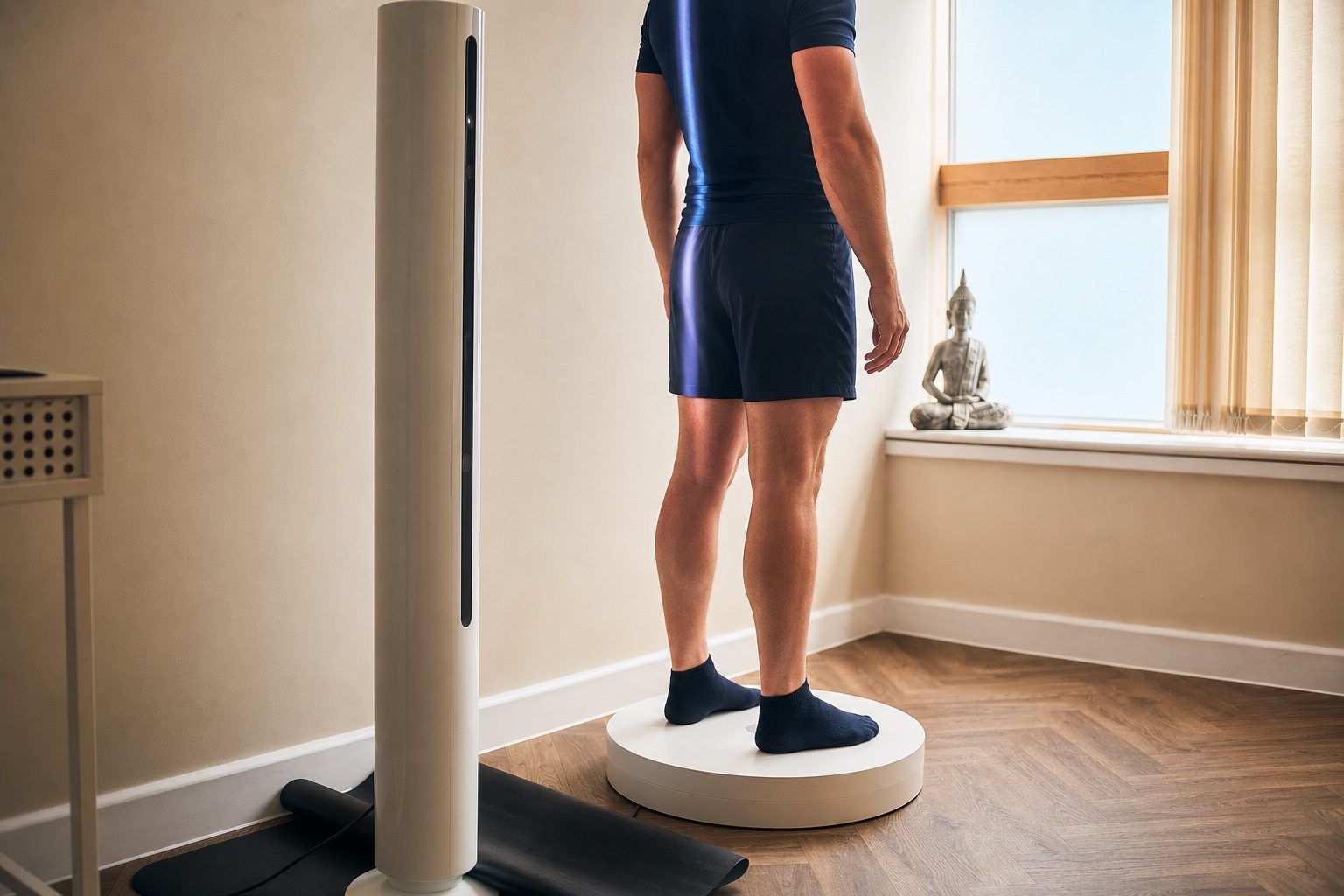
Performance
Body composition testing in Milton Keynes: beyond the bathroom scale
Why lean mass and power-to-weight matter more than the scale, how a Styku 3D scan measures it, and what the numbers mean for training.
Allen7 min readRead the article
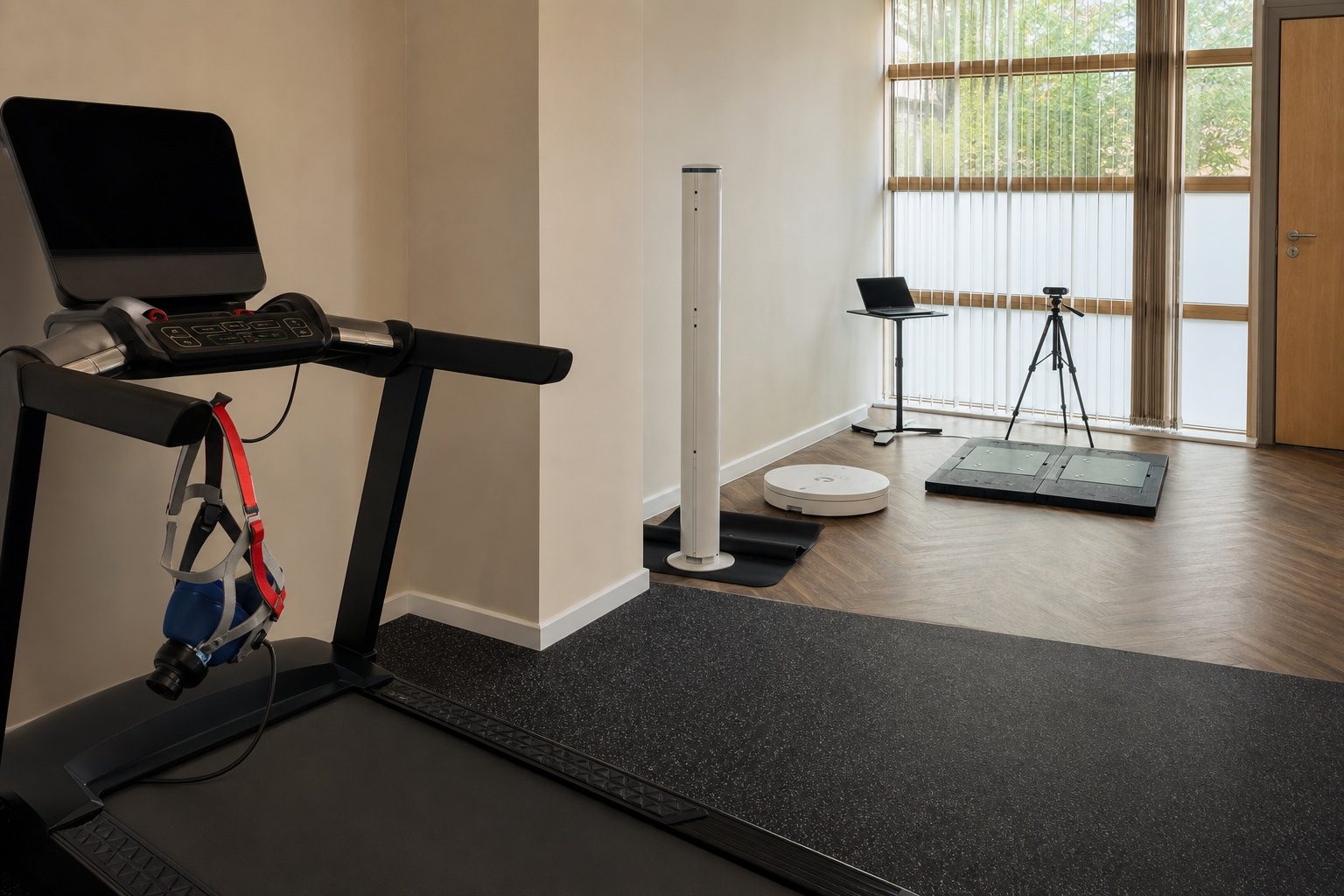
Performance
Performance testing in Milton Keynes: getting the complete picture
Why a complete, clinically-led assessment beats piecemeal testing, and the only place in Milton Keynes that brings VO2 max, body composition and strength together.
Allen7 min readRead the article
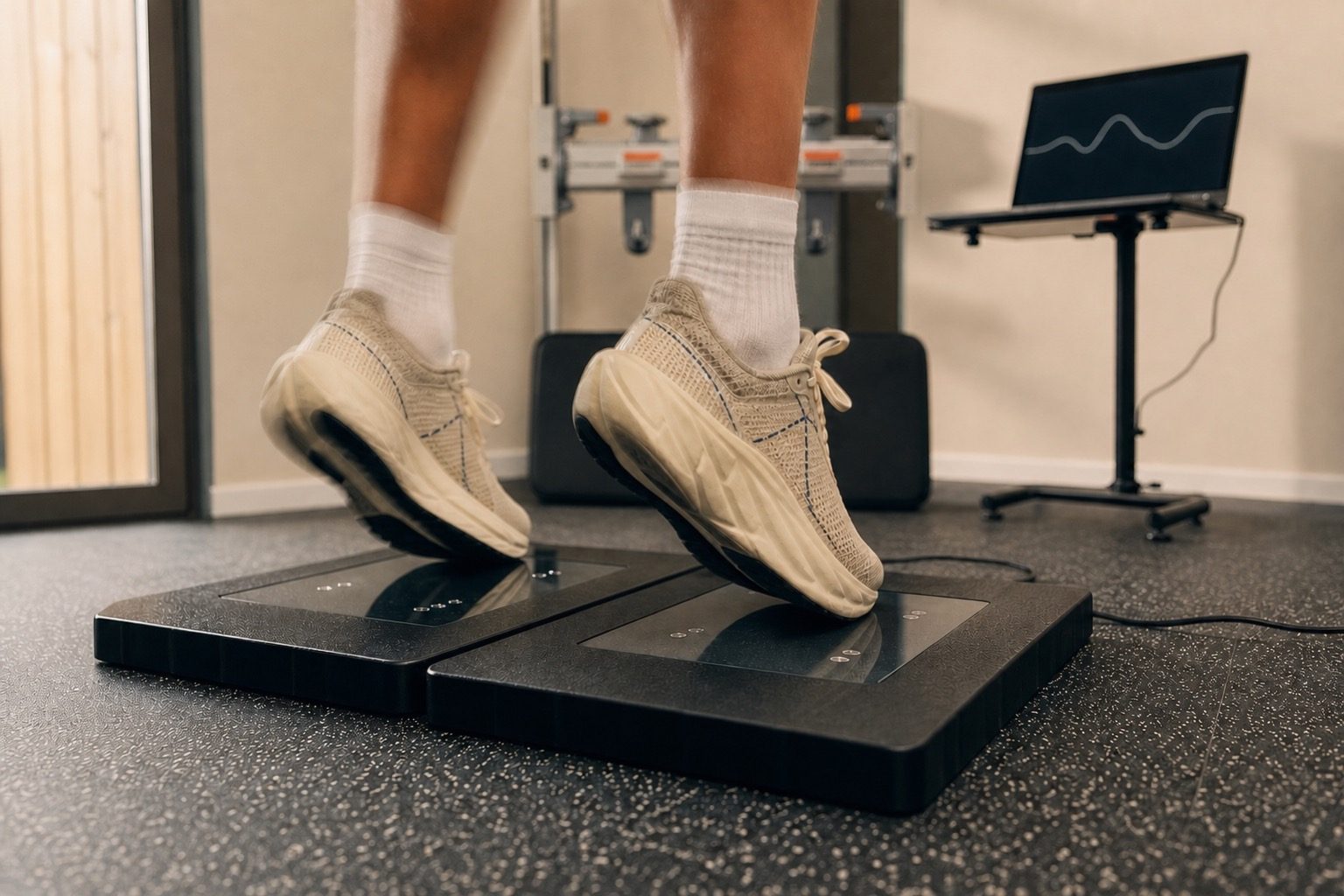
Performance
Force plate testing in Milton Keynes: power, jump performance and hidden asymmetry
How dual force plates quantify power, jump performance and left-right asymmetry, and why that data is useful for training and injury risk.
Allen7 min readRead the article


Stay informed
More from the Hanbury team.
New articles on recovery, movement, physiotherapy and performance, sent when there's something worth reading. No spam, unsubscribe any time.