
Performance
Zone 2 training: what it is and why it works

The short version
- Zone 2 is an easy, conversational intensity you can sustain for a long time.
- It builds your aerobic base and improves how efficiently you use fuel.
- The biggest mistake is going too hard, turning easy training into mediocre hard training.
- Most endurance plans put the majority of training in Zone 2.
- Finding your true Zone 2 usually needs a measured test.
Zone 2 is a comfortable, sustainable training intensity, roughly the hardest effort at which you could still hold a conversation, and it builds the aerobic base that underpins nearly all endurance fitness. It works because training here develops your body's ability to use fat for fuel and improves the efficiency of your muscles, and the catch is that most people do it too hard.
What is Zone 2 training?
Zone 2 is the easy end of your training, sitting just below your aerobic threshold. A simple guide is the talk test: you should be able to hold a conversation in full sentences, if a little more deliberately than at rest. At this intensity your body relies heavily on fat as a fuel and can keep going for a long time, which is exactly what makes it the backbone of endurance training.
Why Zone 2 works
Training in Zone 2 develops the machinery of endurance: it builds the small blood vessels that deliver oxygen to muscle and improves your ability to use fat for fuel, which spares your limited carbohydrate stores for when you need them. It also adds training load without much fatigue, so you can do a lot of it and recover well. Some of the more dramatic claims made for Zone 2, particularly around mitochondria and longevity, are still being researched and should be treated with a little caution, but the core benefit, a bigger and more efficient aerobic base, is well established.
How to find your Zone 2, and why it is harder than it sounds
The honest problem with Zone 2 is that most people cannot find it reliably by feel, and tend to drift too hard. The talk test helps, and a heart rate of very roughly sixty to seventy per cent of maximum is often quoted, but heart rate zones from an age formula carry a large individual error, so they can place your Zone 2 ceiling well off. The only way to pin it precisely is to measure the threshold it sits under, which is what a proper test provides.
- Talk test: you can speak in full sentences, just a little more deliberately.
- Heart rate: roughly 60-70% of max, but formula-based maximums are often wrong for you.
- The honest check: most people drift too hard; if in doubt, ease off.
- The reliable way: set the ceiling from your measured aerobic threshold.
How much Zone 2 should you do?
In most endurance plans, the majority of training, often around eighty per cent, sits in this easy zone, with the remaining hard work done properly hard. This is the polarised approach, and it works because a big easy base makes your smaller amount of hard training more effective and repeatable. For most recreational athletes, the practical message is simple: do more easy training, and make sure it is genuinely easy. Our guides to training zones and the lactate threshold show how the rest fits around Zone 2.
Common mistakes
The classic error is running or riding your easy sessions too hard, which makes them tiring without building a base or driving real adaptation. Others do too little total volume, or skip easy training entirely in favour of intervals, which caps progress. Getting Zone 2 right, and keeping it honest, fixes most of these at once.
Why Hanbury Health is different
At Hanbury, your Zone 2 is set from a measurement. The uVida test, taken to exhaustion, estimates your aerobic threshold from your breathing, so the ceiling of your easy training is set from your own physiology. Your results are read with you by an expert and built into a plan, with re-testing to keep your zones current as part of the Hanbury Method. Zone and threshold testing is available in Milton Keynes from Level 2 of the Performance Blueprint (£495), with the Blueprint starting from £197.
Frequently asked questions
What heart rate is Zone 2?
It is often quoted as roughly sixty to seventy per cent of maximum heart rate, but that is only a rough guide because formula-based maximums carry a large individual error. Your true Zone 2 is best set from a measured threshold.
How do I know if I am in Zone 2?
The simplest check is the talk test: you should be able to speak in full sentences whilst training. If you are gasping between words, you have drifted out of Zone 2.
How long should Zone 2 sessions be?
Because it is easy, you can sustain Zone 2 for a long time, and sessions commonly run from forty-five minutes to a couple of hours depending on your goal and experience. Consistency matters more than any single long session.
Does Zone 2 burn fat and improve VO2 max?
Zone 2 relies heavily on fat for fuel and improves how efficiently you use it, and it builds the aerobic base that makes VO2 max-raising intervals effective. It supports both goals as part of a balanced plan.
Is Zone 2 the same as easy running or riding?
Broadly yes, provided your easy pace is genuinely easy. The common mistake is that people's easy pace is actually a touch too hard, which is why measuring the threshold above Zone 2 helps.
Where can I get Zone 2 or zone testing in Milton Keynes?
Hanbury Health estimates your aerobic threshold and sets your zones from the uVida test within the Performance Blueprint in Milton Keynes, from Level 2 (£495).
References
- Seiler S. What is best practice for training intensity and duration distribution in endurance athletes? Int J Sports Physiol Perform. 2010;5(3):276-291.
- San-Millan I, Brooks GA. Assessment of metabolic flexibility by means of measuring blood lactate, fat, and carbohydrate oxidation. Sports Medicine. 2018;48(2):467-479.
- NHS. Physical activity guidelines for adults.
Ready to put this into practice?
Hanbury Health is the only place in Milton Keynes bringing VO2 max, body composition and objective strength testing together in one visit, under clinical direction and read with you by an expert.
About the author: Nick Allen is a director of Hanbury Health and a Chartered Physiotherapist (BSc (Hons), HCPC-registered, MCSP), with extensive experience in professional and endurance sport, currently Lead Physiotherapist for Great Britain Badminton. Rehabilitation across the physiotherapy service is medically reviewed by Prof Arul Ramasamy, a consultant foot-and-ankle surgeon.
General information, not medical advice. Written by Nick Allen. Medically reviewed by Prof Arul Ramasamy MA PhD MBA FRCS(Tr+Orth). Last reviewed: 25 July 2026.
Related insights
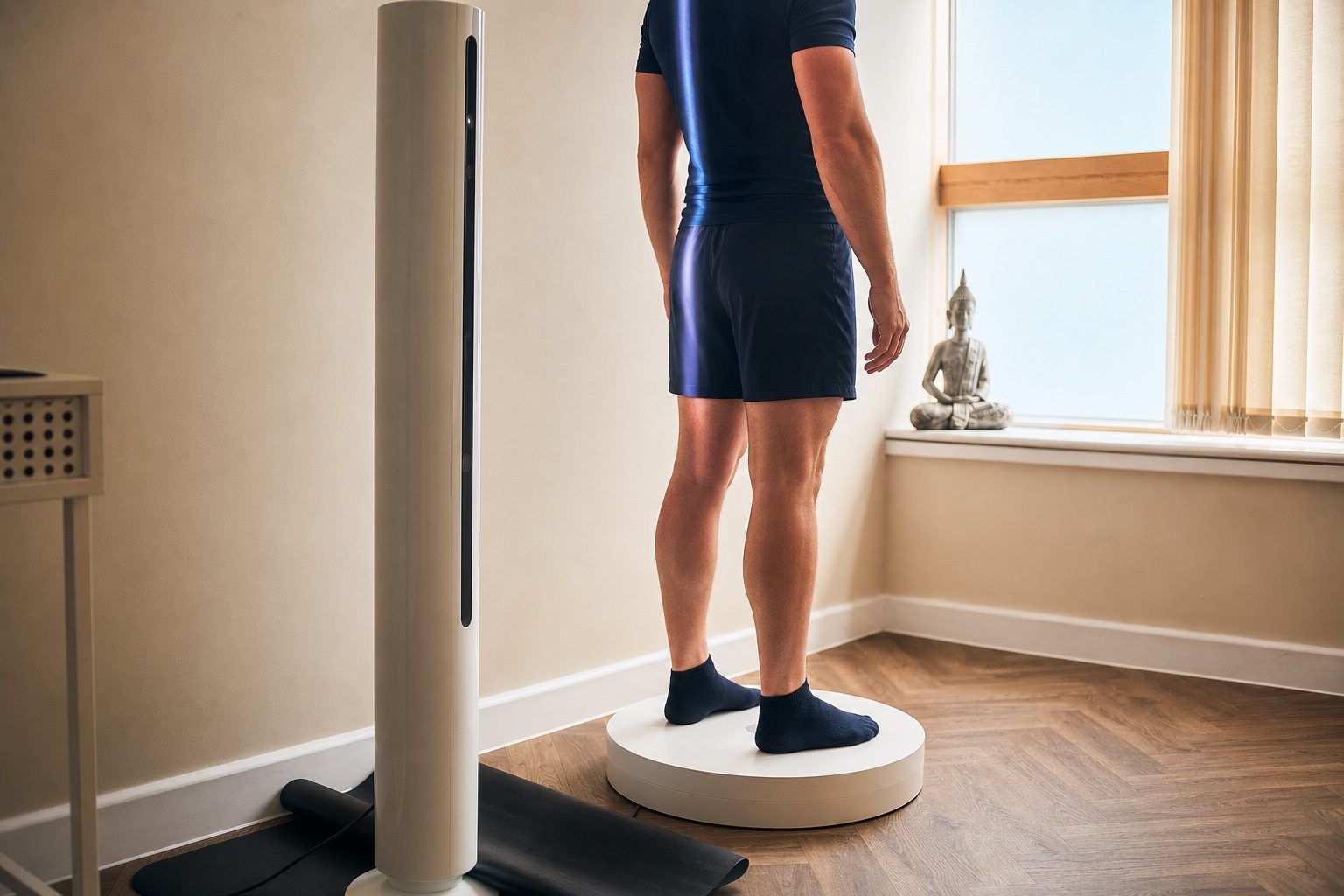
Performance
Body composition testing in Milton Keynes: beyond the bathroom scale
Why lean mass and power-to-weight matter more than the scale, how a Styku 3D scan measures it, and what the numbers mean for training.
Allen7 min readRead the article
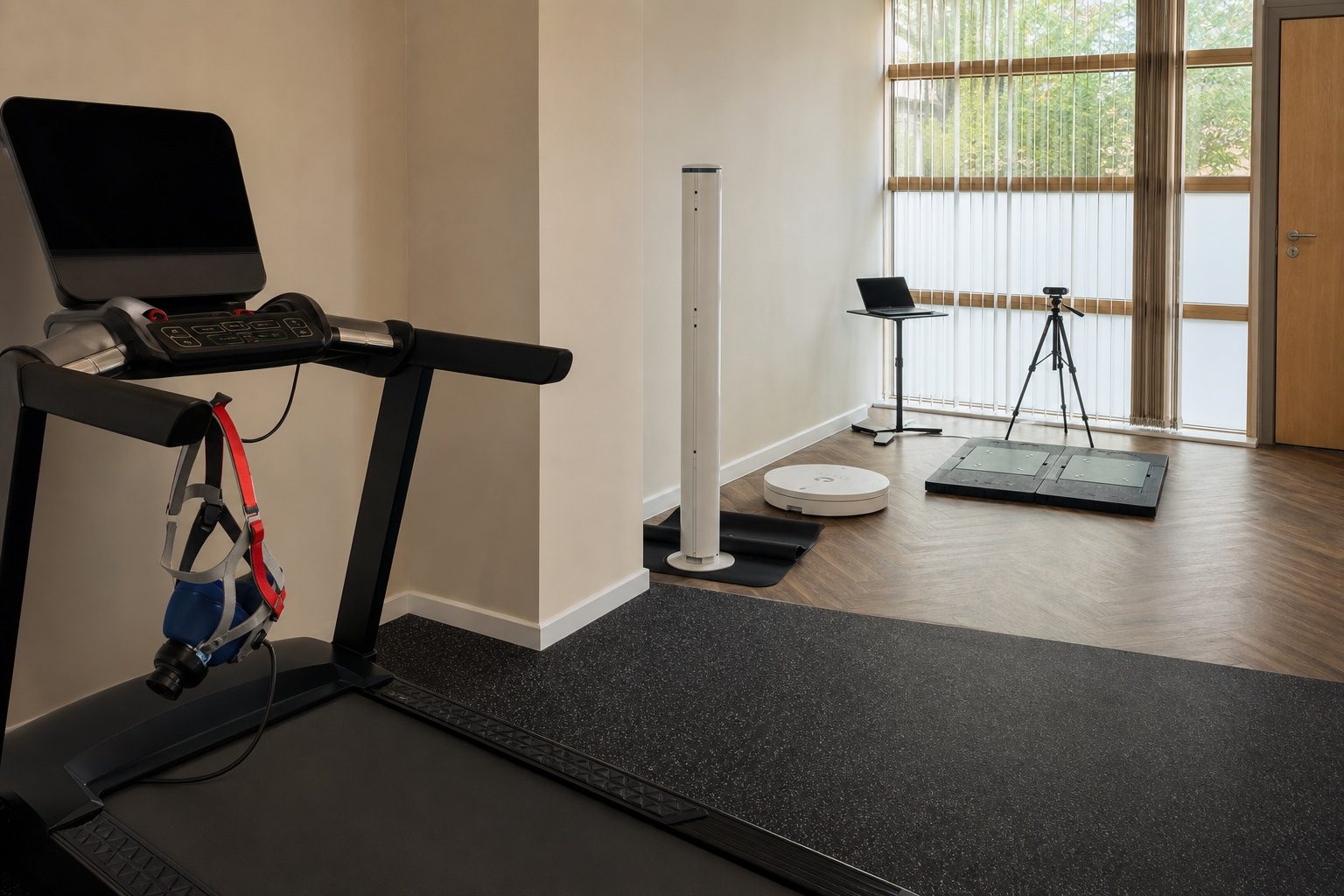
Performance
Performance testing in Milton Keynes: getting the complete picture
Why a complete, clinically-led assessment beats piecemeal testing, and the only place in Milton Keynes that brings VO2 max, body composition and strength together.
Allen7 min readRead the article
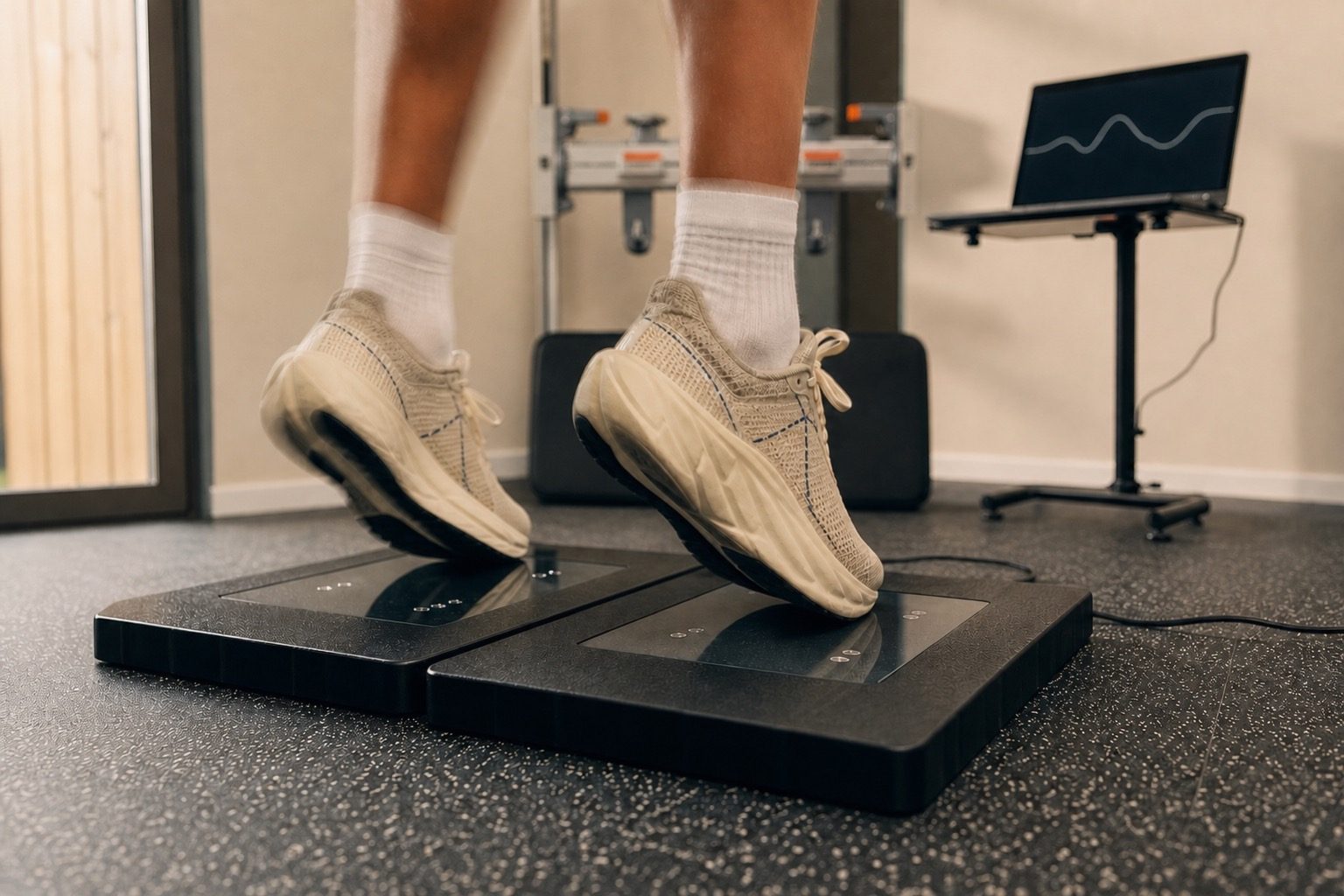
Performance
Force plate testing in Milton Keynes: power, jump performance and hidden asymmetry
How dual force plates quantify power, jump performance and left-right asymmetry, and why that data is useful for training and injury risk.
Allen7 min readRead the article


Stay informed
More from the Hanbury team.
New articles on recovery, movement, physiotherapy and performance, sent when there's something worth reading. No spam, unsubscribe any time.