
Recovery
Can recovery therapy help you sleep better and feel less wound up in Milton Keynes?
The short version
- Fall asleep more easily, without your mind still running through your inbox.
- Feel less braced through your shoulders, jaw and stomach during the day.
- Get a proper reset without any effort on your part, no exercise required.
- Notice calmer, steadier energy in the day or two after a session.
- A simple, low-commitment way in, starting with one guided £75 visit.
- Come away feeling more like yourself, not just recovered.
If you have been lying awake running through the day, or you carry your shoulders up round your ears without noticing, recovery therapy can help settle that down. A guided session on the Shiftwave chair is built to bring your nervous system out of switched-on mode and into something closer to rest, which is exactly the state you need to fall asleep easily and feel steadier the next day.
It is for anyone whose system feels wound up from ordinary life: a heavy few weeks at work, a run of broken nights, a stretch of life that is asking more of you than usual. You do not need to be an athlete, or even someone who exercises much at all, to feel the benefit.
What does recovery therapy actually do for stress and sleep?
Most people hear recovery and think of ice baths after a hard gym session. But your nervous system does not distinguish between the physical stress of training and the mental load of a demanding week, a difficult conversation, or months of disturbed sleep. Either way, you can end up stuck in a slightly alert, slightly braced state, even sitting still.
Recovery therapy in this sense means giving your body clear, physical signals that it is safe to stand down. Pressure, gentle vibration, guided breathing and warmth all do this in slightly different ways. The Shiftwave chair is built specifically around this idea, and compression, contrast therapy and the infrared sauna work with it too, each nudging you a little further from alert towards at ease.
This is not a cure for stress, and it will not fix what is causing a hard patch at work or a long run of poor sleep. What it can do is give your body a proper, physical break from being switched on, often enough that the difference is easy to feel by the time you leave.
Does the Shiftwave chair really help you sleep?
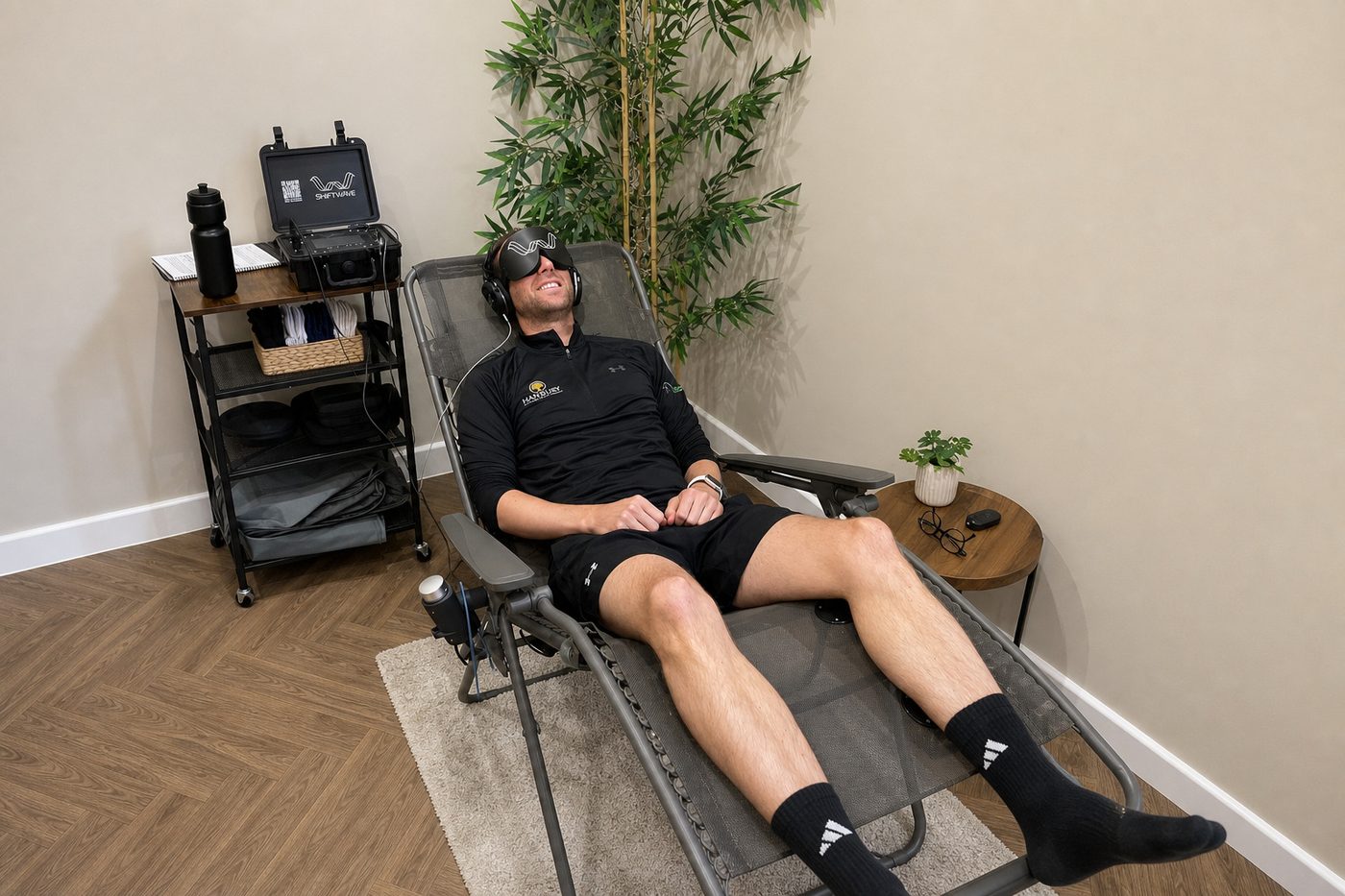
The Shiftwave chair uses pressure waves, gentle vibration and guided breathing to walk your body through a slow down-shift, from alert to settled. You lie back, follow the breathing cues, and let the chair do the rest. Most people describe it as the closest thing to falling properly asleep while still being awake. Our comparison of compression boots and the Shiftwave chair explains what each one is for.
There is a reasonable evidence base behind why this works. A 2025 study in Frontiers in Sports and Active Living looked at how low-frequency vibration affects heart rate variability, one of the clearest physical markers of whether your nervous system is leaning towards alert or rest. It found that a session of low-frequency vibration measurably increased markers of the rest-and-digest side of the nervous system for up to half an hour afterwards, the same broad mechanism the Shiftwave chair is built on.
It will not fix insomnia caused by something else going on, and it is not a substitute for medical treatment where that is needed. For the wired-but-tired feeling that comes from a wound-up day, it is often the single most noticeable part of a Recovery Circuit visit.
Is this only for people who train hard?
No, and this surprises most first-time visitors. A lot of what gets written about recovery, including our own guide on how to recover faster after a workout, is aimed at people training hard and needing their muscles and energy back for the next session. If that is you, that piece is worth reading instead, or alongside this one.
This article is for a different reader: someone who might not train at all, but is dealing with a demanding job, a stretch of poor sleep, or the accumulated tiredness of a busy life. Your body still tenses up and your sleep still suffers, and the Shiftwave chair, contrast therapy and infrared sauna work on exactly the same nervous system whether the trigger was a hard training block or a hard month at work.
What actually happens in a session?
The £75 Recovery Circuit runs in this order, guided by one of our experts throughout.
| Stage | What it involves | What it is for |
|---|---|---|
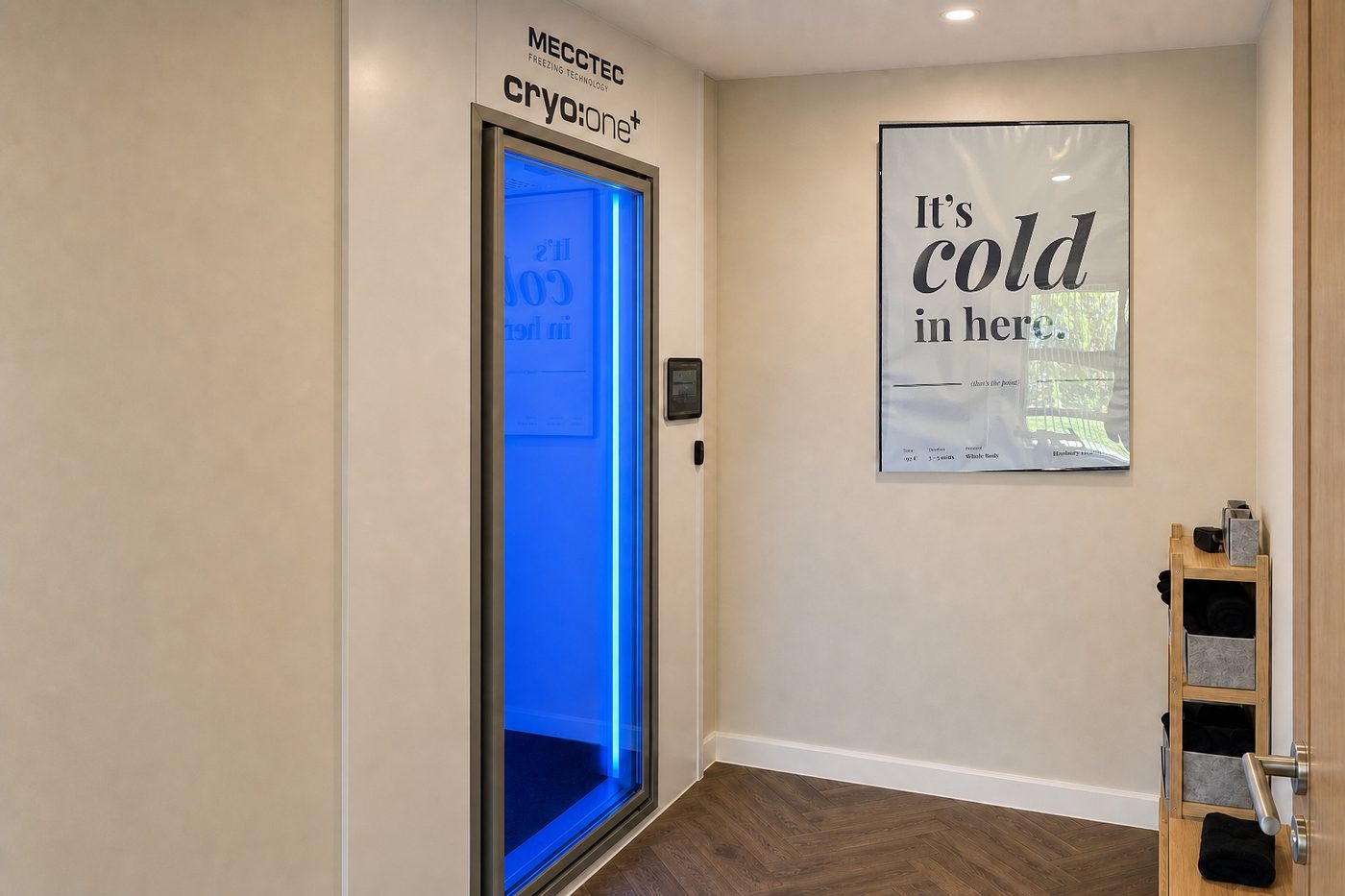
| 1. Cryotherapy | Minus 90C for three to four minutes | A short, sharp cold stimulus that wakes your system up |
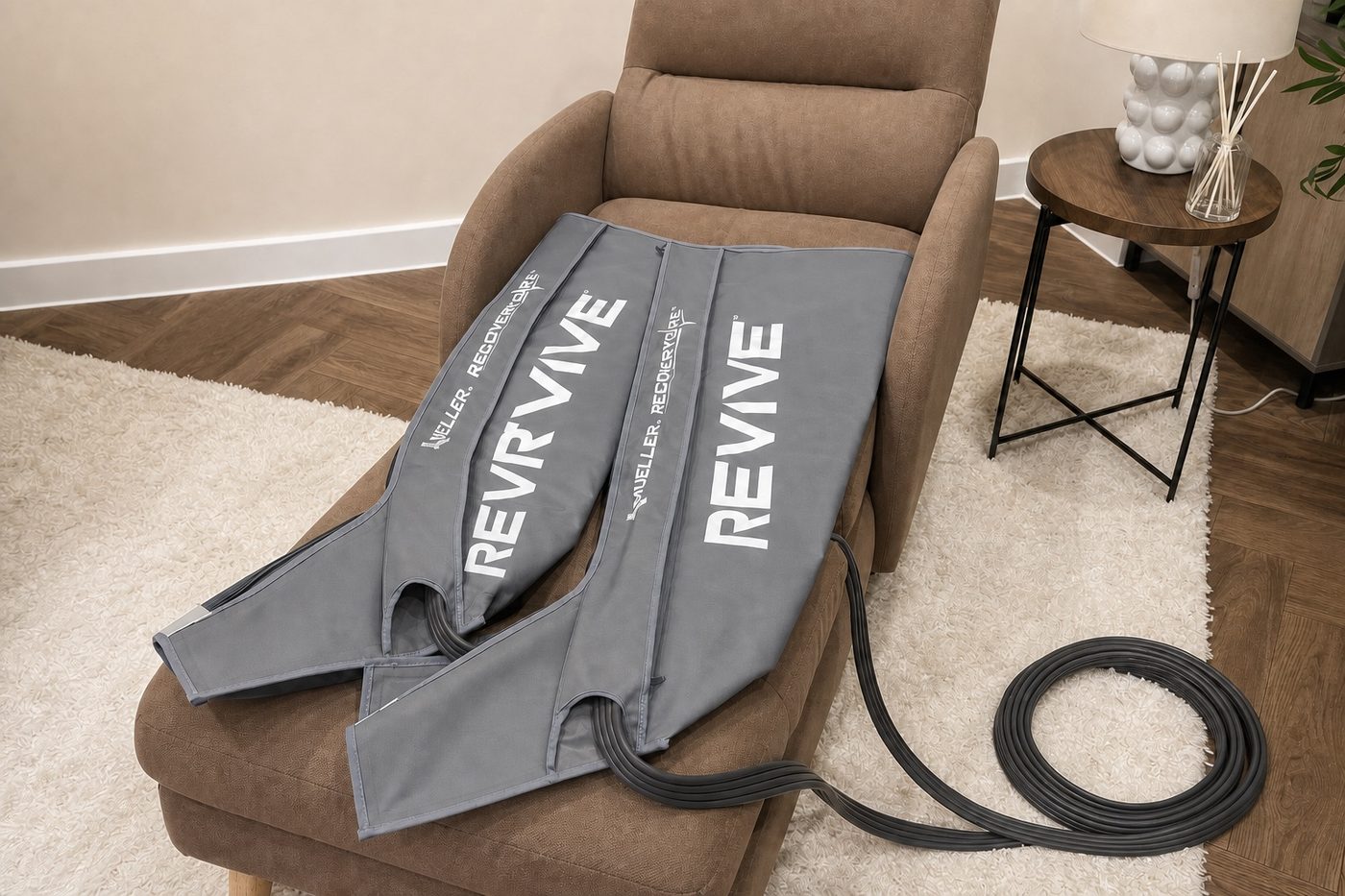
| 2. Compression boots | Sequential pneumatic compression from the feet upward | Flushing out heaviness in tired legs |
| 3. The Shiftwave chair | Pressure waves, gentle vibration and breathing cues | Guided nervous-system down-regulation |
The order matters. Starting brisk and finishing calm gives your body a clear before-and-after to notice, rather than one vague, pleasant hour. Read more in our guide to what a Recovery Circuit visit includes.
Can infrared sauna and contrast therapy help me switch off too?
Yes, in a slower, warmer way. Infrared sauna followed by a precisely timed ice shower, what we call contrast therapy, works on the same nervous system as the Shiftwave chair but through heat and cold rather than pressure and vibration.
A well-known review of the evidence on sauna bathing, published in Mayo Clinic Proceedings in 2018, points to changes in autonomic nervous system activity, your body's automatic switch between alert and calm, as one of the mechanisms behind sauna's wider effects on wellbeing. It is a gentler route into the same territory as the Shiftwave chair, less immediate, more of a slow unwind. Some people prefer to build a session around this instead. Read more in our guides to the benefits of an infrared sauna and what contrast therapy involves.
There is also a genuine link between how settled your nervous system is and how well you sleep. Research in the International Journal of Environmental Research and Public Health (2022) found that people under stress showed measurably different overnight heart rate patterns, with poorer sleep quality tracking alongside a more on-edge nervous system. It is a two-way relationship, and anything that reliably interrupts that loop, even for an hour, is worth having in your toolkit.
Where can you find recovery therapy for sleep and stress in Milton Keynes?
The recovery suite at Hanbury Health is based in Milton Keynes and was built with this kind of visit in mind as much as for people training for an event. If you are searching for somewhere in Milton Keynes to properly switch off, the recovery suite is set up for that, with no experience of recovery therapy needed.
We see people from right across Milton Keynes and the surrounding areas, usually somewhere in their late thirties to sixties, working through a demanding stretch of life rather than an injury or a training plan. For a broader sense of who visits and why, see our overview of recovery therapy in Milton Keynes.
How much does it cost, and how do you book?
The £75 Recovery Circuit is the natural place to start: a single guided visit through cryotherapy, compression boots and the Shiftwave chair, with one of our experts alongside you throughout, so there is no guesswork about what to do or in what order. It is designed to be low-commitment. One visit is enough to feel whether it works for you, with no obligation to come back on a set schedule.
If you do want to make it a regular part of your routine, our guide on how often to do the Recovery Circuit has sensible starting points. If you would rather try the Shiftwave chair or the sauna and contrast setup on its own first, both can be booked individually too.
Why Hanbury Health is different
At Hanbury Health, recovery is one of six pillars in a whole-person plan, sitting alongside movement, strength, nutrition and sleep, the things that actually shape how you feel day to day.
That matters here because a session on the Shiftwave chair is treated as one part of how your whole system copes with a demanding stretch of life, whether or not you have set foot in a gym that week. Whether you are dealing with disturbed sleep, a wound-up nervous system, or the quieter effects of a hard few months, recovery therapy is a legitimate pillar in its own right, whether or not you train. That is why the Recovery Circuit is built to be approachable from a standing start, with no fitness background needed and no pressure to make it a habit before you have even tried it once.
Frequently asked questions
Is the Shiftwave chair the same as a massage chair?
Not quite. A massage chair works your muscles. The Shiftwave chair is built around guided breathing alongside pressure waves and vibration, aiming at your nervous system state rather than muscle tension specifically.
Will one session actually make a difference, or do I need to come regularly?
Most people notice something after a single session, particularly through the Shiftwave chair. Some use it as an occasional reset, others build it into a regular routine. There is no minimum commitment.
I do not exercise much. Is recovery therapy still for me?
Yes. This is exactly who the £75 Recovery Circuit and the Shiftwave chair are for. You do not need to train, or even be particularly active, to have a nervous system stuck in on mode.
How is this different from your post about recovering after a workout?
Our guide on how to recover faster after a workout covers sleep, nutrition and training load for people training hard. This article is for a different reader, someone whose nervous system feels wound up from ordinary life, not from exercise.
Is there anything that means I should not try the Shiftwave chair or contrast therapy?
If you have a cardiovascular condition, are pregnant, or have a condition affecting circulation or temperature regulation, speak to our experts before booking so they can advise on what is suitable, particularly for the cold and heat elements of contrast therapy and cryotherapy.
Where in Milton Keynes is the recovery suite, and do I need to book ahead?
The recovery suite at Hanbury Health is in Milton Keynes and all sessions, including the Recovery Circuit, are booked in advance, so each visit is properly guided from the start.
Can I try just the Shiftwave chair without doing the full Recovery Circuit?
Yes, it can be booked on its own. Many people start this way if sleep and stress are the main concern, though the full £75 Recovery Circuit is worth trying too.
References
- Low-frequency vibration and heart rate variability: effects on autonomic balance. Frontiers in Sports and Active Living, 2025.
- Laukkanen JA, Laukkanen T, Kunutsor SK. Cardiovascular and other health benefits of sauna bathing. Mayo Clinic Proceedings, 2018.
- Stress, overnight heart rate patterns and sleep quality. International Journal of Environmental Research and Public Health, 2022.
Ready to put this into practice?
About the author: Prof Arul Ramasamy is a consultant orthopaedic surgeon and a founder of Hanbury Health. He holds a PhD in bioengineering from Imperial College London, where he is a Visiting Professor, and is a Fellow of the Royal College of Surgeons (Trauma and Orthopaedics). He leads Hanbury's approach to recovery, performance and long-term health.
General information, not medical advice. Written by Prof Arul Ramasamy. Medically reviewed by Prof Arul Ramasamy MA PhD MBA FRCS(Tr+Orth). Last reviewed: 19 August 2026.
Related insights
Recovery
Compression boots or the Shiftwave chair: which do you actually need?
Heavy legs point to the compression boots, a wired nervous system to the Shiftwave chair. How to tell, and why the £75 circuit covers both.
Ramasamy8 min readRead the article
Recovery
How often should you do the Recovery Circuit, and how do you build it into a routine?
Once or twice a week suits most people. How to find your own rhythm with the £75 Recovery Circuit, and when to add the rest of the suite.
Ramasamy8 min readRead the article
Recovery
What does a Hyrox-specific recovery routine actually look like in Milton Keynes?
Match what you feel after a Hyrox race to the right tool: heavy legs, a wired nervous system, localised DOMS and cumulative training-block fatigue.
Ramasamy9 min readRead the article
Stay informed
More from the Hanbury team.
New articles on recovery, movement, physiotherapy and performance, sent when there's something worth reading. No spam, unsubscribe any time.