
Recovery
Who is recovery therapy actually for in Milton Keynes?
The short version
- Recovery therapy is for anyone who wants to feel less stiff, sleep better, or move more freely, not only people in training.
- Most people who use Hanbury Health's recovery suite are managing an old injury, a demanding period of life, or general fatigue, rather than preparing for an event.
- You do not need any fitness background, sporting history, or existing injury to try it. Curiosity is a good enough reason.
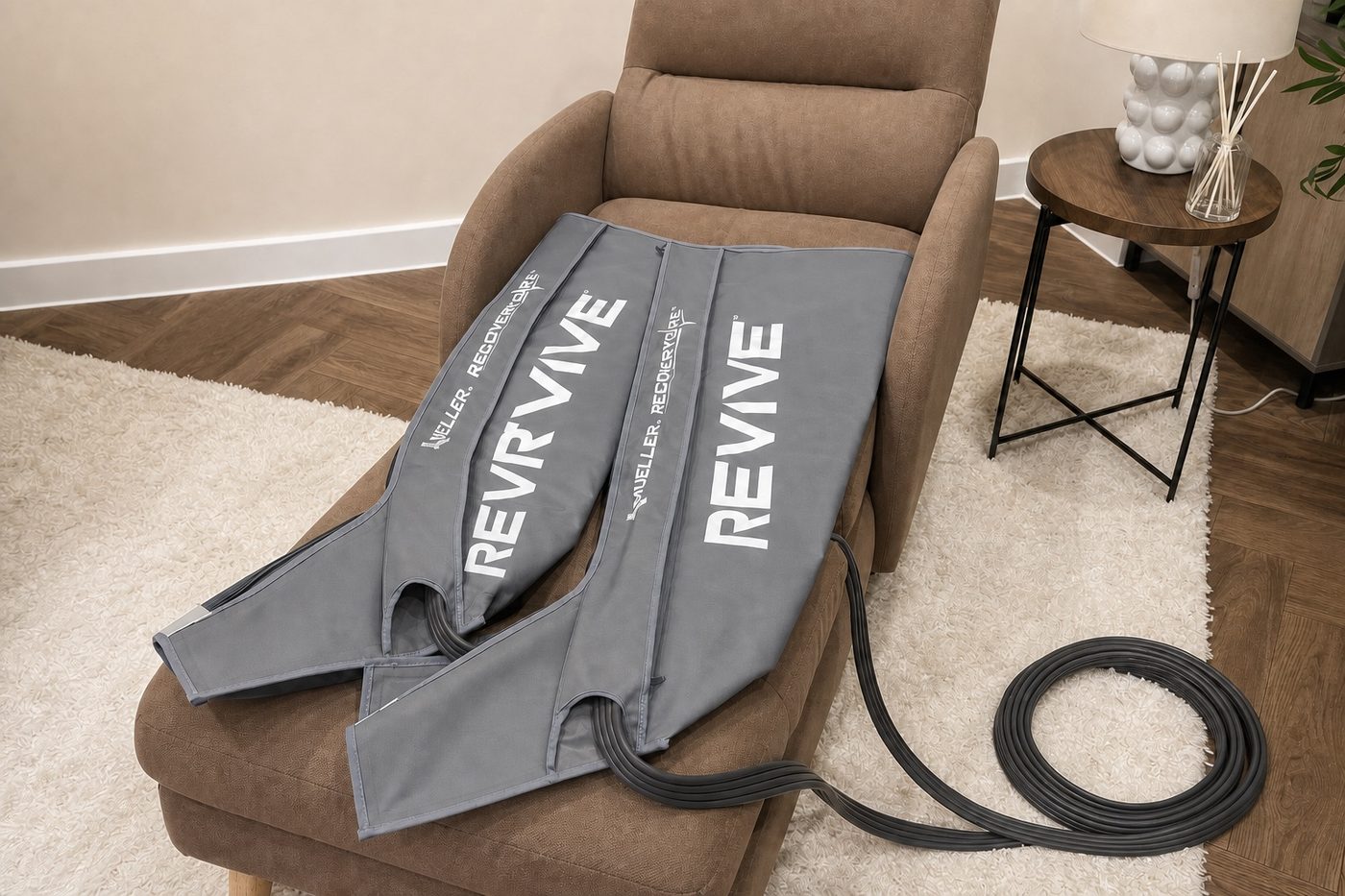
- The recovery suite's seven systems, including cryotherapy, compression boots, and the Shiftwave chair, are used by everyone from first-timers to competitive athletes.
- There is a genuinely low-commitment way to try it: one guided visit, before you decide whether it is for you.
- Hanbury Health's wider team means whatever recovery uncovers does not get lost. It feeds into your physiotherapy, movement, or wellbeing picture too.
If you have walked past Hanbury Health's recovery suite and assumed it is a place for people training for Hyrox or chasing a marathon PB, you are only seeing part of the picture. Recovery therapy is for anyone who wants to move without pain, sleep properly, or simply feel more like themselves again, whatever brought you to that point.
Most people who use Hanbury Health's recovery suite are somewhere between their late thirties and their sixties. Many are working through something that has settled in over time: an old injury that keeps reappearing, a joint or area of the back that no longer tolerates what it used to, or the quieter shifts that come with a demanding stretch of life, work, family, sleep that is not what it was. None of that requires a race number or a training plan. It just requires a body you would like to feel better in.
That said, Hanbury Health also has a genuinely strong Hyrox and serious-amateur-athlete community, and the recovery suite works hard for them too. The point of this article is simple: you do not have to be one of them to belong here. The same seven systems that help someone recover from a heavy training block also help someone recover from a long week, an old injury, or a period of life that has taken more out of them than usual.
Do you have to be an athlete to use recovery therapy?
No. Recovery therapy was developed and studied largely in sport, so it is understandable that the language around it (recovery, training load, muscle soreness) sounds like it belongs to athletes. But the tools themselves do not care why your body is tired or tight.
Cold exposure, compression, and gentle mechanical movement all work on the same basic systems in everyone: circulation, muscle tension, and the nervous system's ability to switch out of "on" mode. Those systems do not know whether the tightness in your shoulders came from a deadlift or a desk.
If you have never done a structured workout in your life but you are dealing with a stiff back most mornings, or you finish most weeks feeling wrung out rather than simply tired, recovery therapy is built for you as much as for anyone training for a race.
Is recovery therapy just for muscle soreness after training?
It helps with that too, but it is not the whole story. Some of the most requested reasons people come to Hanbury Health's recovery suite have nothing to do with a workout at all: an old joint that flares up in certain weather, a back that is never quite settled since an injury years ago, or simply wanting to switch off properly for forty minutes without a phone in hand.
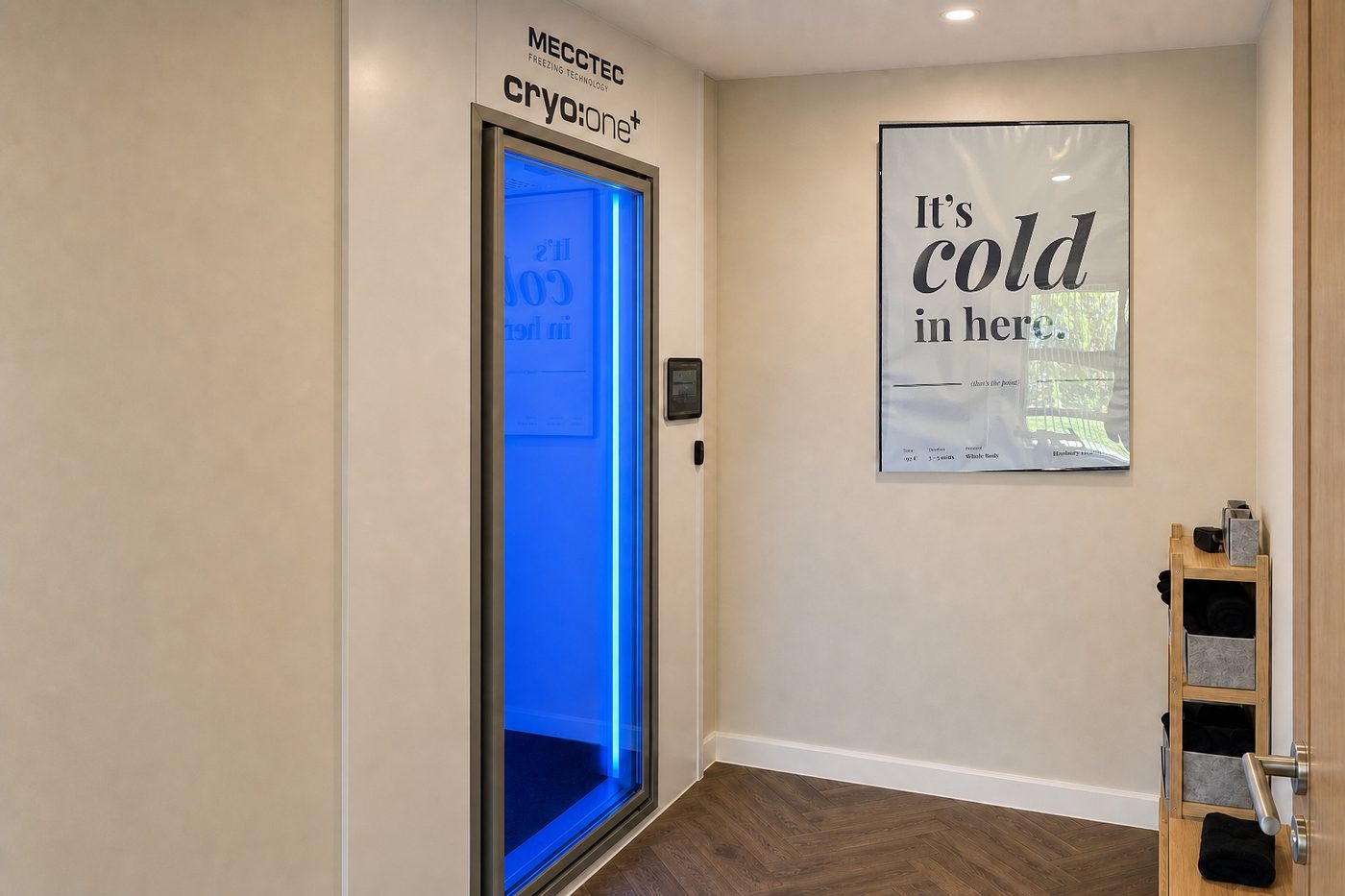
The evidence on some of these tools is honest about where it is strong and where it is still developing. A 2015 Cochrane review looked at whole-body cryotherapy for muscle soreness and found the research so far, mostly in young, physically active men, was not conclusive enough to say cold exposure definitely reduces soreness, though many people report feeling less sore and more able to move afterwards. Compression is on steadier ground: a widely cited meta-analysis in the British Journal of Sports Medicine found compression garments gave a moderate but real benefit to muscle recovery and reduced the severity of post-exercise soreness. Neither of these tells you recovery therapy is only useful after training. They tell you the tools do something real to muscle, circulation, and how sore or heavy a body feels, and that applies whether the tiredness came from a gym session or from simply getting through a hard week.
If soreness after training is specifically what you are dealing with, our guide to the best recovery therapy for DOMS compares the options side by side.
What can recovery therapy help with if you are not training for anything?
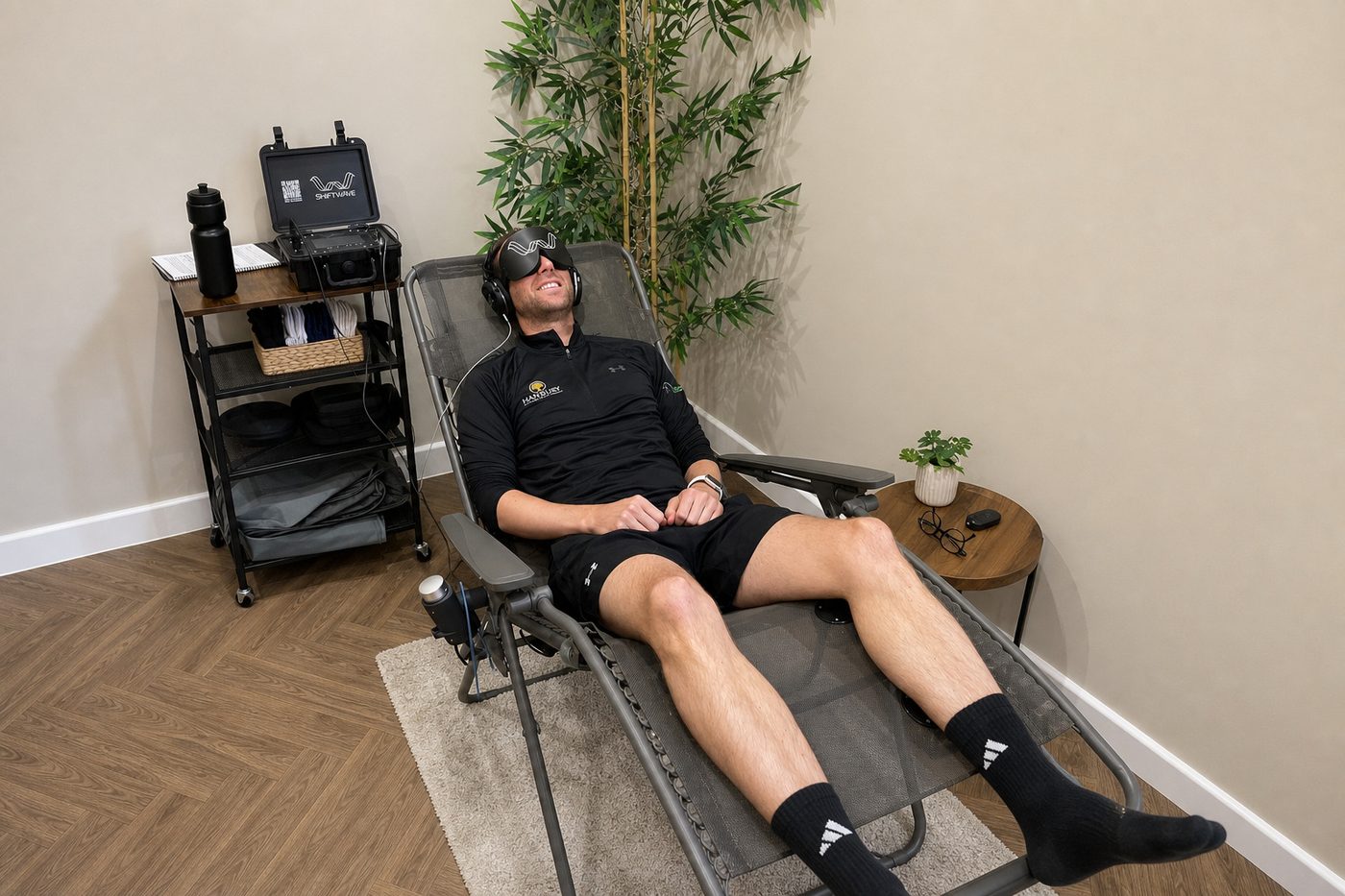
Plenty. People come in for an old injury that has started acting up again, a joint or area of the back that does not tolerate what it used to, general fatigue that sleep alone has not fixed, or just wanting a proper way to unwind. The Shiftwave chair and infrared sauna, in particular, are popular with people who are not training at all. They are simply looking for forty minutes where their body gets to properly stand down.
If sleep and stress are your main reason for being curious, it is worth reading about recovery therapy for sleep and stress, which goes into that side in more depth.
Where can you try recovery therapy in Milton Keynes?
Hanbury Health's recovery suite in Milton Keynes is one of the few places locally where you can access all seven systems, whole-body cryotherapy, compression boots, the Shiftwave chair, contrast therapy, mild hyperbaric oxygen with molecular hydrogen, a medical-grade red light bed, and a lymphatic drainage compression suit, in a single visit, guided by the same team. For a fuller picture of what is on offer and how it works, see the main recovery therapy in Milton Keynes page.
You do not need to know which of the seven systems you want before you arrive. Most first-time visitors do not. Part of the experts' job is helping you work out what your body actually needs, not steering you toward whatever is busiest that day.
How much does recovery therapy cost, and how do you start?
Wherever you are starting from, whether that is your first time hearing the word "cryotherapy" or you have been doing Hyrox for years, the entry point is the same: the £75 Recovery Circuit. It is one guided visit through cryotherapy, compression boots, and the Shiftwave chair, with an expert alongside you the whole way. There is no membership to sign up for and no pressure to book anything else afterwards.
If you decide you would like to come back, you can book individual sessions or explore the other systems, at your own pace, through the recovery suite at Hanbury Health. Some people come once and feel that is enough for now. Others build it into a regular rhythm, especially if they are managing something ongoing like an old injury or a demanding period of life. Either is a reasonable way to use it. If you want a steer on frequency, how often to use the Recovery Circuit covers that in more detail, and if you are curious what the Circuit itself actually involves, the benefits of the Recovery Circuit is worth a read too.
Why Hanbury Health is different
At Hanbury Health, recovery is not treated as something separate from the rest of you. Whatever brought you through the door, physiotherapy for a niggling shoulder, a movement class, or plain curiosity about what a cryotherapy chamber actually feels like, you are seen by the same team.
That matters more than it might sound. If a session in the recovery suite tells the team something useful, that your hip is tighter on one side, that you are holding tension somewhere unexpected, that an old injury is still affecting how you move, it does not stay locked inside one appointment. It feeds into the fuller picture the team already has of you, whether that is your physiotherapy plan, your movement classes, or simply a conversation about what to try next.
Your recovery session connects into a team that is already looking at the whole of you, so it feeds into that wider picture as a genuine part of it.
Frequently asked questions
Do I need to be fit or a regular exerciser to use the recovery suite?
No. Plenty of people who use Hanbury Health's recovery suite do not train at all. They are there for an old injury, general fatigue, or because they want a proper way to unwind. Fitness is not a requirement.
Is recovery therapy safe if I have an old injury or a health condition?
Most of the systems are gentle and low-risk, but some, particularly whole-body cryotherapy and the hyperbaric chamber, are not suitable for everyone, including people who are pregnant, have certain heart or circulation conditions, or specific respiratory issues. The team will talk through your history before your first visit so the right systems are chosen for you.
What is the easiest way to try recovery therapy for the first time?
The £75 Recovery Circuit is designed exactly for this. It is one guided visit through cryotherapy, compression boots, and the Shiftwave chair, so you can find out what it actually feels like before deciding whether to come back.
Can recovery therapy help with poor sleep or feeling constantly tired, even without an injury?
Yes, this is one of the most common reasons people book who have nothing to do with sport. Many describe sleeping more soundly and feeling calmer after sessions, particularly with the Shiftwave chair, contrast therapy, and the infrared sauna.
Is recovery therapy only useful for muscle soreness after a workout?
No. It is also used for older injuries that flare up, general stiffness, joints that do not tolerate what they used to, and simply wanting to feel more like yourself.
Where in Milton Keynes can I access all seven recovery systems in one place?
Hanbury Health's recovery suite in Milton Keynes brings whole-body cryotherapy, compression boots, the Shiftwave chair, contrast therapy, mild hyperbaric oxygen with molecular hydrogen, a medical-grade red light bed, and a lymphatic drainage compression suit together in one guided visit, rather than needing separate appointments across the city.
Do serious athletes and Hyrox competitors still use the recovery suite?
Yes, Hanbury Health has a genuinely strong Hyrox and serious-amateur-athlete community who use the recovery suite regularly. But that community exists alongside, not instead of, everyone else who is there for an old injury, general fatigue, or simply wanting to feel better.
References
Ready to put this into practice?
About the author: Prof Arul Ramasamy is a consultant orthopaedic surgeon and a founder of Hanbury Health. He holds a PhD in bioengineering from Imperial College London, where he is a Visiting Professor, and is a Fellow of the Royal College of Surgeons (Trauma and Orthopaedics). He leads Hanbury's approach to recovery, performance and long-term health.
General information, not medical advice. Written by Prof Arul Ramasamy. Medically reviewed by Prof Arul Ramasamy MA PhD MBA FRCS(Tr+Orth). Last reviewed: 19 August 2026.
Related insights
Recovery
Compression boots or the Shiftwave chair: which do you actually need?
Heavy legs point to the compression boots, a wired nervous system to the Shiftwave chair. How to tell, and why the £75 circuit covers both.
Ramasamy8 min readRead the article
Recovery
How often should you do the Recovery Circuit, and how do you build it into a routine?
Once or twice a week suits most people. How to find your own rhythm with the £75 Recovery Circuit, and when to add the rest of the suite.
Ramasamy8 min readRead the article
Recovery
What does a Hyrox-specific recovery routine actually look like in Milton Keynes?
Match what you feel after a Hyrox race to the right tool: heavy legs, a wired nervous system, localised DOMS and cumulative training-block fatigue.
Ramasamy9 min readRead the article
Stay informed
More from the Hanbury team.
New articles on recovery, movement, physiotherapy and performance, sent when there's something worth reading. No spam, unsubscribe any time.