
Recovery
What is contrast therapy, and how do you do it well?
The short version
- Heavy legs, stiff shoulders and a foggy head tend to feel noticeably lighter by the time you leave.
- Many people find sleep comes more easily on the nights they have done a contrast session.
- You get a real sense of calm alongside the physical reset, not just a shock of cold.
- It works as well for someone easing out a demanding week as it does for an athlete after a hard session.
- You are never left guessing at water temperature or timing, someone experienced runs the session with you.
- It is a next step, not a first one. It sits alongside simpler options like the £75 Recovery Circuit, so you can build up at a pace that suits you.
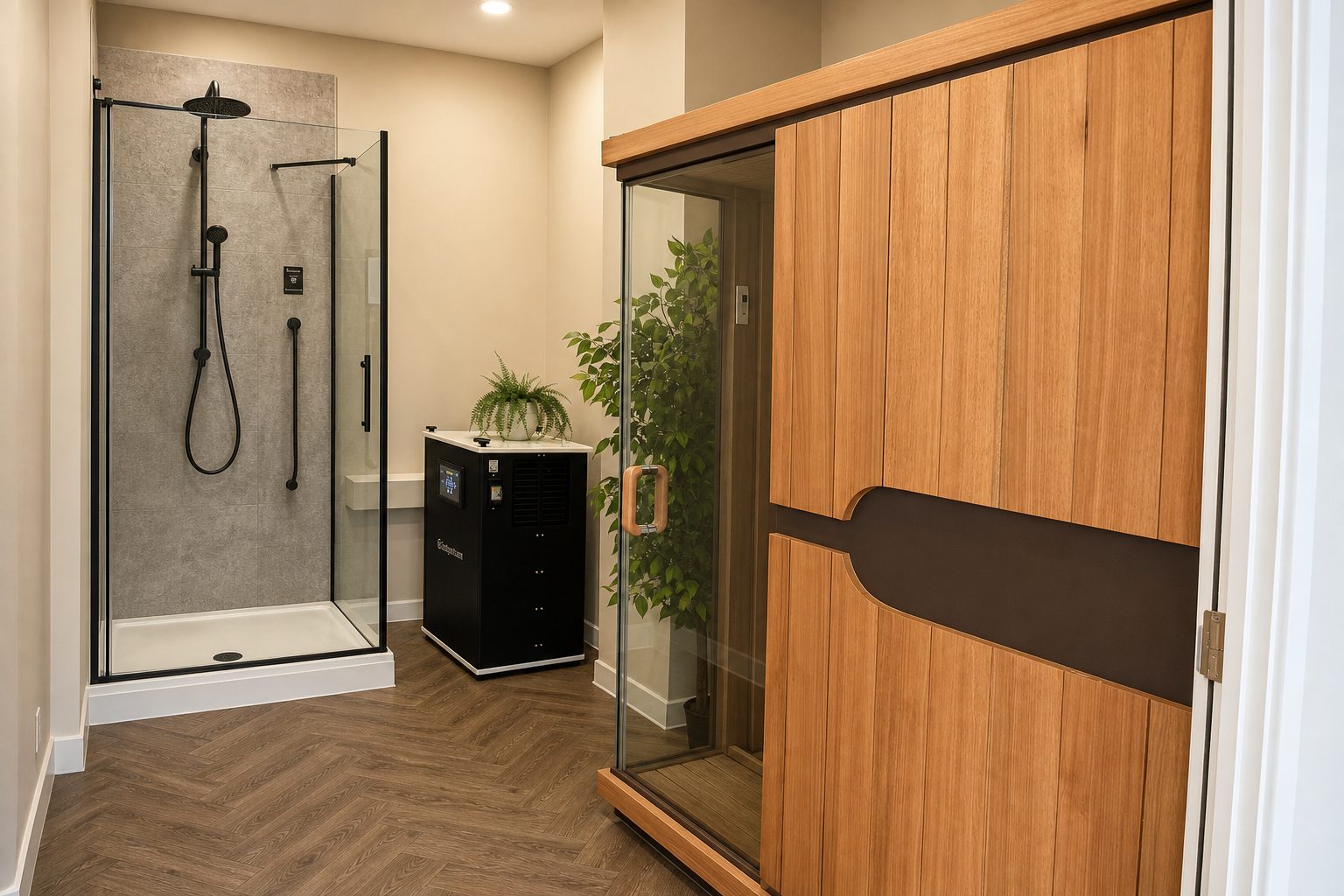
You step out of the heat and straight into the cold, and for a moment your whole body seems to reset. That is contrast therapy: moving between hot and cold in a deliberate order, so your circulation, your muscles and your nervous system all get a turn at settling down. At Hanbury Health, that means time in the infrared sauna followed by a precisely timed ice shower, guided rather than left to guesswork.
If you have ever finished a hot bath with a blast of cold water and felt strangely alert and calm at the same time, you have had a small taste of what contrast therapy is trying to do on purpose.
What is contrast therapy, exactly?
Contrast therapy means alternating heat and cold in a set pattern. At Hanbury Health, that is a spell in the infrared sauna to raise your core temperature and get your circulation moving, followed by a short, precisely timed ice shower to bring it back down sharply.
The order and the timing matter. Heat first widens your blood vessels and relaxes muscle tissue. The cold that follows makes them contract again. That back-and-forth is the whole point, it is a kind of gentle training for your circulation and your nervous system, done in a way that feels intense in the moment and genuinely restful afterwards.
It is a different tool to whole-body cryotherapy, which is a short, sharp cold exposure on its own with no heat phase. If you are not sure which one your body needs, our guide to whole-body cryotherapy and our DOMS decision guide both walk through how to choose.
How does sauna and cold shower recovery actually work?
The heat phase does a lot of the early work. Time in the infrared sauna raises your skin and core temperature, opens up blood vessels near the surface, and gets blood moving to muscles that have been under load. It is also simply relaxing, in a way that starts to quiet a busy nervous system before the cold phase even begins. Our article on the benefits of an infrared sauna goes into the heat side on its own, if that is the part you are most curious about.
Then comes the shift. The cold shower that follows is short and precisely timed, not a test of endurance. Cold causes blood vessels to narrow again quickly, which is thought to help flush out some of the by-products of hard training and encourages fresh, oxygen-rich blood back into the tissue once you warm up again. People often describe the moment after stepping out as unusually clear-headed and calm, which lines up with what is known about how cold exposure affects the nervous system more broadly.
| Phase | What happens | What it is for |
|---|---|---|
| Infrared sauna | Core and skin temperature rise, blood vessels widen | Blood flow to working muscle, and a slower, calmer starting point |
| Timed ice shower | A short, controlled cold exposure, vessels narrow again | The contrast itself, plus the clear-headed feeling afterwards |
| Rewarming | Fresh, oxygen-rich blood returns to the tissue | The settled, lighter feeling most people leave with |
A good contrast session is guided, so the temperatures and timings do the work for you. There is no willpower or gritted-teeth toughing out involved.
What are the benefits of contrast therapy?
Most people come to contrast therapy wanting one of two things: their body to feel less battered after training, or their mind and sleep to settle after a demanding stretch of life. It can help with both, though it is worth being honest about where the evidence is strongest.
A 2017 systematic review and meta-analysis in the Journal of Strength and Conditioning Research looked at cold water immersion and contrast water therapy after team sport. It found real benefit for how recovered people felt, with less perceived fatigue at 24 to 72 hours, and for some performance markers such as jump and sprint recovery at 24 hours. Interestingly, the same review found neither approach reliably reduced how sore people's muscles actually felt, even when other markers improved. Contrast therapy tends to help you feel more recovered and ready to go again. It is less reliable at curing soreness outright.
The heat side has its own evidence base. A 2018 review in Mayo Clinic Proceedings, drawing largely on Finnish research into regular sauna bathing, links consistent sauna use with favourable effects on circulation and cardiovascular markers over time. That is about sauna use built up over months and years, rather than proof that one session changes your heart health, and the authors were clear that some areas still need more research.
Put simply: the heat and cold together give a strong subjective lift, better perceived recovery, better sleep, a calmer nervous system, and a circulatory habit that is well supported for sauna use on its own. Stay a little more sceptical of the muscle soreness claim specifically, we would rather tell you that than oversell it. Our guide to how to recover faster after a workout puts it in the context of sleep, food and training load.
Is contrast therapy safe for everyone?
For most healthy adults, yes, and it is a genuinely pleasant experience once you are used to it. But cold exposure is not neutral for your body. Stepping into cold water or a cold shower triggers what is known as the cold shock response: your heart rate and blood pressure both rise sharply and your breathing quickens. The British Heart Foundation is clear that this is a real physiological event, and that anyone with an existing heart condition should talk to their doctor or specialist nurse before trying cold water exposure.
That is exactly why a guided setting matters. If you are pregnant, have a heart condition, uncontrolled blood pressure, Raynaud's, or you are recovering from illness or surgery, contrast therapy needs a conversation first, not a guess. Our experts will talk this through with you before your first session, and adjust or hold off where needed.
Where can you do contrast therapy in Milton Keynes?
The recovery suite at Hanbury Health in Milton Keynes has contrast therapy as one of seven recovery systems available to book individually, alongside whole-body cryotherapy, compression boots, the Shiftwave chair, mild hyperbaric oxygen therapy, a medical-grade red light bed, and a lymphatic drainage compression suit. You can read about the full suite and its pricing on our recovery therapy in Milton Keynes page.
Plenty of people training for a Hyrox event, or simply working through a demanding block of training in and around Milton Keynes, use contrast therapy as part of a wider recovery routine rather than a one-off treat. If heavy legs are your main complaint, our guide to what compression boots are used for is worth reading alongside this one.
How much does contrast therapy cost, and how do you book it?
Contrast therapy is booked separately from the £75 Recovery Circuit. The Circuit, cryotherapy, compression boots and the Shiftwave chair, in that order, in one guided visit, is the accessible way in, and a good way to see how your body responds to structured cold before adding contrast therapy or any of the other extended suite options.
Contrast therapy, along with mild hyperbaric oxygen therapy, the red light bed and the lymphatic drainage suit, sits in the extended suite and is bookable on its own. Everything is laid out clearly at the point of booking, so you always know exactly what you are paying for and what a session involves before you commit. For full detail on how the £75 Circuit works and how it fits with the rest of the suite, see our Recovery Circuit benefits article.
Why Hanbury Health is different
Plenty of people try a version of contrast therapy at home already, a hot shower followed by a blast of cold, or a sauna session followed by a dip in an outdoor pool. There is nothing wrong with that as a starting point. What is harder to get from a do-it-yourself setup is someone who actually knows your history looking over your shoulder.
At Hanbury Health, contrast therapy sits inside a wider team of experts, not a single piece of equipment in a corner. That means if something comes up, a blood pressure reading that is higher than expected, a heart condition you mention in passing, a joint that is clearly still angry from last week, it does not get missed. It gets flagged, and your session gets adjusted around it, by people trained to notice.
The difference is a team of experts who catch things a single-discipline setup would miss, and build your sessions around you.
Frequently asked questions
How long does a contrast therapy session take?
A guided session typically runs for around 20 to 30 minutes in total, including time in the infrared sauna and the timed cold shower phase. Your first visit may run a little longer while an expert talks you through what to expect.
Is contrast therapy the same as the £75 Recovery Circuit?
No. The £75 Recovery Circuit is cryotherapy, compression boots and the Shiftwave chair, in that order, in one guided visit. Contrast therapy, sauna followed by a timed ice shower, is a separate, stand-alone booking in the extended recovery suite.
Can I do contrast therapy if I have high blood pressure or a heart condition?
You should talk to your doctor or specialist nurse first, and let our experts know before your session. Cold exposure raises heart rate and blood pressure sharply for a short time, which matters if you have an existing cardiovascular condition.
Will contrast therapy get rid of muscle soreness after a hard workout?
It can help you feel more recovered and ready to move again, and it supports your circulation and nervous system. The research is more mixed on whether it directly reduces how sore your muscles feel, so it is best thought of as one part of a wider recovery routine rather than a fix on its own.
How often should I do contrast therapy?
This depends on what you are training for and how your body responds. Some people find once a week fits well around a normal training load, others use it more often during a heavy block. An expert can help you build a rhythm that suits you.
Is there somewhere to do contrast therapy in Milton Keynes without a long-term commitment?
Yes. The recovery suite at Hanbury Health in Milton Keynes lets you book contrast therapy, or any of the seven recovery systems, as a single session. There is no requirement to sign up to anything ongoing.
What should I wear or bring?
Swimwear and a towel are all you need. Bring a bottle of water too, since good hydration makes both the heat and cold phases more comfortable.
References
- Higgins TR, Greene DA, Baker MK. Effects of Cold Water Immersion and Contrast Water Therapy for Recovery From Team Sport: A Systematic Review and Meta-analysis. Journal of Strength and Conditioning Research, 2017;31(5):1443-1460.
- Laukkanen JA, Laukkanen T, Kunutsor SK. Cardiovascular and Other Health Benefits of Sauna Bathing: A Review of the Evidence. Mayo Clinic Proceedings, 2018;93(8):1111-1121.
- British Heart Foundation. Cold water swimming and your heart.
Ready to put this into practice?
About the author: Prof Arul Ramasamy is a consultant orthopaedic surgeon and a founder of Hanbury Health. He holds a PhD in bioengineering from Imperial College London, where he is a Visiting Professor, and is a Fellow of the Royal College of Surgeons (Trauma and Orthopaedics). He leads Hanbury's approach to recovery, performance and long-term health.
General information, not medical advice. Written by Prof Arul Ramasamy. Medically reviewed by Prof Arul Ramasamy MA PhD MBA FRCS(Tr+Orth). Last reviewed: 19 August 2026.
Related insights
Recovery
Compression boots or the Shiftwave chair: which do you actually need?
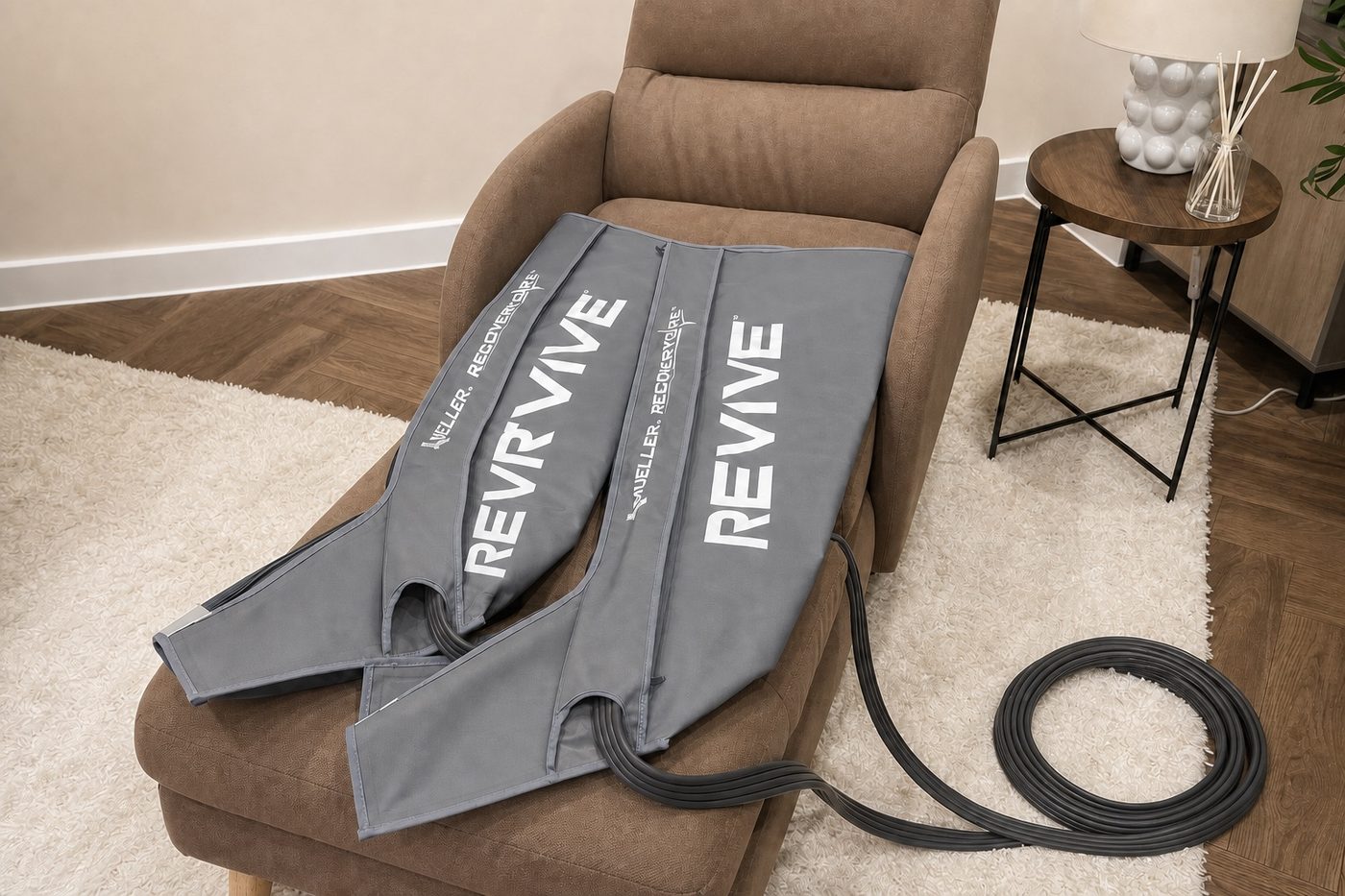
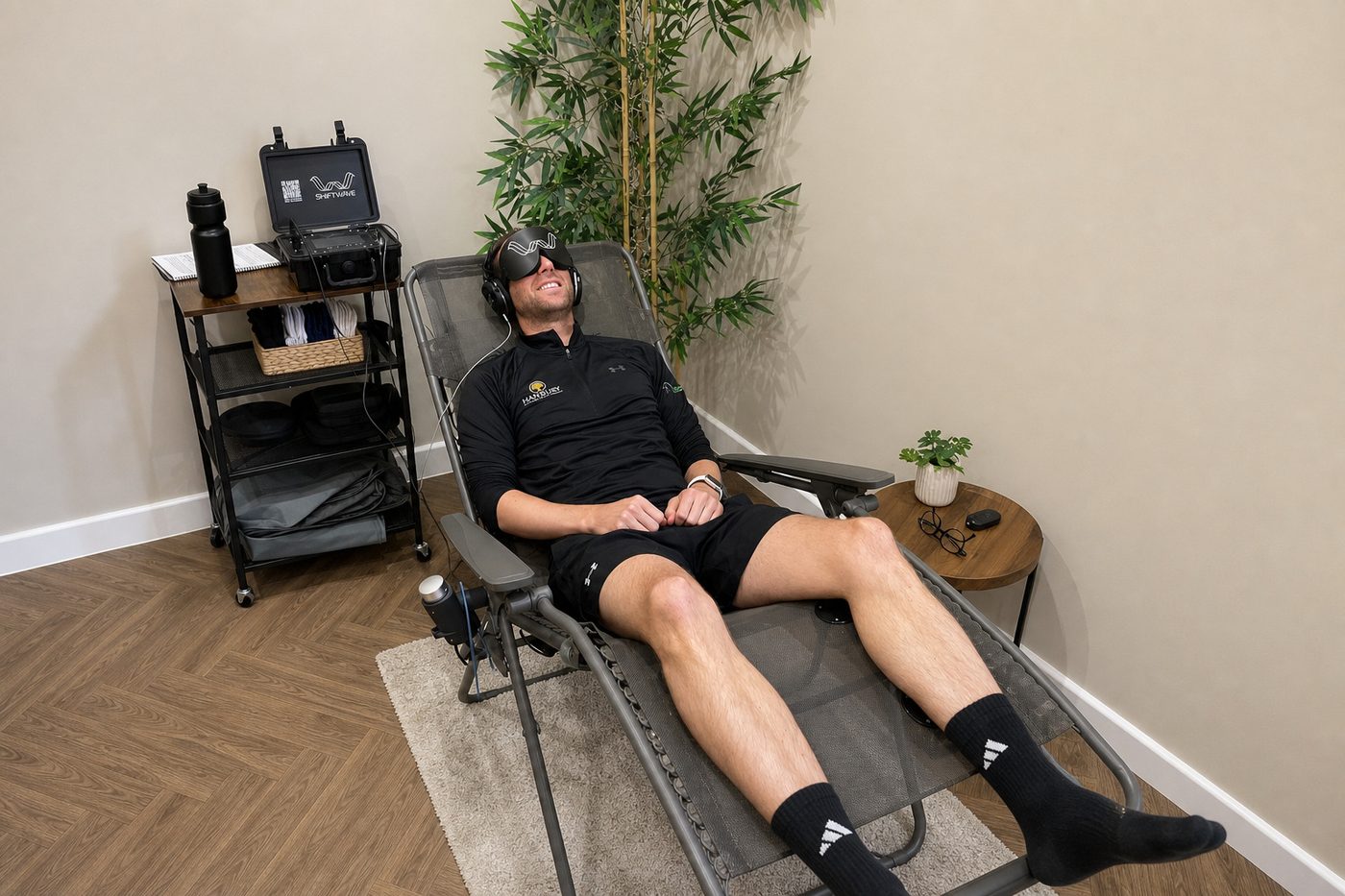
Heavy legs point to the compression boots, a wired nervous system to the Shiftwave chair. How to tell, and why the £75 circuit covers both.
Ramasamy8 min readRead the article
Recovery
How often should you do the Recovery Circuit, and how do you build it into a routine?
Once or twice a week suits most people. How to find your own rhythm with the £75 Recovery Circuit, and when to add the rest of the suite.
Ramasamy8 min readRead the article
Recovery
What does a Hyrox-specific recovery routine actually look like in Milton Keynes?
Match what you feel after a Hyrox race to the right tool: heavy legs, a wired nervous system, localised DOMS and cumulative training-block fatigue.
Ramasamy9 min readRead the article
Stay informed
More from the Hanbury team.
New articles on recovery, movement, physiotherapy and performance, sent when there's something worth reading. No spam, unsubscribe any time.