
Recovery
What are compression boots, and how do you use them for recovery?
The short version
- Your legs feel noticeably lighter and less swollen straight after a session, often within minutes.
- You sit back, relax, and let the boots do the work. No effort needed from you.
- A session is short, generally 20 to 30 minutes, so it fits around a normal day.
- They are one of three systems in the £75 Recovery Circuit, alongside cryotherapy and the Shiftwave chair.
- You do not need to own a set or travel out of Milton Keynes to try proper sequential compression.
- They are gentle enough for most people, though there are a few situations where they are not right for you.
If your legs feel heavy, tight or just done in after a hard session, compression boots are one of the quickest ways to get that feeling of lightness back. They are inflatable sleeves that wrap around your legs and squeeze in rhythmic waves, working from your feet up towards your hips, and most people notice their legs feel lighter and less tired within minutes of stepping out of them.
They will not undo a hard week of training on their own. But as a way to come down from a heavy session, help tired legs feel like yours again, and give yourself a proper break before you go again, they are one of the simplest tools in the recovery suite.
What are compression boots used for?
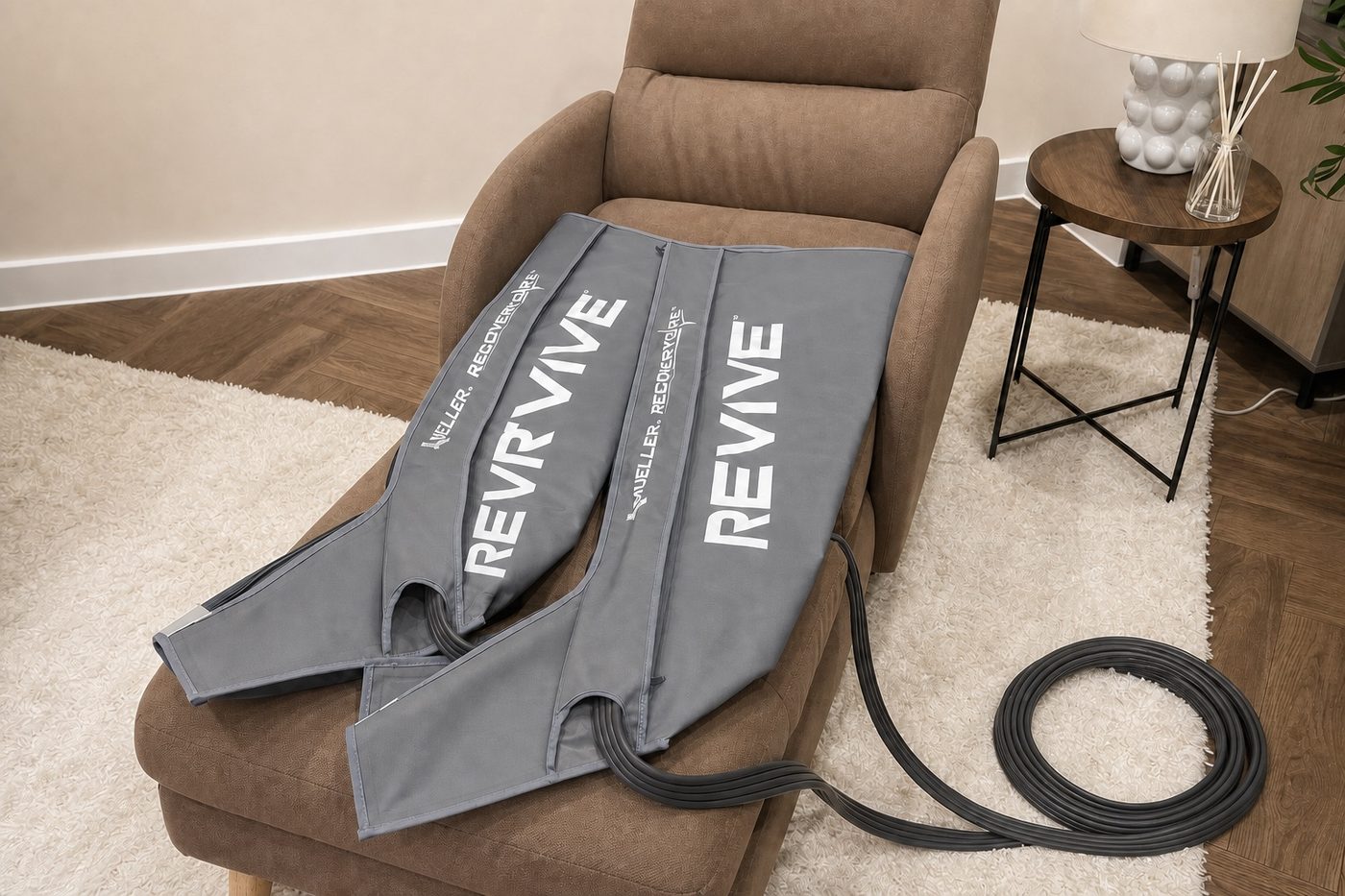
Compression boots (sometimes called pneumatic compression boots or recovery boots) are used to help tired, heavy or swollen legs feel better after exercise, travel, or long periods on your feet. You step into a pair of full-leg sleeves, and an air pump inflates sections of the boot in sequence, starting at your feet and moving up towards your thighs. Each wave squeezes and releases, then the next section fires.
That sequencing matters. It is designed to mimic what your calf and thigh muscles do naturally when you walk, pushing blood and fluid back up towards your heart. After a hard training session, or a day spent mostly sitting or standing still, that natural pumping action can lag behind, and your legs end up feeling puffy, stiff or heavy. The boots pick up where your own muscle pump left off.
At Hanbury Health, people use compression boots after leg day, after a long run, after a Hyrox session, or simply after a demanding week where their legs have not had a proper chance to recover. Plenty of the people who come through the doors are working through something that has settled in over the years, an old injury, a joint that does not move quite like it used to, and the boots are a low-effort way to give those legs a break.
Do compression boots work?
The honest answer is: for some things, yes, quite reliably, and for others, the evidence is still catching up. A 2024 systematic review and meta-analysis in the journal Biology of Sport, pooling 17 studies on lower-limb intermittent pneumatic compression, found a trivial to moderate effect on pain and soreness after exercise, and a trivial to small benefit for muscle function. In plain terms, people generally report feeling less sore and more recovered, even if the effect on measurable strength or power the next day is smaller and less consistent across studies.
That is a fair reflection of what most people notice in the recovery suite too. The immediate feeling, legs that go from heavy to light, is the most reliable benefit. Whether it meaningfully speeds up how fast your muscles physically repair is less settled, and no one at Hanbury Health will tell you otherwise.
The basic mechanism is on firmer ground. Sequential compression genuinely does increase blood flow through the legs, that part is not in dispute, and it is the same principle used in hospitals to help prevent blood clots after surgery. What is still being worked out is how much that translates into faster muscle recovery for someone training hard, rather than someone recovering from an operation.
Compression boots are worth trying because your legs will feel lighter afterwards. They support recovery, but they do not replace the training itself. If you want the wider picture on how they fit alongside sleep, food and sensible training load, our guide to how to recover faster after a workout covers it in more detail.
How do you use compression boots for recovery?
You keep your clothes on and step into the boots, which zip or velcro up your legs. Once you are settled, sequential inflation starts at your feet and works up towards your hips, section by section, in a rolling wave. It feels like a firm, rhythmic squeeze, not painful, more like a deep massage that moves.
A typical session runs around 20 to 30 minutes. You do not need to do anything during that time beyond sit back. Many people use the time to check their phone, close their eyes, or just switch off after training.
| Stage | Roughly how long | What it does |
|---|---|---|
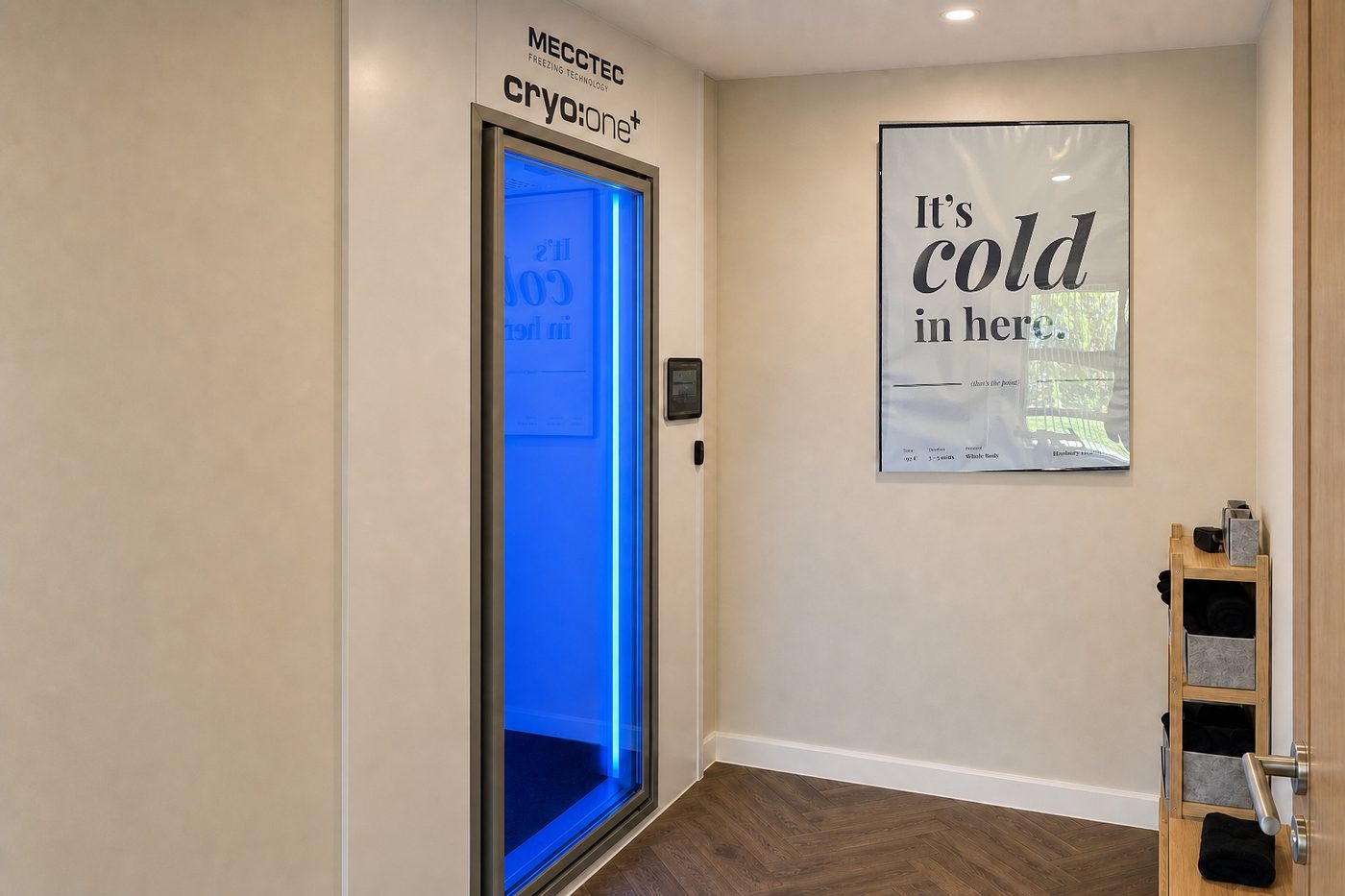
| Whole-body cryotherapy | 2 to 3 minutes | A short, sharp cold exposure to start the visit |
| Compression boots | 20 to 30 minutes | Sequential squeezing moves blood and fluid up out of the legs |
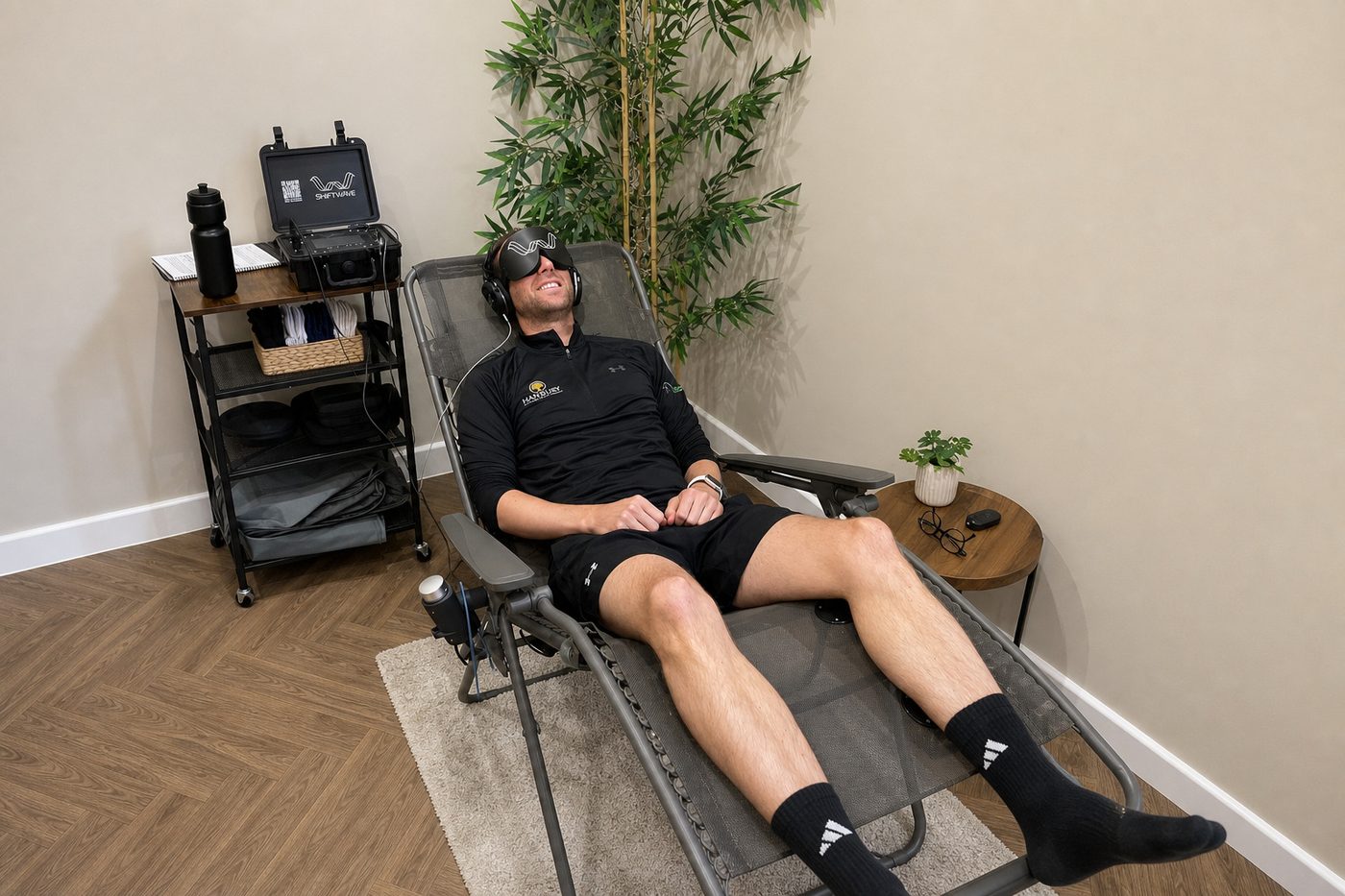
| Shiftwave chair | Around 15 minutes | Paced pressure waves bring your nervous system down a gear |
Within the £75 Recovery Circuit, compression boots come straight after cryotherapy. The cold from the whole-body cryotherapy chamber gives you that sharp anti-inflammatory hit, and then the boots take over, helping move blood and fluid through legs that have just had a jolt of cold exposure. From there you move into the Shiftwave chair to bring your whole nervous system down a gear. It is a deliberate order, built so each stage sets up the next. If you are weighing up the two, our comparison of compression boots and the Shiftwave chair goes further into which suits which kind of tired.
If you are using compression boots on their own instead of through the Circuit, most people find fitting a session in after a heavy leg session, a long run, or a few days of being on their feet works well. As with most recovery tools, more is not automatically better, and there is no need to use them every single day. Using them when your legs actually feel like they need it is a sensible way to approach it.
Where can you try compression boots in Milton Keynes?
You can try proper sequential compression boots at the recovery suite at Hanbury Health in Milton Keynes, without buying your own set or driving out to a bigger city. Sequential pneumatic compression systems of the kind used in sports science and rehab settings are not cheap, and most people will not use one often enough at home to justify owning one.
The recovery suite puts that same standard of equipment within easy reach locally, alongside six other recovery systems: whole-body cryotherapy, the Shiftwave chair, contrast therapy, mild hyperbaric oxygen therapy, a medical-grade red light bed, and a lymphatic drainage compression suit. Read more about the full suite and its pricing on the recovery therapy in Milton Keynes hub page, and about the cold side of the visit in our guide to the benefits of cryotherapy for recovery.
How much do compression boots cost, and how do you book?
The simplest way to try compression boots at Hanbury Health is the £75 Recovery Circuit. It is the low-commitment way in, and it is not just the boots on their own, it is a full guided visit that takes you through cryotherapy, then compression boots, then the Shiftwave chair, in that order, in one session. You can read the full breakdown of what is included on the Recovery Circuit benefits page.
The other six systems in the suite, contrast therapy, mild hyperbaric oxygen therapy with molecular hydrogen, the red light bed, and the lymphatic drainage compression suit, sit outside the Circuit and are bookable individually if you want to explore them once you have a feel for how your body responds to recovery work. There is no pressure to book anything beyond what actually helps you.
Are compression boots right for everyone?
Compression boots are gentle and suit most people, but they are not automatically right for everyone. If you have a history of blood clots, deep vein thrombosis, a current leg infection, an untreated fracture, or certain heart or circulation conditions, sequential compression may not be appropriate, and you should speak to your GP first. This is a general precaution around pneumatic compression, not a claim specific to any one device.
If you are pregnant, have had recent leg surgery, or are not sure whether compression is suitable for you, mention it before your session so the experts at Hanbury Health can talk it through with you.
Why Hanbury Health is different
You can try recovery equipment that is usually reserved for elite training environments without owning a set of compression boots or making a special trip out of Milton Keynes.
A lot of people who would benefit from proper sequential compression never get round to trying it, because the kit that does it properly is expensive, bulky, and not something you would buy for occasional use. At Hanbury Health, it is already set up and ready, alongside the other six systems in the recovery suite, so trying it is as simple as booking a slot locally rather than sourcing your own equipment or travelling somewhere else to find it.
That local access matters more than it sounds. It means you can try compression boots properly, see how your own legs respond, and decide from there whether it is something worth building into how you recover, without having to commit to buying anything or driving out of town to find out.
Frequently asked questions
What do compression boots actually feel like?
A firm, rhythmic squeeze that moves up your leg in waves, from your feet towards your hips. Most people describe it as similar to a deep, moving massage. It is not painful, and the pressure is adjusted to something comfortable for you.
Do compression boots help with DOMS (muscle soreness)?
They can help you feel less heavy and stiff in the short term, and some research points to a moderate effect on perceived soreness. If DOMS specifically is what you are dealing with, our guide to the best recovery therapy for DOMS compares compression boots with the other systems in the suite.
How long does a compression boots session take?
Around 20 to 30 minutes for the boots on their own. Within the £75 Recovery Circuit, the full visit, cryotherapy, boots and the Shiftwave chair together, takes a bit longer, since you are moving through all three.
Can I use compression boots on their own, or only as part of the Circuit?
The £75 Recovery Circuit is the way most people try compression boots for the first time, since it bundles them with cryotherapy and the Shiftwave chair in one guided visit. It is the simplest, lowest-commitment way in.
Are compression boots safe for everyone?
Generally yes, but they are not suitable if you have a history of blood clots, an active leg infection, an untreated fracture, or certain circulation or heart conditions. Speak to your GP if you are unsure, and let the team know before your session.
Where in Milton Keynes can I try compression boots?
At Hanbury Health. You do not need your own equipment or a trip further afield, proper sequential compression is available locally as part of the recovery suite, alongside six other recovery systems.
Do compression boots actually work, or is it just a nice feeling?
Both, honestly. The lighter, less heavy feeling in your legs afterwards is real and well supported by how the boots work. Whether they measurably speed up muscle repair is less settled in the research, so they are best thought of as a genuinely pleasant, useful part of recovery, alongside the training rather than a substitute for it.
References
Ready to put this into practice?
About the author: Prof Arul Ramasamy is a consultant orthopaedic surgeon and a founder of Hanbury Health. He holds a PhD in bioengineering from Imperial College London, where he is a Visiting Professor, and is a Fellow of the Royal College of Surgeons (Trauma and Orthopaedics). He leads Hanbury's approach to recovery, performance and long-term health.
General information, not medical advice. Written by Prof Arul Ramasamy. Medically reviewed by Prof Arul Ramasamy MA PhD MBA FRCS(Tr+Orth). Last reviewed: 19 August 2026.
Related insights
Recovery
Compression boots or the Shiftwave chair: which do you actually need?
Heavy legs point to the compression boots, a wired nervous system to the Shiftwave chair. How to tell, and why the £75 circuit covers both.
Ramasamy8 min readRead the article
Recovery
How often should you do the Recovery Circuit, and how do you build it into a routine?
Once or twice a week suits most people. How to find your own rhythm with the £75 Recovery Circuit, and when to add the rest of the suite.
Ramasamy8 min readRead the article
Recovery
What does a Hyrox-specific recovery routine actually look like in Milton Keynes?
Match what you feel after a Hyrox race to the right tool: heavy legs, a wired nervous system, localised DOMS and cumulative training-block fatigue.
Ramasamy9 min readRead the article
Stay informed
More from the Hanbury team.
New articles on recovery, movement, physiotherapy and performance, sent when there's something worth reading. No spam, unsubscribe any time.