
Recovery
What is a lymphatic drainage suit, and when should you use one?
The short version
- Your legs feel lighter, less puffy and less tight, often within the session itself.
- A calm, full-body squeeze from your feet up through your hips, no needles, no deep massage.
- Best suited to your heaviest lower-body days: sled work, lunges, long runs, or back-to-back sessions.
- It sits outside the £75 Recovery Circuit, you book it separately, when you actually need it.
- Genuine medical lymphatic drainage, for lymphoedema or after surgery, is a different and better-evidenced thing to general recovery use.
- If swelling or heaviness looks like more than the usual post-training kind, it gets flagged to the wider Hanbury Health team rather than quietly soothed away.
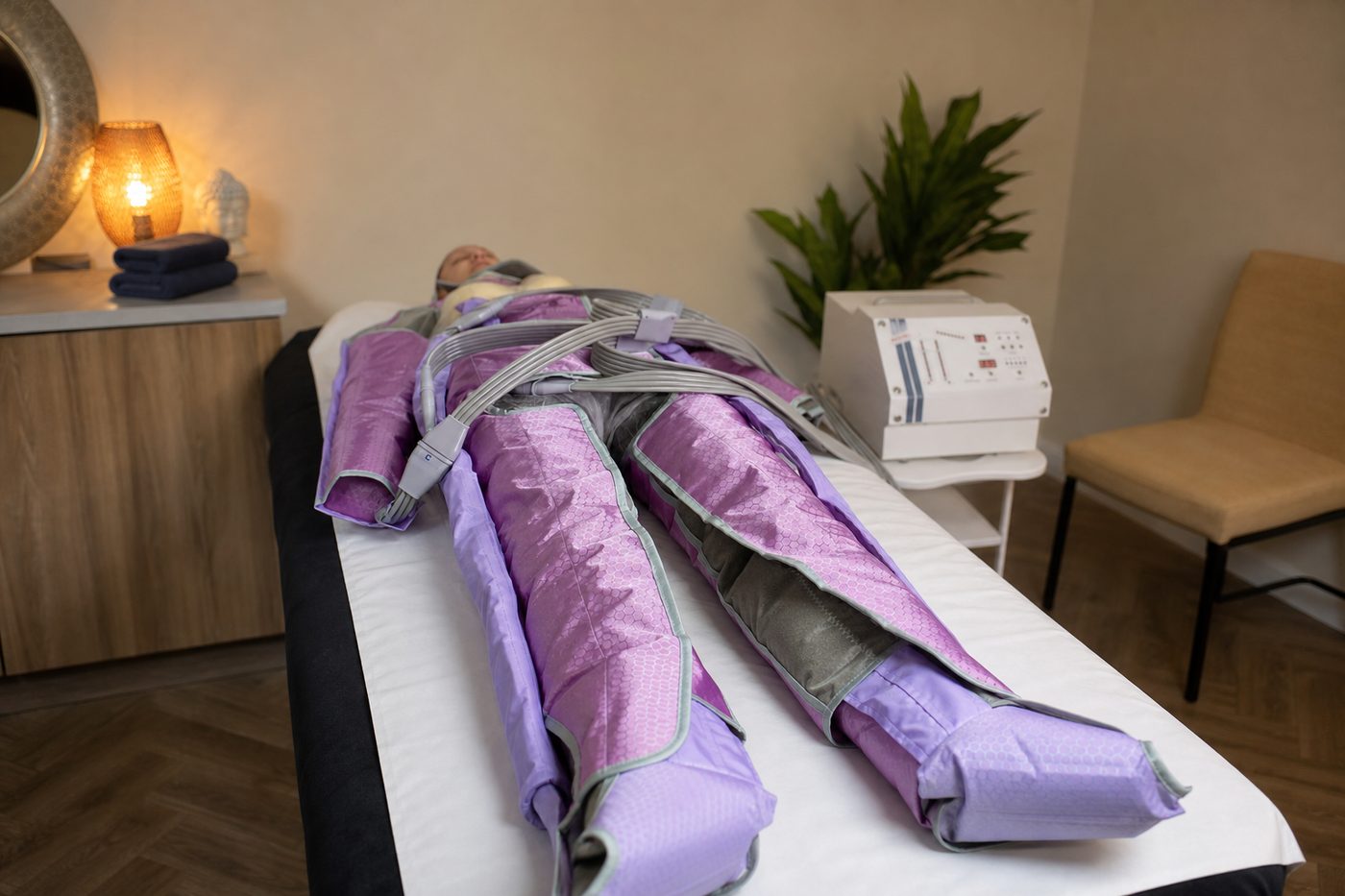
If your legs have felt heavy, tight or a bit swollen since your last big training block, a lymphatic drainage suit is designed to help that settle. It is a full-body pressure suit that squeezes gently and rhythmically from your feet upward, working with your body's own drainage system to help move the fluid that has pooled in your tissues on and out.
You will usually reach for it after the heaviest leg days, not every session. Think sled pushes, lunges, a long run, or back-to-back training days that leave your calves and thighs feeling like they are carrying extra weight.
What is a lymphatic drainage suit?
It is a full-body compression garment, essentially a wearable suit that covers your legs and torso, connected to a pump. Once you are in it, the suit inflates in sequence, starting at your feet and working upward in waves, then releasing. That rhythmic pattern is what gives it its name and its effect: it is mimicking, in a very general way, the direction your lymphatic system already moves fluid in.
You lie back, get zipped in, and the suit does the work. Most people find it more subtle than compression boots, less an intense squeeze and more a slow, steady wave that runs the length of your body rather than just your calves and feet.
How does a lymphatic drainage suit help with heavy legs?
After a heavy training load, especially high-volume lower-body work, fluid can build up in the tissue around your muscles. That is what gives you that swollen, tight, "my legs do not feel like mine" sensation, sometimes a day or two after the session that caused it.
The suit's sequential compression encourages that fluid to move back toward your trunk, where your body can process it normally. Most people describe their legs feeling noticeably lighter and less tight by the time they get up, though how long that lasts varies from person to person and session to session.
It is worth being honest about the evidence here. Research on compression as a recovery tool is reasonably encouraging. A 2014 meta-analysis in the British Journal of Sports Medicine looked at compression garments and found moderate benefits for muscle soreness, strength and power recovery after exercise-induced muscle damage. That is a different device to a full pneumatic suit, but the underlying idea, that compression supports fluid movement and eases soreness, is the same one the suit is built on.
What is the difference between the lymphatic drainage suit and compression boots?
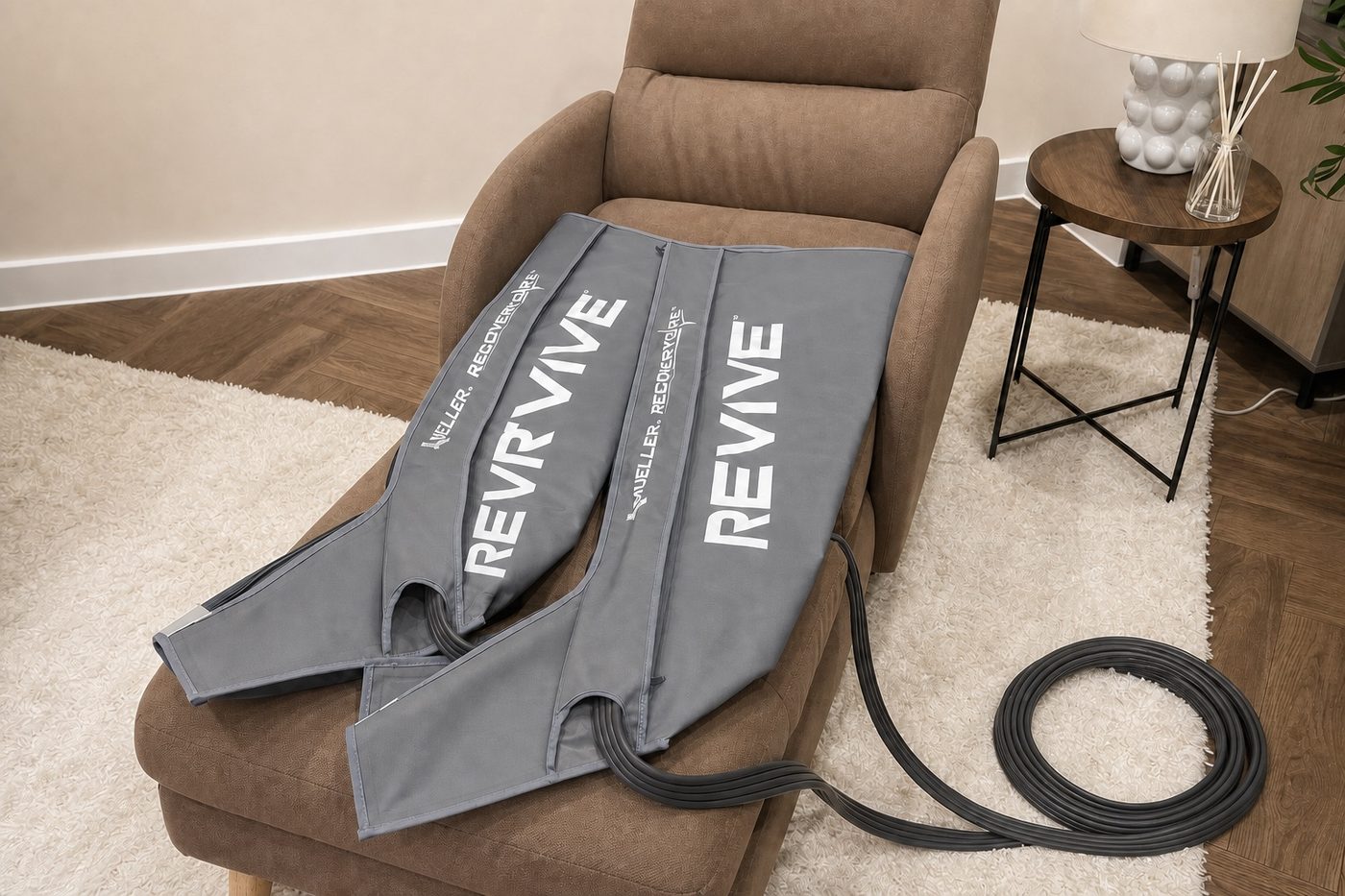
Compression boots, the ones included in the £75 Recovery Circuit, focus on your feet and legs up to the hip, with sequential pneumatic compression that flushes tired legs after a run, a heavy squat session or a day on your feet. They are the everyday tool, the one most people use regularly.
The lymphatic drainage suit goes further, covering your torso as well as your legs, for the days when the heaviness feels more whole-body than just-your-calves. If you are not sure which one fits how you are feeling, the team can talk it through when you arrive, or you can read more about how compression boots work first.
| Lymphatic drainage suit | Compression boots | |
|---|---|---|
| Coverage | Legs and torso | Feet to hip |
| Feel | Slow, steady full-body wave | Firmer, more focused squeeze |
| Best for | Whole-body heaviness and puffiness | Tired, heavy legs after a run or squat session |
| How to book | Separate session, added when you need it | Included in the £75 Recovery Circuit |
Who is the lymphatic drainage suit for?
Plenty of people who train seriously in Milton Keynes reach for it, particularly the strong Hyrox contingent who train through Hanbury Health, along with anyone working through a demanding block of squats, sleds or running volume.
You do not need to be training for an event to feel the benefit. Plenty of people come in simply because their legs feel heavy after a long day standing, a long-haul flight, or a stretch of life that has been more sedentary than usual. If you are unsure whether recovery therapy is right for you at all, our guide to recovering faster after a workout is a good place to start.
Is a lymphatic drainage suit the same as medical lymphatic drainage treatment?
No, and it is an important distinction. Manual lymphatic drainage and intermittent pneumatic compression have a genuine, well-established place in treating conditions like lymphoedema, often after breast cancer surgery or lymph node removal, and in managing post-surgical swelling. A 2024 systematic review and meta-analysis in Gland Surgery looked specifically at intermittent pneumatic compression for breast cancer-related lymphoedema and found it added measurable benefit alongside standard decongestive therapy, though that benefit needed maintaining with ongoing sessions rather than a one-off treatment. Clinical guidance on these pumps is also clear that in a medical setting they are used under supervision, at carefully controlled pressures, and never as a replacement for manual lymphatic drainage therapy from a trained specialist.
What you are using at Hanbury Health is a wellness and recovery tool, aimed at everyday heaviness after training, not a treatment for a diagnosed medical condition. The evidence for general recovery use is real but lighter, promising for how your legs feel and how quickly that heaviness settles, without the same weight of clinical trial data behind it as the medical applications. If you have a diagnosed lymphatic condition, deep vein thrombosis, or any circulatory concern, do speak to your doctor before booking, and let the team know when you arrive.
Where can you try a lymphatic drainage suit in Milton Keynes?
The lymphatic drainage suit is one of seven systems inside the recovery suite at Hanbury Health, alongside cryotherapy, compression boots, the Shiftwave chair, contrast therapy, mild hyperbaric oxygen therapy and the red light bed. If you want the full picture of what is available and what everything costs, this guide to recovery therapy in Milton Keynes covers the whole suite.
If your main concern is muscle soreness rather than heaviness or swelling specifically, it is also worth reading which recovery therapy suits DOMS best, since the right tool depends on what you are actually feeling.
How much does a lymphatic drainage suit session cost, and how do you book?
The lymphatic drainage suit is booked separately from the £75 Recovery Circuit. It is not bundled into that entry-level price, since the Circuit is built around cryotherapy, compression boots and the Shiftwave chair specifically. Pricing for individual sessions, including the suit, is on the main recovery pricing page, and the team will arrange your booking with you.
If you are new to the recovery suite, the sensible starting point is still the £75 Recovery Circuit. It is the low-commitment way to get a feel for cryotherapy, compression boots and the Shiftwave chair in one guided visit, and it gives you and the team a sense of how your body responds before you add anything extra. From there, the lymphatic drainage suit is easy to add on for the weeks your legs need more.
Why Hanbury Health is different
What tends to matter most is not the suit itself, it is what happens if something about your swelling does not add up. Most heaviness after a big leg day is exactly what it looks like, ordinary fluid build-up that settles with a bit of compression and a bit of time.
But if it is not, if the swelling is one-sided, does not ease the way you would expect, or keeps coming back more than training alone would explain, that is not something the team quietly works around. Because the recovery suite sits inside Hanbury Health alongside physiotherapy and the wider team of experts, anything that looks like more than normal post-training heaviness gets flagged and looked into properly, rather than just soothed session after session. You are not left guessing whether something needs a proper look.
You get the same rhythmic compression you would find with any well-run recovery suite, plus people who will notice if your legs are telling you something the suit alone cannot fix.
Frequently asked questions
What does a lymphatic drainage suit actually do?
It applies gentle, sequential pressure from your feet upward, encouraging fluid that has built up in your tissue to move back toward your trunk. Most people feel their legs lighten noticeably by the end of the session.
Does a lymphatic drainage suit hurt?
No. It should feel like a firm, steady squeeze, not painful pressure. Tell the team straight away if anything feels uncomfortable and the pressure can be adjusted.
How long does a session take?
Sessions typically run around 30 minutes, though this can vary. The team will confirm timing when you book.
Can I use the lymphatic drainage suit if I have a diagnosed lymphoedema condition?
Speak to your doctor first. This is a general wellness tool, not a substitute for medically supervised lymphatic drainage treatment, and anyone with a diagnosed lymphatic or circulatory condition should get medical guidance before booking.
How is this different from the compression boots in the £75 Recovery Circuit?
Compression boots cover your feet and legs and are included in the £75 Circuit. The lymphatic drainage suit covers your whole lower body and torso and is booked separately, for the days your legs feel heavier than usual.
Is there a lymphatic drainage suit near me in Milton Keynes?
Yes. It is one of the seven systems in the recovery suite at Hanbury Health in Milton Keynes, alongside cryotherapy, compression boots, the Shiftwave chair and more.
How often should I use it?
There is no fixed schedule. Most people use it after their heaviest lower-body training weeks rather than every visit, alongside the £75 Recovery Circuit as their regular starting point.
References
- Hill J, Howatson G, van Someren K, Leeder J, Pedlar C. Compression garments and recovery from exercise-induced muscle damage: a meta-analysis. British Journal of Sports Medicine, 2014;48(18):1340-1346.
- Systematic review and meta-analysis of intermittent pneumatic compression for breast cancer-related lymphoedema. Gland Surgery, 2024.
Ready to put this into practice?
About the author: Prof Arul Ramasamy is a consultant orthopaedic surgeon and a founder of Hanbury Health. He holds a PhD in bioengineering from Imperial College London, where he is a Visiting Professor, and is a Fellow of the Royal College of Surgeons (Trauma and Orthopaedics). He leads Hanbury's approach to recovery, performance and long-term health.
General information, not medical advice. Written by Prof Arul Ramasamy. Medically reviewed by Prof Arul Ramasamy MA PhD MBA FRCS(Tr+Orth). Last reviewed: 19 August 2026.
Related insights
Recovery
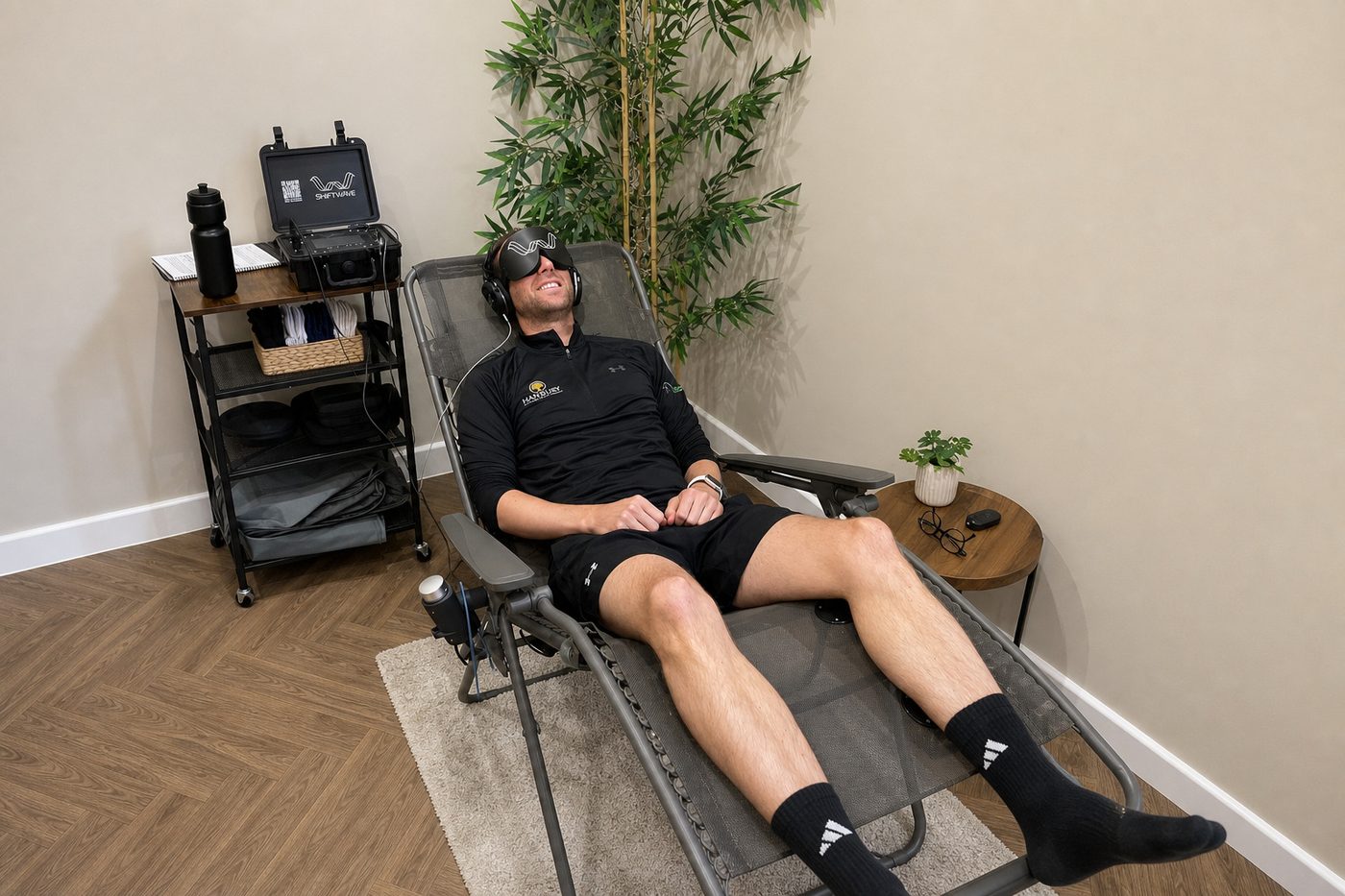
Compression boots or the Shiftwave chair: which do you actually need?
Heavy legs point to the compression boots, a wired nervous system to the Shiftwave chair. How to tell, and why the £75 circuit covers both.
Ramasamy8 min readRead the article
Recovery
How often should you do the Recovery Circuit, and how do you build it into a routine?
Once or twice a week suits most people. How to find your own rhythm with the £75 Recovery Circuit, and when to add the rest of the suite.
Ramasamy8 min readRead the article
Recovery
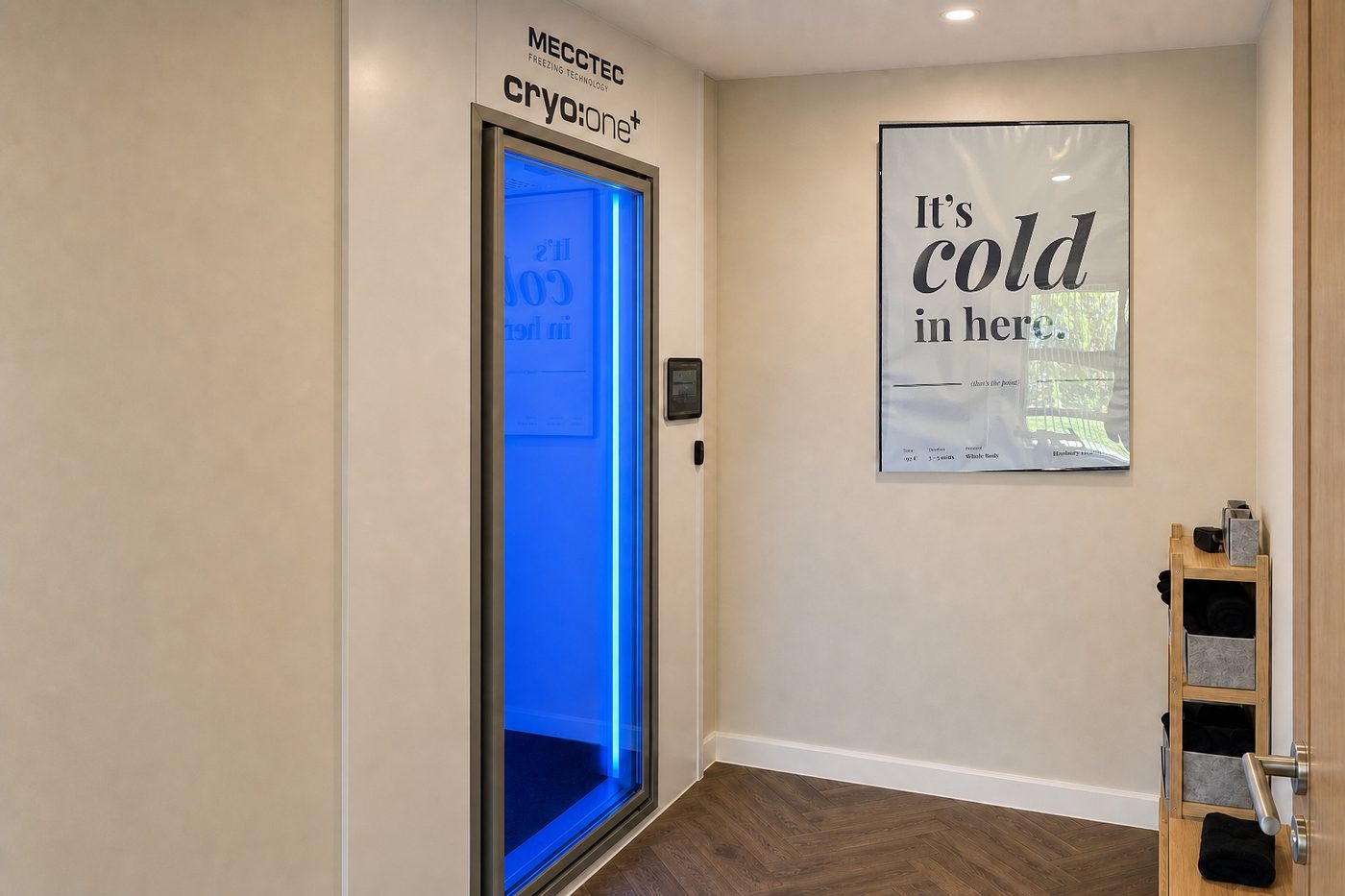
What does a Hyrox-specific recovery routine actually look like in Milton Keynes?
Match what you feel after a Hyrox race to the right tool: heavy legs, a wired nervous system, localised DOMS and cumulative training-block fatigue.
Ramasamy9 min readRead the article
Stay informed
More from the Hanbury team.
New articles on recovery, movement, physiotherapy and performance, sent when there's something worth reading. No spam, unsubscribe any time.